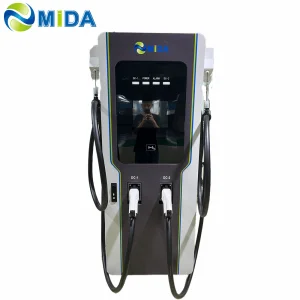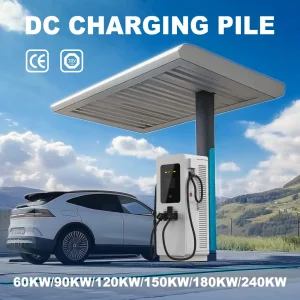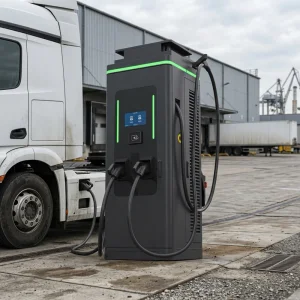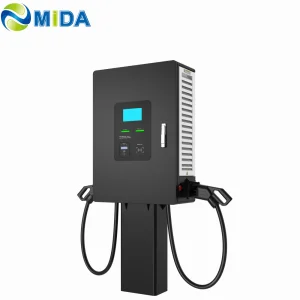
Explore our baseline selection of high-power, multi-standard charging systems designed for public and private infrastructure deployment.
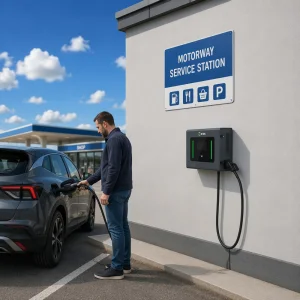
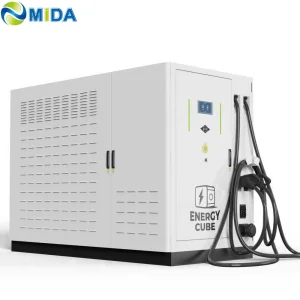
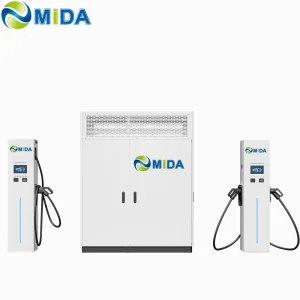
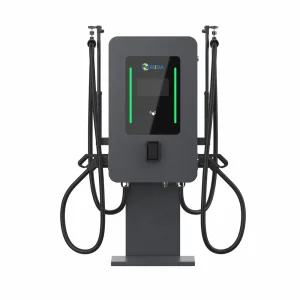
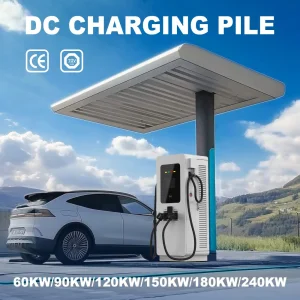
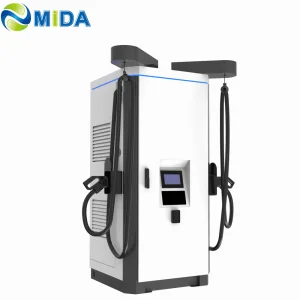
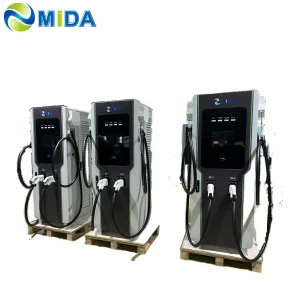
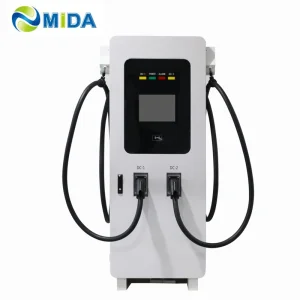
As the electrification of transportation accelerates globally, commercial fleet managers, urban planners, and highway operators are faced with balancing operational efficiency against massive capital expenditures. In this framework, the 180kW DC Fast Charger has emerged as the definitive "sweet spot." It bridges the gap between slower 60kW destination units and highly complex, capital-intensive ultra-fast charging systems exceeding 350kW.
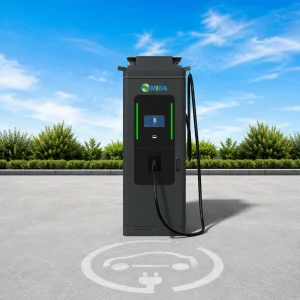
From an electrical engineering standpoint, a 180kW DC architecture matches the dynamic thermal intake thresholds of modern passenger electric vehicles (EVs) and medium-duty logistics trucks. By operating three standard 60kW power modules or six 30kW modules, a 180kW charging pile manages dynamic load allocation intelligently. This enables single-vehicle rapid charging or simultaneous dual-vehicle charging (90kW + 90kW split configuration). This flexibility maximizes utilization rates while avoiding grid-demanded penalty fees associated with excessive megawatt spikes.
Shanghai Mida Cable Group Ltd. operates through its wholly owned subsidiaries: Shanghai Mida EV Power Co., Ltd., Shenzhen Mida EV Power Co., Ltd., and Shanghai Mida New Energy Co., Ltd. This structure positions us at the intersection of power electronics, industrial cable production, and intelligent firmware engineering.
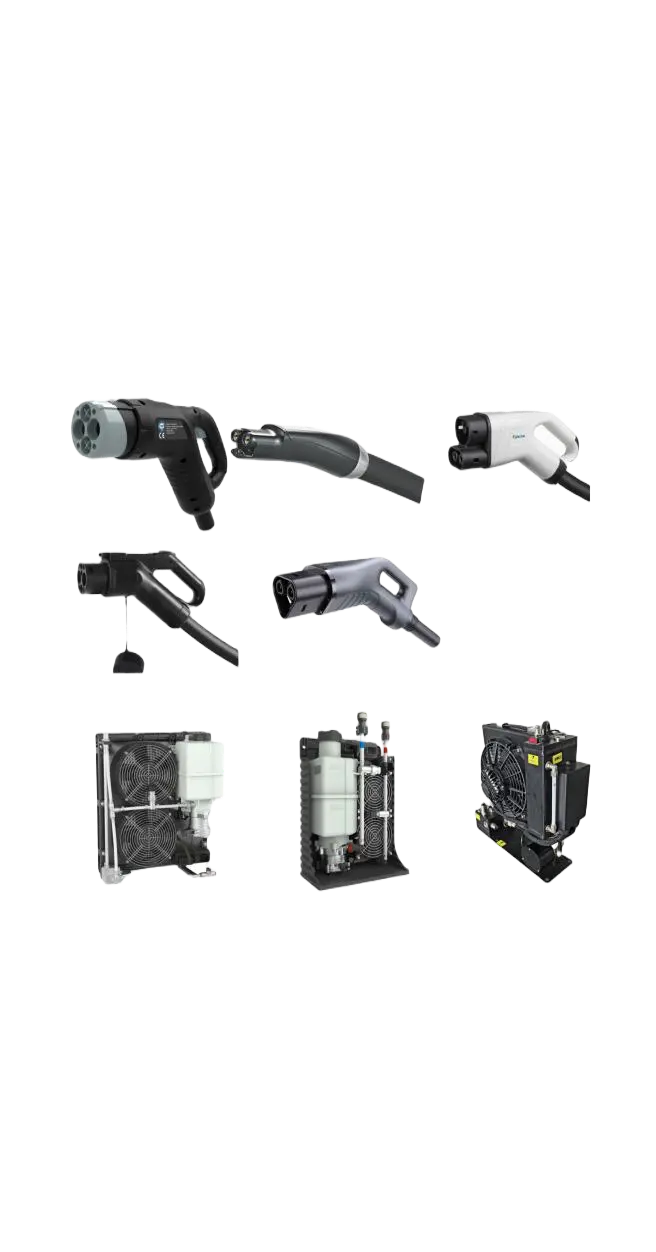
Our factories and integrated facilities manufacture a comprehensive range of EV charging cables. These include J1772 cables (16A to 80A), IEC 62196-2 Type 2 cables (16A to 63A), and robust DC fast charging cables: CCS1 (80A to 500A), CCS2 (125A to 1000A), CHAdeMO (125A to 300A), GBT (200A to 1000A), and NACS connectors (250A to 600A).
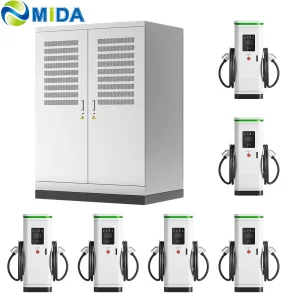
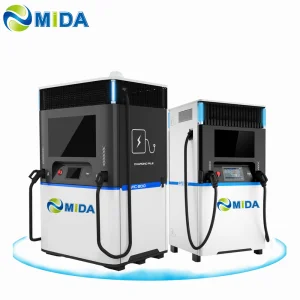
Through MIDA EV Power, we deliver scalable infrastructure: 7kW to 50kW mobile chargers, 3.6kW to 7.2kW portable DC systems, 360kW to 1440kW split-type DC fast charging systems, and 60kW to 480kW floor-standing stations designed for heavy commercial deployment.

Global deployment of EV infrastructure requires cost efficiency, supply-chain resilience, and rapid product localization. Chinese charging factories have developed deep vertical integration, from copper refining and cable extrusion to silicon carbide (SiC) power module manufacturing. This cluster effect provides several distinct advantages:
MIDA GROUP owns and controls the entire production cycle, spanning cabling, metal tooling, logic board assembly, and thermal cooling manifolds. This reduces lead times and protects clients from the semiconductor bottlenecks common in other manufacturing regions.
Our engineering teams adapt firmware and electrical sub-systems in real-time. Whether implementing specialized local payment mechanisms (RFID/POS), integrating customized OCPP backends, or designing dual liquid-cooled connector arrays, our turnarounds are significantly faster than Western counterparts.
China's export-oriented EV manufacturers maintain compliance with international regulatory bodies. Our 180kW DC charging systems are developed, tested, and certified under UL standards, CE Mark requirements, Eichrecht / PTB calibration, and international IEC directives.
We categorize our primary charging systems based on application environments, electrical source parameters, and targeted load management dynamics.
Commercial and residential AC stations supporting Type 1 and Type 2 systems. Designed for depot parking, overnight parking, and retail properties.
Explore AC Lineup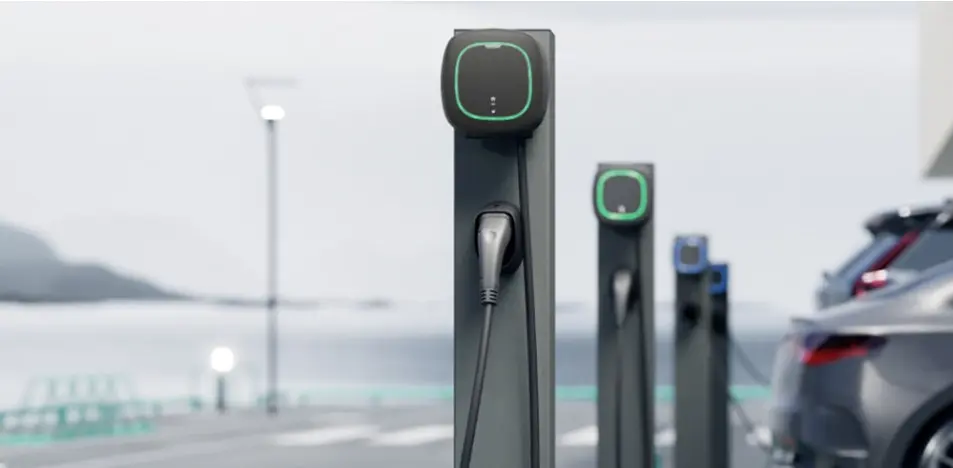
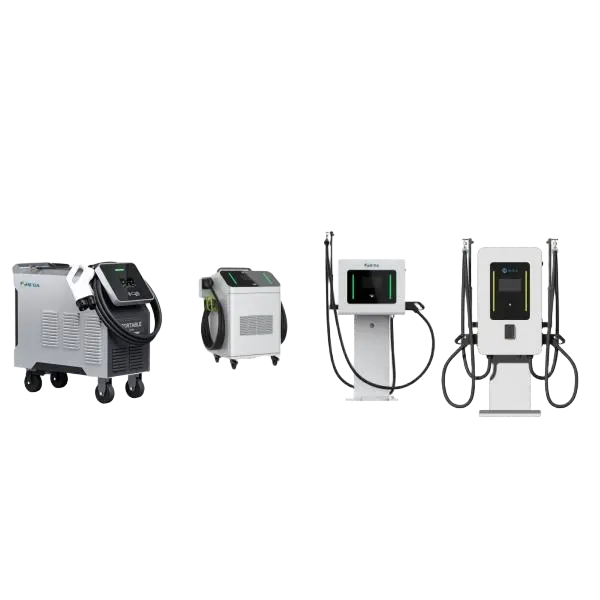
Power envelopes from 7kW, 20kW, 30kW, 40kW, up to 80kW. Provides high mobility and quick deployment for field services and diagnostic depots.
Explore Wall/Mobile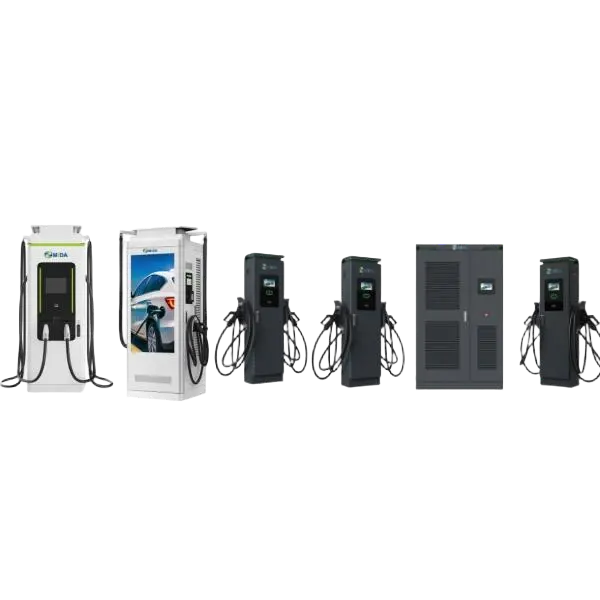
Configurable configurations from 60kW–480kW up to 1440kW split systems. Integrates dynamic power-sharing matrix and high-current connectors.
Explore High Power DC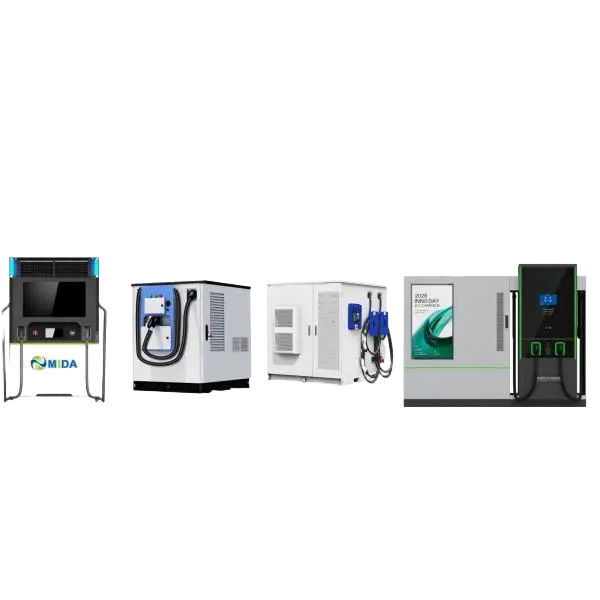
Energy storage stations ranging from 60kWh to 2MWh battery limits. Integrates localized power storage with high-power fast charging.
Explore BESS SystemsOur vertical integration means we do not simply assemble parts. We design the electrical components that define the performance limit of high-power charging.
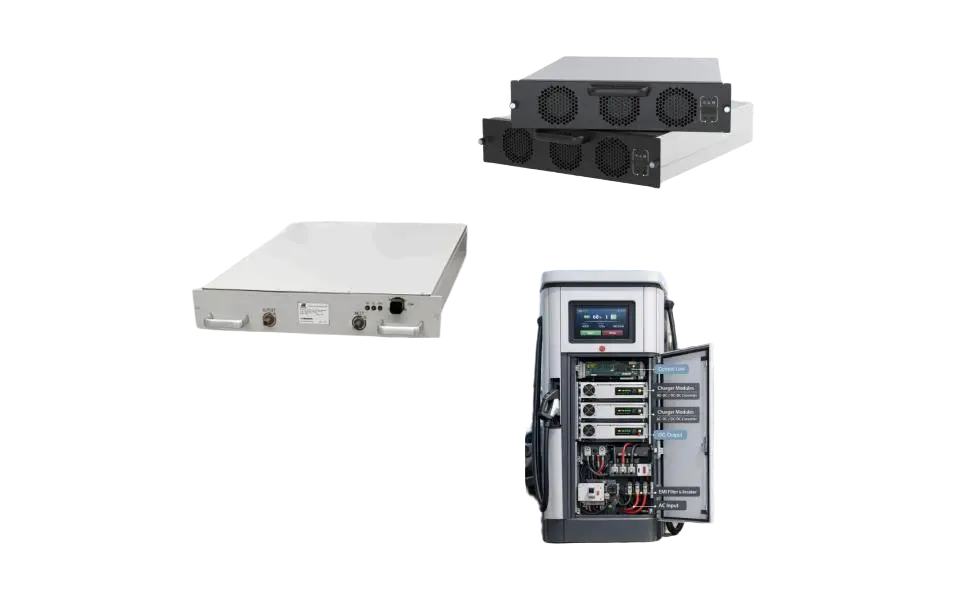
The heart of our 180kW stations. These conversion units dictate the longevity, thermal reliability, and efficiency of the overall unit:
Heavy industrial utilization demands high reliability from cables and connectors. We construct high-amp solutions:
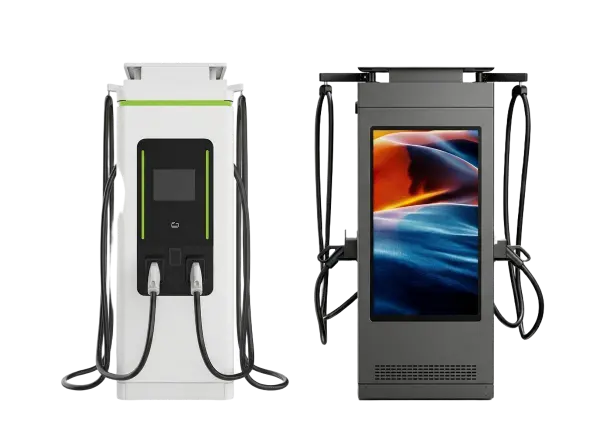
Complete systems designed for commercial operations, municipalities, and site owners:
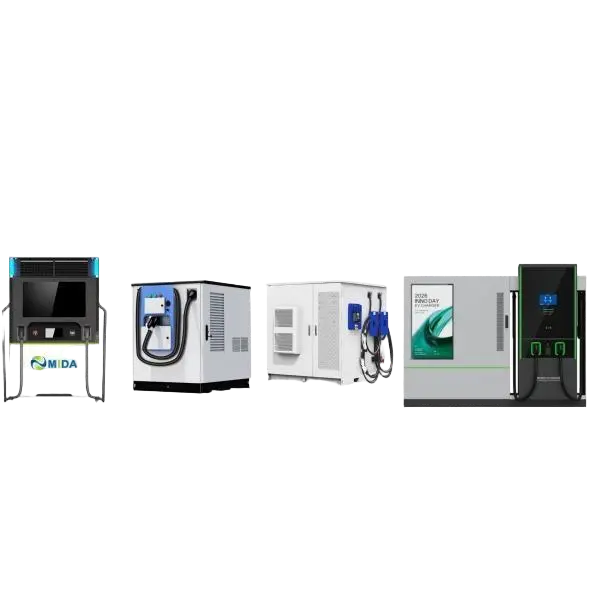
Mitigate peak demand pricing and manage local grid congestion using battery storage integrated stations:
Deploying a 180kW DC system goes beyond plug-and-play installation. It requires an understanding of localized environments, power access constraints, and user behaviors.
For parcel delivery vans and Class 4-6 regional distribution trucks, a 180kW DC charger offers optimal return on investment. Dynamic load management allows depots to recharge two trucks at 90kW overnight, ensuring full battery status by shift start without upgrading localized grid service transformers.
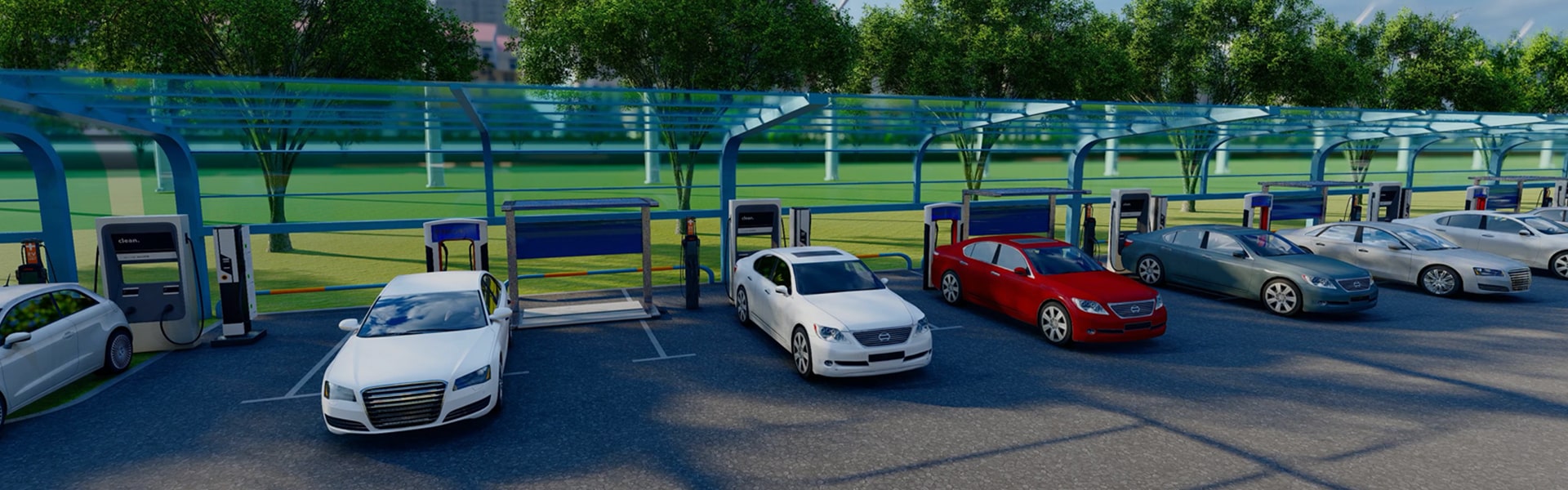
With average dwell times ranging from 30 to 45 minutes, retail properties are prime locations for 180kW systems. This power level provides a meaningful range boost of 120-180 miles during a shopping visit. The secondary charging connector also increases site capacity and traffic throughput.
At transit nodes, the 180kW DC charger serves as a reliable secondary option to ultra-fast 350kW systems. When primary stations are occupied, the 180kW system provides steady fast charging for older or smaller-capacity EVs that cannot draw currents above 200A.
Read about our latest research in heavy-duty transit charging, public utility interfaces, and automatic connection systems.

Technical Paper | July 12, 2026
In contrast to classic plug-in charging systems, e-bus pantograph systems optimize depot charging spaces and enable safe, hands-free megawatt connection cycles.
Read Full Report →
Field Analysis | July 12, 2026
Charging times depend on battery capacity and thermal cooling performance. We analyze how high-current interface systems manage thermals during high-power charging cycles.
Read Full Report →
Installation Guide | July 12, 2026
Installing a "Pantograph Up" system dome for municipal electric transit requires precise alignment, support foundations, and integration with the depot grid.
Read Full Report →Find answers to key technical questions and engineering considerations regarding the installation, operation, and performance of 180kW DC systems.
A 180kW DC charger requires a 3-phase AC input supply, typically 380V to 480V AC, 50/60 Hz. Because conversion losses occur, the incoming grid service must support at least 200kVA of apparent power. Additionally, integrating upstream circuit protections, such as molded case circuit breakers (MCCB) rated at 300A to 400A, is necessary to prevent overload issues.
Yes, when configured as a dual-port system, the station splits output. It can deliver 180kW to a single high-voltage vehicle, or distribute the load symmetrically as 90kW + 90kW, or dynamically share the load (e.g., 120kW + 60kW) depending on each vehicle's requested State of Charge (SoC).
Our power modules achieve a peak electrical efficiency of 96.5%. Utilizing silicon carbide (SiC) MOSFET semiconductor platforms, they generate less waste heat compared to traditional silicon IGBT models, reducing cooling requirements and lowering total operating costs.
Yes. Because MIDA Group manufactures the high-current connectors and cables in-house, we customize the station's layout. We offer single NACS, dual CCS2, combined CCS2+CHAdeMO, or local GBT plug configurations to match regional market needs.
Browse our ultra-high output dispensers, integrated solar charging platforms, and commercial fleet management systems.