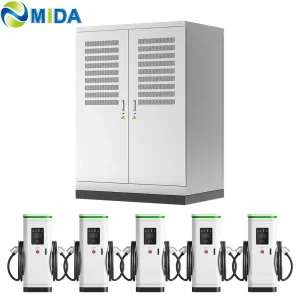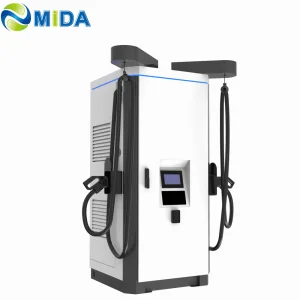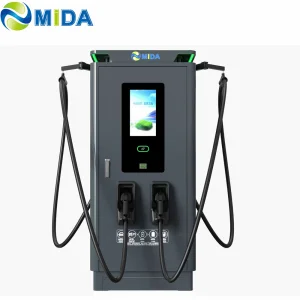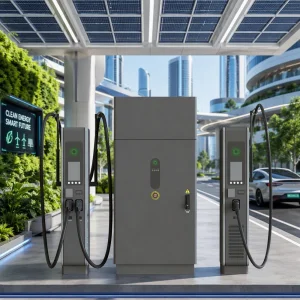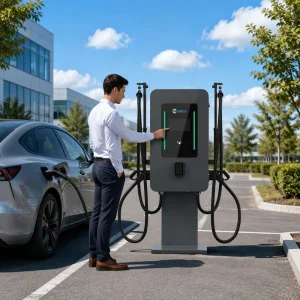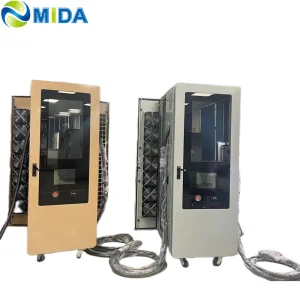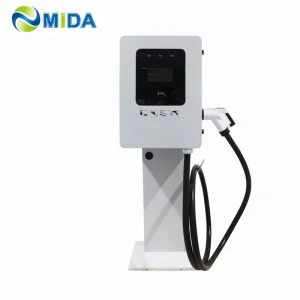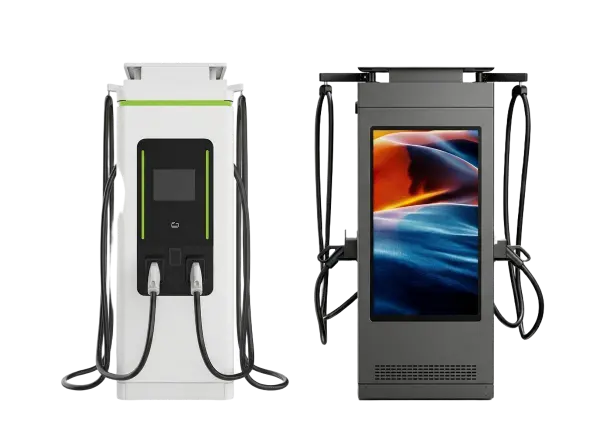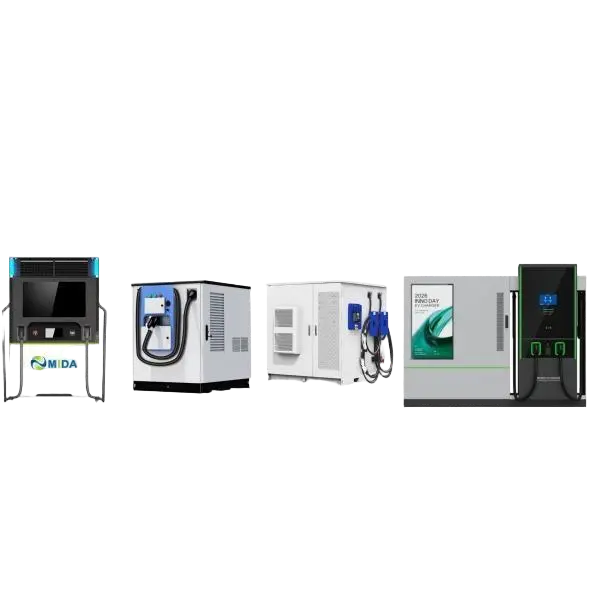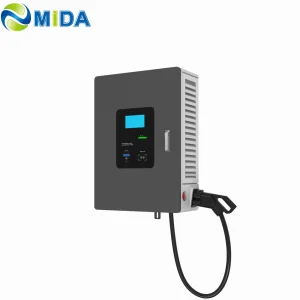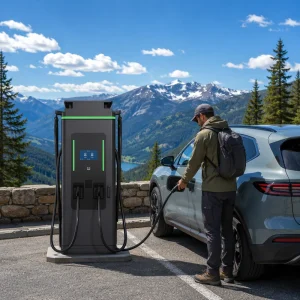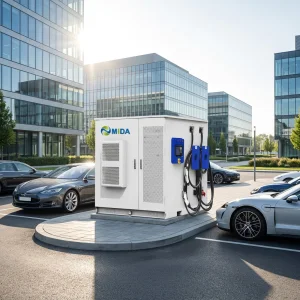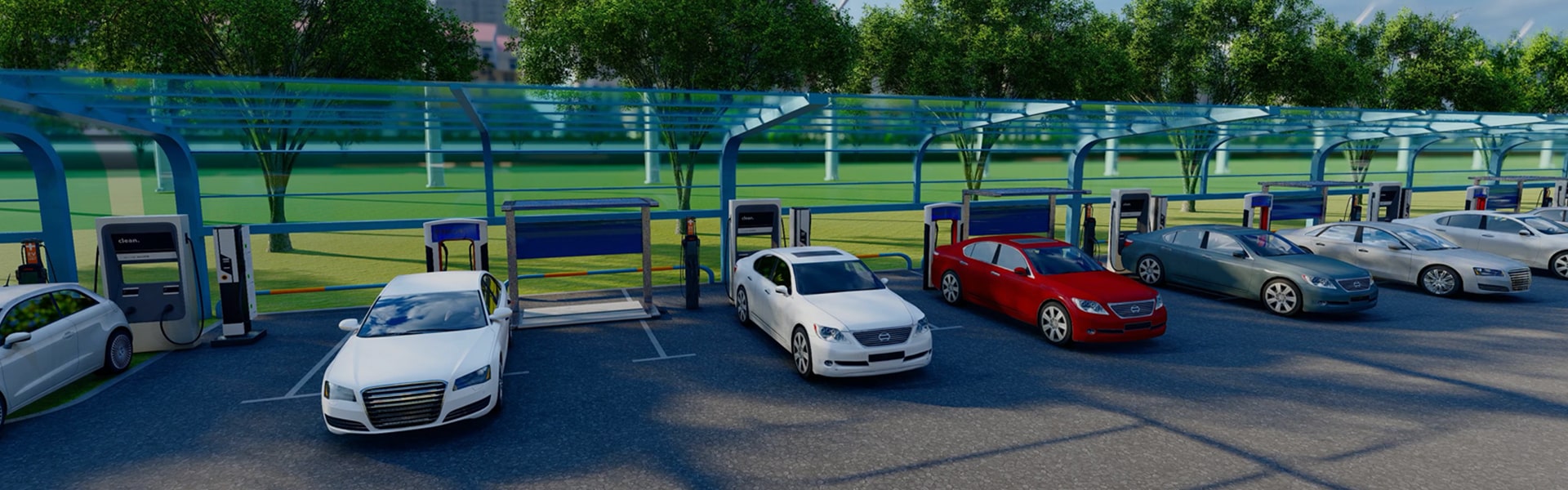
Best 150kW Quick Charging Station Manufacturer & Factories

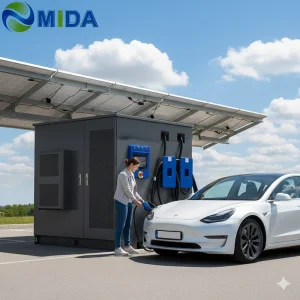
High-efficiency, future-ready DC Fast Charging Infrastructure engineered to power commercial fleets, transit depots, and highway hubs with dynamic load management and smart grid integration.

Industrial and Global Outlook of 150kW Quick Charging Stations

The global transition to sustainable heavy-duty transport, delivery fleets, and public e-mobility has accelerated the need for high-power DC infrastructure. The 150kW DC fast charging station stands as the operational "sweet spot" for mid-to-large-scale logistics and urban bus systems. It represents a vital balance between capital investment, grid connection demands, and rapid charging throughput. Across North America, Europe, and the Asia-Pacific region, commercial fleet operators are replacing legacy 50kW chargers with modular 150kW systems to drastically reduce vehicle downtime.

150kW
Optimal Fleet Power
< 30 Mins
Avg. Charging Time
96%
Power Module Efficiency
OCPP 2.0.1
Future-Proof Standard

According to regulatory frameworks such as the European Union’s Alternative Fuels Infrastructure Regulation (AFIR) and the United States’ National Electric Vehicle Infrastructure (NEVI) formula program, charging hubs must maintain minimum power output thresholds. 150kW has emerged as the baseline standard for light-to-medium-duty commercial vehicles. By adopting 150kW architectures, fleet operators can achieve a 20% to 80% state-of-charge (SoC) in approximately 25 to 35 minutes, perfectly aligning with driver rest mandates and route scheduling requirements.

Technical Architecture: Modular Power & Semiconductor Advancements

Modern 150kW charging structures utilize discrete power stacks. Instead of single-unit high-power converters, leading manufacturers configure these stations using multiple high-efficiency power modules (e.g., 5 x 30kW or 4 x 40kW). This modular topology offers two key benefits:

  • Fault Tolerance & Redundancy: If a single module experiences a thermal or electrical fault, the system dynamically shifts the load, allowing operation to continue at a reduced capacity rather than shutting down completely.
  • Silicon Carbide (SiC) Integration: Next-generation stations utilize SiC MOSFETs in their power modules. This material supports higher switching frequencies, reduces heat emission, and maintains a power conversion efficiency of over 96%.

"For B2B procurement, modular design minimizes the Total Cost of Ownership (TCO). A field technician can swap out a standard 30kW module within 10 minutes, eliminating long periods of downtime."

Dynamic Load Balancing & Smart Grid Integration

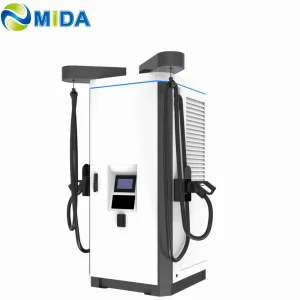
Deploying multiple 150kW charging terminals can strain local distribution transformers. Leading factories integrate Dynamic Load Balancing (DLB) algorithms. By reading real-time grid inputs and vehicle battery requests, the station dynamically manages power delivery across multiple outputs. A dual-gun 150kW charger can provide a full 150kW to a single EV or split it into 75kW + 75kW outputs when a second vehicle connects, optimizing power draw and avoiding peak demand charges.

System Architectures: Air-Cooled vs. Liquid-Cooled Systems

Understanding the operational differences between cooling technologies is essential when selecting a manufacturer for your specific environment.

Feature / Parameter Air-Cooled 150kW Station Liquid-Cooled 150kW+ Station
Primary Application Standard public charging, transit stations, retail parking lots. High-throughput highway corridors, heavy industrial use.
Thermal Efficiency Moderate; reliant on ambient airflow and internal fan speed. Excellent; direct coolant circulation removes heat efficiently.
Cable Weight & Ergonomics Standard, thicker copper conductors (heavier to handle). Slimmer, lighter, and more flexible cooled cabling.
Maintenance Profile Requires regular filter cleaning and fan maintenance. Closed-loop system; periodic coolant level checks.
Decibel Level (Noise) Higher at full load due to high-RPM exhaust fans. Quiet operation, suitable for noise-sensitive urban zones.

WELCOME TO MIDA GROUP

Shanghai Mida Cable Group Ltd. operates through its wholly owned subsidiaries: Shanghai Mida EV Power Co., Ltd., Shenzhen Mida EV Power Co., Ltd., and Shanghai Mida New Energy Co., Ltd.

Mida Cable manufactures a comprehensive range of EV charging cables, including 16A–80A J1772 cables, 16A–63A IEC 62196-2 Type 2 cables, and DC fast charging cables: CCS1 (80A–500A), CCS2 (125A–1000A), CHAdeMO (125A–300A), GBT (200A–1000A), and NACS connectors (250A–600A).

MIDA EV Power produces a full lineup of EV charging stations, such as 7kW–50kW mobile chargers, 3.6kW–7.2kW portable DC chargers, 360kW–1440kW split-type DC fast chargers, 20kW–50kW wall-mounted DC chargers, and 60kW–480kW floor-standing DC fast charging stations.

MIDA New Energy specializes in EV charger power modules, offering 20kW–60kW standard modules, 40kW–125kW liquid-cooled modules, 30kW–62.5kW bidirectional modules, and 20kW–45kW V2G charging modules.
MIDA Quality Certification

Our Main Product Range

Explore our diverse components and systems designed to build dependable electric vehicle charging infrastructures.
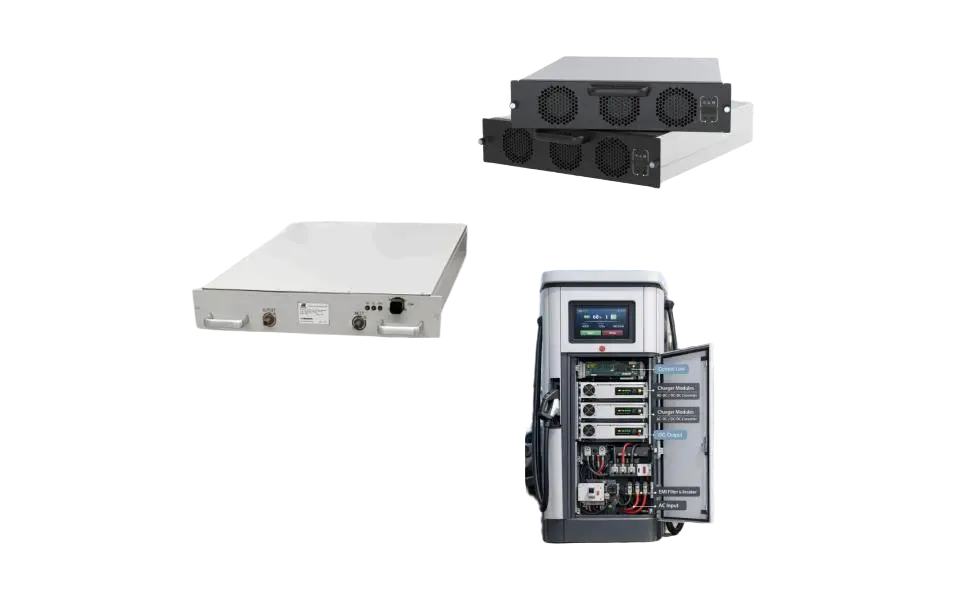
EV Charging Power Module
High-Efficiency Conversion Modules
EV Charging Power Module
  • 30kW-80kW AC DC EV Charger Module
  • 30kW-60kW DC DC EV Charger Module
  • 40kW-125kW Liquid Cooled Power Module
  • 20kW-45kW V2G Power Module
  • 20kW-62.5kW Bidirectional AC DC Modules
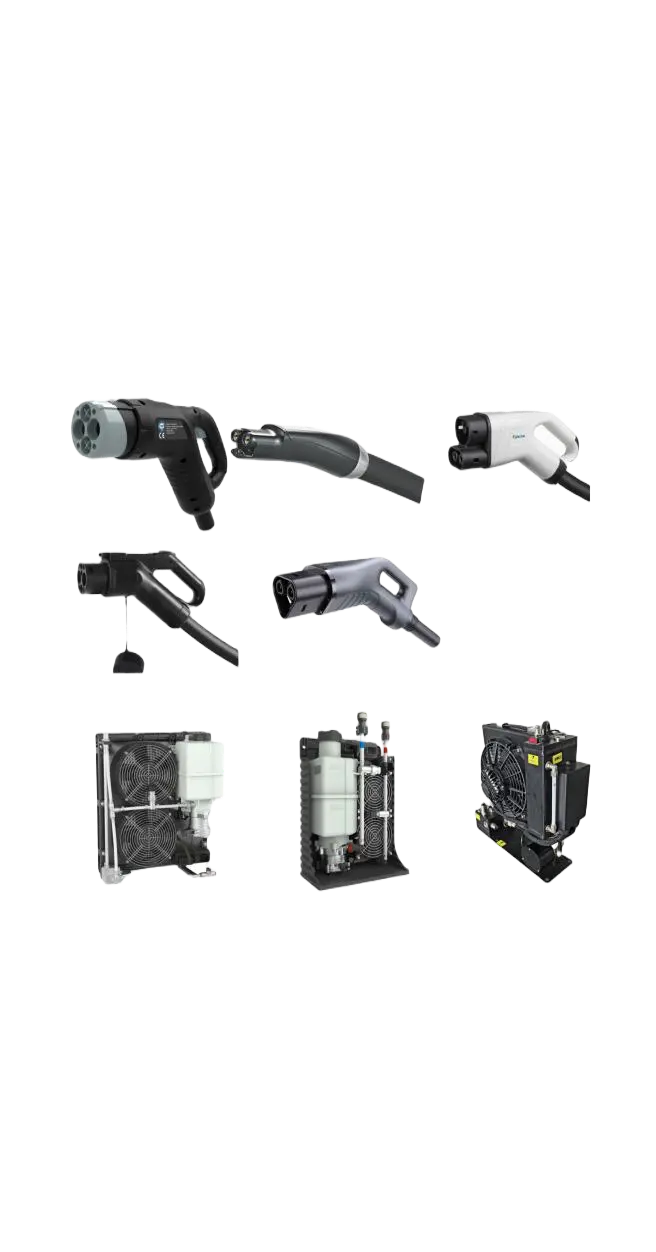
DC Charging Connector & Liquid Cooling Unit
High Power Connectors & Chillers
DC Charging Connector & Liquid Cooling Unit
  • 500A 600A CCS1, CCS2 & GBT Connectors
  • 125A-350A NACS & CHAdeMO Connectors
  • 1500A MCS & CHAOJI Connectors
  • 3.5kW-9kW Integrated Liquid Cooling Units
  • 25kW-72kW HPC Cooling Units
DC Fast Charger Station
Turnkey Charging Stations
DC Fast Charger Station
  • 7kW~60kW Mobile DC Charging Stations
  • 20kW~80kW Wall Mounted DC Charging Stations
  • 60kW~480kW Floor Mounted Charging Stations
  • 60kW~240kW Advertising Charging Stations
  • 360kW~1680kW Split Type DC Charging Stations
Energy Storage Charging Station (BESS)
Battery-Buffered Ultrafast Infrastructure
  • 15kW~480kW Mobile ESS Charging Station
  • 60kW ~ 400kW Integrated ESS Charging Piles
  • 65kWh~200kWh Emergency Rescue Charging Station
  • 165kwh Automatic Charging Robot
  • 800kwh~2000kwh Solar Energy Charging System
Energy Storage Charging Station

B2B Integration & Industry Standards

Our 150kW fast chargers are engineered to meet strict utility requirements and enterprise expectations.

🛡️

Grid & Safety Compliance

Equipped with Overcurrent, Short Circuit, Overtemperature, Ground Fault, and Surge protection. Certified to international safety levels.

  • UL 2231-1 & UL 2231-2 Compliance
  • CE, LVD, and EMC Certified
  • Built-in Type B RCD for leakage protection
🔌

Universal Protocol Compatibility

Supports global charging interfaces. Designed for broad interoperability with diverse passenger and commercial vehicles.

  • ISO 15118 (Plug & Charge ready)
  • DIN 70121 Communication Protocol
  • Dual-outlet CCS2, NACS, and CHAdeMO
🌐

OCPP Network Management

Connects with Central Management Systems via open communication protocols. Enables remote diagnostic capabilities.

  • OCPP 1.6J and OCPP 2.0.1
  • 4G, Wi-Fi, and Ethernet Connectivity
  • Support for dynamic pricing and auth systems

Corporate Insights & Industry News

Technical updates from our R&D center regarding high-power transit charging technology.

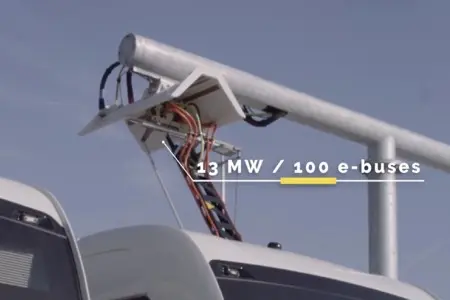
Electric Bus Pantograph Dome
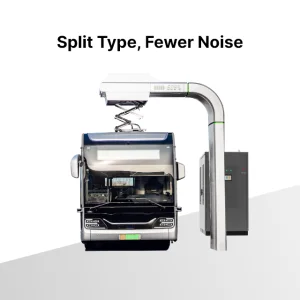
What are the advantages of an e-bus pantograph dome? In contrast to classic plug-in charging systems, e-bus pantographs enable automated overhead energy transfer, reducing vehicle prep times and saving space.
Pantograph Charging Time
How long does it take to charge with an e-bus pantograph? The charging time depends on the battery capacity and the station's configuration, with high-power systems delivering rapid energy top-ups.
Install Pantograph Up Charger
How to Install the Pantograph Up Charger System Dome for Electric Bus. Installing a “Pantograph Up” system dome requires structural alignments, utility integration, and precise calibration for optimal overhead contact.

Frequently Asked Questions

Answers to technical and commercial questions about 150kW quick charging stations.

1. How long does a 150kW DC fast charging station take to charge an average EV?
For typical passenger electric vehicles with battery capacities between 60kWh and 80kWh, a 150kW DC charger can charge from 10% to 80% state of charge (SoC) in approximately 20 to 30 minutes. The actual charge rate adjusts to the battery management system (BMS) parameters to protect vehicle battery health.
2. Does a 150kW station support dynamic load balancing between dual connectors?
Yes, our dual-outlet stations feature integrated Dynamic Load Balancing (DLB). When two vehicles are connected, the system divides the available power (e.g., 75kW per port) based on each vehicle's real-time battery request, avoiding overloading your electrical service.
3. What grid requirements are necessary for a 150kW charging station?
A 150kW DC charger typically requires a 3-phase AC input (380V to 480V, 50Hz/60Hz) with an input current capacity of at least 250A to 300A. A dedicated transformer and a circuit breaker matching local electrical codes are required for installation.
4. Can these stations be integrated with local battery storage systems (BESS)?
Yes. Our stations are designed to work alongside Battery Energy Storage Systems (BESS) and solar arrays. Using buffer batteries helps manage peak demand charges and allows high-speed charging even in areas with limited grid capacity.
MIDA Advanced Production Facility