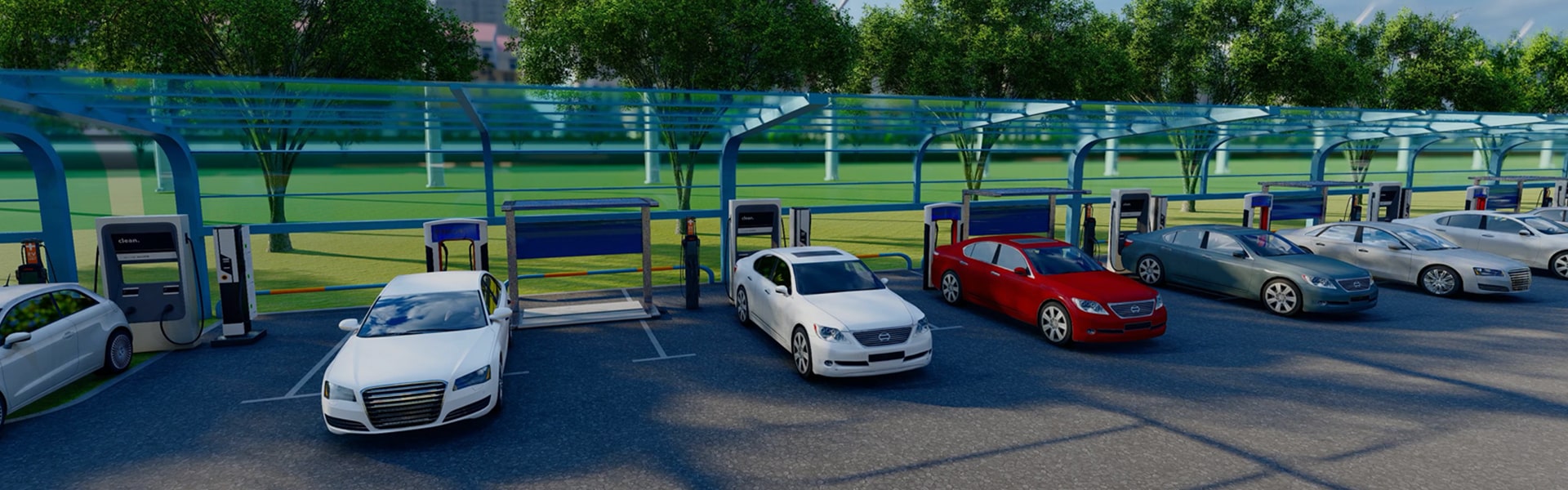
Explore our premium segment of DC charging points designed to optimize performance, charging cycles, and grid interfaces.
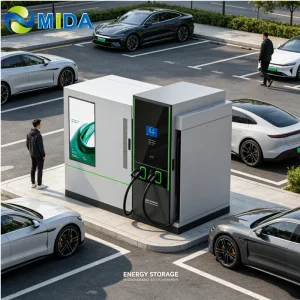
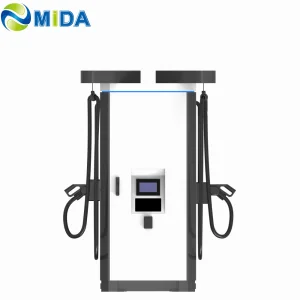
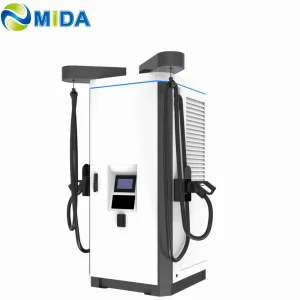
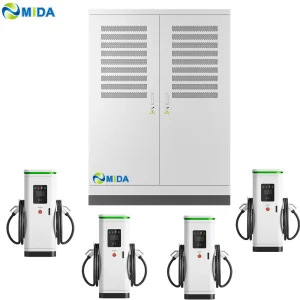
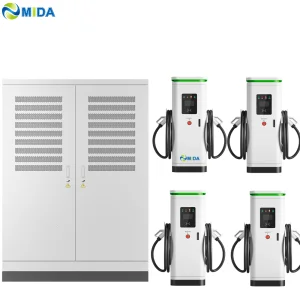
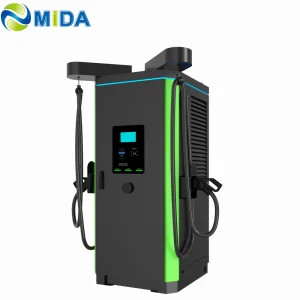
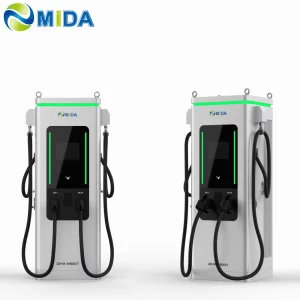
The rapid deployment of electric vehicle (EV) charging networks worldwide has driven significant technological innovation in high-power charging (HPC) nodes. Within the modern charging landscape, the 120kW DC fast charger has emerged as the definitive benchmark for cost-efficiency, power optimization, and operational adaptability. It bridges the gap between low-power AC destination chargers and ultra-fast liquid-cooled megawatt-class charging units, serving as the commercial backbone for municipal networks, retail centers, logistical hubs, and corporate fleets.
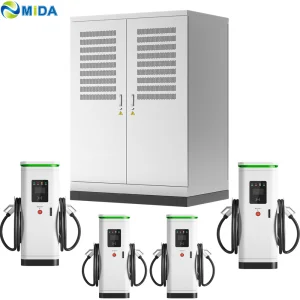
From an infrastructure perspective, deploying charging stations requires a meticulous evaluation of Capital Expenditure (CapEx) against utility grid limitations. 120kW stations are particularly advantageous because they frequently fit within existing commercial grid supplies without necessitating expensive substation upgrades or dedicated step-down transformers. By leveraging dynamic power allocation (load sharing) across dual connectors (e.g., dual CCS2 or mixed CCS1/NACS configurations), a single 120kW unit can charge two vehicles simultaneously at 60kW each, optimizing utility connection utilization and increasing dispenser throughput.
Global procurement teams prioritize strict compliance with localized standards, future-proof communications, and long-term reliability. Procurement strategies for 120kW DC chargers focus on three critical dimensions:
As the density of high-output DC charging points climbs, grid capacity constraints represent the primary barrier to expansion. The integration of Battery Energy Storage Systems (BESS) alongside 120kW DC fast chargers offers a revolutionary solution. When combined with local battery storage (ranging from 60kWh to over 2MkWh capacity), the charging infrastructure can perform "peak shaving"—drawing energy from the grid at a constant, lower rate and discharging high-power bursts directly to EVs during peak charging cycles. This hybrid system minimizes demand charges, integrates seamlessly with onsite solar PV arrays, and provides emergency off-grid backup capabilities.
Modern fast charging stations are complex IoT nodes requiring secure, real-time communication. Compliance with OCPP 1.6J and the latest OCPP 2.0.1 (JSON) protocol is mandatory for seamless integration with third-party Charge Point Management Systems (CPMS). These protocols facilitate remote diagnostics, dynamic tariff management, and advanced load balancing. Furthermore, integrating ISO 15118 allows for secure Plug & Charge functionality, where the vehicle communicates directly with the grid to execute payment authorization and initiate charging without the need for mobile apps or RFID cards, using cryptographic certificates for end-to-end security.
Shanghai Mida Cable Group Ltd. operates through its wholly owned subsidiaries: Shanghai Mida EV Power Co., Ltd., Shenzhen Mida EV Power Co., Ltd., and Shanghai Mida New Energy Co., Ltd.
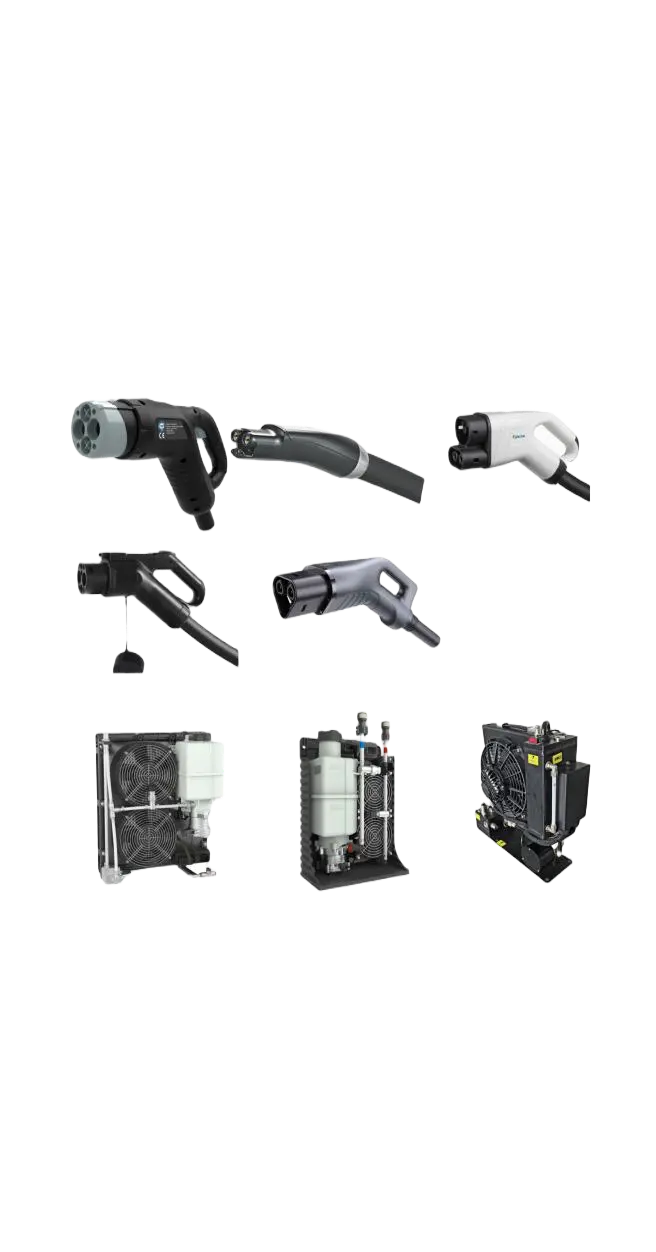
Mida Cable manufactures a comprehensive range of EV charging cables, including 16A–80A J1772 cables, 16A–63A IEC 62196-2 Type 2 cables, and DC fast charging cables: CCS1 (80A–500A), CCS2 (125A–1000A), CHAdeMO (125A–300A), GBT (200A–1000A), and NACS connectors (250A–600A).
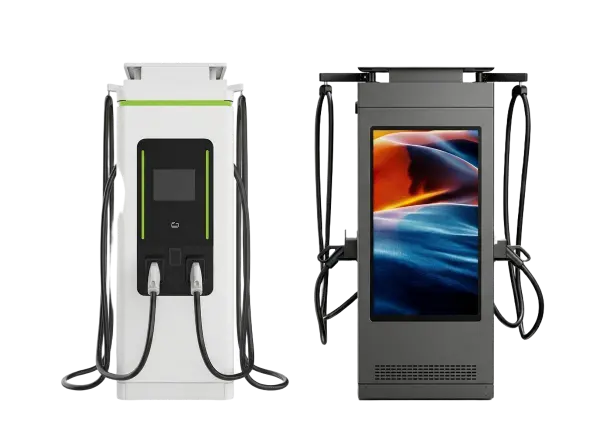
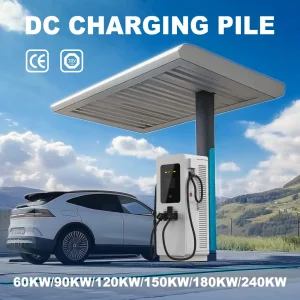
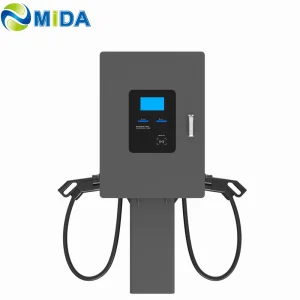
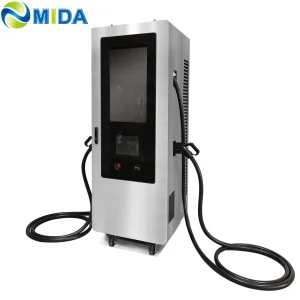
MIDA EV Power produces a full lineup of EV charging stations, such as 7kW–50kW mobile chargers, 3.6kW–7.2kW portable DC chargers, 360kW–1440kW split-type DC fast chargers, 20kW–50kW wall-mounted DC chargers, and 60kW–480kW floor-standing DC fast charging stations.
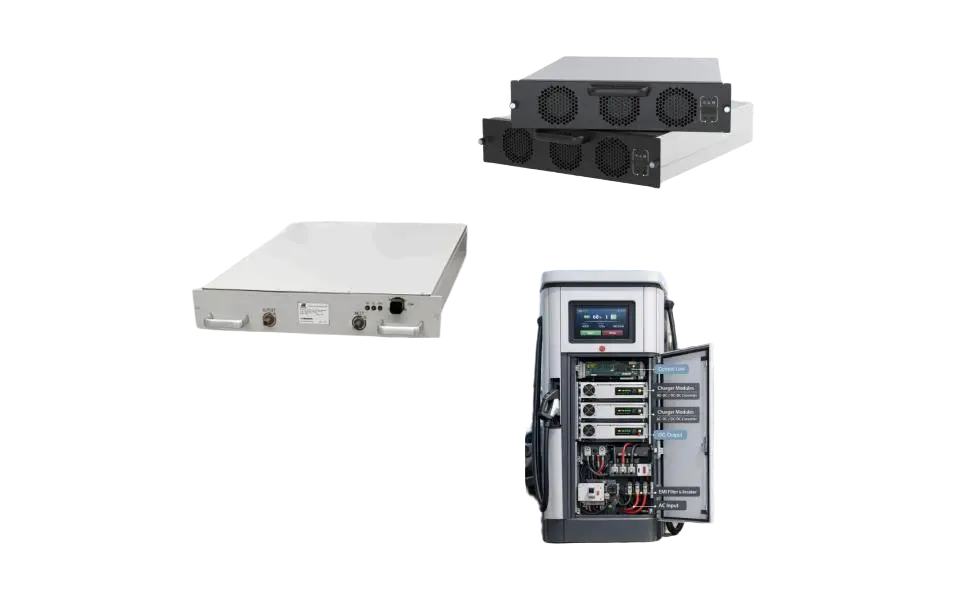
MIDA New Energy specializes in EV charger power modules, offering 20kW–60kW standard modules, 40kW–125kW liquid-cooled modules, 30kW–62.5kW bidirectional modules, and 20kW–45kW V2G charging modules.

Quality Management
Automotive Certified
Our complete manufacturing range spans critical charging components to macro-level infrastructure nodes.
High-efficiency conversion components
Interfacing systems and thermal management
Turnkey fleet & public station infrastructure
Integrated energy storage & PV buffering
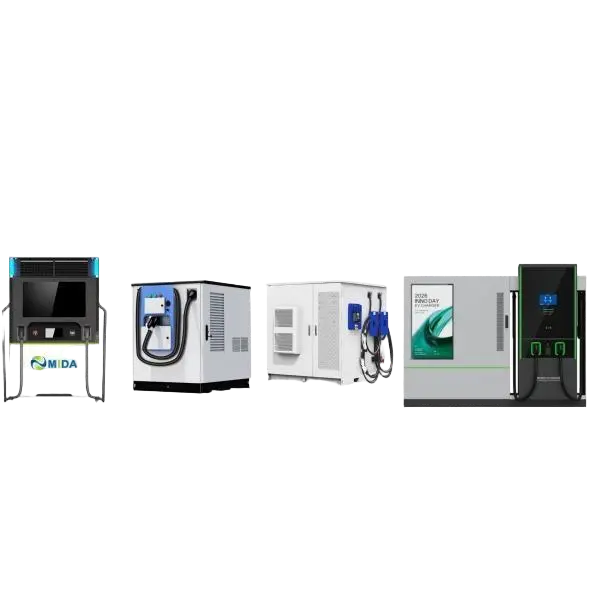
Standard destination charging infrastructure
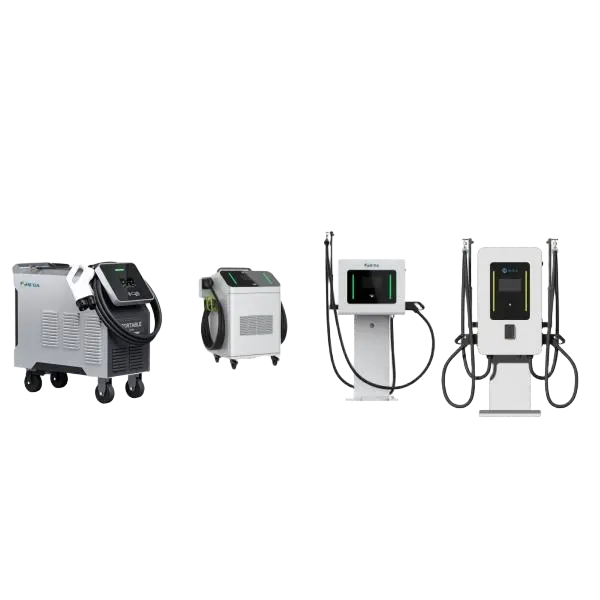
Large scale power cabinets and batteries
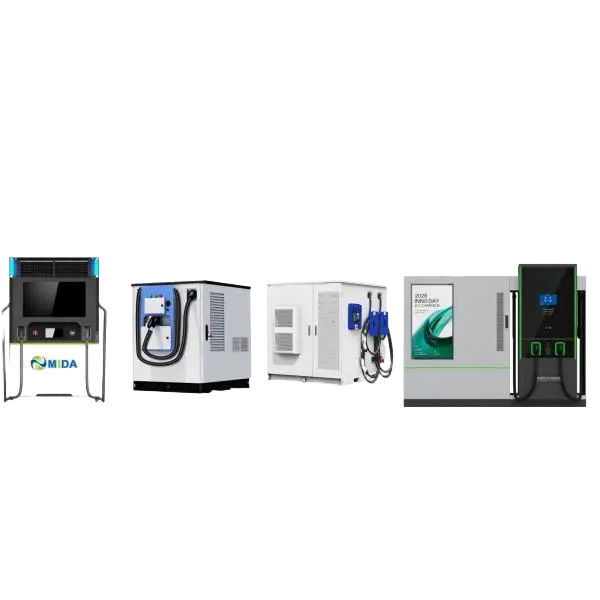
As standard automotive architectures pivot from 400V battery systems to 800V and 1000V high-voltage platforms, DC fast chargers must adapt. The current paradigm demands chargers capable of maintaining flat efficiency curves across broad output voltage windows (typically from 150V DC up to 1000V DC). Industry-leading systems achieve this using wide-bandgap (WBG) semiconductors, specifically Silicon Carbide (SiC) MOSFETs. SiC devices drastically reduce switching losses, lower heat dissipation, and yield overall power module conversion efficiencies of over 96.5%.
Traditional charging systems utilize static power splitting (e.g., dedicated 60kW lines to two ports). Next-generation 120kW stations use dynamic matrix switching. In this setup, the unit evaluates the state of charge (SoC) and battery temperature of each connected vehicle via the vehicle-to-grid communication channel. The charger then shifts individual 30kW modules to the vehicle that can accept the highest current. This dynamic modulation reduces overall charge times by up to 20% compared to legacy split configurations.
With massive fleets transitioning to electric drivetrains, the concept of the EV as a mobile energy storage unit is becoming reality. Bidirectional charging modules (using V2G standards such as ISO 15118-20) allow fleet operators to utilize their vehicle depots as distributed virtual power plants (VPPs). During periods of peak electricity pricing, the charger can draw energy back from the vehicle fleets to support grid stability, generating passive revenue streams for commercial operators.
Keep up with the latest insights from Mida Group's technological discoveries and international projects.
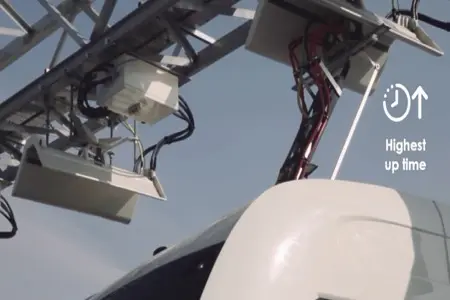
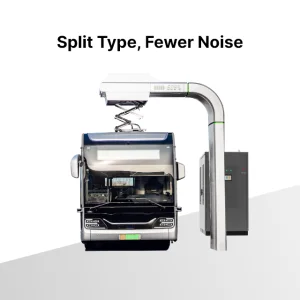
What are the advantages of an e-bus pantograph dome? In contrast to classic plug-in charging systems, e-bus pantograph systems offer automated, hands-free high-power connections designed for urban public transport networks.
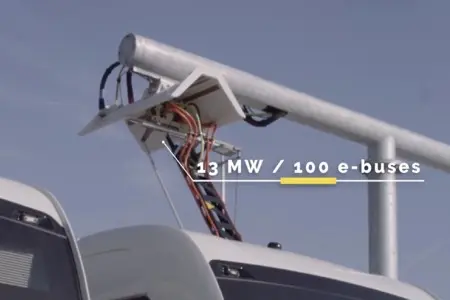
How long does it take to charge with an e-bus pantograph? The charging time depends heavily on the battery capacity and the dynamic output of the overhead system, typical of high-current depots.
How to Install the Pantograph Up Charger System Dome for Electric Bus. Step-by-step structural guidelines, alignment tolerances, and safety calibrations for civil engineers and transit operators.
Premium chargers supporting multiple standards, dynamic configurations, and high reliability for global utility systems.

Providing direct answers to crucial engineering, utility, and procurement questions regarding fast charging nodes.