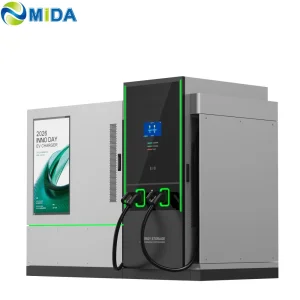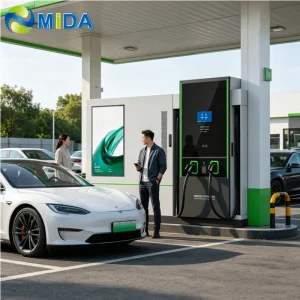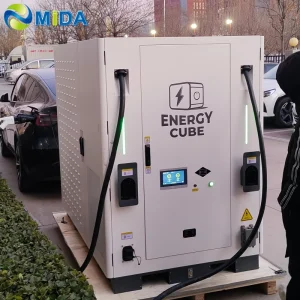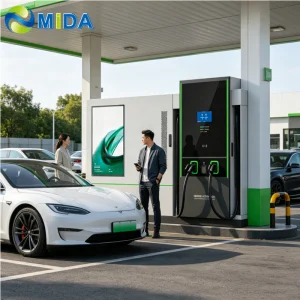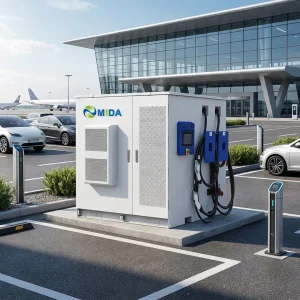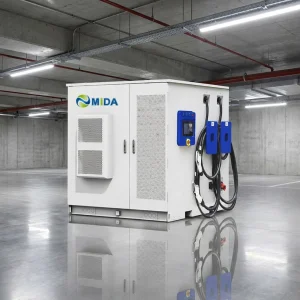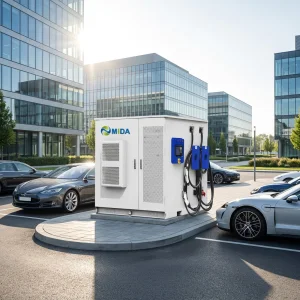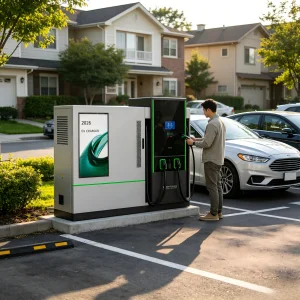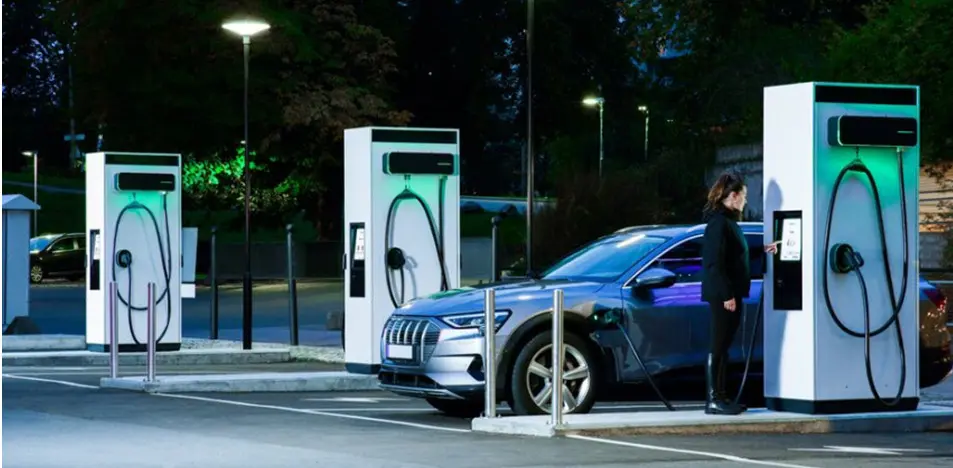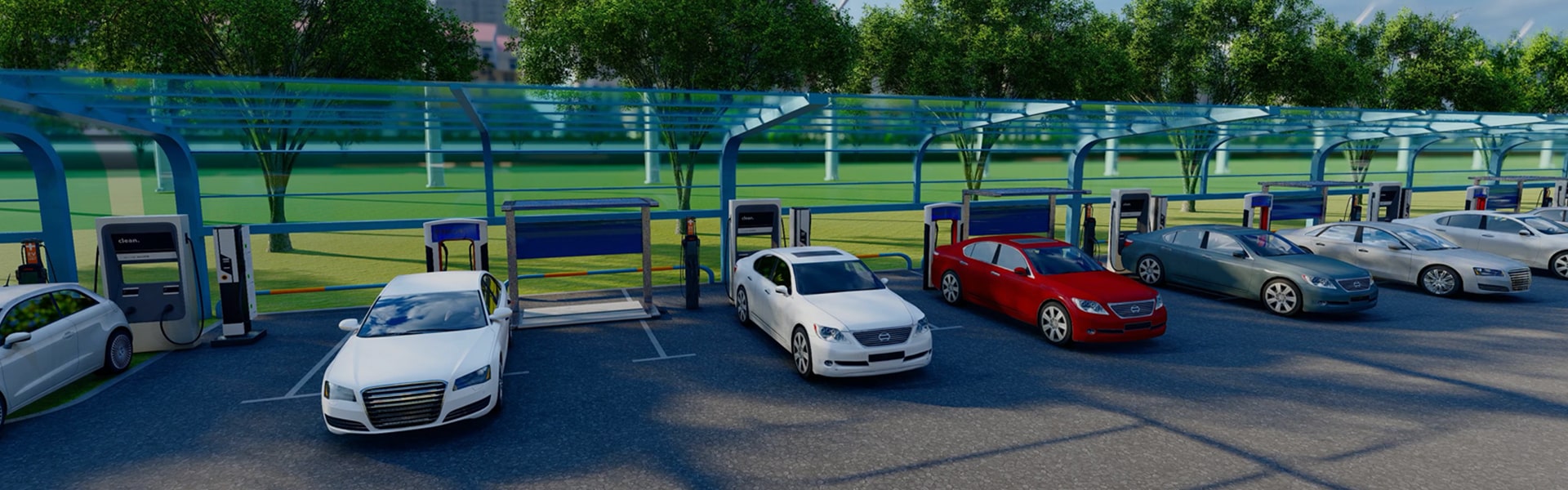
DC Charger Station Suppliers & Factories for the Netherlands Market

High-power DC Fast Chargers & Integrated Battery Energy Storage Charging Station (BESS) solutions optimized for the Dutch grid infrastructure

Send Inquiry Now

Navigating Netcongestie: The Future of Dutch EV Infrastructure

Analysis of BESS-integrated DC fast charging as the prime remedy for the grid capacity constraints in the Netherlands.

The Netherlands represents one of the most mature electric vehicle (EV) markets in Europe. However, the rapid electrification of heavy-duty transport, delivery fleets, and public mobility is colliding with a critical local challenge: Netcongestie (grid congestion). Transmission system operators (TSOs) and distribution system operators (DSOs) like TenneT, Liander, Enexis, and Stedin are increasingly declaring capacity limits. In major logistical hubs and industrial parks, waiting times for a grid connection upgrade can range from two to seven years.
2-7 Yrs
Grid Connection Wait Time
>70%
Peak Shaving Efficiency
OCPP 2.0
Smart Protocol Standard
Up to 2MW
Megawatt Charging Capability

Why Battery Energy Storage Systems (BESS) are Imperative

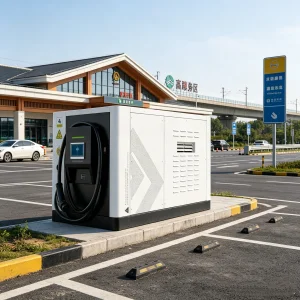
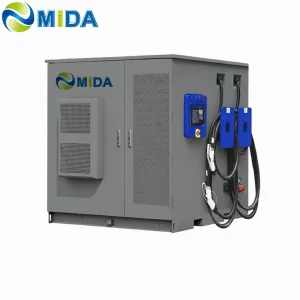
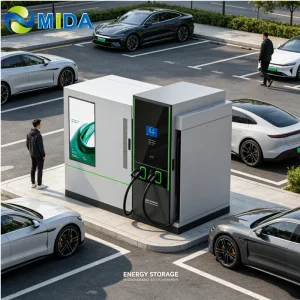
Integrated BESS charging systems function as an energy buffer. Instead of drawing high peaks directly from the medium-voltage network when an EV connects, the charging station continuously pulls a low, manageable current from the grid to replenish its local battery cells. When a vehicle requires high-power DC fast charging (e.g., 120kW to 480kW), the station discharges power from the internal battery modules. This dynamic balancing completely eliminates the risk of tripping local substations and enables operators to install high-performance charging infrastructure without wait times.

Key Technology Trends in the Dutch Charging Landscape

1. Bidirectional Power and V2G (Vehicle-to-Grid): The Dutch energy market relies heavily on dynamically priced contracts. Incorporating bidirectional energy modules allows charging stations to store cheap solar energy during midday, or feed energy back into the facility during peak tariff periods.

2. High-Power Liquid-Cooled Infrastructure: As heavy transport transitions to electric, liquid-cooled charging cables and modules are replacing conventional air-cooled hardware. This reduces heat dissipation limits, ensuring continuous 500A+ charging curves for electric trucks.

Welcome to MIDA GROUP

Shanghai Mida Cable Group Ltd. operates through its wholly owned subsidiaries: Shanghai Mida EV Power Co., Ltd., Shenzhen Mida EV Power Co., Ltd., and Shanghai Mida New Energy Co., Ltd.
Mida Cable manufactures a comprehensive range of EV charging cables, including 16A–80A J1772 cables, 16A–63A IEC 62196-2 Type 2 cables, and DC fast charging cables: CCS1 (80A–500A), CCS2 (125A–1000A), CHAdeMO (125A–300A), GBT (200A–1000A), and NACS connectors (250A–600A).
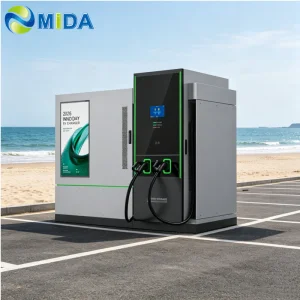
MIDA EV Power produces a full lineup of EV charging stations, such as 7kW–50kW mobile chargers, 3.6kW–7.2kW portable DC chargers, 360kW–1440kW split-type DC fast chargers, 20kW–50kW wall-mounted DC chargers, and 60kW–480kW floor-standing DC fast charging stations.
MIDA New Energy specializes in EV charger power modules, offering 20kW–60kW standard modules, 40kW–125kW liquid-cooled modules, 30kW–62.5kW bidirectional modules, and 20kW–45kW V2G charging modules.
Mida Group Certification and Standards Logo

China Factory 4.0: Manufacturing Excellence & Supply Resilience

Why global procurement departments choose Mida Group for certified, vertically-integrated industrial hardware.

In the BESS and high-power charging sector, reliability and supply chain agility are paramount. Mida Group's China-based production facilities leverage the principles of Industry 4.0 to deliver exceptional efficiency, end-to-end component traceability, and stringent quality control. By maintaining vertical integration—manufacturing our own cables, liquid-cooled connectors, bidirectional power modules, and localized energy management software—we eliminate common third-party dependency bottlenecks. This permits tailored adjustments for European compliance requirements, such as special grid-coupling protection (G99/G100 equivalents), CE certification, and TUV safety alignments.

Main Product Lines & Engineering Capacity

🔋

BESS Charging Stations & Energy Storage

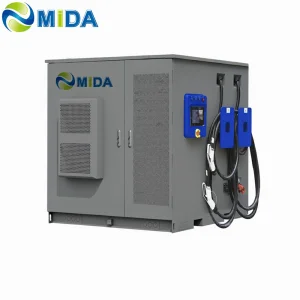
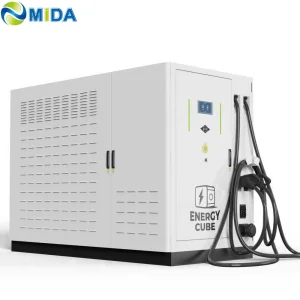
  • 15kW ~ 480kW Mobile BESS Charging Stations
  • 60kW ~ 400kW Integrated BESS Charging Piles
  • 65kWh ~ 200kWh Emergency Rescue Charging Stations
  • 165kWh Automated Charging Robots
  • 800kWh ~ 2000kWh Solar Energy Charging Systems

DC Fast Charging Systems

  • 7kW ~ 60kW Mobile DC Charging Stations
  • 20kW ~ 80kW Wall Mounted DC Charging Stations
  • 60kW ~ 480kW Floor Mounted Charging Stations
  • 60kW ~ 240kW Advertising Charging Stations (43" & 55")
  • 600kW ~ 1080kW Liquid Cooled Charging Stations
  • 360kW ~ 1680kW Split Type DC Charging Stations
🔌

DC Connectors & Liquid Cooling Units

  • 500A 600A CCS1 & CCS2 & GBT Connectors
  • 125A 250A 300A 350A NACS & CHAdeMO Connectors
  • 1500A MCS Connectors & CHAOJI Connectors
  • 3.5kW 4.5kW 6kW 9kW Integrated Liquid Cooling Units
  • 2.4kW 3.5kW Split Type Cooling Units
  • 25kW ~ 72kW Cooling Units for HPC Charging
⚙️

EV Charging Power Modules

  • 30kW - 80kW AC/DC EV Charger Modules
  • 30kW - 60kW DC/DC EV Charger Modules
  • 40kW - 125kW Liquid Cooled Power Modules
  • 20kW - 45kW V2G Power Modules
  • 30kW - 60kW MPPT Power Modules
  • 20kW - 62.5kW Bidirectional AC/DC Modules

Localized Application Scenarios in the Netherlands

Engineered specifically to solve real-world infrastructure problems faced by Dutch enterprises.

Logistics & Truck Depots

Fleet operators in the Port of Rotterdam need rapid electrification of heavy-duty trucks. Our 2MWH 960kW BESS Integrated Stations store grid energy off-peak and discharge at Megawatt scale to power trucks overnight, bypassing regional grid constraints.

Agri-Greenhouses & Solar PV

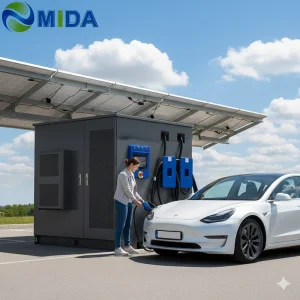
Dutch greenhouse operations with massive solar panel installations utilize our MPPT-integrated BESS stations. They harvest solar energy directly without AC/DC conversion losses and feed EV charging hubs or the public grid during peak tariff hours.

Highway Rest Areas

For charging operators on busy arterial routes (A1, A2, A4), deploying liquid-cooled high-power DC chargers is simplified. Integrated batteries act as cushions, avoiding the need for expensive medium-voltage transformers.

Custom Modular Component Configurator

Mix and match components to design local, customized systems compliant with Dutch electrical standards.
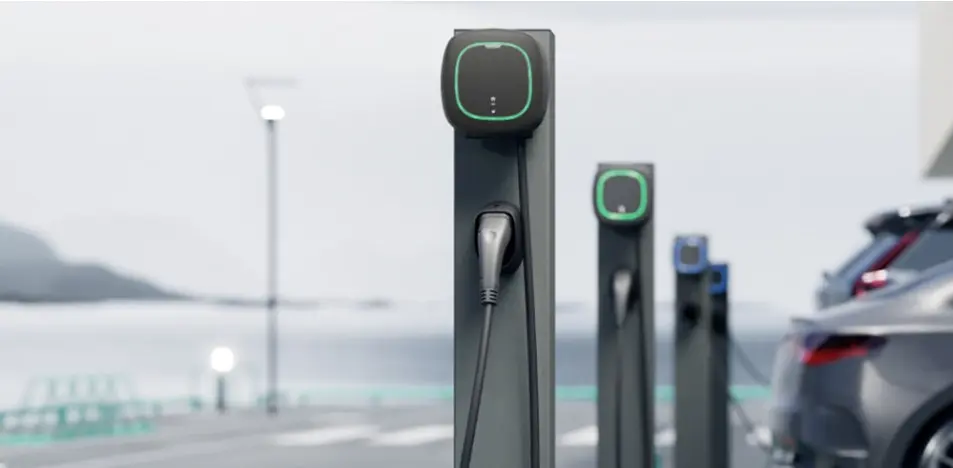
Wall-Mounted/Mobile EV Charger

Wall-Mounted/Mobile EV Charger

7kW 20kW 30kW 40kW 60kW 80kW

Flexible Power Deployment View More →
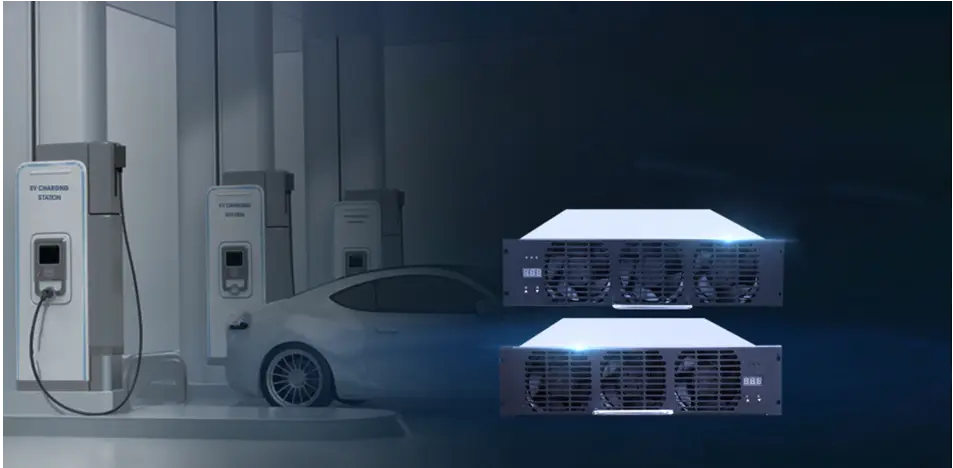
DC Charger Station

DC Charger Station

60kW-480kW 360kW-1440kW

High-Power Charging View More →
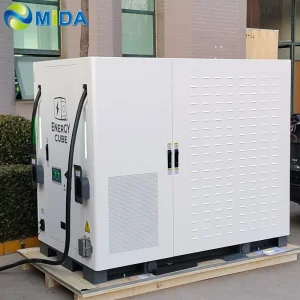
BESS Charging Station

BESS Charging Station

60kWh 261kWh 418kWh 625kWh 2MkWh

Peak Shaving Systems View More →

Corporate News & Transit Engineering

Technical updates regarding E-Bus infrastructure, pantograph chargers, and regional deployments.

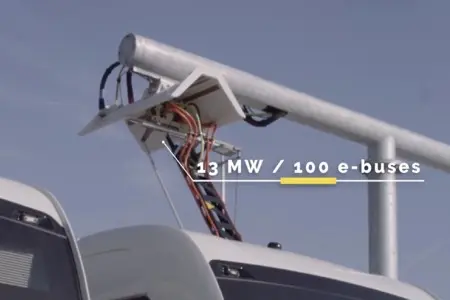
E-Bus Pantograph Dome Advantages
What are the advantages of an e-bus pantograph dome? In contrast to classic plug-in charging systems, e-bus pantograph stations facilitate hands-free opportunity charging during standard bus dwell times.
Charging Time with E-Bus Pantograph
How long does it take to charge with an e-bus pantograph? The charging cycle is highly dependent on battery chemistry and the active voltage limit, often delivering rapid top-offs in 5 to 15 minutes.
Installing Pantograph Up Charger System Dome
How to Install the Pantograph Up Charger System Dome for Electric Buses? Setting up an inverted pantograph dome involves precise integration with the city grid network and local optical positioning software.
Industrial Charging Solutions Factory Floor Layout

Frequently Asked Questions (FAQ)

Answers to technical and regulatory queries regarding BESS and DC charging implementation in the Netherlands.

What are the Dutch compliance and grid safety certifications required for BESS chargers? +
For deployment in the Netherlands, charging structures and battery storage solutions must meet the CE directive, low voltage directive (LVD), electromagnetic compatibility (EMC) regulations, and the safety specifications outlined in EN 61851-1 and IEC 62477-1. Grid-tied BESS installations are required to satisfy local grid codes (including EN 50549-1) to ensure safe utility decoupling in the event of grid instability.
How does peak shaving mitigate the effects of "Netcongestie" in local logistics centers? +
Peak shaving acts as a demand buffer. If a logistics facility is capped at a 100kW grid connection but needs to charge multiple trucks at 300kW, the integrated BESS storage system fills the gap. The batteries recharge during low-activity windows at under 100kW, and discharge simultaneously with grid power to deliver high-capacity charging when fleets plug in.
What battery chemistries are used in Mida Group's BESS charging systems? +
We use premium Lithium Iron Phosphate (LiFePO4 / LFP) cells. LFP is chosen for its superior safety, thermal stability, and extended life cycle performance, offering over 6000 cycles at 80% Depth of Discharge (DoD), which is crucial for high-usage commercial EV applications.
Are these BESS charging stations compatible with solar PV setups? +
Yes. Our smart energy management systems feature built-in bidirectional MPPT DC-DC modules. This allows for direct DC-to-DC routing of power from solar panels to the battery storage units, maximizing efficiency by eliminating typical AC conversion losses.
What communications protocols are supported (OCPP / Modbus)? +
Mida Group charging stations natively support OCPP 1.6J and OCPP 2.0.1. This ensures full compatibility with commercial fleet management platforms and EMS software across Europe. Modbus TCP/RTU is also available for integration with industrial building management systems.

Accelerate Your EV Fleet Rollout

Consult with our application engineers for a custom quote on customized charging and storage systems.
Send Inquiry Now