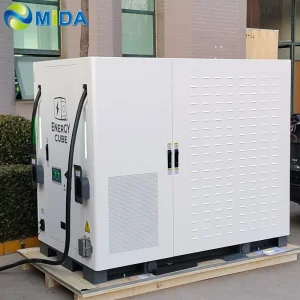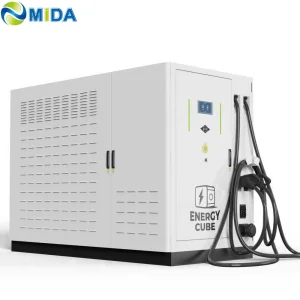
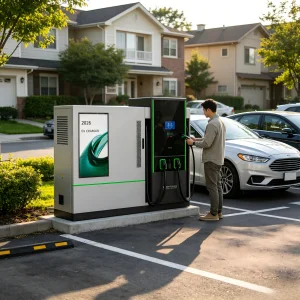
Explore high-power Battery Energy Storage System (BESS) DC charging stations engineered to circumvent peak grid constraints in commercial and industrial settings across Austria.
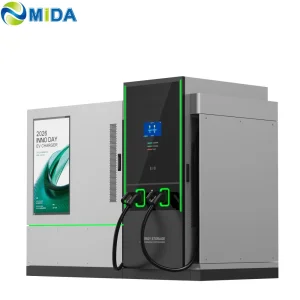
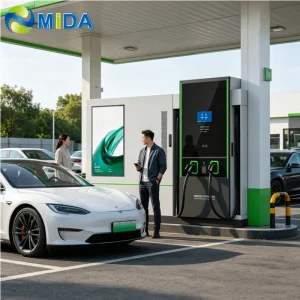
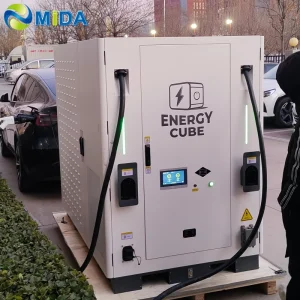
Analyzing the Technical Synergy between Battery Energy Storage Systems (BESS) and High-Capacity DC Fast Charger Stations in Central Europe.
Austria is currently executing a ambitious energy transformation program structured under the Renewable Energy Expansion Act (EAG - Erneuerbaren-Ausbau-Gesetz), targeting 100% renewable electricity generation by 2030. In lockstep, the deployment of light-duty and heavy-duty electric vehicles (EVs) has accelerated dramatically across commercial transport, urban logistics, and public fleets. Cities like Vienna, Linz, Graz, and Salzburg are leading initiatives to establish low-emission logistics zones, which demands a massive increase in ultra-fast DC charging infrastructure.
However, local Austrian grid architectures frequently encounter physical bottlenecks. Peak power extraction from municipal grids triggers high load-peak tariff charges (Netznutzungsentgelte), significantly impacting the Total Cost of Ownership (TCO) for charging station operators. Standard DC chargers pulling 150kW to 480kW can disrupt localized distribution networks, requiring costly transformer upgrades. In this landscape, BESS-integrated DC charging stations have emerged as the most technologically viable path, acting as peak-shaving buffers that accumulate energy during low-tariff hours and discharge it rapidly to support high-current vehicle requirements.
"By decoupling grid draw from vehicle charging rates, BESS-backed stations reduce peak demand costs by up to 60% in Austrian alpine distribution regions, stabilizing local voltages and enabling fast charging where transformer capacity is physically restricted."
On a global scale, the integration of EV charging infrastructure with localized energy storage systems is shifting from pilot programs to large-scale infrastructure assets. This trend is driven by two global macro factors: grid capacity constraints and the rise of distributed solar generation. In regions such as Germany, California, and the Nordics, the deployment of standard high-power chargers without buffering leads to localized voltage drops and network instability.
Globally, energy management systems (EMS) are migrating towards smart Virtual Power Plants (VPPs) utilizing Bidirectional AC/DC converters (V2G, vehicle-to-grid) and BESS units. Integrated solar-plus-storage-plus-charging configurations are becoming the de facto standard for highway service corridors, allowing operators to arbitrage energy price fluctuations by charging integrated lithium iron phosphate (LFP) chemistry cells when spot-market prices are zero or negative, and feeding it back during high-demand peak charging phases.
China remains the uncontested center of gravity for the battery energy storage supply chain, housing over 75% of the world's LFP cell manufacturing capacity. Companies like MIDA Group leverage this supply chain density to provide unrivaled cost efficiency, scale, and engineering iteration speeds. By integrating lithium cell supply, battery management system (BMS) logic development, liquid cooling unit engineering, and power module production within a cohesive industrial ecosystem, Chinese manufacturers reduce lead times for custom BESS systems from months to weeks.
MIDA Group's Shanghai and Shenzhen facilities deploy highly automated robotic assembly lines for cell packing, module integration, and precision validation. This high degree of manufacturing maturity guarantees tight tolerances in cell balancing, thermal runaway mitigation, and overall system longevity. Through centralized supply channels and optimized engineering cycles, we pass substantial cost advantages to European distributors, enabling them to offer premium, CE-certified BESS units at highly competitive capital expenditure levels.
Shanghai Mida Cable Group Ltd. operates through its wholly owned subsidiaries: Shanghai Mida EV Power Co., Ltd., Shenzhen Mida EV Power Co., Ltd., and Shanghai Mida New Energy Co., Ltd.
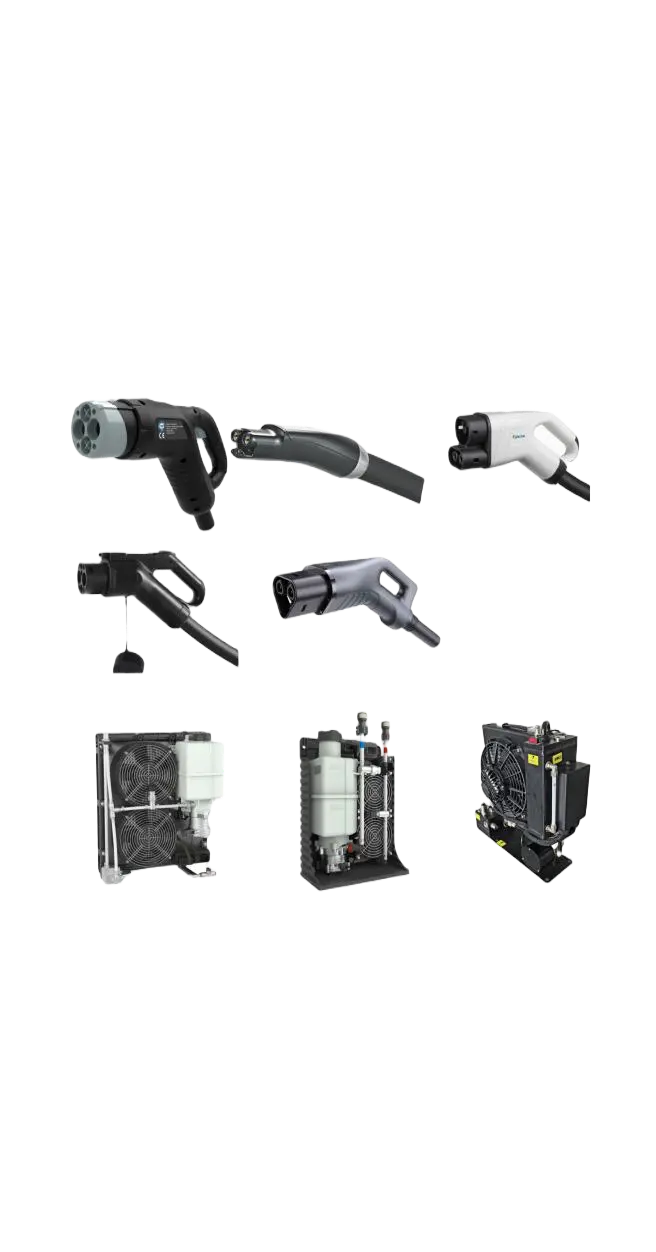
Mida Cable manufactures a comprehensive range of EV charging cables, including 16A–80A J1772 cables, 16A–63A IEC 62196-2 Type 2 cables, and DC fast charging cables: CCS1 (80A–500A), CCS2 (125A–1000A), CHAdeMO (125A–300A), GBT (200A–1000A), and NACS connectors (250A–600A).
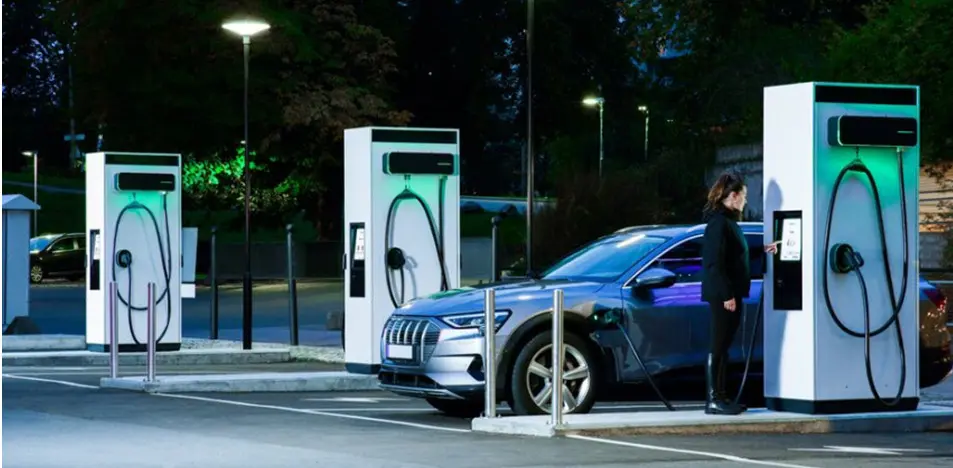
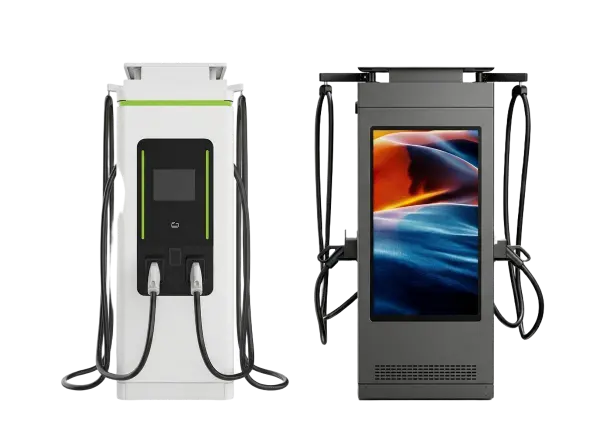
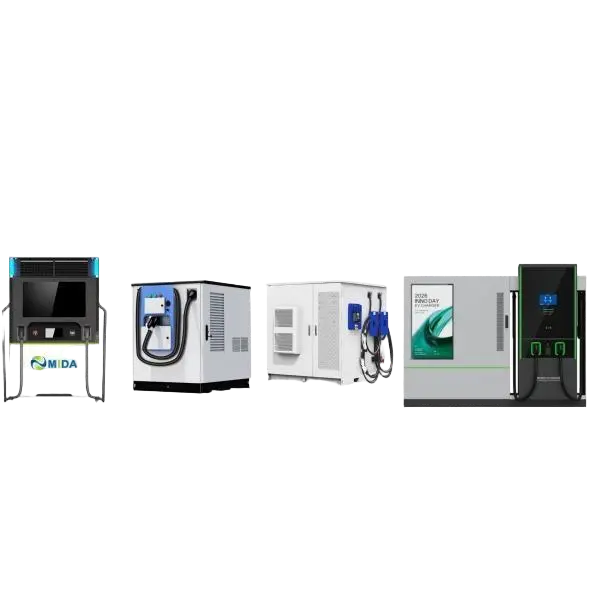
MIDA EV Power produces a full lineup of EV charging stations, such as 7kW–50kW mobile chargers, 3.6kW–7.2kW portable DC chargers, 360kW–1440kW split-type DC fast chargers, 20kW–50kW wall-mounted DC chargers, and 60kW–480kW floor-standing DC fast charging stations.
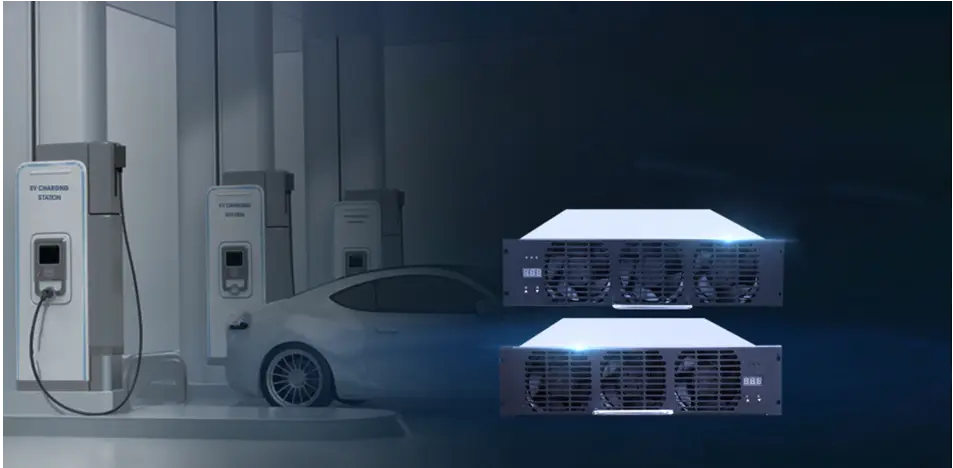
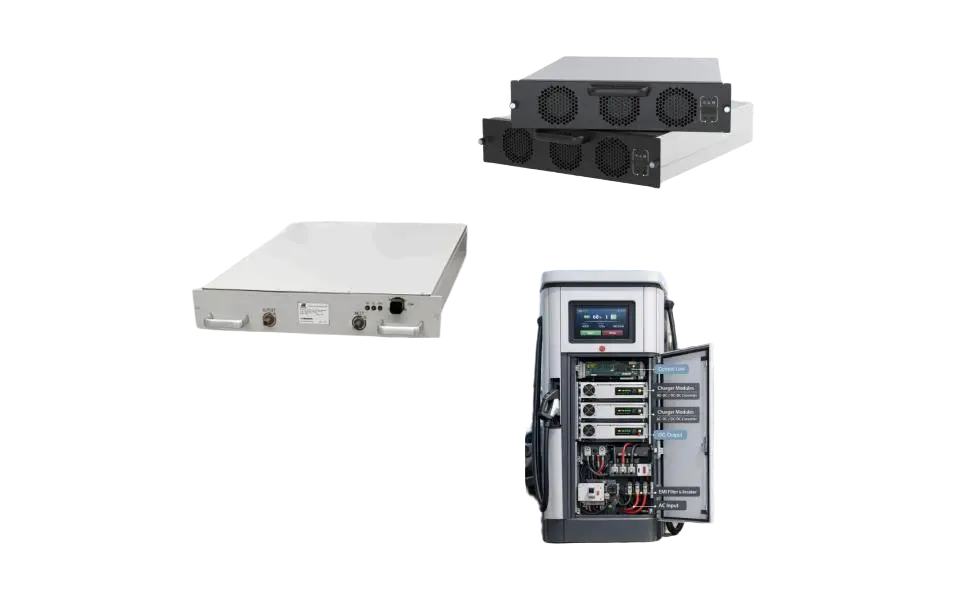
MIDA New Energy specializes in EV charger power modules, offering 20kW–60kW standard modules, 40kW–125kW liquid-cooled modules, 30kW–62.5kW bidirectional modules, and 20kW–45kW V2G charging modules.

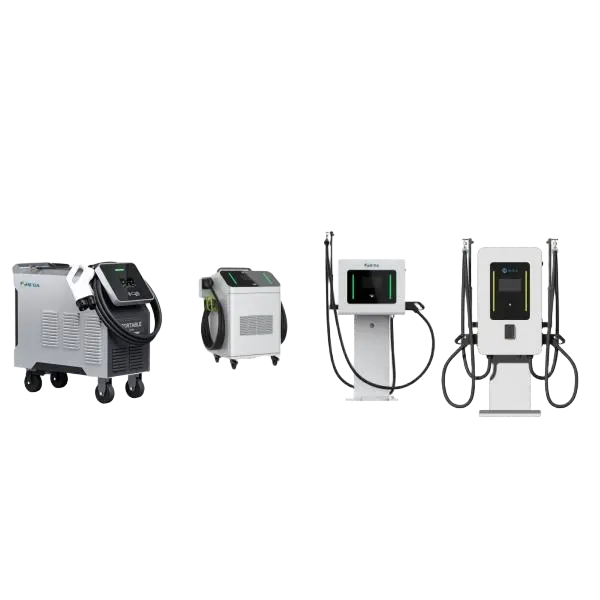
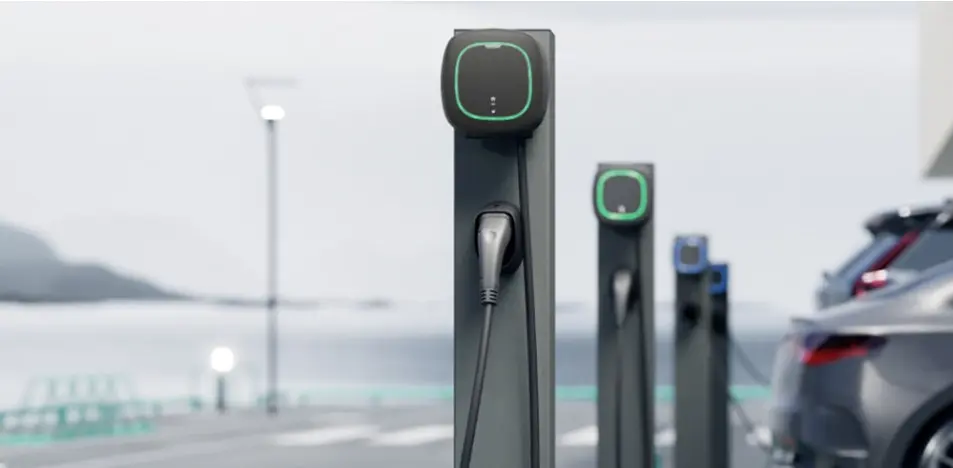
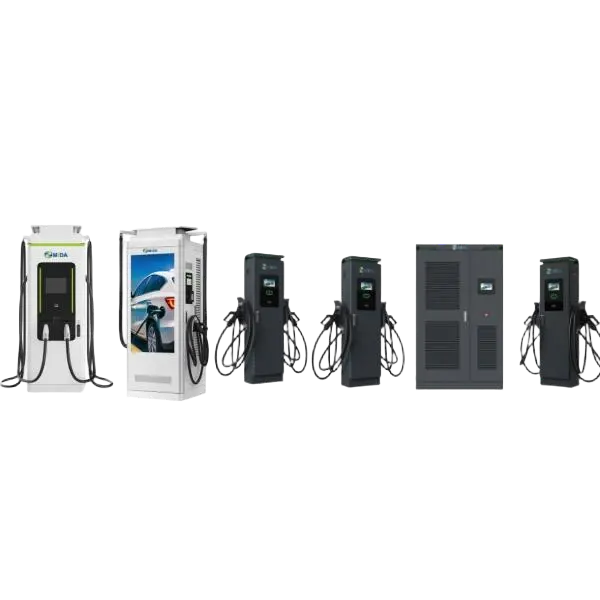
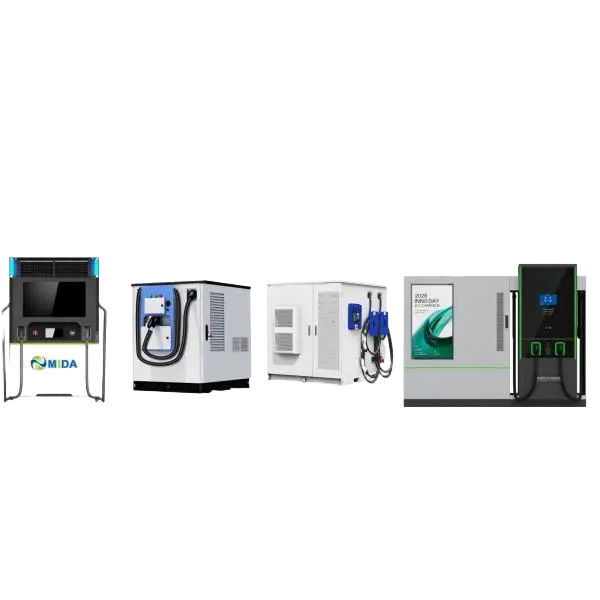
Explore our core business segments providing foundational components and turnkey systems globally.
Stay up to date with MIDA Group's technical research, transit installations, and electric bus pantograph projects.
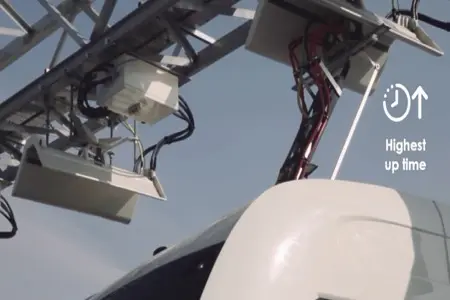
In contrast to classic plug-in charging systems, e-bus pantograph dome architectures enable hands-free automatic high-current power transfer directly from overhead gantries, minimizing depot foot-print.
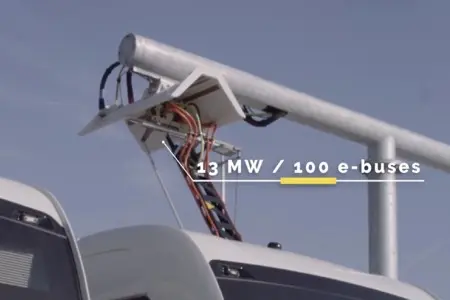
The charging time depends on the battery capacity and output energy levels. Megawatt level connections via pantograph chargers can bring heavy duty transit buses to 80% charge state in under 10 minutes.
Installing a “Pantograph Up” system dome for electric buses involves high structural alignment accuracy and integrated communication interfaces (ISO 15118 compliant) to trigger automation sequences safely.
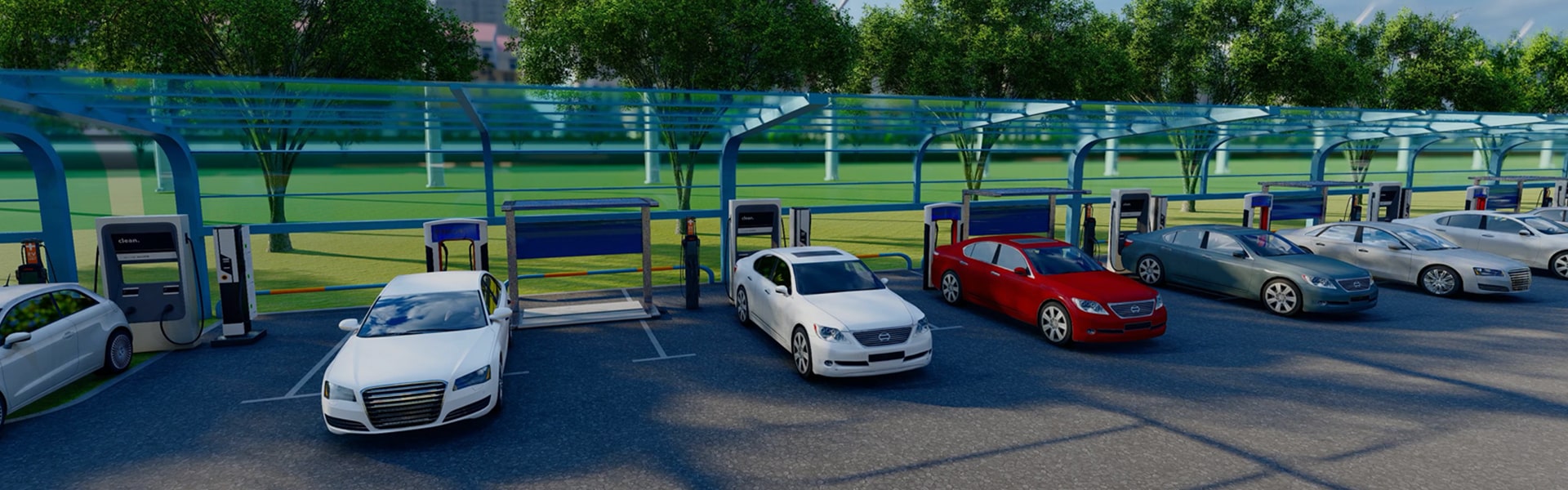
Key standards, safety parameters, and software integrations required when executing commercial grid battery tenders.
Corporate engineering directors and public procurement managers require complete compliance documentation before deploying high-power electrical machinery. For Austria and the wider European Free Trade Area, hardware must bear the CE mark and conform to directives like the Low Voltage Directive (2014/35/EU) and Electromagnetic Compatibility Directive (2014/30/EU). In terms of specific EV standards, safety systems must comply with IEC 61851-1 (conductive charging systems) and IEC 61851-23 (DC fast charging).
Furthermore, integration with public grids in Austria (such as Netz NÖ or Wiener Netze) demands conforming to local TOR guidelines (Technische und Organisatorische Regeln für Betreiber und Benutzer von Netzen) and standard **ÖVE EN 50549** for generation units connected in parallel to distribution networks. Communication pathways must natively support standard open application interfaces like **OCPP 1.6J** or **OCPP 2.0.1** to ensure integration into existing charge point management software (CPMS) like Has·to·be, Greenflux, or Virta.
High-performance DC chargers generate intense thermal load during energy conversion. Air-cooled systems suffer from efficiency drops and accelerated component aging under high ambient temperatures or continuous heavy loads. MIDA Group specializes in **Liquid-Cooled Power Modules (40kW to 125kW)** and integrated liquid-cooling units, which restrict peak operating temperatures inside the power cabinet. This liquid-loop isolation shields sub-components from environmental pollutants, salt mist, and mountain condensation.
The stationary LFP (Lithium Iron Phosphate) cells within our BESS units undergo rigorous state-of-health (SoH) diagnostics managed by redundant battery management systems (BMS). LFP chemistry is selected due to its superior thermal stability, safety profile, and high cycle count (up to 6000 cycles at 80% Depth of Discharge). Liquid-cooled thermal management extends operational battery pack lifespans by up to 35%, ensuring high asset productivity over long-term municipal or private contracts.
The EV charger sector is progressing towards multi-megawatt hubs and intelligent dispatch nodes. Key trends include:
Complete selection of localized integration setups including high-voltage containment units, trailer setups, and bidirectional micro-grid chargers.
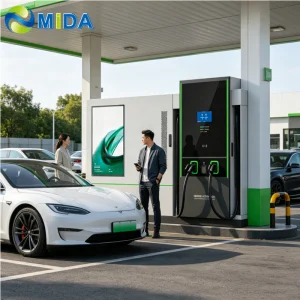
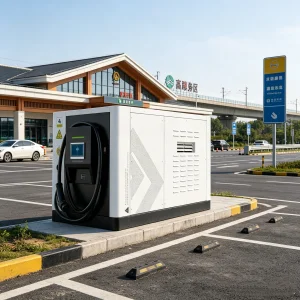
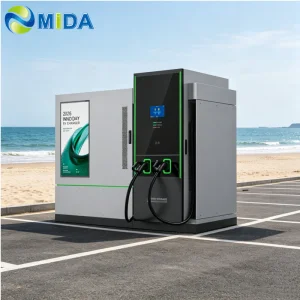
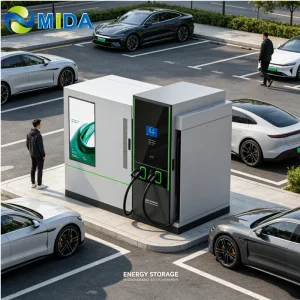
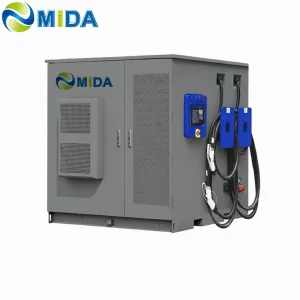
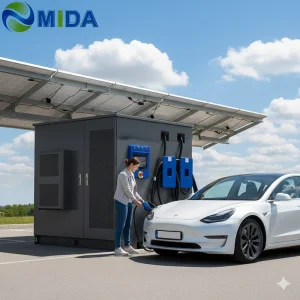
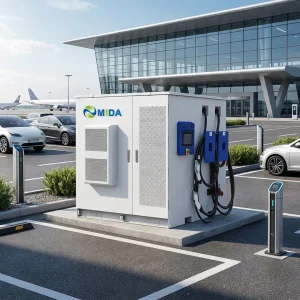
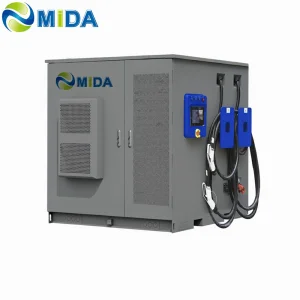
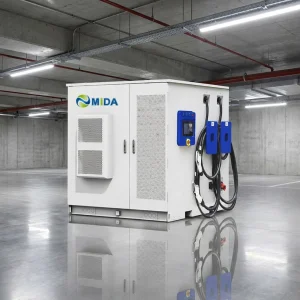
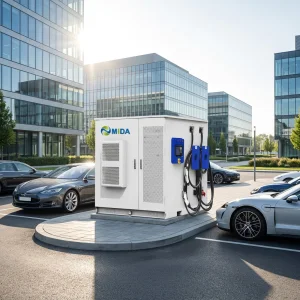
Get professional clarification on deployment limits, certification paths, and integration dynamics within the Central European market.
When an EV requests a high-power charge (e.g., 180kW), it draws directly from the integrated storage unit rather than the primary grid connection. The local connection remains restricted to a low baseline flow (e.g., 30kW). The BESS dynamically steps in during peak usage times to bridge the delta, recharging itself during low demand phases. This prevents grid voltage drops and expensive peak-demand penalties.
All electrical machines must comply with EU Directives and CE certification standards. Specifically, EV chargers must pass tests under IEC 61851-1 and IEC 61851-23. To operate legally within the Austrian public domain, connection licenses require complying with ÖVE/ÖNORM and TOR rules, which govern electromagnetic compatibility, galvanic isolation safety, and grid-feeding profiles.
Unlike air cooling, which relies on fans pulling dust, salt, and humidity into the power cabinet, liquid cooling isolates electronic components inside a sealed loop. Heat-transfer fluid dissipates heat efficiently, lowering thermal stress on the diodes and inductors. This increases unit lifetime, lowers noise emissions to near-silent levels, and guarantees continuous rated power delivery under extreme thermal cycles.
Yes, all MIDA systems feature OCPP 1.6J and OCPP 2.0.1 compliance. This permits integration with local building management systems (BMS), solar management modules, and commercial billing platforms (like Has·to·be or Greenflux) via open Ethernet, Wi-Fi, or LTE connections.
Our battery enclosures integrate multi-layered protection systems. This includes cell-level thermal runaway monitoring, independent fire suppressing aerosol blocks, gas detection sensors (detecting CO/H2 releases), and emergency manual shutoffs. LFP cell chemistry itself features high thermal stability compared to conventional NMC cells.
Consult with our engineering team for compliance documentation, custom BESS dimensioning, and localized quoting.
Send Inquiry Now