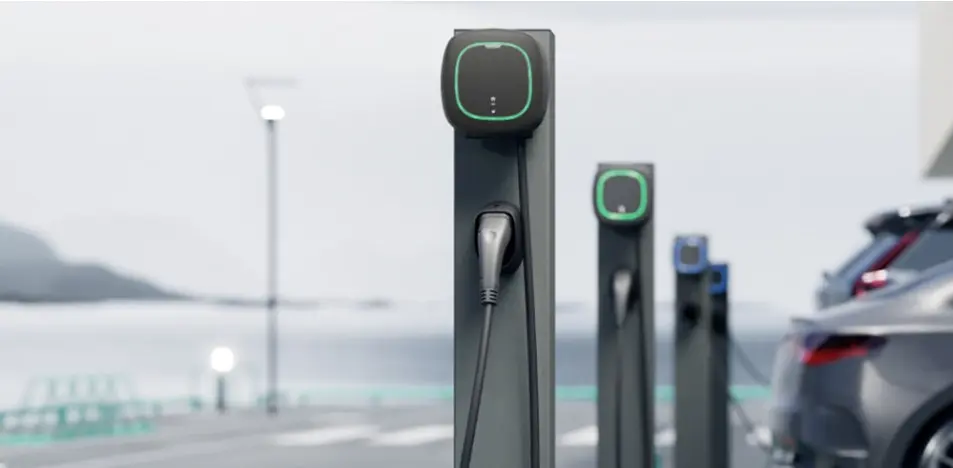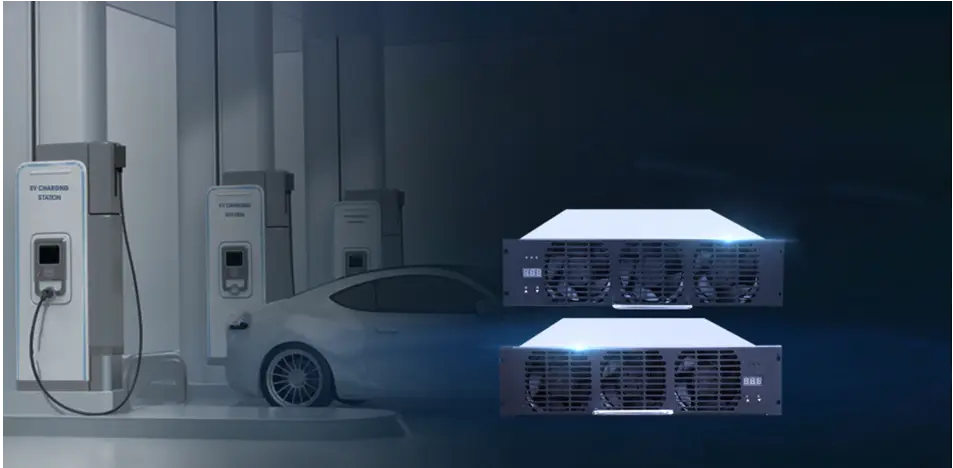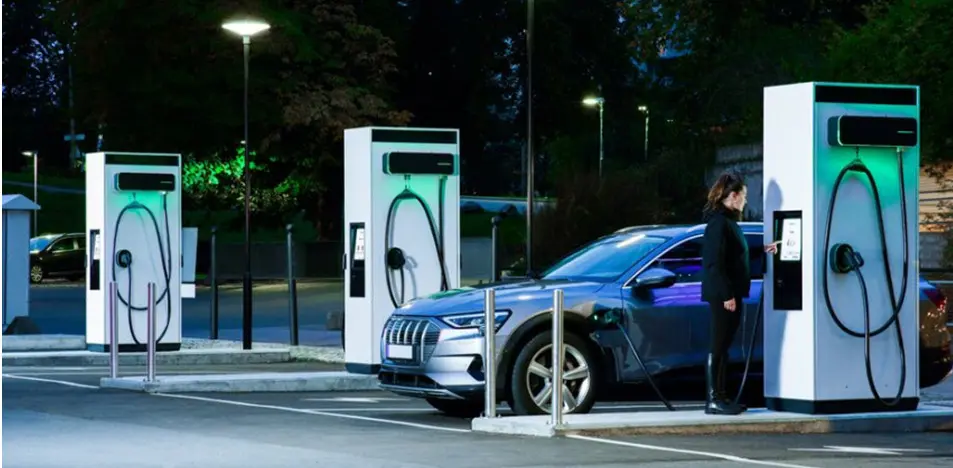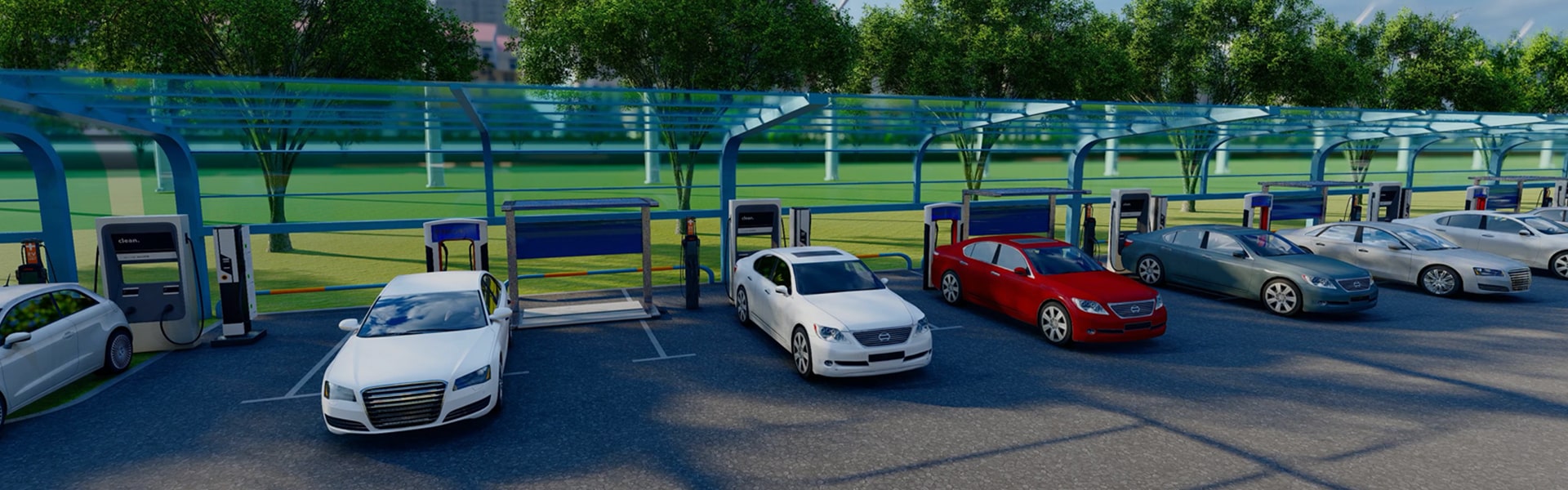
Featured smart mobile BESS systems engineered for immediate deployment in the Los Angeles metropolitan area.
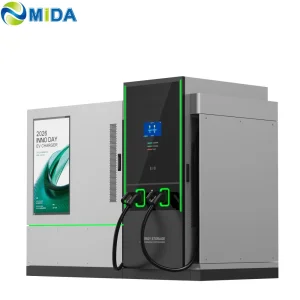
Integrated energy storage and fast charger design, mitigating local grid bottlenecks and peak demand tariffs.
View Specifications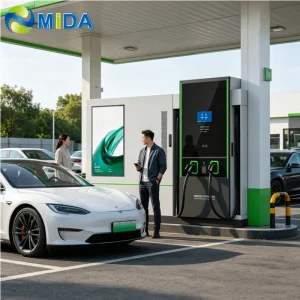
Perfect for commercial complexes and fleet depots requiring dual standard CCS2 & CHAdeMO integration.
View Specifications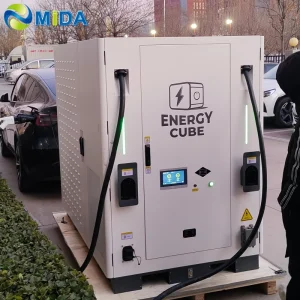
Mobile power trailer designed for roadside assistance, vehicle testing fleets, and emergency dispatch teams.
View Specifications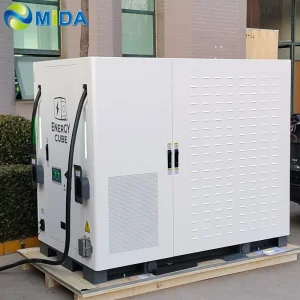
Leverage California's solar generation capacity with direct MPPT-coupled solar energy charging interfaces.
View SpecificationsLos Angeles is at the epicentre of the global electric vehicle revolution. As California accelerates towards its ambitious mandate of zero-emission light-duty car sales by 2035 and complete fleet electrification for medium- and heavy-duty vehicles, the pressure on local electrical grids has escalated to unprecedented levels. In metropolitan Los Angeles, commercial property developers, fleet operators, and industrial logistics hubs face massive challenges when seeking to install traditional high-power DC fast charging infrastructure. Interconnection delays, high utility upgrade costs, and prohibitive peak demand pricing under local utilities like LADWP and SCE have made traditional grid-dependent fast charging economically challenging.
Installing multiple 150kW or 350kW DC fast chargers in a localized depot frequently exceeds the immediate capacity of the utility distribution transformer. Under California Energy Commission (CEC) frameworks, upgrading transformers can take anywhere from 12 to 24 months, with costs often running into hundreds of thousands of dollars. Furthermore, peak demand charges (measured in $/kW) can make up to 50% of an commercial EV charging facility's monthly utility bill. BESS (Battery Energy Storage System) integrated charging stands out as the single most viable technology to solve these grid limitations.
By decoupling the power delivered to the EV from the power pulled directly from the utility grid, Mida's Battery Energy Storage Systems (BESS) offer a buffer. During off-peak periods, or when site energy demand is low, the internal storage batteries charge at a slow, controlled rate (e.g., 30kW–50kW AC grid connection). When an EV requests ultra-fast charging, the system discharges from both the battery pack and the grid simultaneously, delivering up to 180kW, 240kW, or even megawatt-level power without triggering utility peak-demand charges. This peak-shaving architecture drastically lowers operating costs while ensuring fleet vehicles charge at maximum speeds.
Providing high-precision hardware systems from the vehicle connection to megawatt energy systems.
Wall-Mounted/Mobile EV Charger (7kW 20kW 30kW 40kW 60kW 80kW)
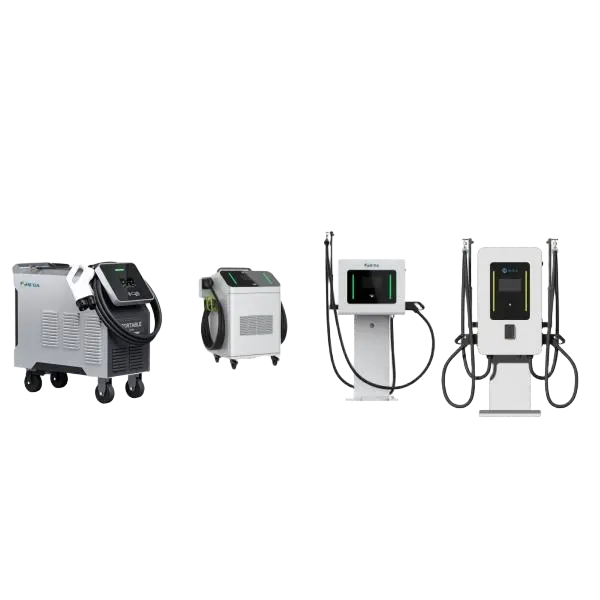
60kW-480kW 360kW-1440kW Ultra-Fast Chargers
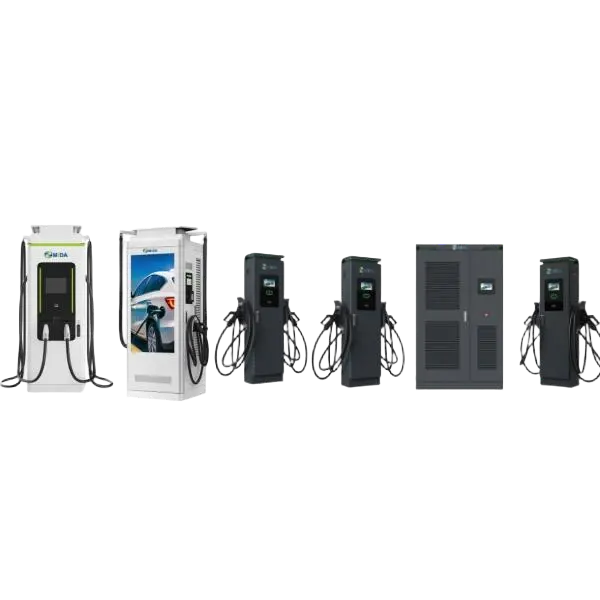
60kWh 261kWh 418kWh 625kWh 2MkWh Storage Hubs
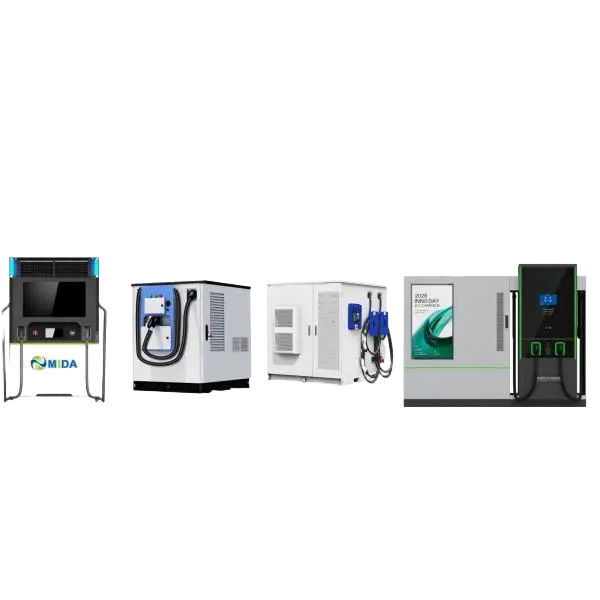
Shanghai Mida Cable Group Ltd. operates through its wholly owned subsidiaries: Shanghai Mida EV Power Co., Ltd., Shenzhen Mida EV Power Co., Ltd., and Shanghai Mida New Energy Co., Ltd.
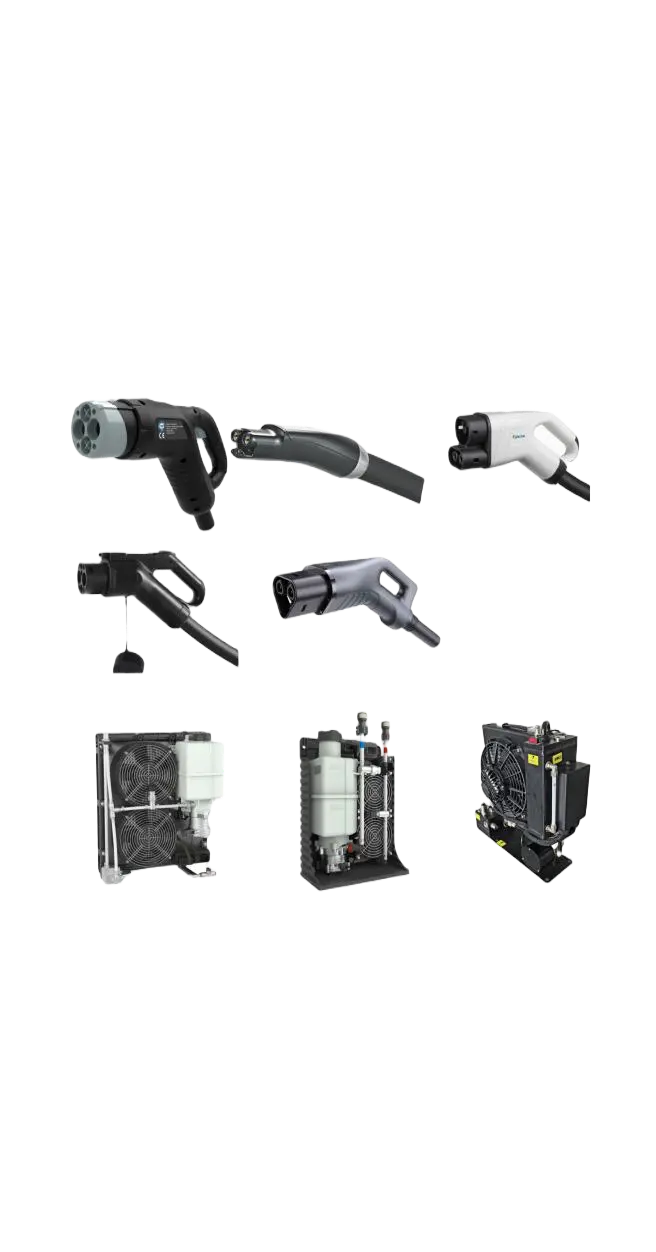
Mida Cable manufactures a comprehensive range of EV charging cables, including 16A–80A J1772 cables, 16A–63A IEC 62196-2 Type 2 cables, and DC fast charging cables: CCS1 (80A–500A), CCS2 (125A–1000A), CHAdeMO (125A–300A), GBT (200A–1000A), and NACS connectors (250A–600A).
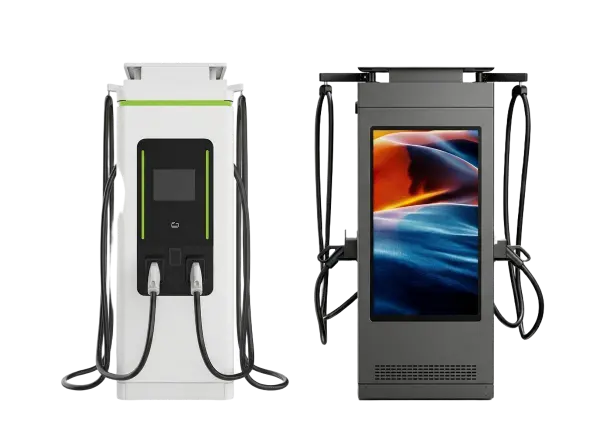
MIDA EV Power produces a full lineup of EV charging stations, such as 7kW–50kW mobile chargers, 3.6kW–7.2kW portable DC chargers, 360kW–1440kW split-type DC fast chargers, 20kW–50kW wall-mounted DC chargers, and 60kW–480kW floor-standing DC fast charging stations.
MIDA New Energy specializes in EV charger power modules, offering 20kW–60kW standard modules, 40kW–125kW liquid-cooled modules, 30kW–62.5kW bidirectional modules, and 20kW–45kW V2G charging modules.

In the highly competitive EV charging infrastructure space, production efficiency, supply chain stability, and component cost control are key to commercial success. As a leading vertically-integrated manufacturer, Mida Group implements advanced Industry 4.0 production principles across its factories in Shanghai and Shenzhen, delivering major advantages for global procurement departments:
Deploying charging equipment in Los Angeles requires compliance with a complex network of local, state, and national regulations. Our systems are engineered to integrate with local regulations, including:
NEMA 3R/4 Enclosures: Fully sealed against environmental factors, preventing dust, humidity, and coastal salt spray from damaging sensitive power electronics.
OCPP 1.6J & 2.0.1 Protocols: Allowing local fleet operators to integrate our systems with common US network management platforms like ChargePoint, EVgo, or AmpUp.
NACS Connector Integration: Featuring native support for the SAE J3400 North American Charging Standard, ensuring compatibility with Tesla and other US electric vehicle brands.
Engineered for system integrators, municipal engineering teams, and local charger station factories.
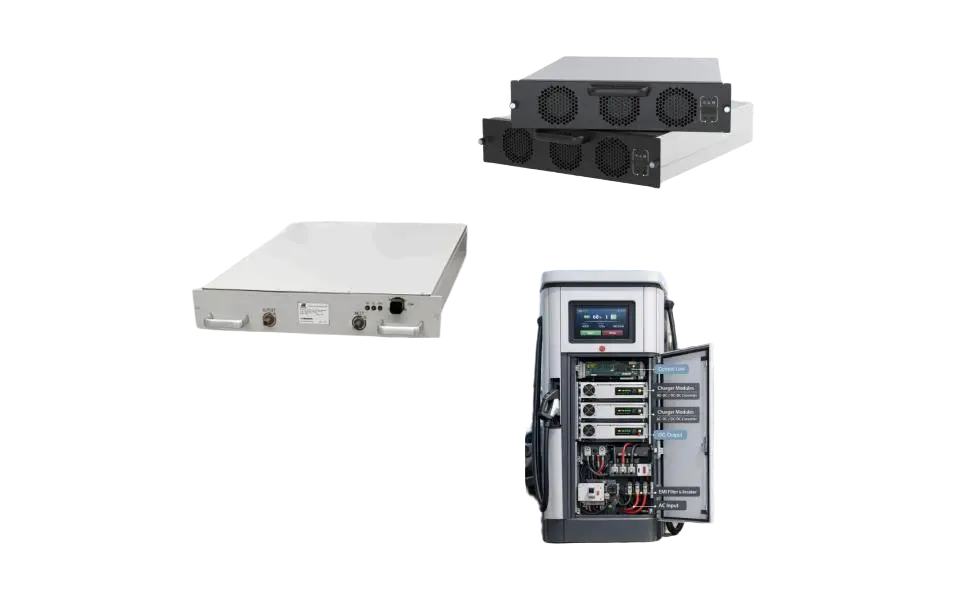
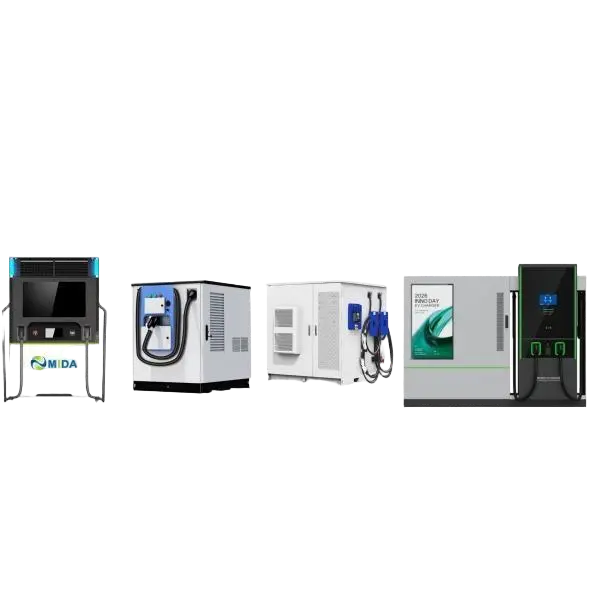
Southern California's unique economic geography creates diverse requirements for charging installations. Mida's modular DC charger and BESS integrations target key regional scenarios:
The transition of drayage trucks to zero-emission alternatives demands megawatt-scale power distribution. Deploying our liquid-cooled split-type DC systems (up to 1680kW capacity) combined with large-scale 2MWh BESS systems enables port logistics hubs to run high-speed charging schedules without overloading local SCE substations during peak morning and afternoon windows.
Multi-tenant commercial garages face strict electric utility capacity caps. By using Mida's smart integrated 241kWh/120kW BESS chargers, parking lot operators can add fast charging options without expensive service upgrades, generating revenue while supporting EV drivers.
For rural sites, regional highways, or temporary construction environments where direct utility tie-ins are unavailable, Mida's mobile off-grid solar EV charging stations—equipped with LFP energy storage and high-efficiency solar MPPT controllers—deliver reliable, emission-free charging powered by California's sunlight.
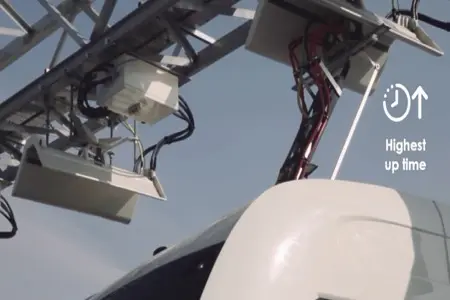
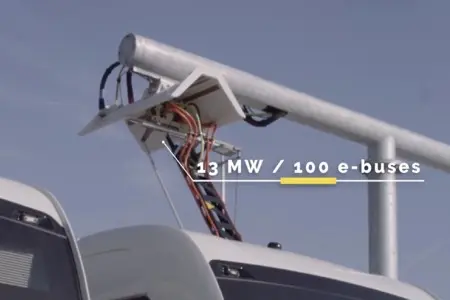
Stay informed on our latest advances in heavy vehicle transit charging and high-efficiency pantograph architectures.
Select industrial EVSE solutions designed to meet the electrical standards of California installations.
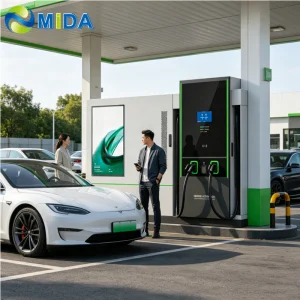
Equipped with CCS and NACS dual connectors, providing dynamic power sharing for multi-vehicle charging.
Specifications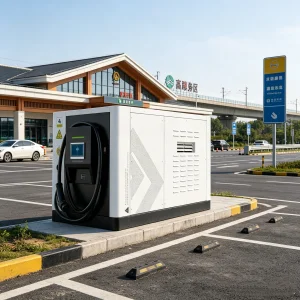
Compact design for dealerships, repair bays, and rapid parking-lot charging services.
Specifications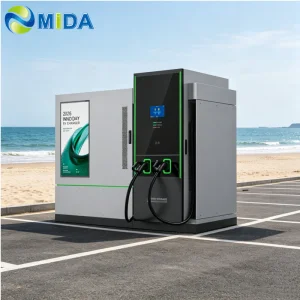
High-density liquid-cooled battery thermal management system ensures safety under high ambient temperatures.
Specifications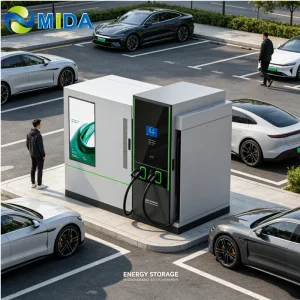
High-power station designed for commercial delivery fleets and fleet hubs.
Specifications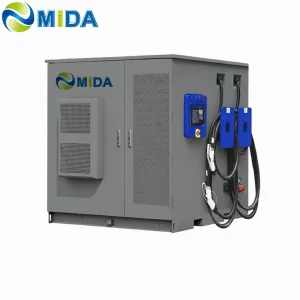
Megawatt-scale battery storage system designed for highway charging hubs and depot electrification projects.
Specifications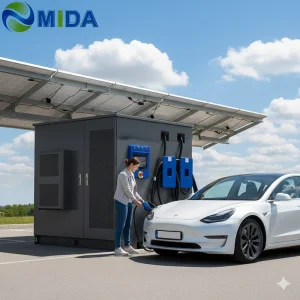
Ruggedized mobile energy trailer built to support emergency power restoration and utility grid shaving.
Specifications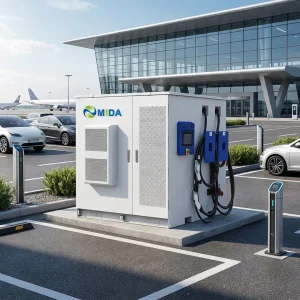
High-power mobile platform designed for rapid charger testing and seasonal fleet capacity demands.
Specifications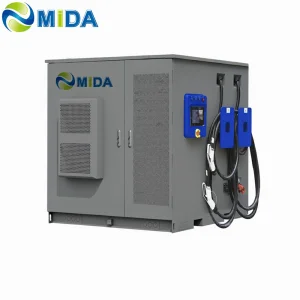
Containerized mobile battery storage and high-power DC charging trailer for industrial zones.
Specifications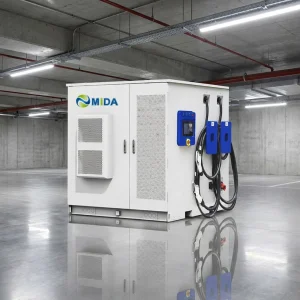
Mid-tier capacity design featuring liquid-cooled storage cells and automated system protection.
Specifications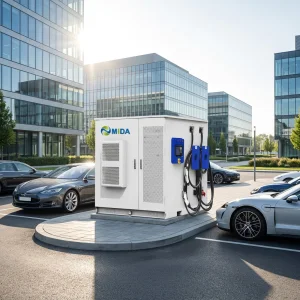
Optimized for heavy logistics sites, featuring containerized engineering, HVAC liquid cooling, and fire suppression systems.
Specifications
Multi-protocol charger with intelligent load distribution, ideal for mixed commercial fleets.
Specifications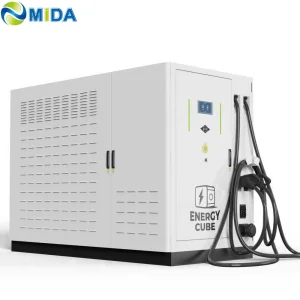
Features advanced fire protection and outdoor rated enclosures for Southern California installations.
SpecificationsAddressing the core technical and commercial questions of buyers in the Los Angeles region.
Southern California utilities (LADWP and SCE) apply demand charges based on the maximum power drawn during a billing period. An integrated BESS stores energy at a low, continuous power level and discharges it rapidly during vehicle charging. This caps the utility grid demand at a preset level (e.g., 30kW) even while delivering 120kW or more to the vehicle, significantly reducing demand charges.
Yes. Mida Group products comply with international standards. Our components and complete charging assemblies are engineered to meet UL 2202 (DC Fast Charging Stations), UL 9540 (Energy Storage Systems), and National Electrical Code (NEC) Article 625 specifications for safe installation in the US.
Yes, all our DC chargers and BESS units support OCPP 1.6J and OCPP 2.0.1. They feature integrated cellular, Wi-Fi, or Ethernet connectivity, allowing remote management via third-party network software, peak-shaving scheduling, and real-time telemetry tracking.
We use premium Lithium Iron Phosphate (LFP) cells, which offer high thermal stability and a long cycle life (typically over 6,000 cycles to 80% State of Health). With our active liquid-cooling system, these battery modules are designed for over 10 years of reliable service in Southern California's climate.