BESS Charging Station Suppliers & Factories for Mexico City

Empowering Commercial Real Estate, Municipal Fleets, and Heavy Industrial Corridors in the Valley of Mexico with Grid-Tethered and Off-Grid Smart Energy Storage Solutions.

1. Industrial Realities & Energy Challenges in the Valley of Mexico

Mexico City (CDMX) and its surrounding metropolitan area represent one of the most dynamic economic zones in Latin America. Fueled by the "nearshoring" wave under the USMCA (T-MEC) agreement, global logistics firms, automotive manufacturers, and high-tech industries are rapidly expanding. However, this growth has strained the regional energy infrastructure. The state-owned grid utility, Comisión Federal de Electricidad (CFE), frequently faces high transmission loads, distribution capacity bottlenecks, and localized voltage fluctuations.

For industrial plants in the Vallejo industrial corridor, logistics hubs in Tepotzotlán, and corporate developments in Santa Fe, deploying High-Power Electric Vehicle (EV) chargers without auxiliary energy storage is becoming increasingly unfeasible. Demand spikes from simultaneous 120kW or 180kW DC charging sessions run the risk of exceeding local substation capacities, triggering heavy penalty tariffs (Tarifa GDMTO and GDMTH), or causing localized blackouts.

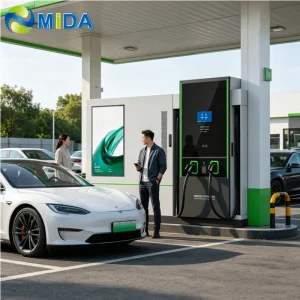
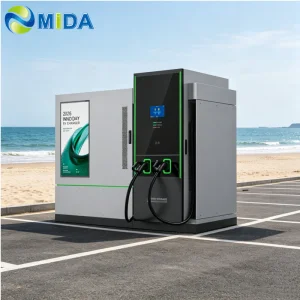
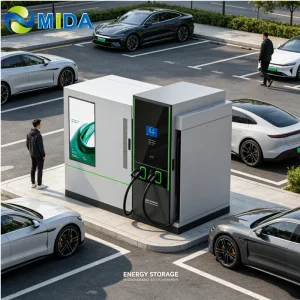
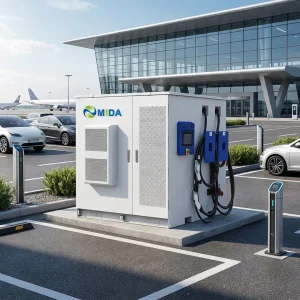
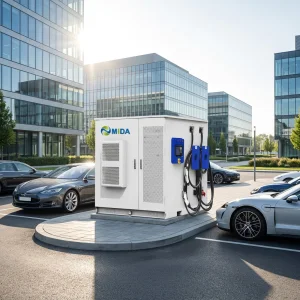
This is where **Battery Energy Storage System (BESS) Charging Stations** come in as a pivotal technology. By decoupling grid power draw from vehicle dispensing rates, BESS charging infrastructure enables commercial operators to capture electricity during low-tariff hours, buffer it, and deliver high-power ultra-fast charging to EVs when needed, completely bypassing grid congestion.

2. Peak Shaving, Microgrids, and Financial Viability

For Mexican businesses, energy cost management hinges on mitigating peak demand charges. BESS integration allows for:

  • Peak Shaving: Shifting the peak energy demand of EV chargers away from CFE's peak pricing hours (generally between 6:00 PM and 10:00 PM in Central Mexico).
  • Cap-Ex Mitigation: Avoiding expensive, bureaucratic transformer and substation upgrades, which can take anywhere from 12 to 24 months to secure approval from the Comisión Reguladora de Energía (CRE).
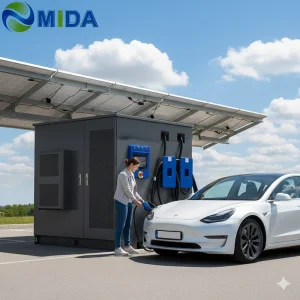
  • Microgrid Cohesion: Integrating locally generated photovoltaic (PV) solar energy into the storage system via MPPT (Maximum Power Point Tracking) charge controllers to create zero-emission, self-sufficient off-grid or hybrid charging sites.

Primary Product Lines & Specifications

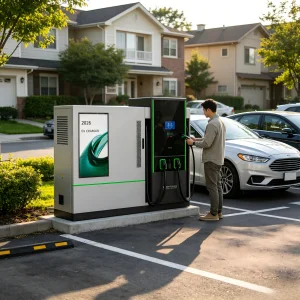
We supply a wide range of charging systems, from compact residential chargers to high-power grid-scale storage stations.

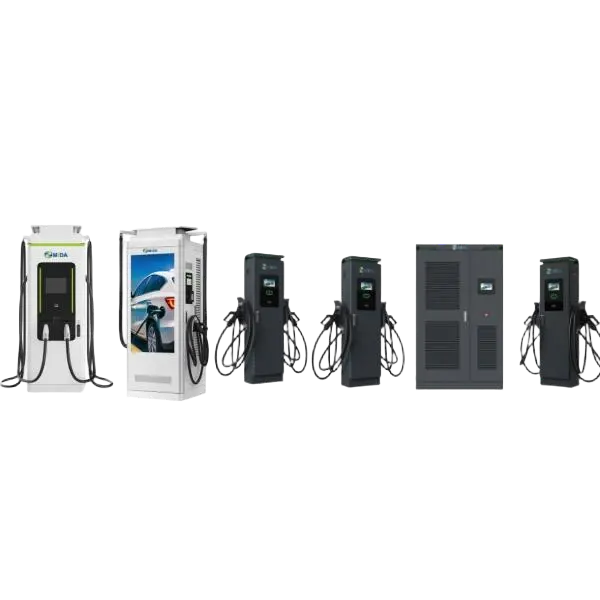
AC EV Charger
Commercial & Public Charging
MIDA AC EV Charger View More
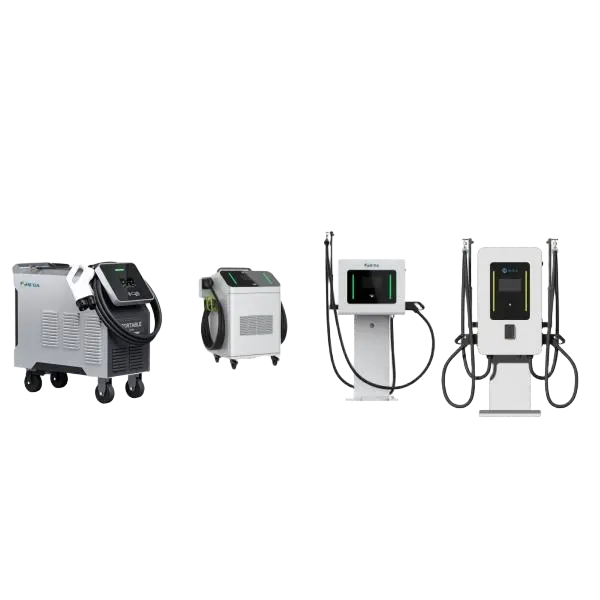
Wall-Mounted / Mobile EV Charger
7kW | 20kW | 30kW | 40kW | 60kW | 80kW
Wall-Mounted Charger View More
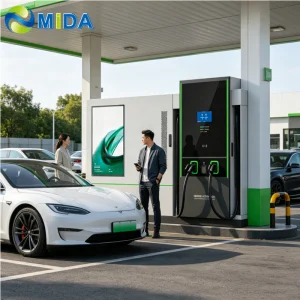
DC Charger Station
60kW - 480kW | 360kW - 1440kW
DC Charging Station View More
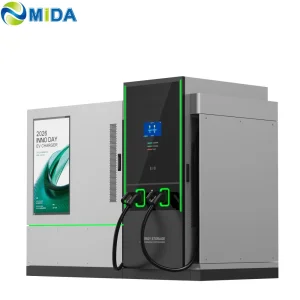
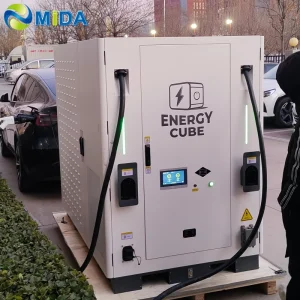
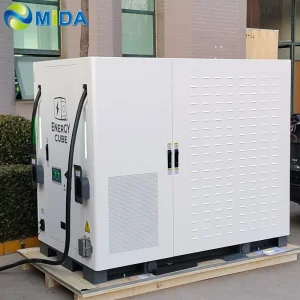
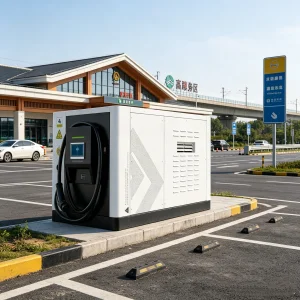
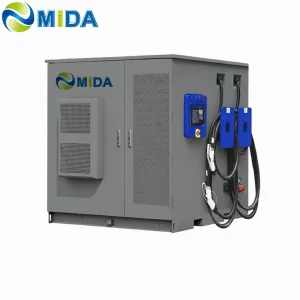
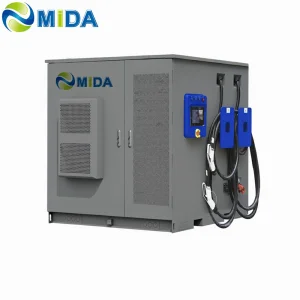
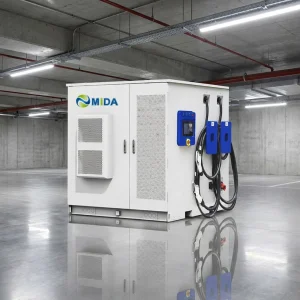
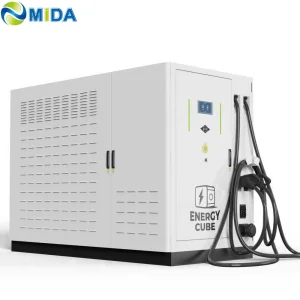
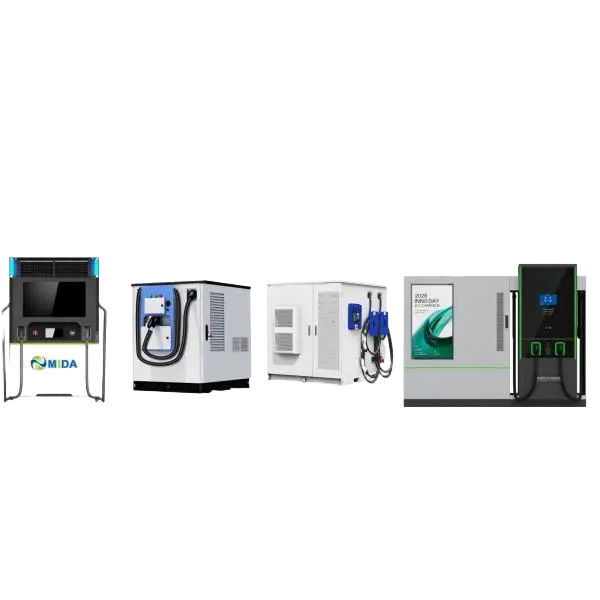
BESS Charging Station
60kWh | 261kWh | 418kWh | 625kWh | 2MWh+
BESS Charging Station View More

About MIDA Group (Shanghai Mida Cable Group Ltd.)

A global leader in electric vehicle supply equipment (EVSE), storage integration, and liquid-cooled fast-charging systems.

Shanghai Mida Cable Group Ltd. operates through its wholly owned subsidiaries: Shanghai Mida EV Power Co., Ltd., Shenzhen Mida EV Power Co., Ltd., and Shanghai Mida New Energy Co., Ltd. This multi-disciplinary structure allows us to handle full-stack EV infrastructure development, from raw cable manufacturing to power module engineering and ultimate field BESS assembly.

Mida Cable manufactures a comprehensive range of EV charging cables, including 16A–80A J1772 cables, 16A–63A IEC 62196-2 Type 2 cables, and heavy-duty DC fast charging cables: CCS1 (80A–500A), CCS2 (125A–1000A), CHAdeMO (125A–300A), GBT (200A–1000A), and NACS connectors (250A–600A).

MIDA EV Power produces a full lineup of EV charging stations, such as 7kW–50kW mobile chargers, 3.6kW–7.2kW portable DC chargers, 360kW–1440kW split-type DC fast chargers, 20kW–50kW wall-mounted DC chargers, and 60kW–480kW floor-standing DC fast charging stations.

MIDA New Energy specializes in EV charger power modules, offering 20kW–60kW standard modules, 40kW–125kW liquid-cooled modules, 30kW–62.5kW bidirectional modules, and 20kW–45kW V2G charging modules.

MIDA EV Power Facilities

3. Technical Adaptation for High Altitude & Climate

Mexico City is situated at an elevation of 2,240 meters (7,350 feet) above sea level. This high-altitude geographic context poses unique engineering challenges for high-power power electronics:

  • Air Derating Factors: At high altitudes, the lower air density reduces the heat dissipation capability of air-cooled converters. Standard chargers can overheat if not appropriately derated. MIDA addresses this through oversized heat sinks, variable-speed industrial fan assemblies, and state-of-the-art liquid cooling systems.
  • Dielectric Properties of Air: The dielectric strength of thinner air is lower, requiring wider clearance and creepage distances in the layout of internal PCBs to prevent high-voltage arcing. Our designs comply with stringent IEC 61851 and UL 2202 specifications adapted for high-altitude zones.
  • Seismic Resilience: Being situated in a high-seismic activity zone, our physical BESS outdoor enclosures (NEMA 3R / IP55 or IP66) are engineered with reinforced structural bases and shock-absorption brackets to protect LiFePO4 batteries from physical vibrations.

4. Regulatory Framework: NOM, CRE, and CFE Standards

Deploying energy storage and commercial charging networks in Mexico City requires navigating a complex set of local regulations:

  • NOM-001-SEDE (Instalaciones Eléctricas): This official standard governs the safety requirements of electrical installations. All BESS enclosures, isolation transformers, and distribution panels must undergo certification by an authorized Unidad de Verificación de Instalaciones Eléctricas (UVIE).
  • CRE Interconnection Provisions: The Comisión Reguladora de Energía regulates power production and self-consumption. Small-scale grid-tied storage under 500kW can run under "Net Metering" or "Net Billing" schemes. Systems larger than 500kW require a formal generation permit. MIDA's smart energy management software can prevent backfeeding to the CFE grid, streamlining the permitting process as a "Zero-Export" grid-tied system.
  • Safety and Protections: Our systems feature integrated surge protection devices (SPD), ground fault detection, and intelligent dual-loop aerosol fire suppression systems optimized for LiFePO4 battery chemistries.

MIDA Sub-Systems & Main Components

A modular look into our OEM and ODM component supply chain, designed for maximum system longevity.

EV Charging Power Module
  • 30kW | 40kW | 50kW | 60kW | 80kW AC/DC Modules
  • 30kW | 40kW | 50kW | 60kW DC/DC Modules
  • 40kW | 60kW | 75kW | 125kW Liquid Cooled Power Module
  • 20kW | 22kW | 30kW | 40kW | 45kW V2G Power Module
  • 30kW | 40kW | 50kW | 60kW MPPT Solar Charger Module
  • 20kW | 50kW | 62.5kW Bidirectional AC/DC Power Module
Explore Modules
DC Connector & Cooling Units
  • 500A | 600A CCS1, CCS2 & GBT Connectors
  • 125A | 250A | 300A | 350A NACS & CHAdeMO Connectors
  • 1500A MCS Connector & CHAOJI Connector
  • 3.5kW | 4.5kW | 6kW | 9kW Integrated Liquid Cooling Unit
  • 2.4kW | 3.5kW Split Type Cooling Units
  • 25kW - 72kW Cooling Units for HPC Charging Stations
Explore Connectors
Fast Charger Stations
  • 7kW - 60kW Mobile DC Charging Station
  • 20kW - 80kW Wall Mounted DC Charging Station
  • 60kW - 480kW Floor Mounted Charging Station
  • 60kW - 240kW Advertising Charging Station (43 / 55 inch)
  • 600kW - 1080kW Liquid Cooled Charging Station
  • 360kW - 1680kW Split Type DC Charging System
Explore Stations
Energy Storage Charging Station (BESS Systems)
  • 15kW - 480kW Mobile ESS Charging Stations
  • 60kW - 400kW Integrated ESS Charging Piles
  • 65kWh - 200kWh Emergency Rescue Charging Stations
  • 165kWh Automatic Charging Robots
  • 800kWh - 2000kWh Solar Energy Charging Systems
View BESS Portfolios

Commercial Grade Hardware Catalog

Explore our complete catalog of cables, high-voltage plugs, mobile emergency chargers, and ultra-fast liquid-cooled hardware.

5. BESS Integration Scenarios in Mexico City

Depending on your specific energy structure and use cases, we configure the BESS charging stations into three main architectural archetypes:

A. Peak-Shaving Commercial Parking & Logistics Hubs

Highly recommended for heavy fleet operators in areas like Tlalnepantla and Naucalpan. The BESS system monitors the facility’s primary utility meter. When the total electrical draw nears the CFE-contracted limit (Demanda Contratada), the BESS automatically stops drawing grid power and supplies energy directly to the DC charger dispensers. Once vehicle demand drops, the storage system gently replenishes its batteries from the grid at a constant, low-demand rate.

B. Solar PV + BESS Off-Grid Charging

Ideal for remote highway rest stops along routes linking CDMX to Querétaro or Puebla, where grid extensions are economically prohibitive. Integrated MPPT charge controller arrays funnel solar power directly into LiFePO4 storage packs, ensuring 24/7 fast charging without a physical grid hookup.

C. High-Density Urban Micro-Hubs

Designed for space-constrained corporate districts like Reforma, Polanco, and Santa Fe. The system features liquid-cooled batteries and integrated cooling assemblies inside a compact foot-print enclosure, optimizing thermal balance and safety in tight underground or roof-deck configurations.

6. Technical Specifications: Inside the MIDA Technology Suite

Our state-of-the-art storage units rely on high-grade Lithium Iron Phosphate (LFP) prismatic cells, known for superior thermal stability and long life cycles. These cells are combined with a multi-level Battery Management System (BMS) that monitors state-of-health, cell temperature, and voltage balance in real-time.

The power converters are built using silicon carbide (SiC) semiconductor technology. SiC provides up to 98.5% efficiency in bidirectional AC/DC and DC/DC conversion stages, reducing heat losses—an essential factor when operating under the thin-air conditions of Mexico City's high altitudes.

Frequently Asked Questions

Expert answers regarding local engineering, CFE grid compliance, pricing, and system deployment in Central Mexico.

Q1: How does Mexico City's altitude of 2,240m affect the rating of a 120kW BESS?
Lower air density reduces convective cooling efficiency. Without special cooling design, a standard 120kW station might need to be derated by 10-15%. MIDA prevents this by utilizing high-capacity liquid cooling plates for battery packs and oversized, variable-speed industrial blowers for the power conversion modules, ensuring full output capacity up to 3000 meters elevation.
Q2: Do we need special permits from the CRE (Comisión Reguladora de Energía) to install a BESS?
For grid-tied BESS installations that do not export power back to the grid (zero-export configuration) and remain under 500kW total generation capacity, the approval process is simplified. It requires standard CFE interconnection notifications and UVIE compliance under NOM-001-SEDE. Systems exporting power or exceeding 500kW require a formal generation license from the CRE.
Q3: How does peak shaving lower industrial CFE power bills?
Under industrial tariffs like GDMTH, CFE charges heavily based on the single highest 15-minute demand spike registered during the month. By using the MIDA BESS to power chargers during fleet-wide plug-in periods, you cap your peak draw from the grid, which can slash the demand charge portion of your energy bill by up to 40%.
Q4: Are MIDA systems compatible with local EV models in Mexico?
Yes. Mexico’s EV market is highly diverse. We provide charge plugs to match all major standards: CCS1 (typical for North American imports), CCS2 (European standard), GBT (for Chinese fleet vehicles and buses), and NACS (Tesla standard).
Q5: What is the typical life cycle of MIDA's LFP Battery Energy Storage?
We use high-grade LiFePO4 cells that deliver more than 6,000 charge/discharge cycles at 80% Depth of Discharge (DoD) before capacity drops below 80% of its initial value. In typical daily usage patterns, this translates to over 12-15 years of operational life.
Q6: How does the system handle high-voltage spikes common in Mexico City's industrial grids?
Our systems include high-voltage industrial surge protection (SPD Type 1 and Type 2), combined with fast-acting isolation contactors and internal isolation transformers. This buffers sensitive control boards and battery modules from grid-side disturbances.
Q7: Can MIDA design systems for off-grid operations in isolated parts of Central Mexico?
Yes, our Off-Grid Solar BESS platforms integrate MPPT solar inputs, diesel generator backup control lines, and battery banks. This enables reliable EV fast charging in remote commercial zones and agricultural corridors without access to a CFE grid line.

Corporate News & Technical Insights

Stay informed with the latest research on high-voltage pantographs, municipal transport electrification, and safety standards.

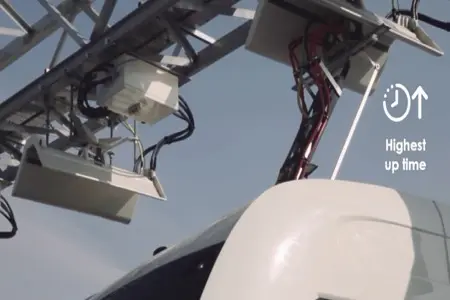
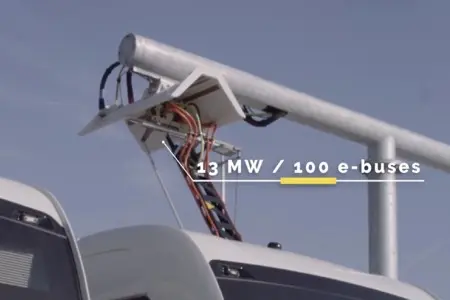
E-bus pantograph dome advantages

What are the advantages of an e-bus pantograph dome? In contrast to classic plug-in charging systems, e-bus pantogra...

2026-07-12 View More
Charging time with e-bus pantograph

How long does it take to charge with an e-bus pantograph? The charging time depends on the battery capacity and the ...

2026-07-12 View More
Install Pantograph Up Charger System Dome

How to Install the Pantograph Up Charger System Dome for Electric Bus Installing a "Pantograph Up" syste...

2026-07-12 View More

Deploy Reliable Energy Infrastructure in Mexico City

Our team of field engineers can design custom BESS charging systems tailored to your site’s electrical capacity, CFE grid conditions, and fleet demands.

Send Inquiry Now
MIDA Factory Manufacturing Line