High-Capacity Battery Energy Storage Solutions

BESS Charging Station Manufacturers & Suppliers in Switzerland

Premium BESS Systems for Swiss Infrastructures

Engineered for stability under Alpine grid fluctuations. Explore our leading high-power configurations utilizing advanced LFP battery chemistry and smart thermal management.
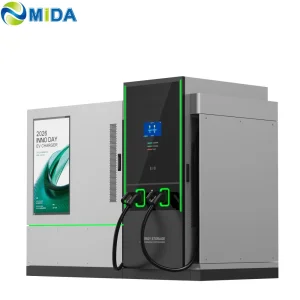
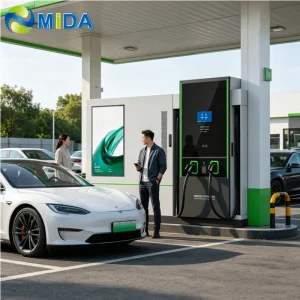
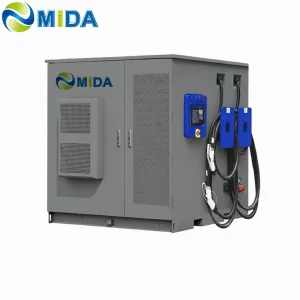
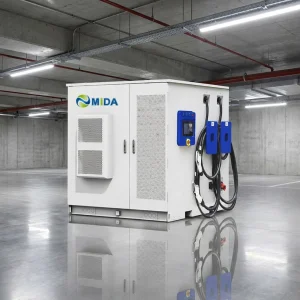
Switzerland Highway Fast Charging BESS 120kwh

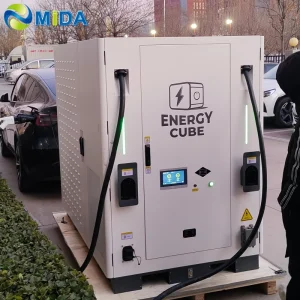
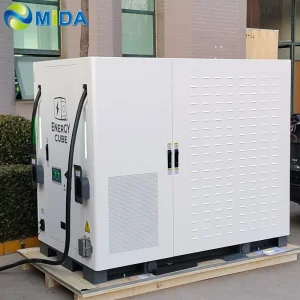
Switzerland Highway Fast Charging Project - 120kWh 60kw CCS2 GBT BESS Charger

View Technical Details
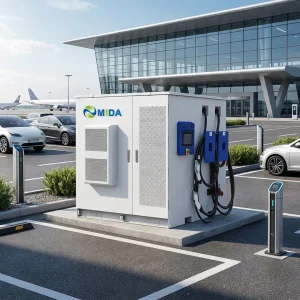
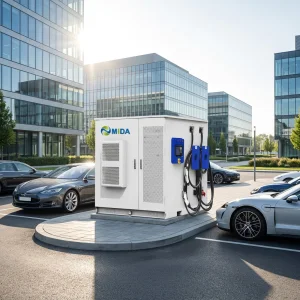
Swiss C&I Peak Shaving BESS 215kwh

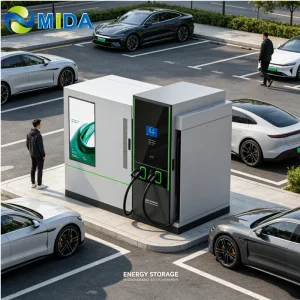
Swiss Commercial & Industrial Grid-Tie BESS - 215kwh 90kw CCS2 CHAdeMO Storage Charger

View Technical Details
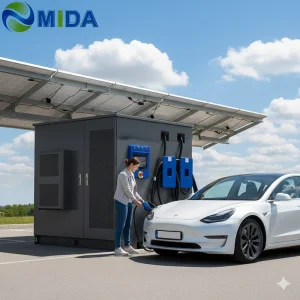
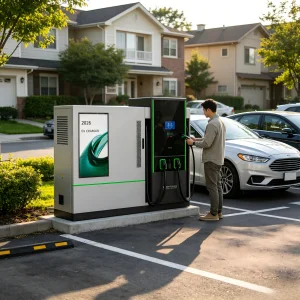
Swiss Alpine Mobile BESS 200kWh

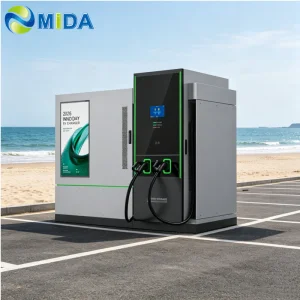
Swiss Alpine Mobile Fleet Rescue System - CCS2 GBT 120kW 200kWh Mobile BESS Charger

View Technical Details
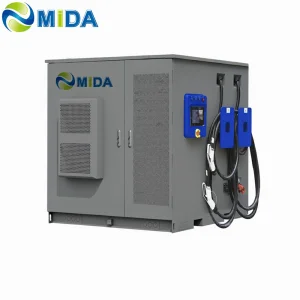
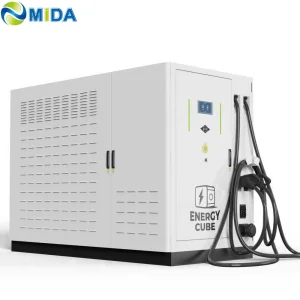
Switzerland Off-Grid Solar BESS 200kWh

Switzerland Remote Off-Grid Solar Array - 200kWh 120kW Mobile EV Charger Solar MPPT

View Technical Details

Switzerland's BESS & EV Charging Infrastructure Landscape

Analyzing the intersection of the Swiss Energy Strategy 2050, high-altitude grid configurations, and commercial electrification demands.

Grid Support & Integration Under Alpine Conditions

Switzerland is systematically reshaping its energy sector under the mandate of Energy Strategy 2050. With the phasing out of nuclear energy and rapid expansion of decentralized photovoltaic (PV) solar installations, grid balancing has transitioned from a localized priority to a national emergency. In high-altitude cantons such as Valais and Grisons, remote tourist centers, skiing resorts, and highway arteries experience severe peak-demand spikes from electric vehicle (EV) charging during transit seasons.

Deploying Megawatt-scale Battery Energy Storage Systems (BESS) integrated with Ultra-Fast Charging (UFC) stations mitigates the massive grid upgrades otherwise required by Swiss distribution system operators (DSOs). Instead of installing high-voltage supply lines through complex mountainous topography, regional operators rely on BESS as a dynamic buffer, reducing high connection fees (Grid Capacity Tariffs) and maintaining network frequency integrity.

  • Peak Shaving: Prevents utility load spikes and minimizes monthly demand charge penalties.
  • Frequency Regulation: Delivers Primary Control Reserve (PCR) to Swissgrid.
  • Solar Self-Consumption: Stores local hydro and solar generation to execute late-night fast charging.

Global BESS Market Trends & Supply Chain Optimization

Navigating the balance between premium European design compliance and Chinese manufacturing efficiency.

The Shift to Liquid-Cooled LFP Architectures

In the global energy storage sector, Lithium Iron Phosphate (LFP) chemistry has achieved absolute dominance over Nickel Manganese Cobalt (NMC) formulations for stationary applications. This shift is driven by LFP's superior thermal runaway thresholds, lower Levelized Cost of Storage (LCOS), and prolonged lifecycle capabilities (typically exceeding 6,000 cycles at 80% Depth of Discharge). Global industrial procurement managers prioritize integration partners that utilize active liquid-cooled battery thermal management systems (BTMS). Liquid cooling maintains cell temperatures within a tight ±2°C delta, preventing premature aging and ensuring consistent fast-charging output even under sustained operation.

Synergizing Chinese Manufacturing with Swiss Engineering Compliance

Procuring industrial equipment requires balancing cost performance against strict regulatory standards. The Shanghai Mida Cable Group leverages China's advanced battery value chain, combining automated assembly efficiency with European components to meet Swiss electrical safety norms. Our engineering systems fully comply with:

ESTI
Swiss Inspectorate Compliance
IEC
62619 / 61851 Standards
TÜV
Certified Active Components
IP55
All-Weather Enclosures

By optimizing battery cell sourcing, automated pack integration, and high-power module fabrication, MIDA supplies European project developers with tier-1 battery storage infrastructure at competitive prices. Every system is configured with high-efficiency power modules and liquid-cooled liquid systems, reducing system losses and maximizing return on investment.

About MIDA Group

A trusted global supplier of electric vehicle charging infrastructure and advanced battery energy storage systems.

Shanghai Mida Cable Group Ltd. operates through its wholly owned subsidiaries: Shanghai Mida EV Power Co., Ltd., Shenzhen Mida EV Power Co., Ltd., and Shanghai Mida New Energy Co., Ltd. We manage the entire product development process, from heavy industrial cables and high-power charging connectors to intelligent bidirectional power conversion systems (PCS) and containerized BESS enclosures.

Our component and system portfolio features:

  • Mida Cable: Manufactures comprehensive high-power EV charging cables, including 16A–80A J1772, 16A–63A IEC 62196-2 Type 2, and DC liquid-cooled cables supporting CCS1 (80A–500A), CCS2 (125A–1000A), CHAdeMO (125A–300A), GBT (200A–1000A), and NACS connectors (250A–600A).
  • MIDA EV Power: Produces a full range of high-efficiency EV charging stations: 7kW–50kW mobile DC chargers, 3.6kW–7.2kW portable DC chargers, 360kW–1440kW split-type DC fast chargers, 20kW–50kW wall-mounted DC chargers, and 60kW–480kW floor-standing DC fast charging stations.
  • MIDA New Energy: Specializes in high-density EV charger power modules, offering 20kW–60kW standard air-cooled modules, 40kW–125kW liquid-cooled modules, 30kW–62.5kW bidirectional modules, and 20kW–45kW V2G charging modules.
⚙️

EV Charging Power Module

  • 30kW–80kW AC DC EV Charger Modules
  • 30kW–60kW DC DC EV Charger Modules
  • 40kW–125kW Liquid Cooled Power Modules
  • 20kW–45kW V2G Power Modules
  • 30kW–60kW MPPT Power Modules
  • 20kW–62.5kW Bidirectional AC DC Modules
🔌

DC Connectors & Cooling

  • 500A–600A CCS1, CCS2 & GBT Connectors
  • 125A–350A NACS & CHAdeMO Connectors
  • 1500A MCS & CHAOJI Connectors
  • 3.5kW–9kW Integrated Liquid Cooling Units
  • 2.4kW–3.5kW Split Type Cooling Units
  • 25kW–72kW Cooling Units for HPC Charging
🔋

DC Fast Charger Stations

  • 7kW–60kW Mobile DC Charging Stations
  • 20kW–80kW Wall Mounted DC Charging Stations
  • 60kW–480kW Floor Mounted Charging Stations
  • 60kW–240kW Advertising Charging Stations
  • 600kW–1080kW Liquid Cooled Charging Stations
  • 360kW–1680kW Split Type DC Stations

Energy Storage Systems

  • 15kW–480kW Mobile BESS Charging Stations
  • 60kW–400kW Integrated BESS Charging Piles
  • 65kWh–200kWh Emergency Rescue Charging
  • 165kwh Automatic Charging Robots
  • 800kwh–2000kwh Solar Energy Charging Systems

Industrial-Grade BESS & Ultra-Fast Charger Portfolio

Explore our scalable battery storage platforms configured for commercial buildings, logistics depots, and municipal transit grids across Switzerland.
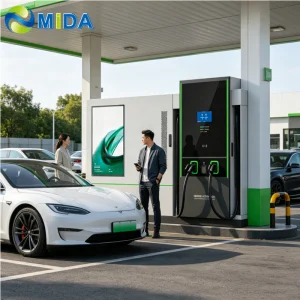
Swiss Geneva Commuter Hub BESS

Swiss Geneva Commuter Hub Installation - Best 241kwh 120kw BESS EV Charger CCS NACS

View Technical Details
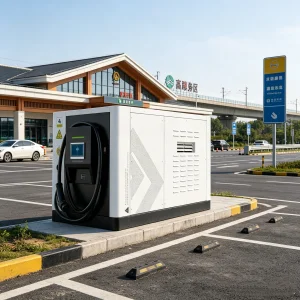
Zurich Mobile Roadside Rescue BESS

Zurich Mobile Roadside Rescue System - Best 60kWh 30kW CCS2 CHAdeMO Portable BESS Mobile

View Technical Details
Bern Municipal Depot Storage Charger

Bern Municipal Transit Depot Storage Charger - Best 261kwh 120kw BESS Charger Piles Integrated

View Technical Details
St. Gallen Micro-grid Battery Bank

St. Gallen Micro-grid Integrated Battery Bank - Best 261kwh 180kw 200kw BESS Charging Station

View Technical Details
Lucerne Heavy Fleet Megawatt System

Lucerne Heavy Freight Logistics Hub - Best 1MWH 480kw Smart BESS Charging Station EV Charger

View Technical Details
Basel Industrial Chemical Park Grid Buffer

Basel Industrial Chemical Park Grid Buffer - Best 418kwh 240kw BESS Charging Station Battery Storage

View Technical Details
Lugano Lakeside Electric Boat Fast Charger

Lugano Lakeside Electric Vessel Station - China 320kw 482kwh BESS Charger Mobile EV Charging Station

View Technical Details
Lausanne Smart City Micro-grid System

Lausanne Smart City District Micro-grid - China 400kW 625kwh BESS Charger Station Mobile

View Technical Details
Zug Tech Valley High-Power Hub

Zug Tech Valley Infrastructure Grid - China 160kw 313kwh BESS Charging Station Integrated Mobile

View Technical Details
Davos World Economic Forum Site Project

Davos Premium Peak Buffering Center - Best 2MWH 960kw BESS Charging Station Megawatt

View Technical Details
Schaffhausen Hydro-solar Storage Station

Schaffhausen Hydro-solar Balancing - China 241kwh 120kw CCS CHAdeMO NACS BESS

View Technical Details
Sion Off-grid Ski Resort Buffer BESS

Sion Alpine Ski Resort Buffer BESS - Best CCS NACS CHAdeMO 200kwh 120kw BESS Charging Station

View Technical Details

Latest Industry News & Technical Insights

Stay up to date with updates regarding industrial electrification, vehicle-to-grid tech, and automated charging solutions.

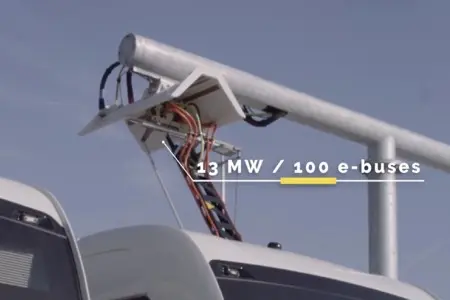
e-bus pantograph dome advantages
What are the advantages of an e-bus pantograph dome? In contrast to classic plug-in charging systems, e-bus pantograph domes enable automated, fast megawatt charging, optimizing runtime efficiencies for municipal transit fleets.
Date: 2026-07-12 Read More
e-bus pantograph charge times
How long does it take to charge with an e-bus pantograph? The charging time depends on battery capacity and grid connection, but typically delivers full recovery within 5 to 15 minutes at high power outputs.
Date: 2026-07-12 Read More
installing pantograph up systems
How to Install the Pantograph Up Charger System Dome for Electric Bus. Installing a "Pantograph Up" system dome requires precise mechanical positioning, high-voltage cabling alignment, and robust safety interlocking.
Date: 2026-07-12 Read More

Expert Engineering FAQ: BESS Charging Stations

Providing technical answers to procurement questions regarding safety, efficiency, and regulatory compliance.

How does a BESS EV Charging Station reduce Swiss grid tariffs (peak shaving)?
Swiss power distributors (DSOs) levy high network capacity fees based on the peak energy draw measured in kilowatts (kW) during any 15-minute interval. By placing a BESS system between the grid and EV chargers, the battery system discharges during periods of high demand, keeping the grid draw flat. This prevents peak demand charges and can pay back the investment within 3 to 5 years depending on local rates.
What regulatory approvals are needed for BESS installations in Switzerland?
BESS installations in Switzerland must comply with the Federal Inspectorate for Heavy Current Installations (ESTI) guidelines. The systems must satisfy Swiss standard SN EN 62619 for lithium batteries, together with CE certifications. Depending on local zoning, installations may also require approval under Swiss fire safety standard VKF, which specifies thermal monitoring, physical separation, and aerosol fire extinguishing systems.
Why choose LFP chemistry over NMC for industrial-scale storage systems?
Lithium Iron Phosphate (LFP) is preferred for C&I installations due to its stability. LFP does not release oxygen during thermal breakdown, reducing fire risk compared to NMC. It also offers a higher lifecycle (up to 6000 cycles at 80% DOD), making it more cost-effective over the project's lifetime.
What is the impact of low temperature on BESS performance in Alpine regions?
Low temperatures reduce lithium-ion mobility, lowering discharge capacity and restricting charging speeds to prevent cell damage. To mitigate this, MIDA BESS cabinets feature double-walled insulated enclosures and integrated HVAC systems. The system pre-heats battery cells using liquid coolant loops, maintaining performance even in winter temperatures down to -30°C.
Can MIDA BESS charging stations participate in Swiss Virtual Power Plants (VPP)?
Yes, our BESS systems integrate with external Energy Management Systems (EMS) using Modbus TCP and OCPP 2.0.1 protocols. This allows operators to aggregate BESS units into a virtual power plant (VPP) to participate in primary (FCR) or secondary (aFRR) control reserve programs managed by Swissgrid, creating additional revenue streams.