Industrial-grade energy storage integrated charging products optimized for local grid connectivity and reliable heavy-duty deployment.
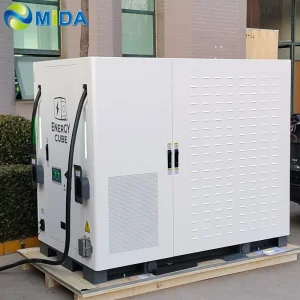
Nagoya, as the capital of Aichi Prefecture, represents the absolute nucleus of Japan's automotive manufacturing and heavy industrial production. With industry giants driving the transition toward carbon neutrality by 2050, the demand for massive electrification of commercial fleets and logistics networks is soaring. However, the local grid infrastructure faces systemic challenges. High-power DC fast-charging of heavy trucks and corporate passenger fleets introduces massive, unpredictable load peaks. These peaks threaten localized transformer thermal capacities and trigger expensive grid upgrade penalties.
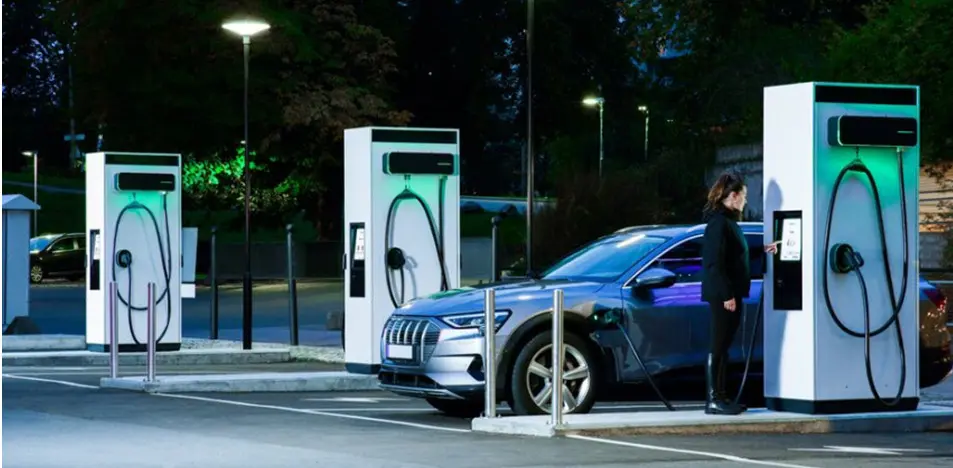
To mitigate these peak demands, smart Battery Energy Storage Systems (BESS) integrated with EV charging stations have emerged as the definitive solution. By buffering energy during low-demand periods and discharging it dynamically during vehicle charging cycles, BESS charging stations reduce peak demand loads by up to 60%. This mechanism bypasses costly substation renovations and offers local manufacturing hubs an adaptable path toward decarbonization, microgrid capability, and emergency blackout resilience.
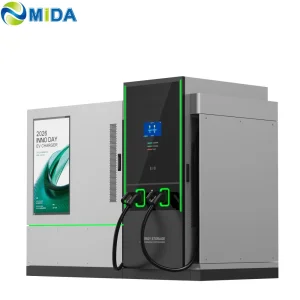
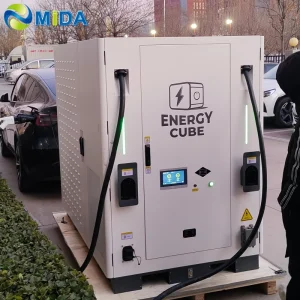
Modern industrial BESS stations operate at the intersection of high-voltage chemistry, thermal management, and algorithmic control. At MIDA, we integrate Tier-1 Lithium Iron Phosphate (LiFePO4) cell technology with smart, liquid-cooled enclosures to guarantee thermal stability under prolonged cyclic stress. Our system configuration combines high-density power modules, bi-directional AC-DC converters, and multi-protocol vehicle interfaces (CCS1, CCS2, CHAdeMO, NACS, and GBT).
Our technical roadmap focuses heavily on edge-managed Energy Management Systems (EMS). This software coordinates local solar PV generation, battery state of charge (SoC), and EV load profiles. Additionally, the system leverages V2X bi-directional capabilities, converting vehicle batteries and stationary BESS into virtual power plants (VPPs) that can feed energy back into the Nagoya regional grid during peak system stresses, unlocking secondary revenue streams for enterprise operators.
Pioneering Next-Generation EV Charging Components & Smart Energy Storage Systems Globally
Shanghai Mida Cable Group Ltd. operates through its wholly owned subsidiaries: Shanghai Mida EV Power Co., Ltd., Shenzhen Mida EV Power Co., Ltd., and Shanghai Mida New Energy Co., Ltd.
Mida Cable manufactures a comprehensive range of EV charging cables, including 16A–80A J1772 cables, 16A–63A IEC 62196-2 Type 2 cables, and DC fast charging cables: CCS1 (80A–500A), CCS2 (125A–1000A), CHAdeMO (125A–300A), GBT (200A–1000A), and NACS connectors (250A–600A).
MIDA EV Power produces a full lineup of EV charging stations, such as 7kW–50kW mobile chargers, 3.6kW–7.2kW portable DC chargers, 360kW–1440kW split-type DC fast chargers, 20kW–50kW wall-mounted DC chargers, and 60kW–480kW floor-standing DC fast charging stations.
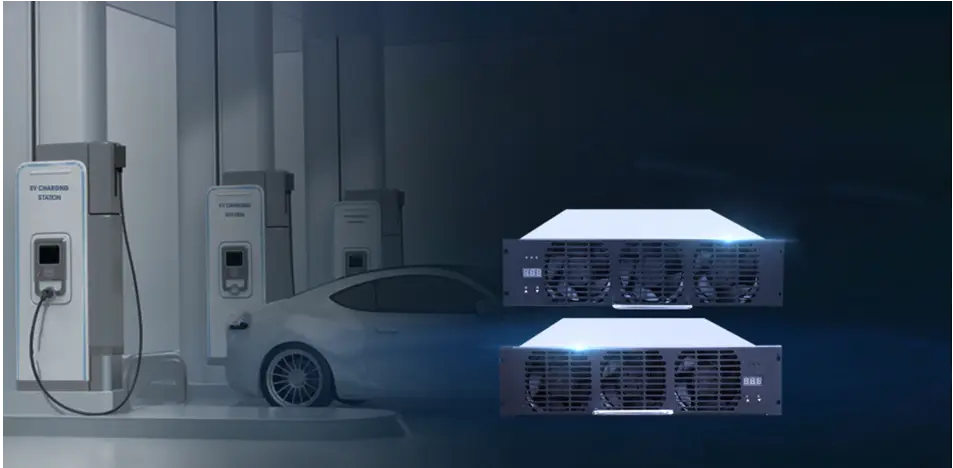
MIDA New Energy specializes in EV charger power modules, offering 20kW–60kW standard modules, 40kW–125kW liquid-cooled modules, 30kW–62.5kW bidirectional modules, and 20kW–45kW V2G charging modules.
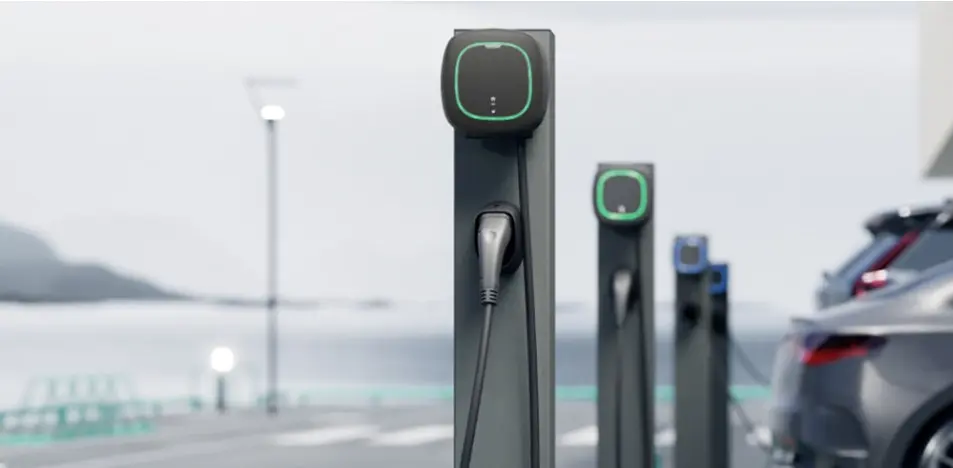
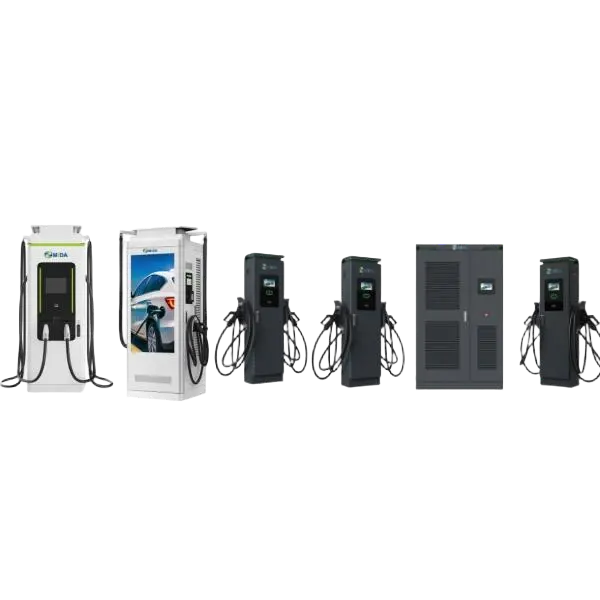
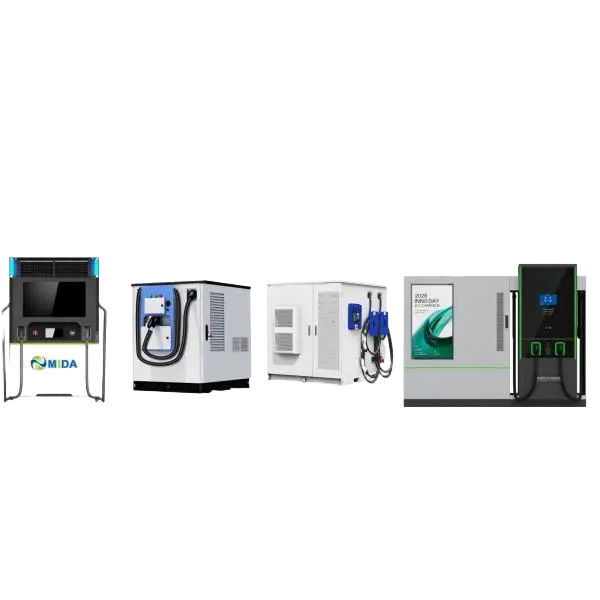
Fully integrated containerized and modular battery energy storage solutions.
View MoreDeploying BESS hardware in Japan demands rigorous alignment with stringent national electrical standards and fire safety codes. The Ministry of Economy, Trade and Industry (METI) enforces guidelines addressing thermal runaways, safety disconnects, and seismic structural ratings. Any utility-interconnected battery system must conform to Japanese Electrical Safety and Environment Technology Laboratories (JET) standards, ensuring reliable anti-islanding protection and seamless grid reconnection.
MIDA supports industrial clients in the Chubu region through localized engineering consultations, navigating municipal subsidies, and managing grid connection applications with Chubu Electric Power. By coordinating directly with Japanese EPC contractors, we ensure our systems meet local standards, minimizing administrative delays and streamlining the installation process.
MIDA manufactures at scale in advanced, smart Factory 4.0 environments in China, offering global buyers a combination of supply chain flexibility, cost efficiency, and rigorous quality control. Our factories feature automated battery module assembly lines, computerized end-of-line (EOL) system validation, and strict environment control for raw cell storage.
This deep integration shields clients in Nagoya and globally from component shortages. We maintain strategic agreements with Tier-1 battery cell manufacturers and fabricate our own high-capacity power modules and EV charging cables. This direct oversight enables us to adapt system configurations to client specifications while reducing production lead times by up to 35% compared to local Japanese system assemblers.
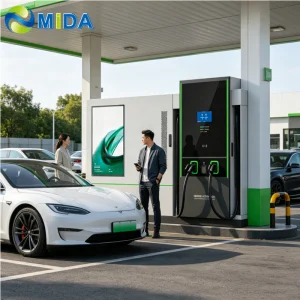
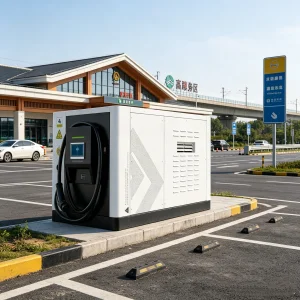
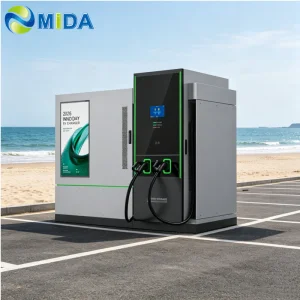
High-capacity battery systems configured to support commercial depots, municipal hubs, and heavy-duty logistics centers across Nagoya.
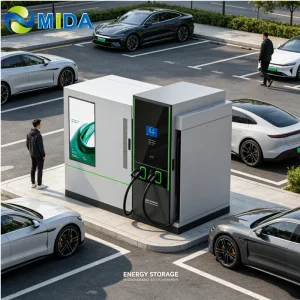
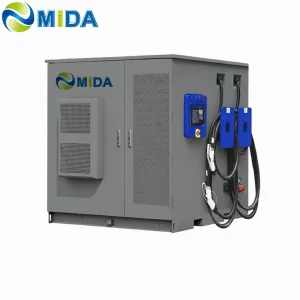
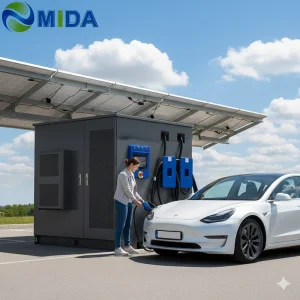
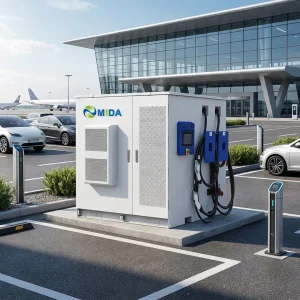
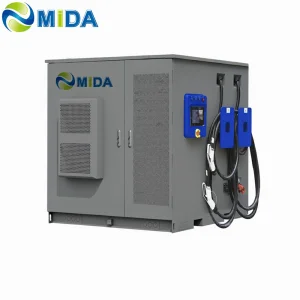
Purchasing high-capacity BESS systems requires looking beyond upfront capital expenditures. Project developers and EPCs must evaluate the total cost of ownership (TCO) across a 10-year operating horizon. Main cost considerations include battery cell cycle life degradation, power conversion efficiency (AC-to-AC round-trip efficiency), and maintenance frequency.
MIDA BESS systems are engineered to target 6,000 charge-discharge cycles at 80% Depth of Discharge (DoD). Our systems feature smart liquid-cooling, maintaining battery cell temperatures within a ±2°C window. This prevents localized micro-hotspots that accelerate degradation, extending system operating lifespans and ensuring high ROI for transport fleets and industrial logistics parks.
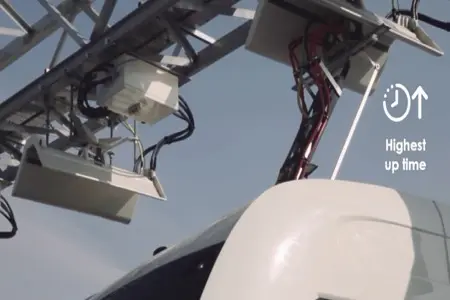
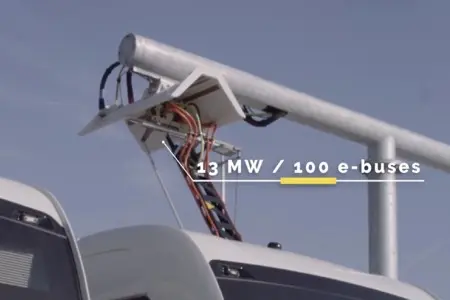
Stay up to date with modern pantograph technologies, fast-charging innovations, and infrastructure deployment strategies.
Quick answers to common engineering questions regarding the planning and deployment of BESS charging stations.