
As the European Union intensifies its decarbonization targets, Luxembourg stands at a critical juncture of infrastructure transformation. The Grand Duchy's strategic position as a European logistics pivot, combined with its high concentration of financial headquarters, commercial fleets, and heavy metal industries (such as those in Esch-sur-Alzette and Differdange), drives an unprecedented demand for high-power electric vehicle (EV) charging. However, scaling rapid charging infrastructure presents severe electrical grid challenges.
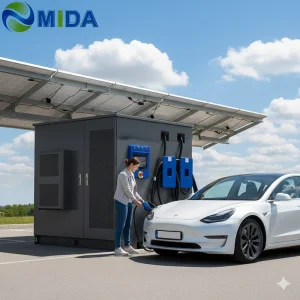
"Integrating high-capacity battery energy storage systems (BESS) directly with ultra-fast DC charging stations allows Luxembourg companies to bypass expensive grid connection upgrades, eliminate high peak demand charges (puissance de pointe), and ensure complete energy autonomy."
According to the Institut Luxembourgeois de Régulation (ILR), peak electricity consumption is projected to climb steeply over the coming decade. Commercial and industrial entities are finding that traditional grid connections (Creos Luxembourg S.A.) cannot support multiple 150kW or 350kW superchargers without costly substation expansions and multi-year delays. By deploying decentralized BESS charging stations, organizations can harvest off-peak energy or utilize onsite solar PV arrays to deliver high-capacity power whenever transport fleets require it.
Modern BESS charging systems are moving beyond basic peak shaving. They now act as active grid assets. Equipped with advanced grid-forming bidirectional inverters, they participate in primary frequency regulation, providing synthetic inertia to regional microgrids. This stabilizes the local grid during transient fluctuations, transforming charging hubs from energy liabilities into stable revenue-generating grid helpers.
To maximize cell longevity and safe operation under continuous high-power discharges (C-rates of 1C to 2C), the industry is transitioning from forced-air cooling to closed-loop liquid thermal management. Liquid cooling maintains cell-to-cell temperature differentials within 2°C, minimizing battery degradation and mitigating the risks of thermal runaway—a vital safety guarantee for densely populated logistics centers.
Shanghai Mida Cable Group Ltd. operates through its wholly owned subsidiaries: Shanghai Mida EV Power Co., Ltd., Shenzhen Mida EV Power Co., Ltd., and Shanghai Mida New Energy Co., Ltd. We are a globally recognized manufacturer of EV infrastructure components and integrated systems.
Mida Cable manufactures a comprehensive range of EV charging cables, including 16A–80A J1772 cables, 16A–63A IEC 62196-2 Type 2 cables, and heavy-duty DC fast charging cables: CCS1 (80A–500A), CCS2 (125A–1000A), CHAdeMO (125A–300A), GBT (200A–1000A), and NACS connectors (250A–600A) designed to power the next generation of transportation.
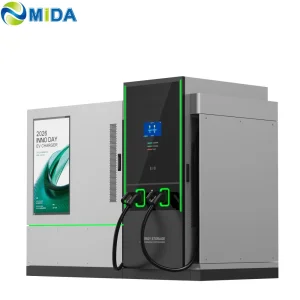
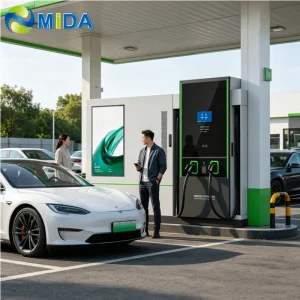
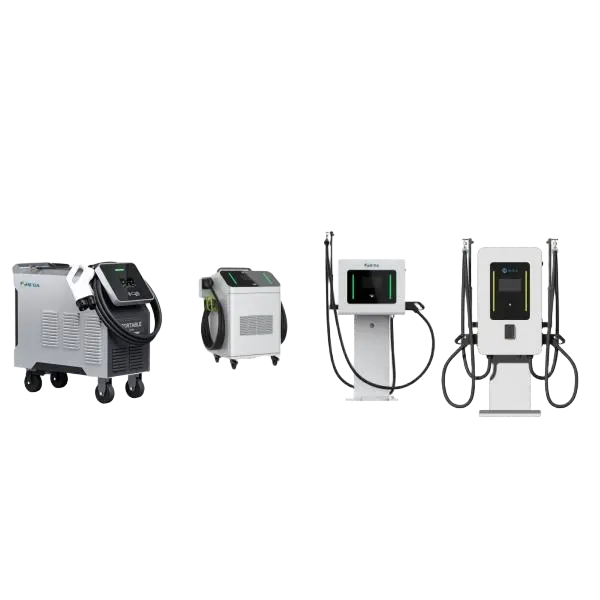
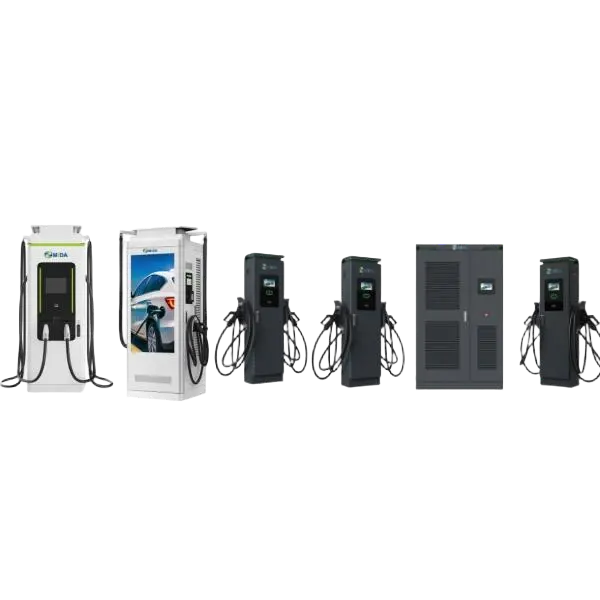
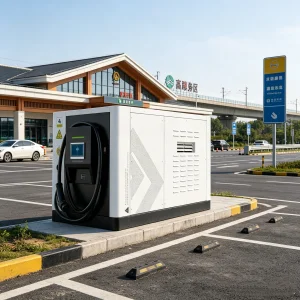
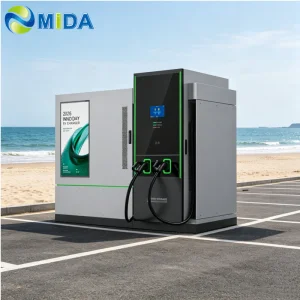
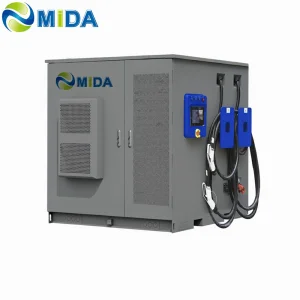
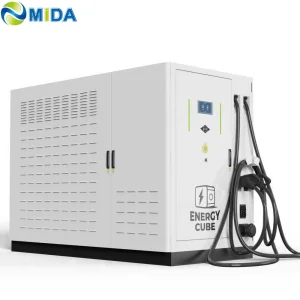
Our dedicated division, MIDA EV Power, produces a full lineup of premium EV charging stations, such as 7kW–50kW mobile chargers, 3.6kW–7.2kW portable DC chargers, 360kW–1440kW split-type DC fast chargers, 20kW–50kW wall-mounted DC chargers, and 60kW–480kW floor-standing DC fast charging stations.
Meanwhile, MIDA New Energy specializes in cutting-edge EV charger power modules, offering 20kW–60kW standard modules, 40kW–125kW liquid-cooled modules, 30kW–62.5kW bidirectional modules, and 20kW–45kW V2G charging modules.
For European buyers in Luxembourg, sourcing from MIDA group offers an unmatched balance of technological sophistication and cost efficiency. Our state-of-the-art China Factory 4.0 operates under automated smart manufacturing frameworks. Key advantages include:
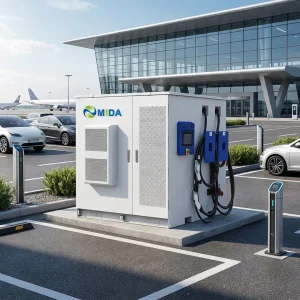
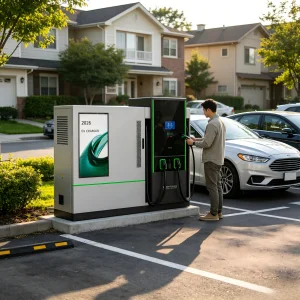
Heavy-duty cargo trucks and delivery fleets operating in Bettembourg Logistics Park require rapid overnight turnaround. High-capacity BESS systems (up to 2MWH) store energy during low tariff hours to fast-charge trucks at up to 960kW without triggering grid penalties.
Industrial operations in Esch-sur-Alzette face strict peak limits. BESS stations act as a dynamic load buffer. They absorb sudden energy surges and feed power back during critical production windows while keeping fleet charging fully operational.
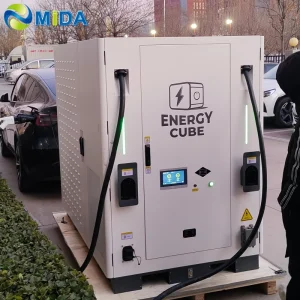
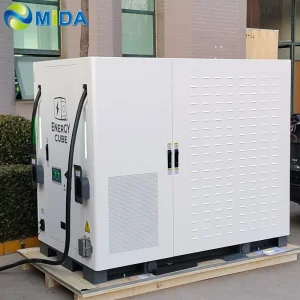
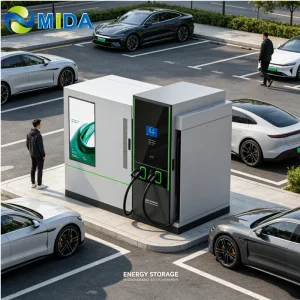
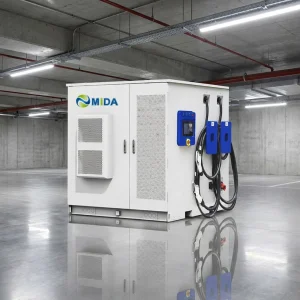
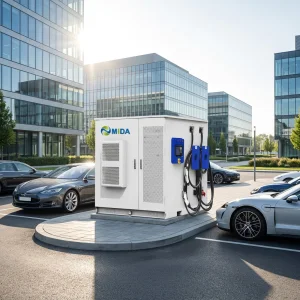
In the Kirchberg Financial District, office parking complexes utilize compact 241kWh integrated BESS units to charge executive EVs during corporate hours. This strategy optimizes solar consumption and lowers the building's overall carbon footprint.
Wall-Mounted/Mobile EV Charger
60kW-480kW & 360kW-1440kW
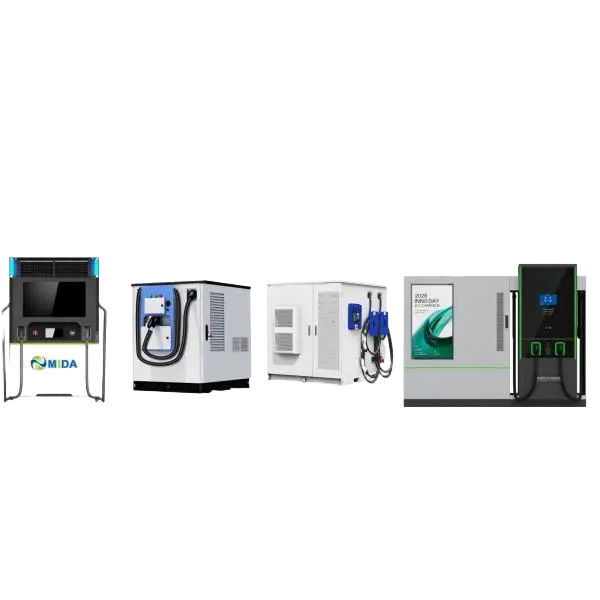
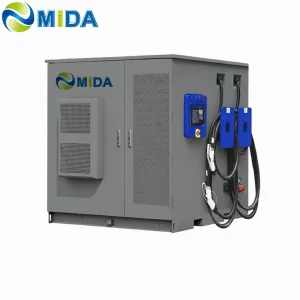
60kWh | 261kWh | 418kWh | 625kWh | 2MkWh
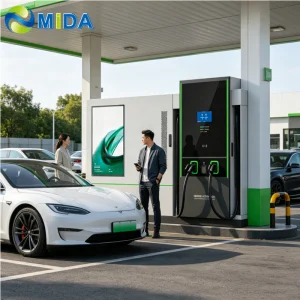

In contrast to classic plug-in charging systems, e-bus pantograph dome architectures facilitate reliable overhead fast-charging...
Read Full Post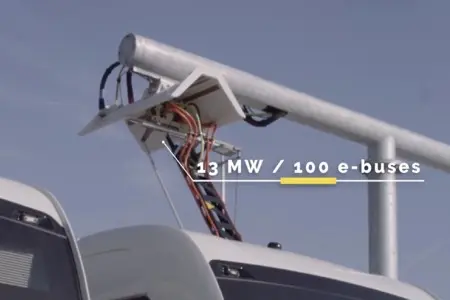
The charging time depends on the battery capacity, energy density, ambient temperature, and the maximum power delivery...
Read Full Post
Installing a "Pantograph Up" system dome requires precise mechanical alignment, robust concrete foundation planning, and smart electrical integration...
Read Full Post
Luxembourg industrial sites face strict peak-demand tariffs. Traditional grid capacity upgrades involve extensive processing times with regional network operators, along with high capital expenses. Integrated BESS charging stations allow companies to buffer energy from the grid at off-peak rates, using this stored energy to fast-charge electric vehicles during peak operating windows. This bypasses the need for costly substation expansions.
Our BESS chargers comply with the European standard CCS2 (Combined Charging System Type 2), which is standard across Luxembourg. We also support CHAdeMO, Chinese GBT, and the Tesla-backed NACS connector standards, ensuring full interoperability for global transport fleets.
Yes, all our BESS enclosures feature IP54 or IP55 ingress protection and are equipped with advanced intelligent thermal management systems. Liquid-cooled configurations automatically heat the battery packs during freezing winter months and cool them during peak summer heat, maintaining an optimal cell operating temperature of 15°C to 35°C.
We use high-security LFP (Lithium Iron Phosphate) cell chemistry, which has a higher thermal runaway threshold than ternary batteries. The cells are managed by a multi-level Battery Management System (BMS) that monitors voltage, current, and temperature at the cell level. Additionally, our units feature built-in aerosol-based fire suppression systems for maximum safety.
Absolutely. Our systems offer built-in MPPT (Maximum Power Point Tracking) solar input modules. This allows direct DC-to-DC routing of solar energy into the storage cells, avoiding conversions that degrade system efficiency.
Speak directly with our expert team of electrical engineers to design a customized BESS charging station infrastructure that matches your operational needs in Luxembourg or worldwide.
Send Inquiry Now