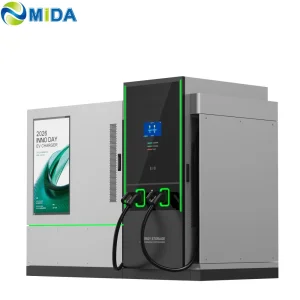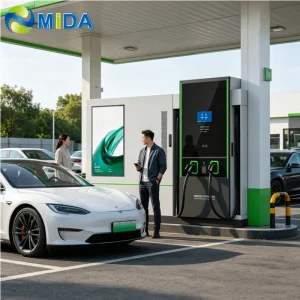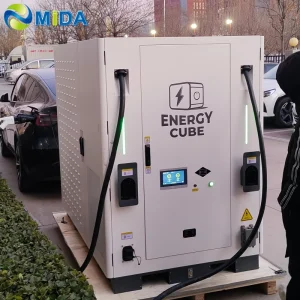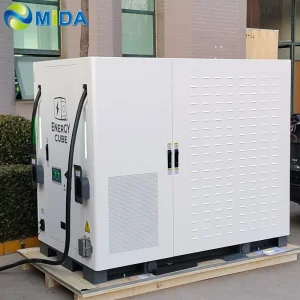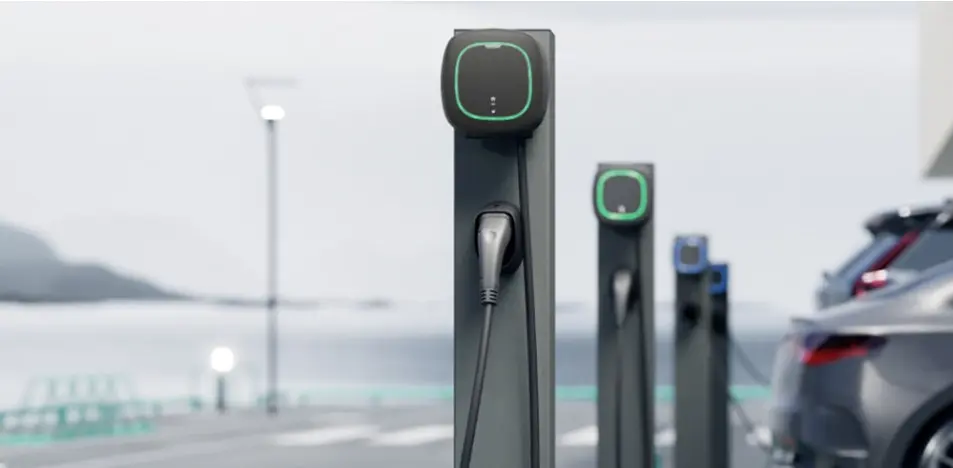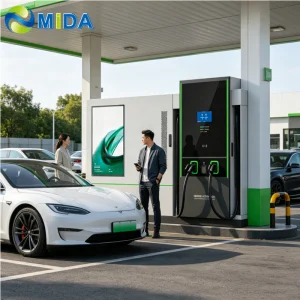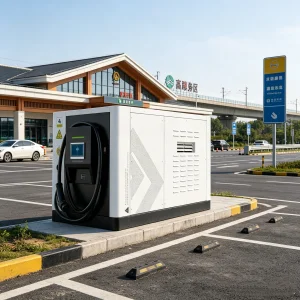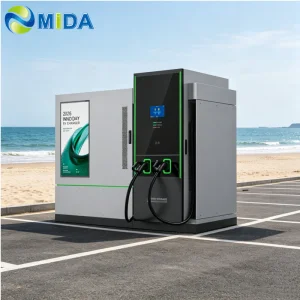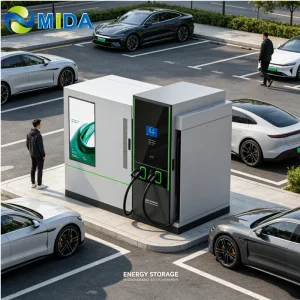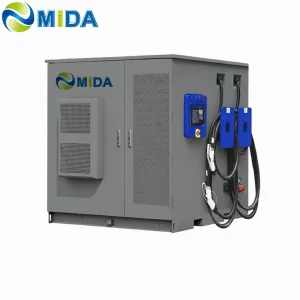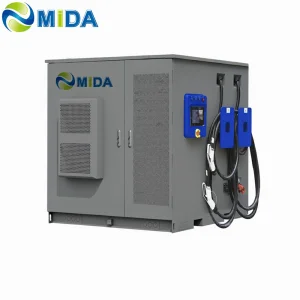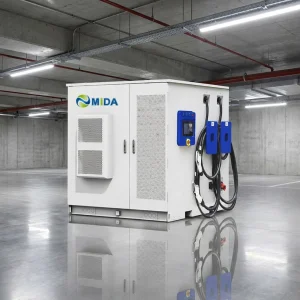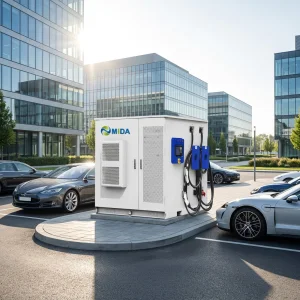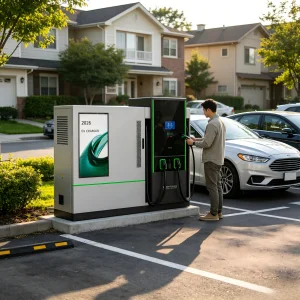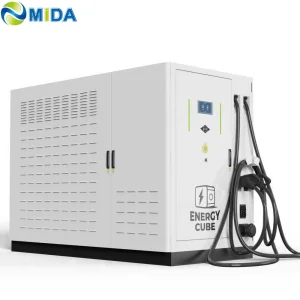
Intelligent battery-buffered ultra-fast DC charging configurations tailored for UK grid constraints and DNO requirements.
The United Kingdom's commitment to achieving Net-Zero by 2050 has sparked an unprecedented surge in Electric Vehicle (EV) adoption across commercial fleets, public transport, and private sectors. However, this transit revolution faces a critical structural barrier: Grid Connection Bottlenecks. Across UK Distribution Network Operator (DNO) regions, requesting new grid capacity upgrades for High-Power Charging (HPC) hubs can take anywhere from 3 to 7 years, incurring prohibitive capital costs.
This is where Battery Energy Storage System (BESS) Integrated Charging Stations act as a catalyst. By decoupling charging demands from instantaneous grid capacity, BESS technology allows operators to harvest low-cost off-peak energy, integrate localized solar PV arrays, and deliver high-power DC charging (up to 480kW and beyond) without triggering costly grid reinforcement. It bypasses DNO upgrade delays, optimizing Capital Expenditure (CAPEX) while safeguarding operational continuity.
Shanghai Mida Cable Group Ltd., operating via its specialized subsidiaries—Shanghai Mida EV Power Co., Ltd., Shenzhen Mida EV Power Co., Ltd., and Shanghai Mida New Energy Co., Ltd.—stands as a preeminent global provider of electric vehicle infrastructure components, DC charging stations, and utility-scale battery energy storage systems.
From advanced liquid-cooled cable configurations (delivering up to 1000A) to smart bidirectional V2G power modules and containerized megawatt BESS stations, MIDA Group's vertically integrated supply chain ensures unparalleled manufacturing efficiency, reliable lead times, and robust product durability tested under demanding conditions.
Ensuring reliability, efficiency, and compliance across complex grid environments in the United Kingdom.
We deploy premium Lithium Iron Phosphate (LiFePO4 - LFP) cell configurations across all standard and custom BESS cabinets. LFP technology offers high thermal stability, up to 6000 cycles at 80% DoD, and avoids the environmental concerns associated with Cobalt-based chemistries.
Our solutions feature complete compliance with UK energy network standards, including Engineering Recommendation G99 (for grid-connected generation systems) and G100 (for export limitation schemes), preventing unwanted reverse power flows into local DNO networks.
To support high C-rate continuous operation, our systems incorporate high-efficiency liquid cooling plates. This ensures cell-to-cell temperature differentials stay below 2°C, limiting degradation and reducing thermal runaway risks compared to air-cooled models.
How UK commercial enterprises, fleet depots, and highway services leverage BESS to optimize grid capacity.
Large UK logistics hubs transitioning to electric commercial vehicles (such as heavy vans and HGVs) often face grid capacity constraints. Our integrated BESS solutions store energy overnight during low tariff windows (e.g., Octopus Go / commercial off-peak rates) and discharge it during peak daytime logistics shifts to charge vehicles simultaneously without overloading local substations.
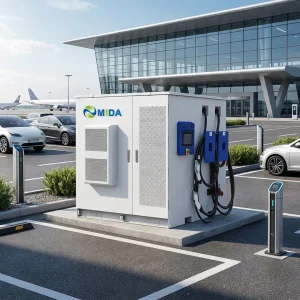
Ultra-Fast charging hubs require massive grid draws (often 1MW to 10MW). BESS integration acts as a power buffer. By trickling power from the grid during quiet periods, it delivers high-current output to multiple 150kW-350kW CCS2 dispensers during busy periods, offering a reliable user experience without grid dependency.
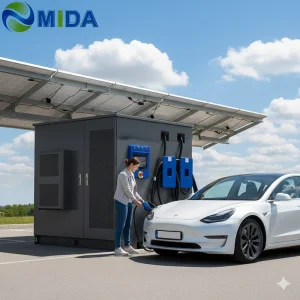
Commercial offices, retail parks, and factories can combine roof-mounted solar PV systems with our BESS chargers. Excess solar generation is stored in the battery instead of being exported for low feed-in tariffs, maximizing self-consumption and reducing overall site electricity expenditure.
Leveraging Chinese manufacturing scale is a significant advantage when deploying capital-intensive energy infrastructure. The domestic Chinese battery supply chain controls over 70% of global lithium refining and battery cell manufacturing capacity. This density ensures MIDA Group has direct access to high-grade cells, micro-processors, and liquid cooling plates at optimized baseline costs.
By conducting design, system integration, software development, and quality assurance under one roof at our state-of-the-art facilities in Shanghai and Shenzhen, we offer cost-optimized engineering solutions. Every system undergoes extensive multi-point testing, including insulation resistance checks, thermal imaging chamber sweeps, and high-current discharge testing, ensuring compliance with BS EN 61851 and UK safety standards prior to export.
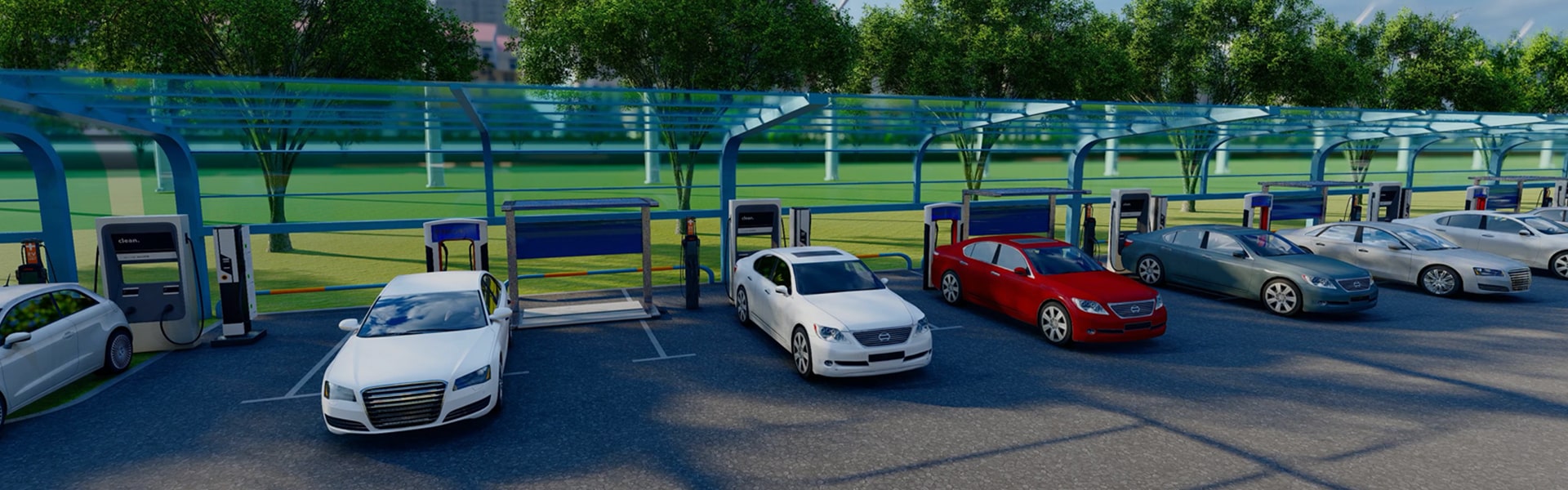
Comprehensive vehicle charging cables, power conversion modules, and energy storage enclosures.
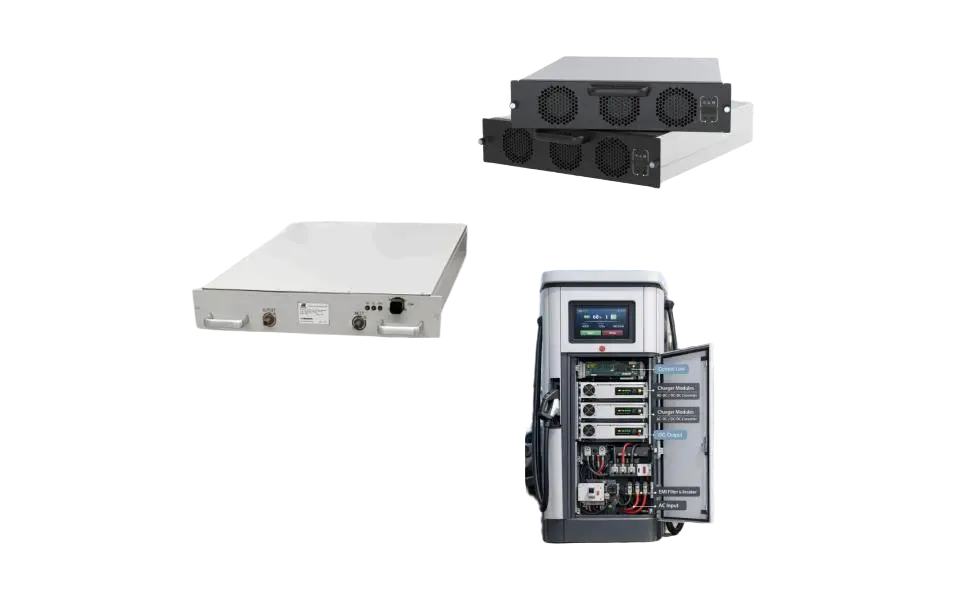
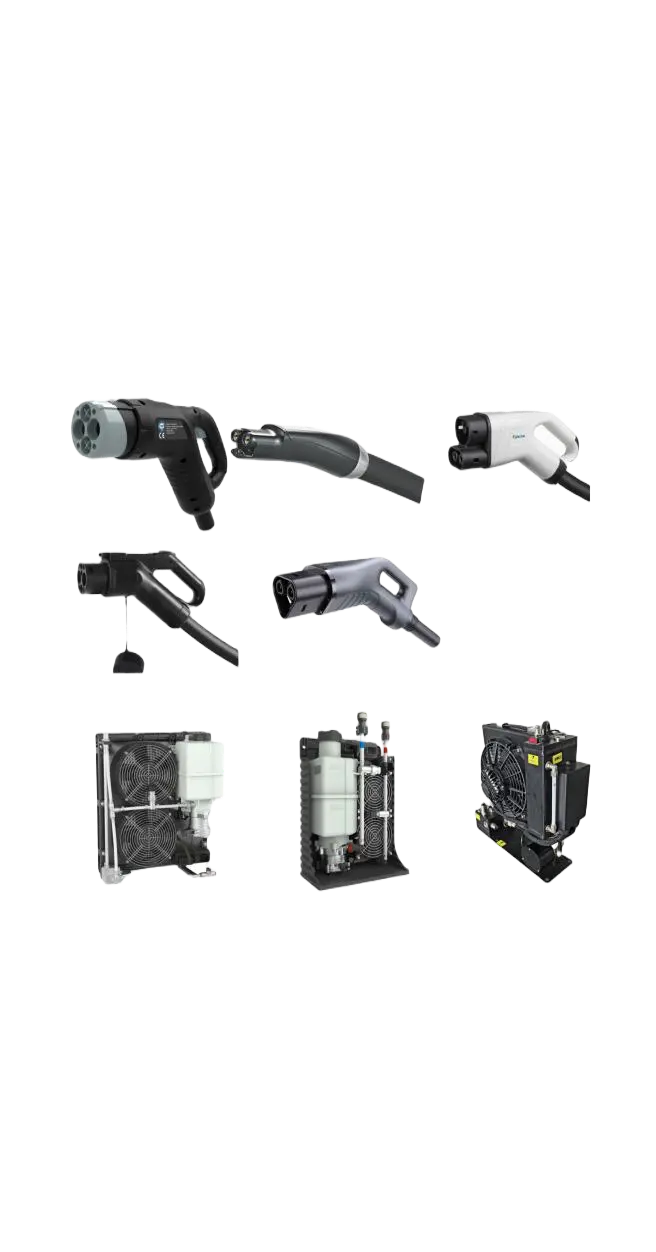
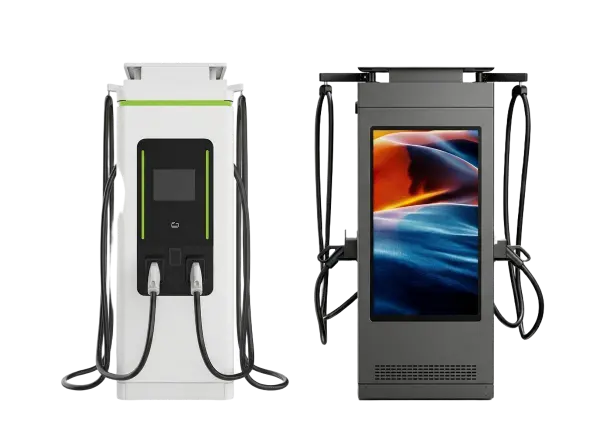
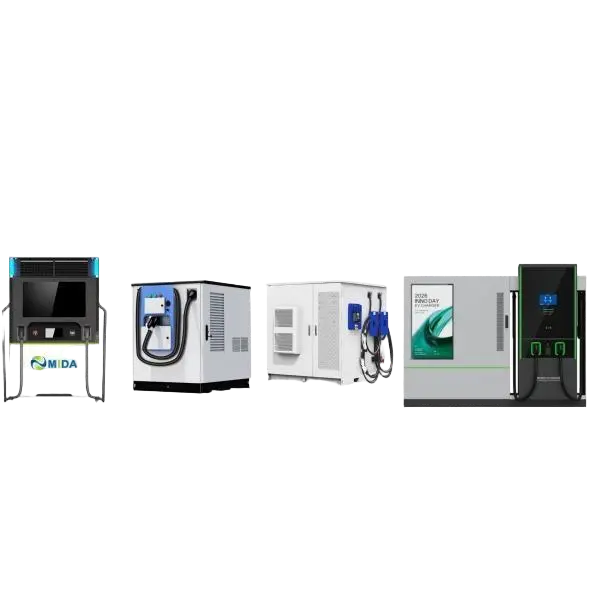
High performance infrastructure tailored to public, industrial, and fleet applications.
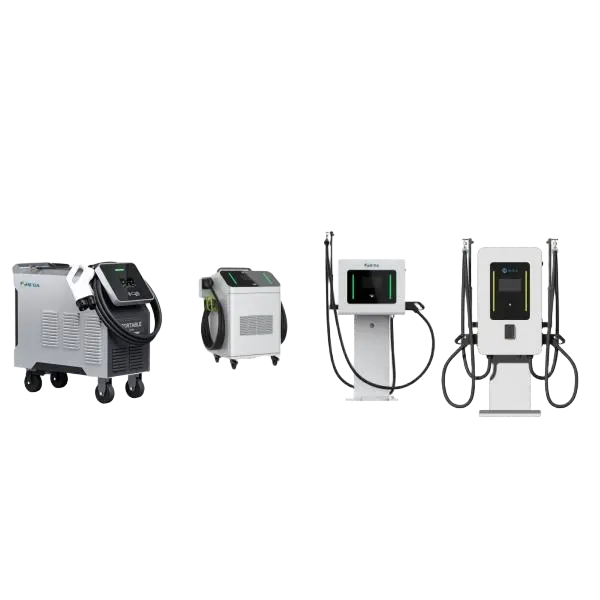
Versatile and modular 7kW, 20kW, 30kW, 40kW, 60kW, and 80kW configurations.
View More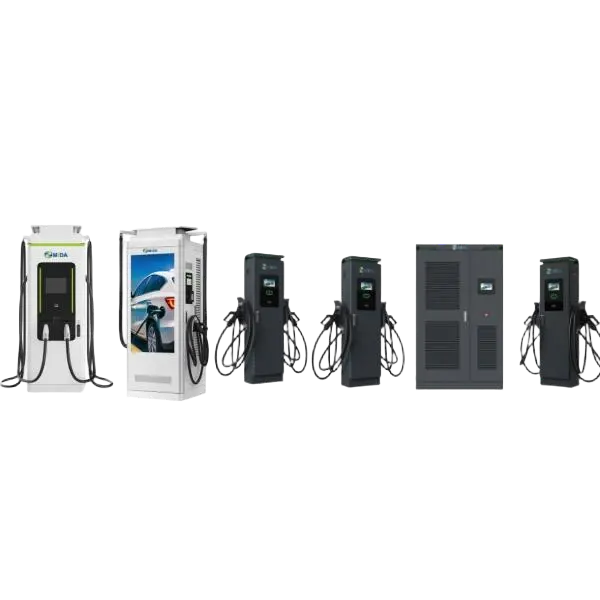
High capacity fast DC systems ranging from 60kW-480kW up to 1440kW split configurations.
View More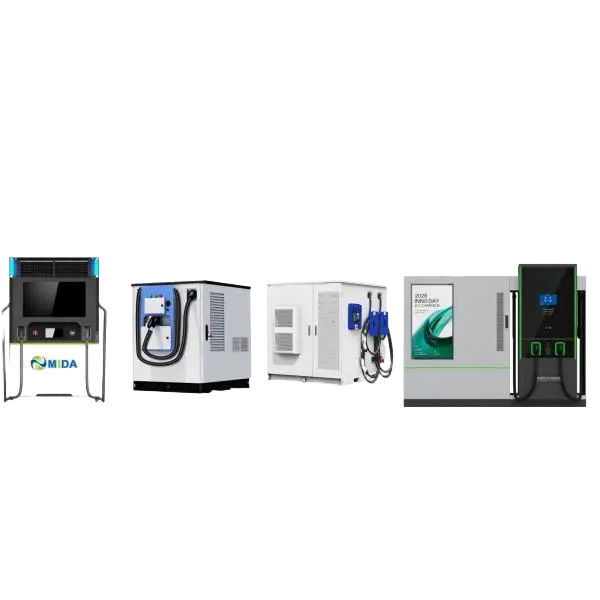
Battery integrated hybrid storage units from 60kWh to 2MWh capacity options.
View MoreStay updated with the latest technological developments in the public transport and heavy vehicle charging sectors.

What are the advantages of an e-bus pantograph dome? In contrast to classic plug-in charging systems, e-bus pantograph systems allow automated opportunity charging with massive output currents...
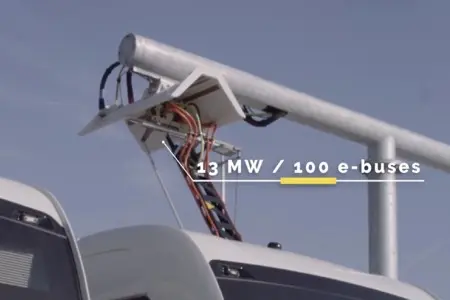
How long does it take to charge with an e-bus pantograph? The charging time depends on the battery capacity and the grid capacity available at the terminal station, usually completing charges in minutes...
How to Install the Pantograph Up Charger System Dome for Electric Bus. Step-by-step layout planning guidelines for civil construction, alignment validation, and safety switch integrations...
Detailed answers to key technical questions regarding UK BESS installations, certifications, and compliance.
Select the appropriate capacity, power output, and physical footprint for your localized UK application.
Looking to deploy battery-buffered high-power EV charging infrastructure without grid upgrades? Contact MIDA Group's engineering design division for customized sizing, pricing, and structural evaluations.
Send Inquiry Now