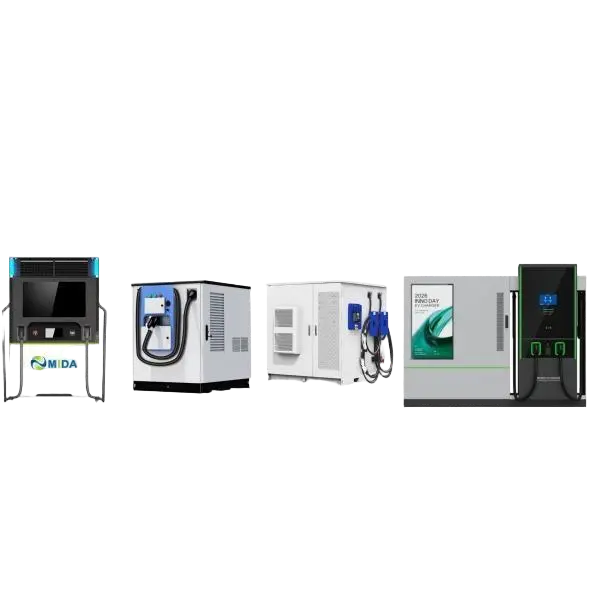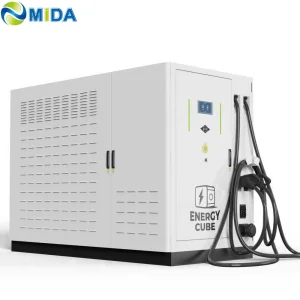
Engineered specifically for heavy duty commercial deployment and remote microgrid stabilizing operations across Central Africa.
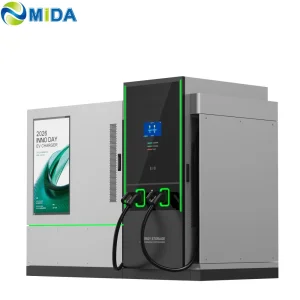
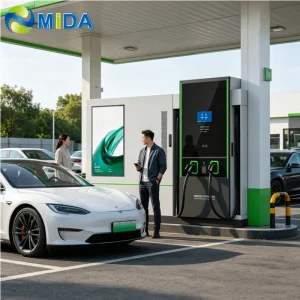
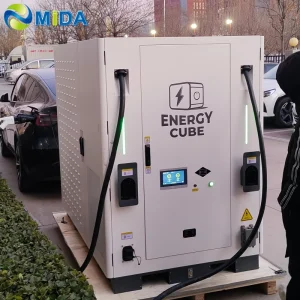
The Central African Republic (CAR) presents a unique energetic profile characterized by extensive geographical dispersion, high dependency on biomass, and a national electric grid (ENERCA) facing deep structural constraints. With peak capacity in Bangui struggling to meet base loads and rural provinces entirely disconnected, the application of **Battery Energy Storage Systems (BESS)** coupled with EV/Industrial charging capability is no longer a futuristic development—it is an immediate infrastructural necessity.
Traditional energy frameworks in CAR rely heavily on centralized diesel generator plants, exposing companies, municipal services, and industrial mines (such as those in Ndassima and surrounding regions) to severe supply-chain shocks, volatile fuel pricing, and costly maintenance schedules. Paired with the region's immense solar potential (average horizontal solar radiation exceeding 5.0 kWh/m²/day), BESS technology bypasses the traditional grid requirement. By storing solar energy generated during peak sunlight hours, BESS Charging Stations provide stable, continuous, and high-power discharge curves required for transport networks, heavy mining operations, and regional agricultural machinery.
Exceptional solar irradiance index across CAR, making solar-linked BESS highly viable.
Urban/rural grid deficit makes autonomous microgrid power storage systems critical.
Substantial savings achieved by displacing diesel fuel imports with clean solar-BESS energy.
The primary barrier to transport electrification and industrial automation in Central Africa is the absence of high-power substation transmission lines. Standard direct-current (DC) fast-charging infrastructure requires immediate, massive pull from the local electrical network, which would trigger immediate grid collapse or equipment degradation under local network conditions.
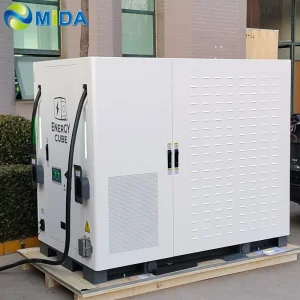
To address this challenge, **BESS Integrated Charging Stations** act as power buffers. These systems slowly ingest power from a weak grid connection or a local solar array over several hours and store it safely in liquid-cooled LFP cells. When an electric truck, utility vehicle, or mining unit hooks up for a charge, the station discharges this energy at high speeds (up to 480kW or 960kW), bypassing local grid thermal limits. Furthermore, mobile BESS emergency units can be transported along key corridors—such as the vital Douala-Bangui commercial transport route—to support stranded commercial fleets or field operation centers.
Shanghai Mida Cable Group Ltd. operates through its wholly owned subsidiaries: Shanghai Mida EV Power Co., Ltd., Shenzhen Mida EV Power Co., Ltd., and Shanghai Mida New Energy Co., Ltd.
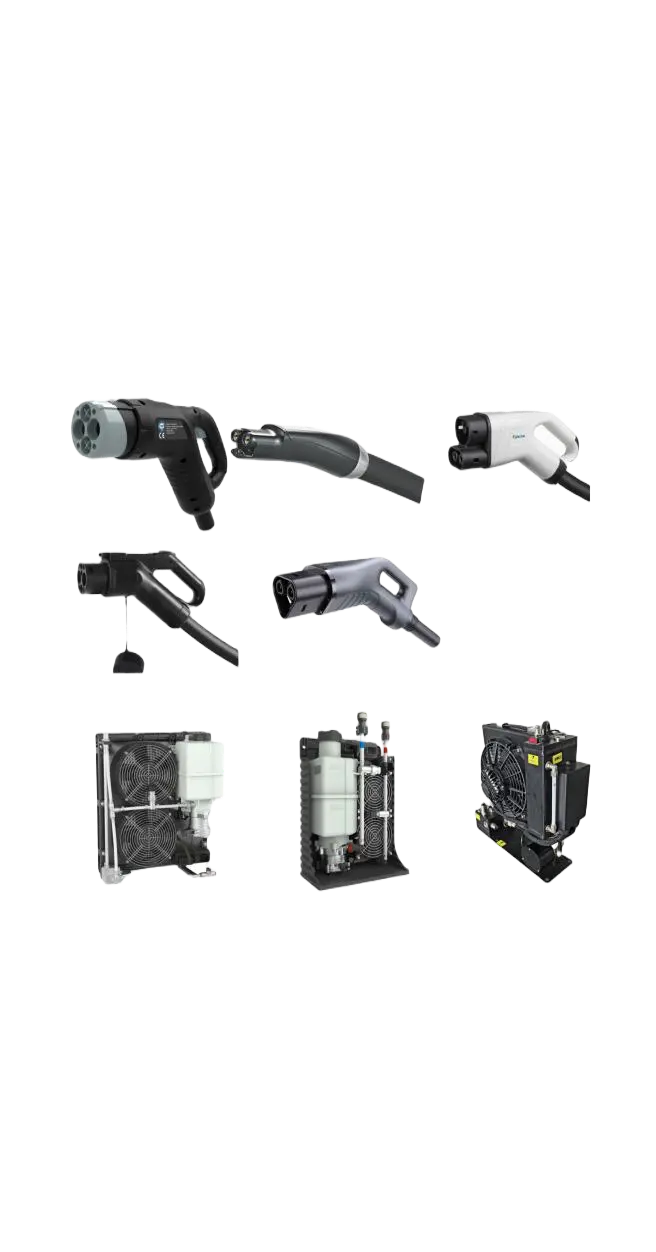
Mida Cable manufactures a comprehensive range of EV charging cables, including 16A–80A J1772 cables, 16A–63A IEC 62196-2 Type 2 cables, and DC fast charging cables: CCS1 (80A–500A), CCS2 (125A–1000A), CHAdeMO (125A–300A), GBT (200A–1000A), and NACS connectors (250A–600A).
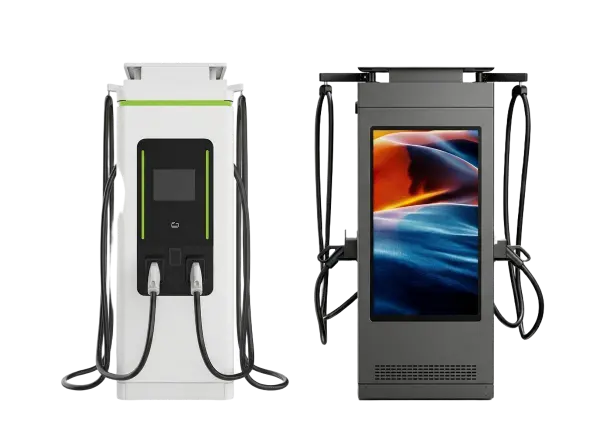
MIDA EV Power produces a full lineup of EV charging stations, such as 7kW–50kW mobile chargers, 3.6kW–7.2kW portable DC chargers, 360kW–1440kW split-type DC fast chargers, 20kW–50kW wall-mounted DC chargers, and 60kW–480kW floor-standing DC fast charging stations.
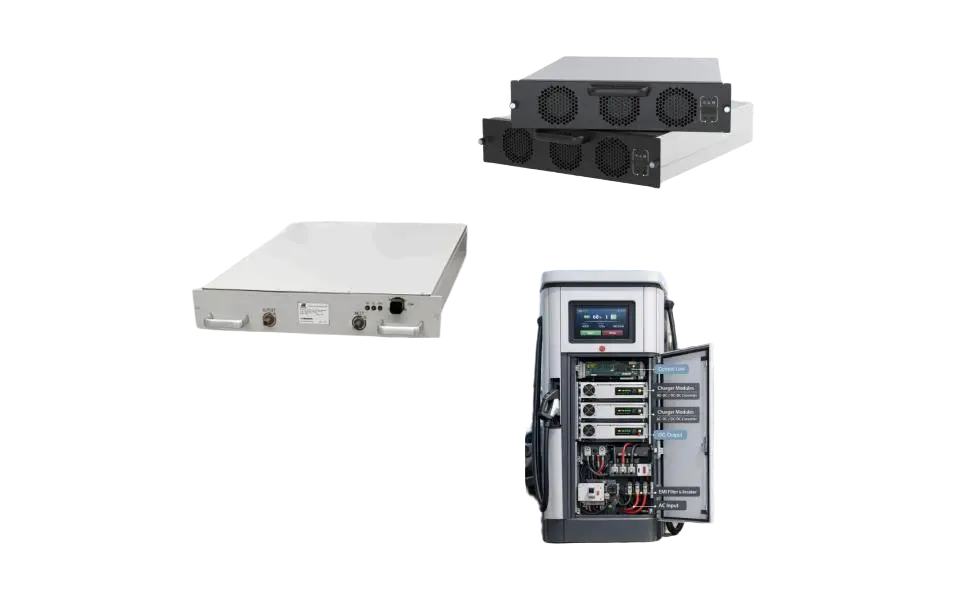
MIDA New Energy specializes in EV charger power modules, offering 20kW–60kW standard modules, 40kW–125kW liquid-cooled modules, 30kW–62.5kW bidirectional modules, and 20kW–45kW V2G charging modules.
Connect with our Technical Engineers
Deploying heavy infrastructure like BESS units in landlocked nations like the Central African Republic requires impeccable equipment build quality. MIDA's Factory 4.0 manufacturing processes utilize automated robotic cell-sorting, multi-layered quality control, and rigorous thermal testing chambers that simulate extreme African climates (up to 55°C ambient temperatures with 95% humidity).
Our integrated supply chain guarantees the following advantages for global procurement partners and local CAR engineering firms:
Our manufacturing utilizes automated cell sorting and optical inspection to guarantee uniform internal resistance, extending battery pack lifetimes to 6,000+ full cycles (at 80% Depth of Discharge).
Our BESS stations are fully compatible with CCS1, CCS2, GBT, NACS, and CHAdeMO standards. This multi-protocol approach ensures compatibility with all electric machinery, trucks, and personal passenger vehicles.
To prevent thermal runaway in the tropical heat of CAR, our systems feature active liquid cooling plates and localized aerosol fire extinguishing modules within every individual battery tray.
For procurement managers handling mineral concessions, agricultural hubs, or logistics projects in Central Africa, MIDA Group handles complex multimodal logistics, providing sea freight clearance through Douala, Cameroon, followed by secure overland transit to Bangui and outlying project areas, complete with critical spare part packages and remote tracking telematics.
High-quality components, charging modules, and full-scale power units manufactured to international standards.
Gold and mineral extraction in the interior of the Central African Republic requires constant high-voltage supply for ore processing, pump systems, and heavy transportation machinery. Often, these mine sites operate hundreds of kilometers away from any transmission line, relying on diesel convoys that are vulnerable to logistics interruptions. By integrating localized solar arrays with containerized **2MWH BESS systems**, mining operators can achieve up to 80% fuel reduction, running processing lines and recharging electric dump trucks or haulers with stable, clean power.
In rural CAR, agricultural losses occur due to the lack of refrigeration and processing systems. Small-scale cooperative microgrids built around a **120kWh to 240kWh BESS system** can run high-draw cooling machinery and processing mills. In addition, these hubs can double as charging depots for electric logistics motorcycles and light utility trucks that transport produce to market centers like Bangui.
As Bangui shifts towards modern transport solutions, charging infrastructure must scale without overwhelming local substations. Deploying a centralized **MIDA Smart BESS Station (e.g., 418kWh / 240kW)** allows fleet operators to draw off-peak grid power at night, storing it to deliver rapid charging during high-demand daytime schedules, avoiding grid overload and high demand charges.
Given the volatile infrastructure context, humanitarian organizations, clinics, and administrative outposts require uninterrupted energy. The **MIDA 200kWh Mobile EV Charger & MPPT Solar Station** can be rapidly deployed to field sites, providing immediate power generation, telecommunications backup, and heavy vehicle charging in remote regions.
Engineered for long life, high thermal resilience, and variable electrical inputs. Complete with smart BMS interfaces.
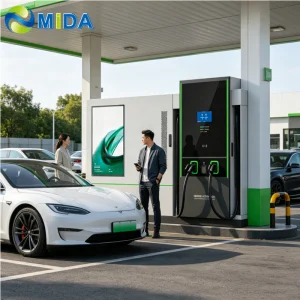
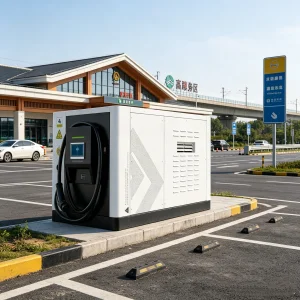
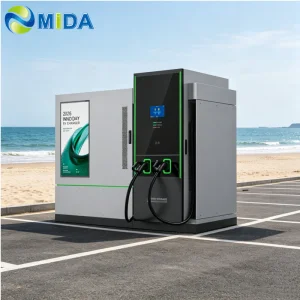
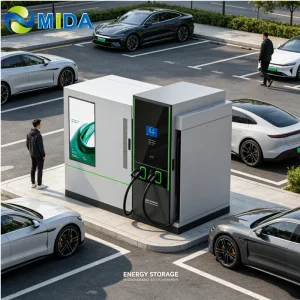
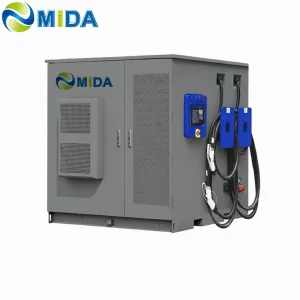
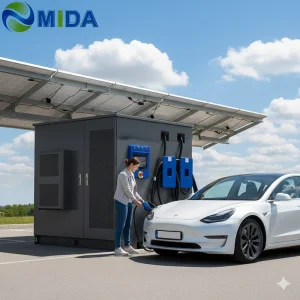
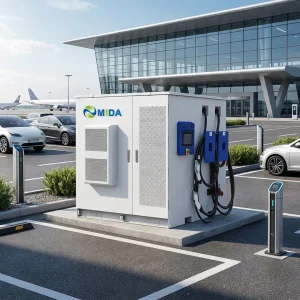
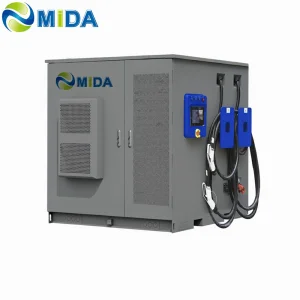
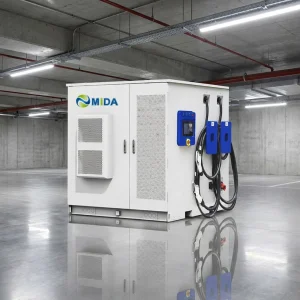
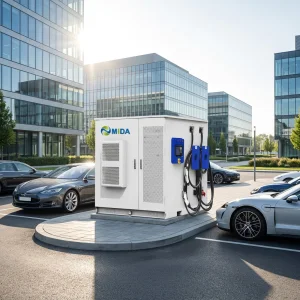
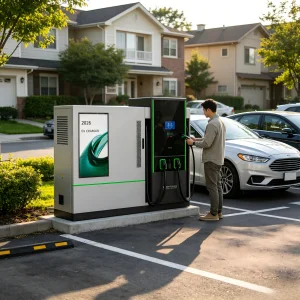
Standard energy storage systems manufactured for temperate climates often suffer from rapid capacity fade, cycle life degradation, or critical failures when exposed to high dust concentrations, relative humidity fluctuations, and ambient temperatures exceeding 40°C. MIDA's engineering department has developed advanced mitigation strategies to ensure maximum uptime for installations in the Central African Republic:
Fine sand and high humidity are major causes of electronic failure in tropical sub-Saharan regions. Our outdoor BESS containers utilize double-wall insulated steel enclosures with custom gasket seals. This design isolates the sensitive battery packs, BMS circuitry, and power modules from external dust, moisture, and insects while minimizing heat transfer from intense solar radiation.
Our premium liquid-cooled BESS modules pump specialized dielectric coolant directly through the battery pack channels. By maintaining temperature variation between individual lithium cells within a strict ±2°C window, we prevent the localized hot spots that lead to thermal runaway, ensuring consistent battery health over thousands of deep cycles.
Our integrated MPPT charge controllers have a dynamic input voltage range, adapting to solar output fluctuations or unpredictable local voltage inputs. The bidirectional inverter system allows operators to seamlessly switch between grid-following and grid-forming modes, establishing stable, self-contained AC microgrids anywhere in CAR.
Expert insights for engineers, project developers, and procurement managers targeting energy storage installations in the Central African Republic.
Stay updated with our latest technological developments and industry news.
Our expert technical engineers are here to design a custom, high-capacity solar BESS microgrid or vehicle charging system tailored to your budget and site conditions.
Send Inquiry Now