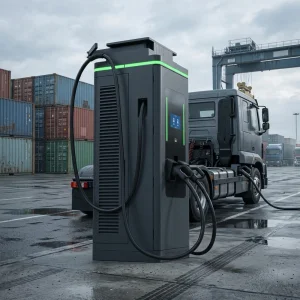
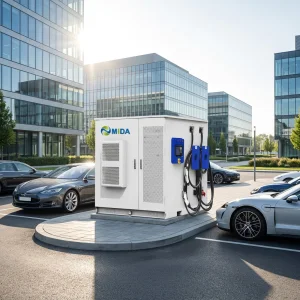
Shanghai Mida Cable Group Ltd. operates through its wholly owned subsidiaries: Shanghai Mida EV Power Co., Ltd., Shenzhen Mida EV Power Co., Ltd., and Shanghai Mida New Energy Co., Ltd.
Mida Cable manufactures a comprehensive range of EV charging cables, including 16A–80A J1772 cables, 16A–63A IEC 62196-2 Type 2 cables, and DC fast charging cables: CCS1 (80A–500A), CCS2 (125A–1000A), CHAdeMO (125A–300A), GBT (200A–1000A), and NACS connectors (250A–600A).
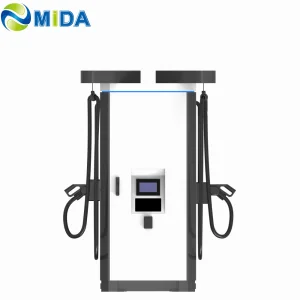
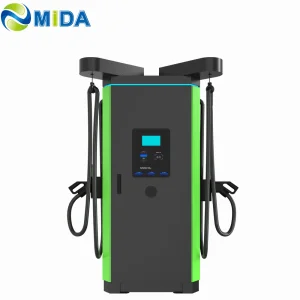
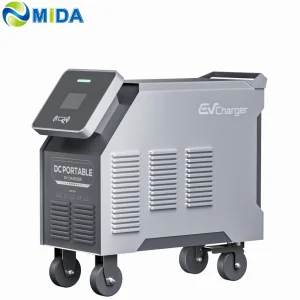
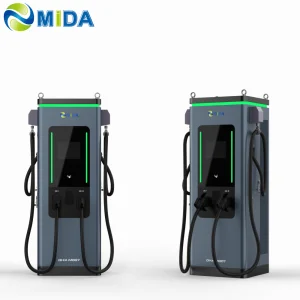
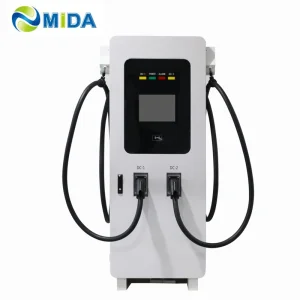
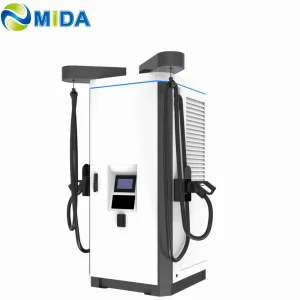
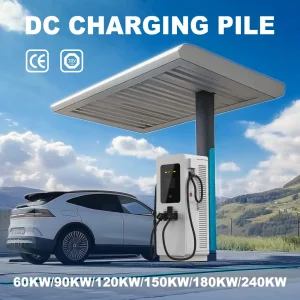
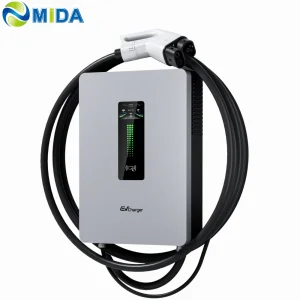
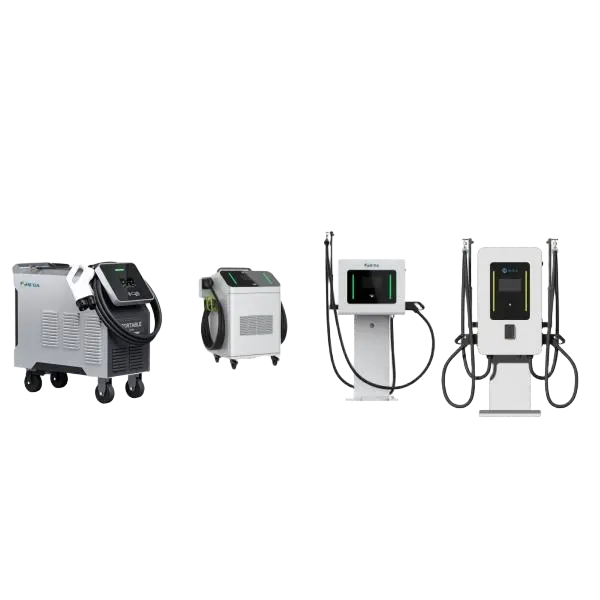
MIDA EV Power produces a full lineup of EV charging stations, such as 7kW–50kW mobile chargers, 3.6kW–7.2kW portable DC chargers, 360kW–1440kW split-type DC fast chargers, 20kW–50kW wall-mounted DC chargers, and 60kW–480kW floor-standing DC fast charging stations.
MIDA New Energy specializes in EV charger power modules, offering 20kW–60kW standard modules, 40kW–125kW liquid-cooled modules, 30kW–62.5kW bidirectional modules, and 20kW–45kW V2G charging modules.

The global transition to electric mobility has reached an inflection point where charging infrastructure must match both vehicle demand and grid capability. Among various charging standards, the Combined Charging System (CCS) has solidified its position as the leading architecture across Europe and North America. Specifically, the CCS 50kW DC Fast Charger serves as a critical keystone in this infrastructure. While ultra-fast 150kW+ units are suited for highways, the 50kW variant represents the optimal intersection of capital expenditure, grid deployment simplicity, and speed for medium-dwell environments.
Deploying high-power charging stations (150kW to 360kW) typically demands bespoke medium-voltage substations, lengthy permitting cycles, and high demand-charge rates from electric utility providers. For many business locations, this represents a cost-prohibitive barrier.
A CCS 50kW charger, by contrast, operates at a capacity that can often connect directly to existing commercial low-voltage panels (400V AC in Europe, 480V AC in North America) without requiring utility-level transformer upgrades. This makes it the preferred power class for fleet operations, local transit networks, commercial workplaces, and multi-family residential hubs. By charging a standard passenger car or commercial van from 20% to 80% state of charge (SoC) in approximately 45 to 60 minutes, it matches typical commercial dwell times perfectly.
Information Gain Insight: Sourcing from an integrated China CCS 50kW charger manufacturer like Mida Group enables operators to mitigate installation complexity through custom-engineered modular cabinets that support future scaling (e.g., modular design that upgrades from 30kW to 40kW or 50kW without structural chassis replacement).
China's prominence as a supplier of EV charging systems is not merely a matter of lower labor costs; it is driven by vertical integration. At MIDA Group, every core subsystem—ranging from the high-frequency transformer and EV charging power modules (20kW–60kW standard & liquid-cooled modules) to the mechanical design of the liquid-cooled DC cables and proprietary control PCB assembly—is designed and produced under a single, unified manufacturing ecosystem.
This level of vertical control drastically reduces component friction, optimizes thermal dissipation layouts, and ensures compliance with strict international testing frameworks (including CE, TUV, UL, and ETL certification pathways). For international B2B procurement professionals, this translates into consistent quality control, shortened lead times, and hardware that works reliably out of the box.
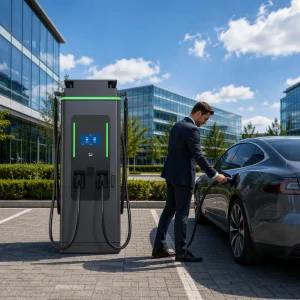
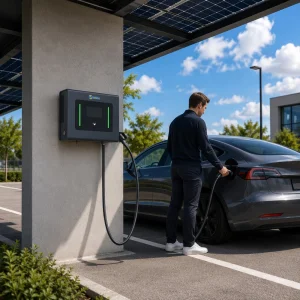
Flexible AC solutions designed for home, workplace, and commercial parking spaces.
View More AC Series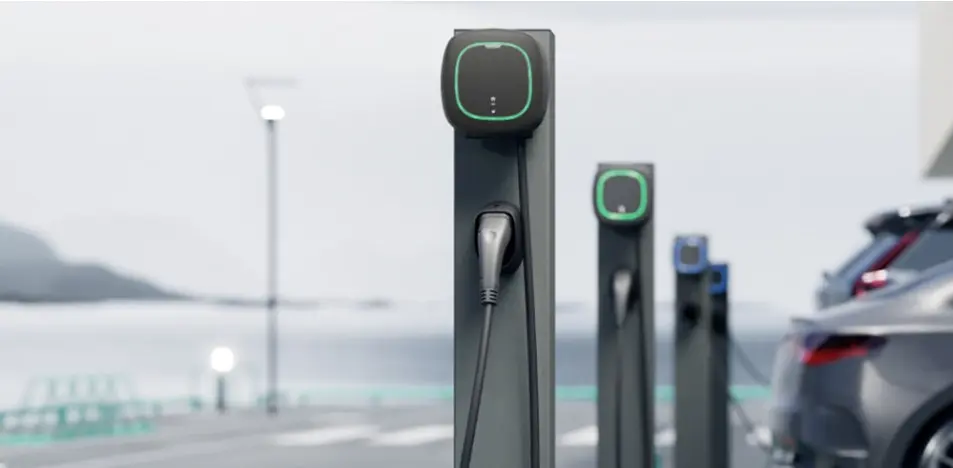
Portable fast charging systems with integrated CCS, CHAdeMO, or GBT outlets.
View More Mobile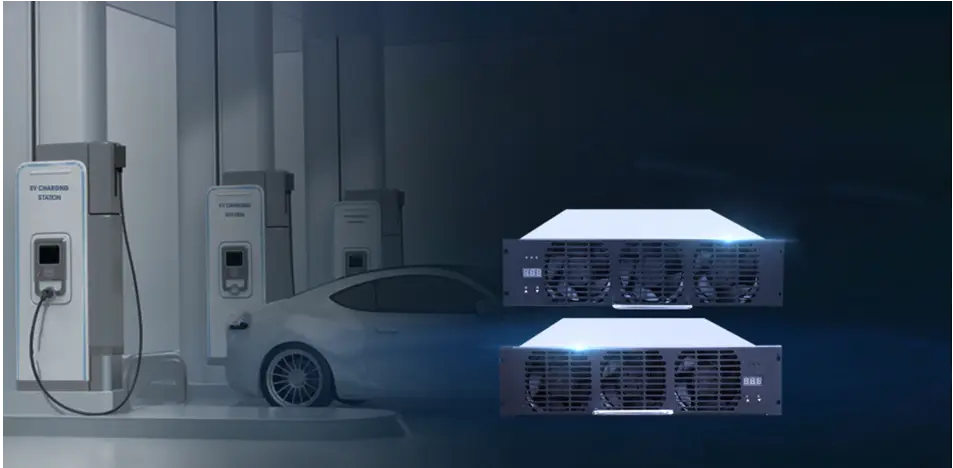
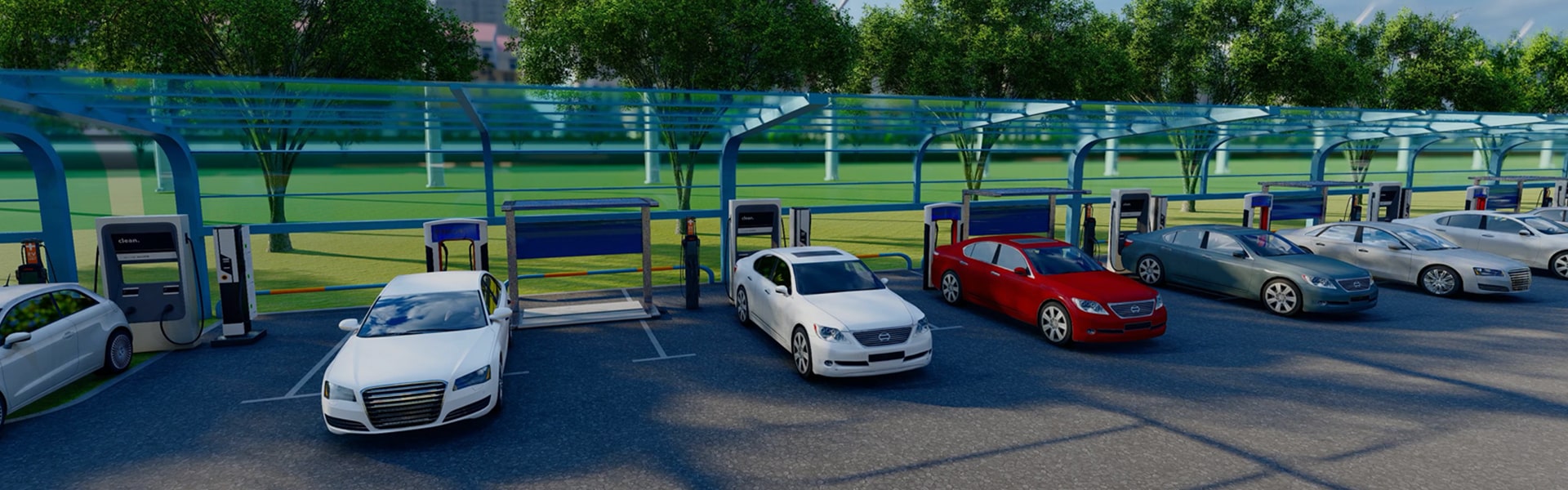
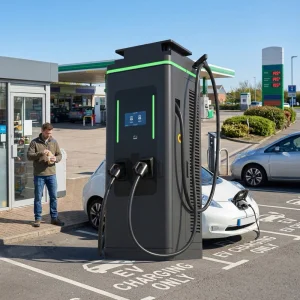
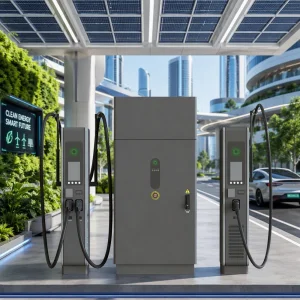
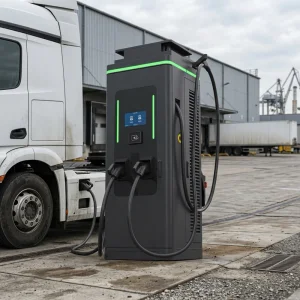
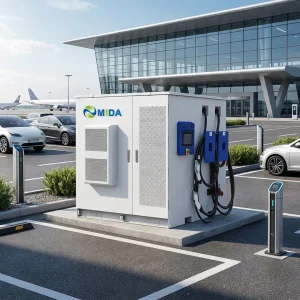
Heavy-duty high-speed charging infrastructure designed for intensive public use.
View More DC StationsDesigned for smart microgrids and remote operations. Integrates battery storage with ultra-high-power output to deliver megawatt-level charging independently of direct high-capacity utility connections.
View Storage Systems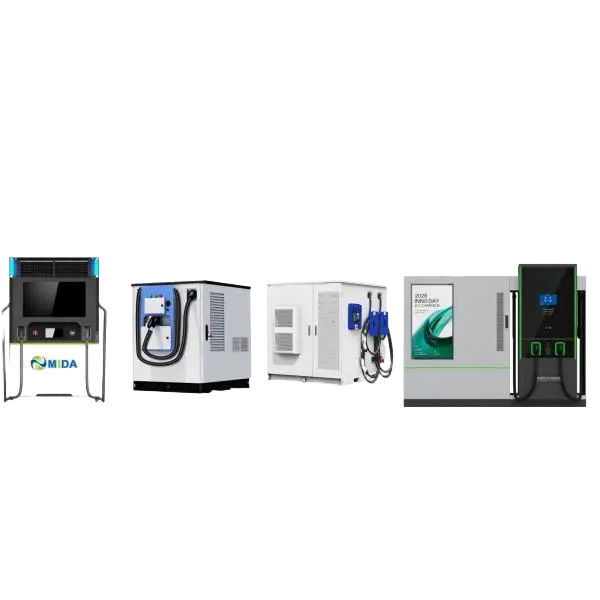
The architecture of public charging is evolving. While historically 50kW chargers utilized proprietary control boards, modern standards demand compliance with OCPP 1.6J and OCPP 2.0.1 protocol stacks. These protocols enable remote diagnostics, dynamic tariff management, and secure firmware updates via cloud connections.
Furthermore, integration with BESS (Battery Energy Storage Systems) is growing in popularity. By pairing a 50kW CCS charging post with a local 65kWh to 200kWh battery storage cabinet, installers can build rapid-charging systems that deliver peak energy without straining local grid connections.