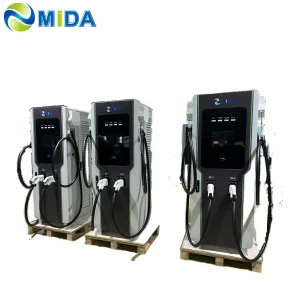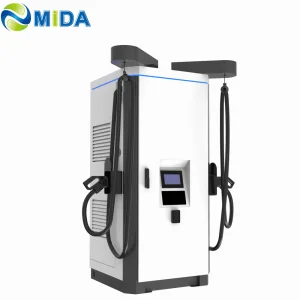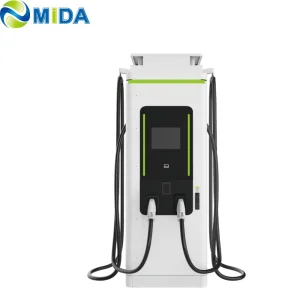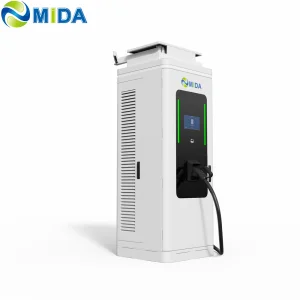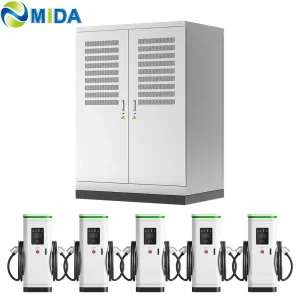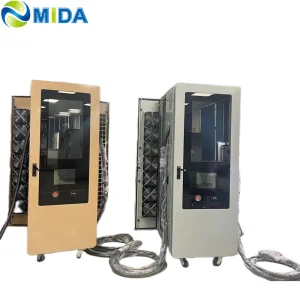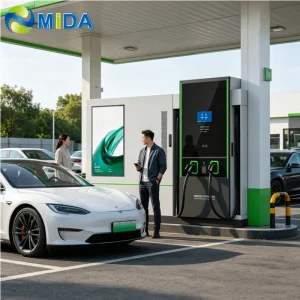
China 50kW CHAdeMO Rapid Charger Manufacturers & Supplier

High-efficiency, network-integrated DC charging infrastructure engineered for fleet operation, municipal utilities, and commercial charging networks worldwide.

Global B2B Procurement Demands for 50kW CHAdeMO Solutions

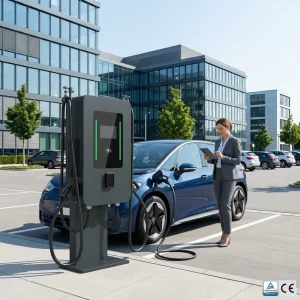
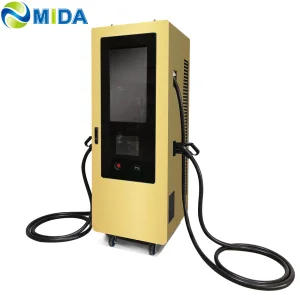
As the transportation sector accelerates its transition to electric mobility, global procurement entities, public utility operators, and commercial fleet managers are faced with the challenge of deploying robust charging infrastructure that balances capital expenditure (CAPEX) with operational performance (OPEX). While ultra-fast charging stations (150kW to 360kW) dominate interstate transit corridors, the 50kW CHAdeMO Rapid Charger remains the absolute cornerstone of urban charging configurations, commercial depots, and destination points.

Purchasing managers across Japan, Europe, Oceania, and Latin America specifically target the 50kW power threshold due to grid limitations. Upgrading grid connections to support multi-megawatt configurations can cost upwards of five times the initial charger investment and require months of administrative approvals. A 50kW unit, however, offers the optimal trade-off: it provides rapid, Level-3 DC replenishment (restoring 100–150 kilometers of range in roughly 30 to 45 minutes) while fitting within existing electrical service entries. This avoids the excessive demand charges levied by municipal electric companies for larger power draws.

Key Regional Drivers for 50kW CHAdeMO Specifications:

  • Japan & Asian Markets: The CHAdeMO protocol remains deeply embedded in the infrastructure framework of Japan and several Southeast Asian nations. Compatibility with domestic logistics fleets and municipal vehicles dictates a strict requirement for dedicated CHAdeMO outlets alongside GBT standards.
  • Legacy Fleet Operations in Europe & North America: Despite CCS1/CCS2 expansion, hundreds of thousands of light commercial vehicles, taxis, and early-generation battery electric vehicles (BEVs) depend entirely on CHAdeMO plugs. Dual-standard configurations (CCS + CHAdeMO) at the 50kW power level ensure 100% vehicle coverage for mixed fleets.
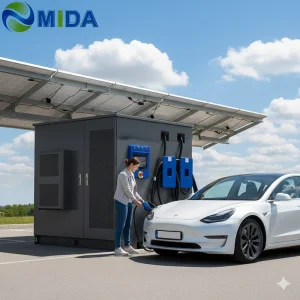
  • Off-Grid and Hybrid Energy Environments: Microgrids, solar-plus-storage projects, and distributed energy setups in regions like Australia and South America specify 50kW chargers because they can be easily driven by 60kWh to 100kWh Battery Energy Storage Systems (BESS) without risking complete system depletion during peak hours.

95%+

Peak Power Module Efficiency

IP54/65

Robust Environmental Protection

OCPP 2.0.1

Advanced Software Integration

100k+

Global Charge Cycles Proven

Macro-Industry Solutions & Technical Engineering Blueprint

Implementing a scalable EV infrastructure requires more than standalone charging hardware. It demands a macro-level systems approach that encompasses grid integration, real-time load management, and multi-tenant software connectivity. A typical commercial deployment utilizes a centralized energy broker that coordinates utility grid feeds, solar arrays, localized battery banks, and the DC charging hubs themselves.

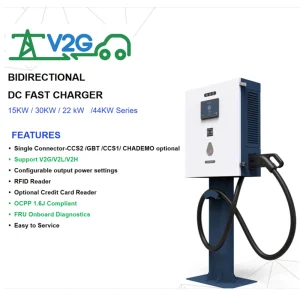
Modern 50kW CHAdeMO installations act as active elements within the Smart Grid. Through bidirectional communication protocol implementations, these units can respond to dynamic price signals, throttling charging speeds during peak utility periods, or even injecting power back into the microgrid via Vehicle-to-Grid (V2G) technology. This capability changes charging stations from static electrical loads into dynamic grid assets.

Dynamic Power Distribution

Utilizes internal multi-module power sharing to dynamically allocate capacity across dual CCS/CHAdeMO outputs, maximizing charge station utilization.

Modular Power Core

Equipped with hot-swappable sub-modules (e.g., 20kW or 30kW units) that ensure uninterrupted operations during maintenance phases.

Thermal Management

Advanced intelligent air cooling with IP54 isolation protects power modules from environmental contaminants and moisture ingress.

Technical Roadmap & Future Outlook

The technical evolution of CHAdeMO fast charging is converging with new co-developed standards, notably the ChaoJi protocol (CHAdeMO 3.0). This next-generation platform is capable of delivering power levels exceeding 500kW while retaining complete backward compatibility with legacy CHAdeMO plugs through multi-protocol adapters and transition cables. Modern 50kW platforms must be constructed with forward-compatible hardware control boards capable of supporting these protocol transitions via simple software firmware updates.

Simultaneously, the industry is transitioning away from standard proprietary billing and networking platforms toward open, interoperable environments managed via OCPP 2.0.1 and ISO 15118. This transition allows auto-authentication (Plug & Charge), secure cryptographic payment structures, and advanced remote diagnostics, minimizing manual site monitoring expenses.

Corporate Strength & Manufacturing Capability

Discover the engineering depth, extensive facilities, and global presence of Shanghai Mida Cable Group.

Welcome to MIDA GROUP

Shanghai Mida Cable Group Ltd. operates through its wholly owned subsidiaries: Shanghai Mida EV Power Co., Ltd., Shenzhen Mida EV Power Co., Ltd., and Shanghai Mida New Energy Co., Ltd.

Mida Cable manufactures a comprehensive range of EV charging cables, including 16A–80A J1772 cables, 16A–63A IEC 62196-2 Type 2 cables, and DC fast charging cables: CCS1 (80A–500A), CCS2 (125A–1000A), CHAdeMO (125A–300A), GBT (200A–1000A), and NACS connectors (250A–600A).

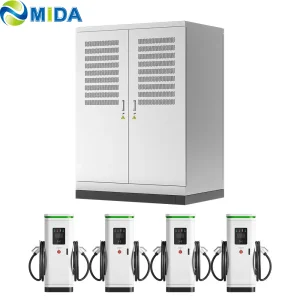
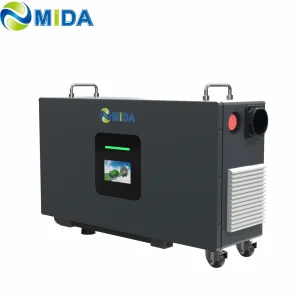
MIDA EV Power produces a full lineup of EV charging stations, such as 7kW–50kW mobile chargers, 3.6kW–7.2kW portable DC chargers, 360kW–1440kW split-type DC fast chargers, 20kW–50kW wall-mounted DC chargers, and 60kW–480kW floor-standing DC fast charging stations.

MIDA New Energy specializes in EV charger power modules, offering 20kW–60kW standard modules, 40kW–125kW liquid-cooled modules, 30kW–62.5kW bidirectional modules, and 20kW–45kW V2G charging modules.

Mida Group Certification Badge

Primary Engineering Solutions

Comprehensive systems and specialized components designed for charging networks, fleet depots, and utility stations.
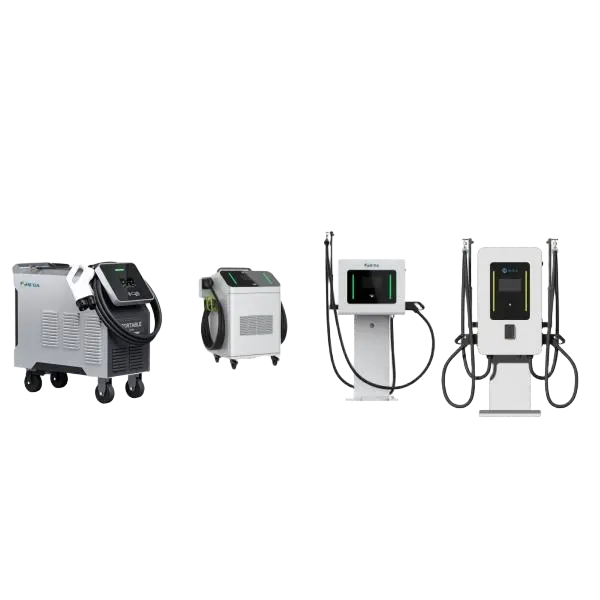
Wall-Mounted/Mobile EV Charger

Wall-Mounted / Mobile EV Chargers

Power Rating: 7kW | 20kW | 30kW | 40kW | 60kW | 80kW
High Mobility, Rapid Commissioning
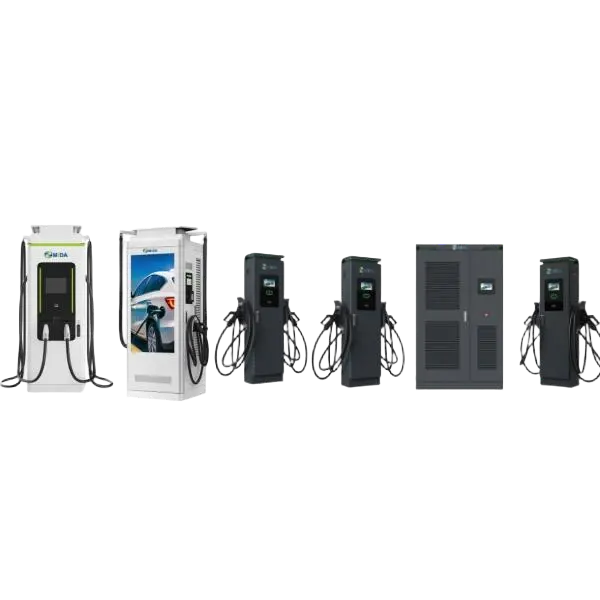
DC Charger Station

DC Fast Charger Stations

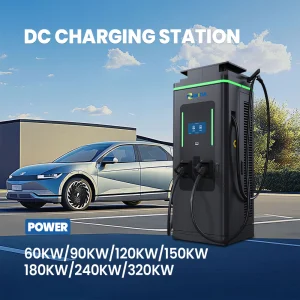
Power Rating: 60kW–480kW | 360kW–1440kW
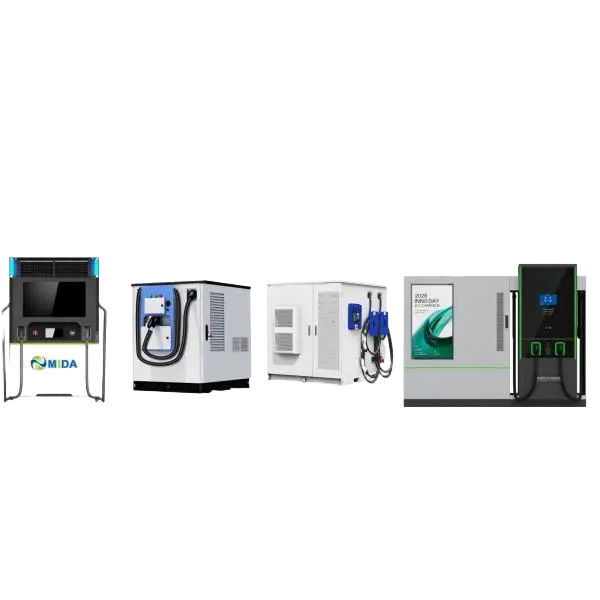
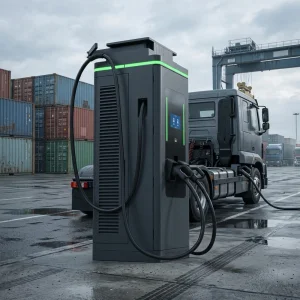
Industrial Fleet Charging Systems
BESS Charging Station

BESS Charging Stations

Storage Capacity: 60kWh | 261kWh | 418kWh | 625kWh | 2MkWh

Battery Energy Storage Systems

EV Charging Power Modules

  • 30kW | 40kW | 50kW | 60kW | 80kW AC-DC Modules
  • 30kW | 40kW | 50kW | 60kW DC-DC Converter Modules
  • 40kW | 60kW | 75kW | 125kW Liquid Cooled Modules
  • 20kW | 22kW | 30kW | 40kW | 45kW V2G Modules
  • 30kW | 40kW | 50kW | 60kW MPPT Solar Power Modules
  • 20kW | 50kW | 62.5kW Bidirectional AC-DC Modules

DC Connectors & Cooling Units

  • 500A | 600A CCS1, CCS2 & GBT Connectors
  • 125A | 250A | 300A | 350A NACS & CHAdeMO Connectors
  • 1500A MCS Connector & CHAOJI Connectors
  • 3.5kW | 4.5kW | 6kW | 9kW Liquid Cooling Units
  • 2.4kW | 3.5kW Split Type Cooling Units
  • 25kW–72kW Cooling Units for HPC Stations

DC Fast Charger Stations

  • 7kW–60kW Mobile DC Charging Stations
  • 20kW–80kW Wall Mounted DC Charging Stations
  • 60kW–480kW Floor Mounted Charging Stations
  • 60kW–240kW Smart Advertising Stations (43", 55")
  • 600kW–1080kW Liquid Cooled Ultra Fast Stations
  • 360kW–1680kW Split Type DC Charger Piles

Energy Storage Charging Stations

  • 15kW–480kW Mobile ESS Charging Systems
  • 60kW–400kW Integrated ESS Charging Piles
  • 65kWh–200kWh Emergency Rescue Mobile Stations
  • 165kWh Automated Battery Charging Robots
  • 800kWh–2000kWh Solar Energy Storage Charging Stations

Local Support, Standardization, and Compliance Assurance

Deploying energy equipment globally requires strict adherence to international safety standards, EMC parameters, and local grid regulations. Operating without compliance certification introduces significant legal risks for site operators and fleet managers. Our engineering portfolio is certified according to global standards to guarantee safe, trouble-free deployment in target markets:

  • Electrical Safety Compliance: All charging equipment meets UL 2202, CE, and IEC 61851-1/23 standards, ensuring safety mechanisms like leakage protection (AC 30mA + DC 6mA), ground fault monitoring, and over-temperature detection are always active.
  • CHAdeMO Certification: The 50kW DC system conforms strictly to the CHAdeMO Association specifications, ensuring interoperability with Japanese, European, and American vehicle ECUs without protocol mismatches.
  • OCPP & API Integration: The implementation of standard OCPP 1.6J and 2.0.1 protocols allows operators to connect their charging hardware to any open-access charging management platform (CSMS) without vendor lock-in. This enables seamless remote diagnostics, load optimization, and billing system updates.
  • Physical Enclosure Protection: Built to meet IP54/NEMA 3R standards, the chassis features anti-corrosion finishes suitable for harsh outdoor environments, from extreme cold to humid coastal areas.

Corporate News & Developments

Stay up to date with technology launches, engineering insights, and projects from the global Mida Group team.

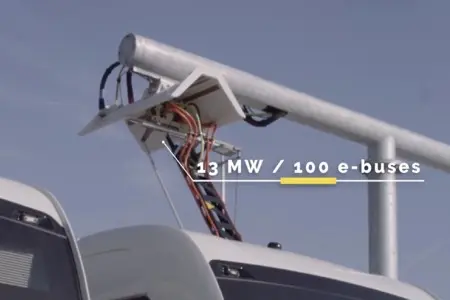
e-bus pantograph dome

Advantages of E-Bus Pantograph Dome Systems

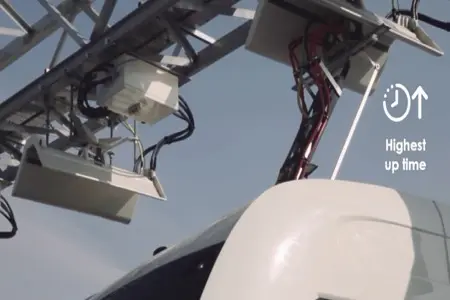
In contrast to classic plug-in charging systems, e-bus pantograph overhead systems optimize transit bus charging directly at stops.

Read Complete Article →
e-bus charging time

How Long to Charge via E-Bus Pantograph?

The required charging duration depends on the vehicle's battery capacity, the grid supply, and the system output rating.

Read Complete Article →
pantograph system installation

Installing "Pantograph Up" Charging Systems

Detailed infrastructure requirements for municipal operators installing overhead dome networks for zero-emission city transit.

Read Complete Article →

Expert Q&A: Commercial DC Charging Infrastructure

Detailed technical answers for procurement directors, project developers, and electrical engineers.

What are the key installation advantages of a 50kW DC charger compared to a 150kW unit?
A 50kW DC fast charger operates efficiently within existing grid infrastructure, typically requiring standard 400V AC three-phase supply. This avoids the cost of installing dedicated substations and high-capacity transformers, which are usually required for 150kW+ chargers. It also minimizes recurring demand charges from utilities, significantly improving the project's return on investment (ROI).
Is the CHAdeMO charging protocol still relevant for long-term investments?
Yes, CHAdeMO is critical for global fleets operating Japanese imports or legacy electric vehicles (like Nissan Leaf, Mitsubishi Outlander, and early-model luxury BEVs). It remains the leading protocol in the Japanese domestic market. Using multi-standard dual chargers (CCS + CHAdeMO) ensures compatibility across mixed fleets and protects the installation from becoming obsolete.
How does the modular configuration of the power core prevent charger downtime?
Our 50kW platforms use multiple parallel hot-swappable sub-modules (e.g., three 20kW modules or two 30kW modules running at de-rated levels). If a single module experiences a fault, the controller automatically bypasses the failed module and continues charging at a lower capacity. This avoids complete station downtime while service personnel schedule maintenance.
Can a 50kW CHAdeMO charger integrate with on-site solar arrays and battery storage?
Absolutely. By using OCPP 1.6J/2.0.1 and dry contact controls, our stations integrate directly with on-site BESS (Battery Energy Storage Systems) and solar controllers. They dynamically match charging speeds to solar output or battery levels, reducing reliance on the grid during peak rate periods.
What protection systems are standard on these units?
Every system includes: residual current devices (RCD Type B), short-circuit, over-current, over-voltage, under-voltage, lightning surge protection (Class II), emergency stop buttons, insulation monitoring, and dual-zone temperature management to protect both charging cables and inner power components.
Mida Group EV Charging Stations Factory Banner