Explore MIDA’s flagship high-power charging modules, integrated battery storage units, and utility-scale fast-charging stations designed for global commercial deployment.
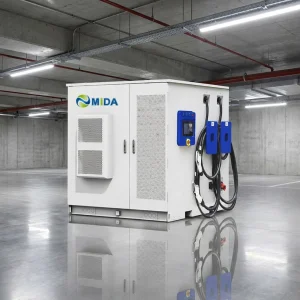
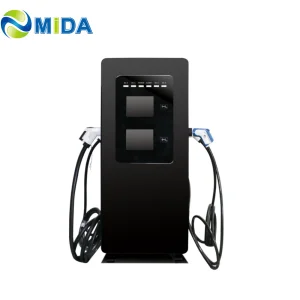
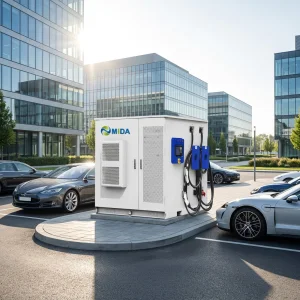
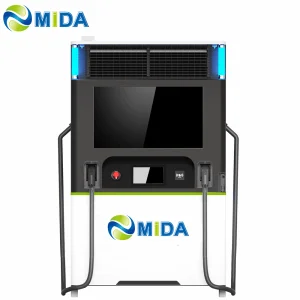
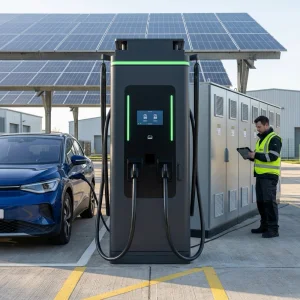
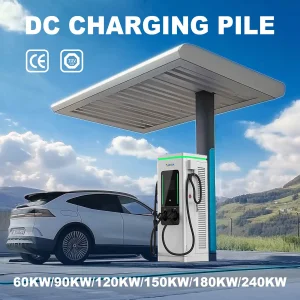
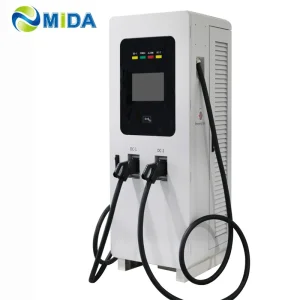
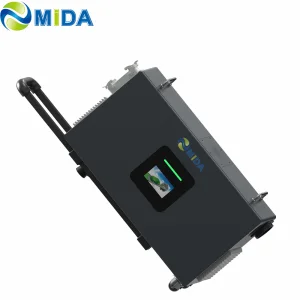
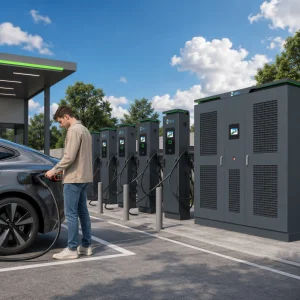
The global transition to sustainable mobility has moved past low-power residential charging. As passenger electric vehicles (EVs) migrate to 800V architectures and commercial transit fleets shift to electric powertrains, the demand for 400kW DC Fast Chargers has experienced exponential growth. Delivering up to 400 kW of continuous output power allows modern EVs to add up to 300 kilometers of range in under 10 minutes, satisfying the strict requirements of highway corridors, logistics hubs, and public transit facilities.
Furthermore, 400kW infrastructure serves as the crucial foundation for Mega-Watt Charging Systems (MCS) designed to fuel heavy-duty transport, refuse vehicles, and terminal tractors. By installing modular, liquid-cooled, and grid-buffered systems, operators maximize vehicle uptime, optimize fleet routes, and eliminate range anxiety on a global scale.
Information Gain Insight: The evolution of 400kW DC ultra-fast charging is not merely about output capacity; it is about managing the thermal loads generated during energy transfer. The transition from air-cooled cables to liquid-cooled systems has reduced the overall diameter of charging cables by 40% while doubling the continuous current capacity up to 500A (and up to 1000A in split supercharger configurations), ensuring safety and ergonomics for users.
Shanghai Mida Cable Group Ltd. operates through its wholly owned subsidiaries: Shanghai Mida EV Power Co., Ltd., Shenzhen Mida EV Power Co., Ltd., and Shanghai Mida New Energy Co., Ltd.
Mida Cable manufactures a comprehensive range of EV charging cables, including 16A–80A J1772 cables, 16A–63A IEC 62196-2 Type 2 cables, and DC fast charging cables: CCS1 (80A–500A), CCS2 (125A–1000A), CHAdeMO (125A–300A), GBT (200A–1000A), and NACS connectors (250A–600A).
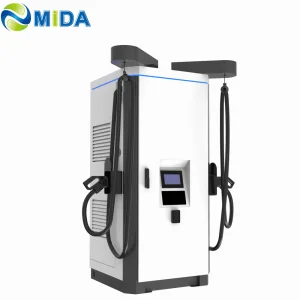
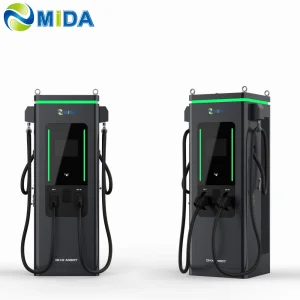
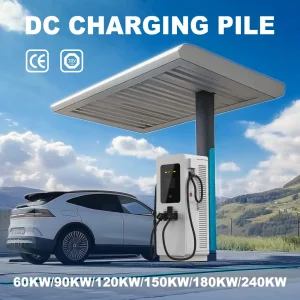
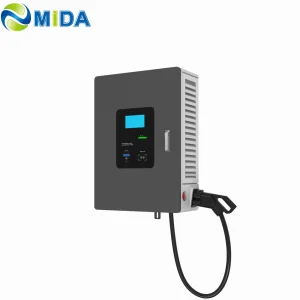
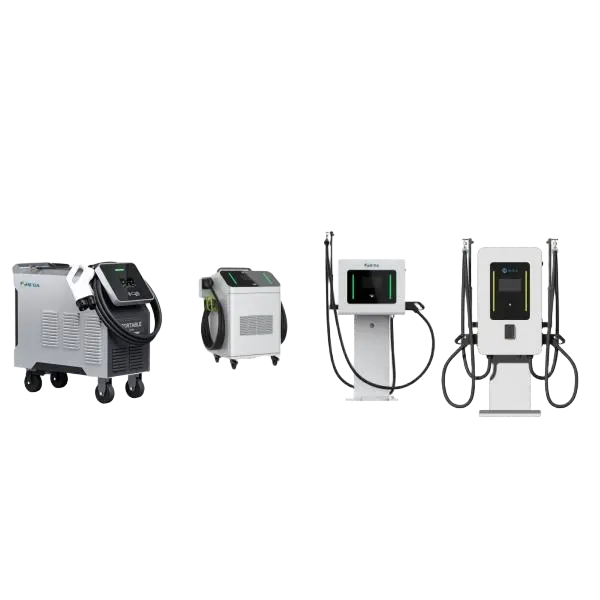
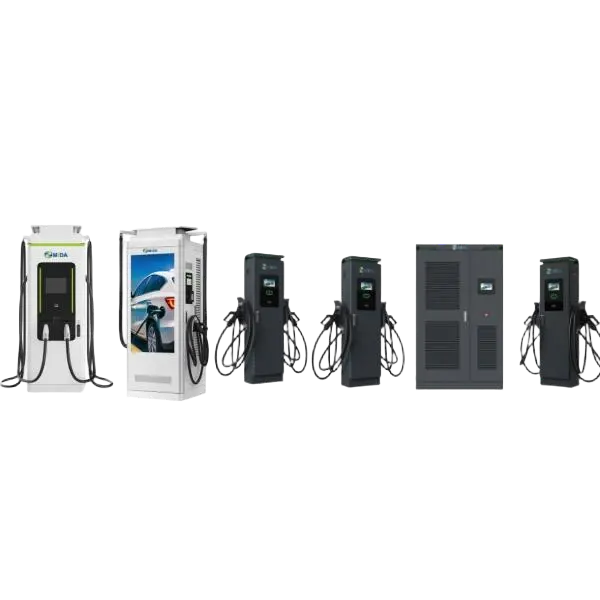
MIDA EV Power produces a full lineup of EV charging stations, such as 7kW–50kW mobile chargers, 3.6kW–7.2kW portable DC chargers, 360kW–1440kW split-type DC fast chargers, 20kW–50kW wall-mounted DC chargers, and 60kW–480kW floor-standing DC fast charging stations.
MIDA New Energy specializes in EV charger power modules, offering 20kW–60kW standard modules, 40kW–125kW liquid-cooled modules, 30kW–62.5kW bidirectional modules, and 20kW–45kW V2G charging modules.

How deep vertical integration and advanced component manufacturing empower Chinese factories to deliver robust 400kW charging solutions globally.
By manufacturing charging cables, power modules, liquid cooling systems, and communication boards under one umbrella, MIDA Group guarantees component-level compatibility. This direct integration eliminates integration delays and accelerates delivery cycles for utility-scale deployments.
Chinese modern factories lead the integration of Silicon Carbide semiconductors within EV power modules. Compared to traditional Silicon IGBT modules, SiC increases switching frequencies, minimizes energy loss, and allows chargers to operate at efficiency levels exceeding 96.5%.
From UL 2202 and CE Markings to IEC 61851, OCPP 1.6J/2.0.1, and local grid regulations, MIDA ensures that all hardware is thoroughly tested. Dynamic thermal simulations and automated testing beds guarantee that every shipped unit stands up to the harshest environmental conditions.
Precision engineered components and complete charging systems developed for high-availability infrastructures.
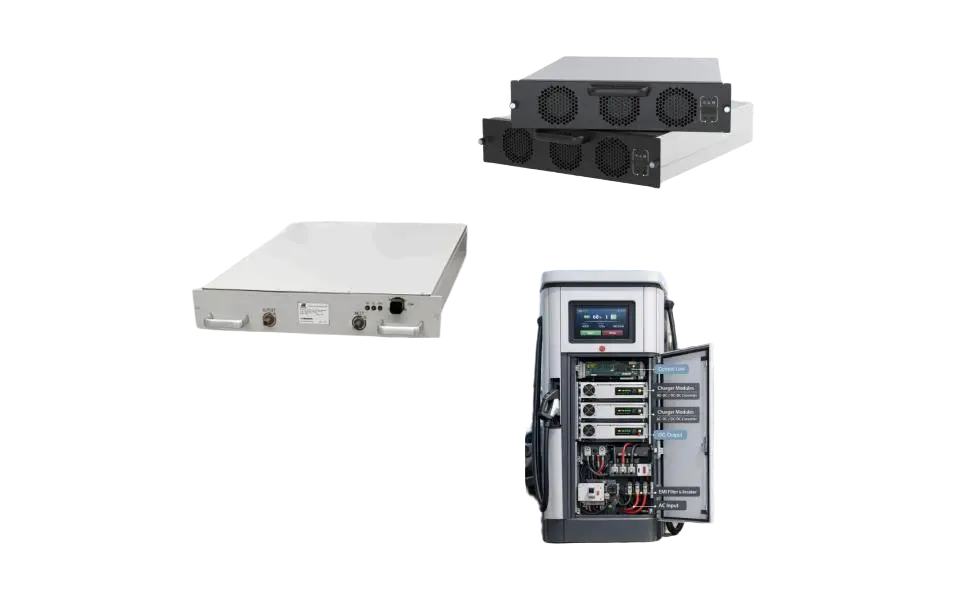
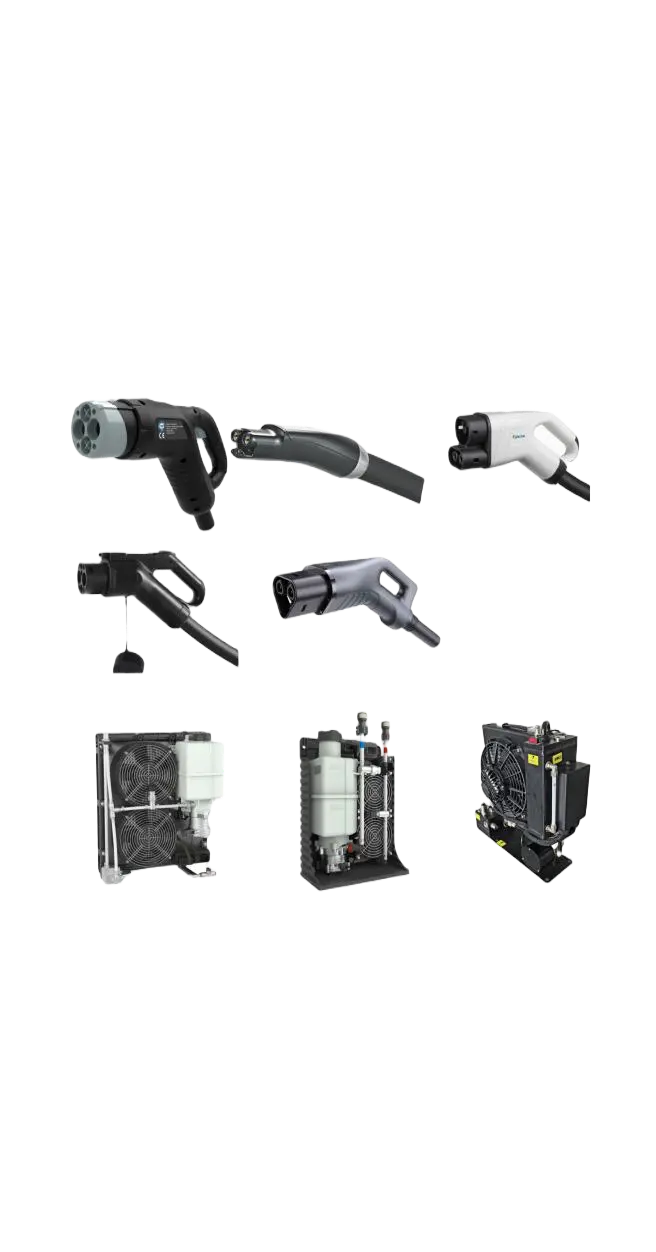
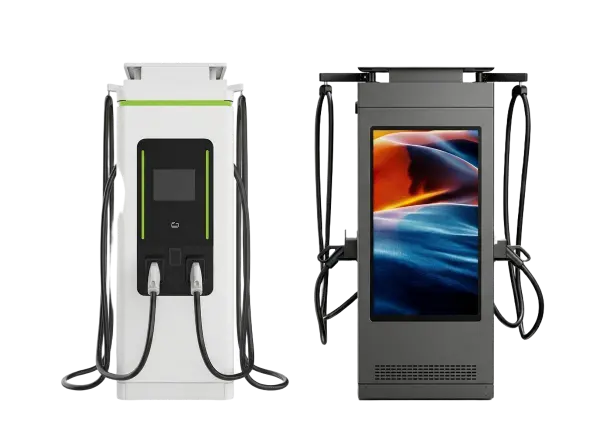
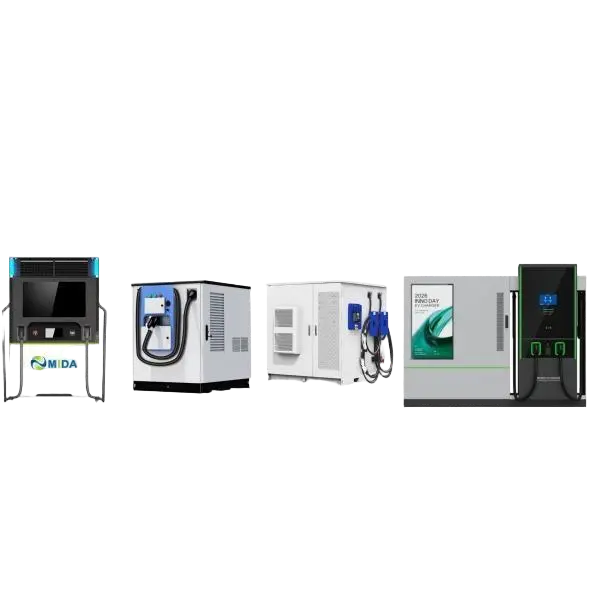
Deploying ultra-high-power charging stations requires a deep understanding of grid integration, local energy storage, and dynamic power distribution.
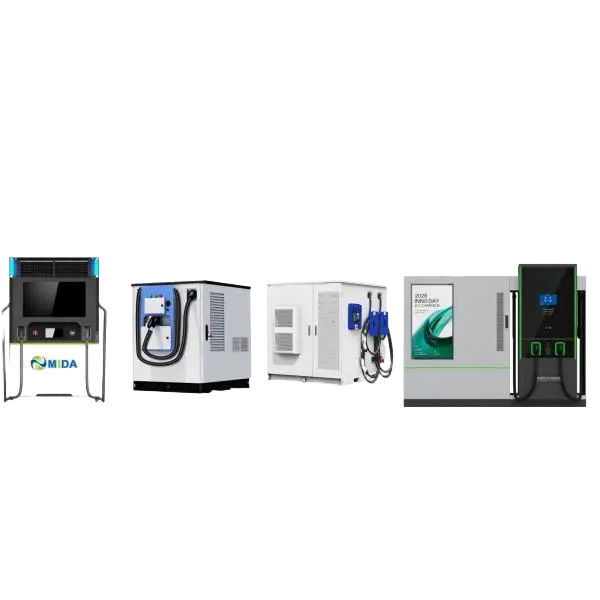
A primary challenge of deploying a 400kW DC fast charger lies in managing the massive peak power demands imposed on local distribution transformers. Directly drawing 400 kW can cause voltage sags, localized grid instability, and substantial demand charges from utility companies. To mitigate these electrical stresses, MIDA integrates battery energy storage (BESS) technologies and implements advanced dynamic power sharing protocols across charging stalls.
| Technical Specification | Air-Cooled DC Charger (120kW - 180kW) | MIDA 400kW HPC Liquid-Cooled System | BESS-Integrated 400kW System (Hybrid Grid) |
|---|---|---|---|
| Continuous Output Current | 150A - 250A | 500A (up to 1000A split stack) | 500A constant (buffered by battery) |
| Grid Harmonic Distortion (THDi) | < 5% at full load | < 3% (Active Power Factor Correction) | < 3% (isolated grid connection) |
| Cable Weight & User Handling | Heavy, rigid, non-liquid cooled | Lightweight, flexible, synthetic coolant | Lightweight, flexible, synthetic coolant |
| Peak Grid Demand Impact | Medium (Requires grid upgrade) | High (Requires direct medium voltage connection) | Minimal (Peak shaving managed via local storage) |
| Efficiency (Power Module level) | 94% - 95% | Up to 96.8% (SiC technology) | Dynamic efficiency optimization via storage |
MIDA's 400kW platforms leverage proprietary Matrix Power Allocation algorithms. When two vehicles are connected simultaneously, the charger dynamically allocates power based on real-time Battery Management System (BMS) requests. For example, if a vehicle with a 400V system and another with an 800V system connect at the same time, the charger allocates 150kW and 250kW respectively, optimizing grid feed-in limits while preventing overheating. The integrated cooling loop circulates dielectric coolant fluid to maintain the cable connector temperature below 50°C, ensuring continuous operations in extreme environments (up to 55°C ambient temperature).
Comprehensive charging categories to meet residential, commercial, and utility-scale energy needs.
From heavy-duty highway corridors to automated transit systems, discover how high-power charging performs across environments.
For electric logistics trucks and municipal buses, charging windows are extremely tight. Utilizing a 400kW charger with dual liquid-cooled CCS2 or GBT ports allows transit agencies to complete charging cycles between shifts, maximizing operations and daily mileage throughput.
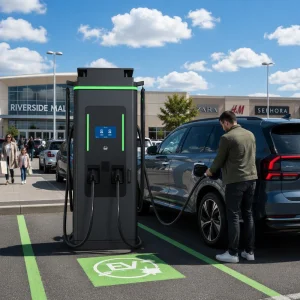
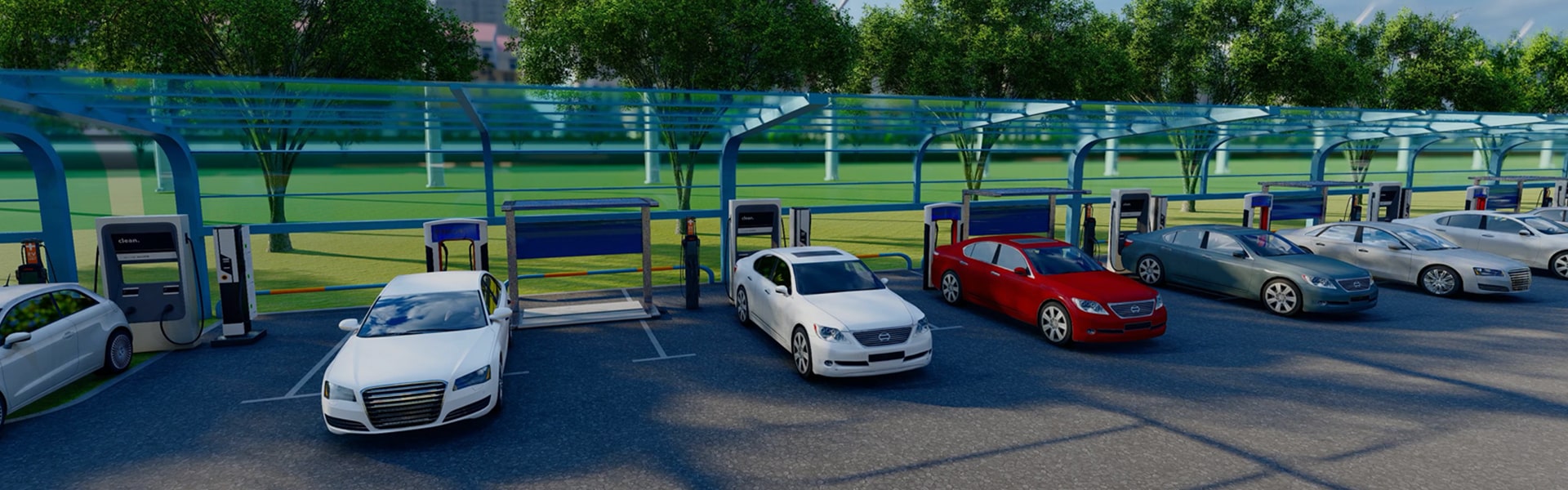
To minimize queue times at public service plazas, high-power DC fast-charging terminals are essential. Our 400kW system scales dynamically, offering quick power injections that mirror standard fueling times, providing crucial range extensions for long-distance EV travel.
In remote locations where grid connections are constrained, coupling a 400kW fast charger with a battery energy storage system (BESS) ensures reliable power delivery. The BESS trickle-charges from the grid during off-peak hours and discharges at high rates when an EV arrives.
Stay updated with the latest technological achievements, installations, and developments in automated charging systems.

What are the advantages of an e-bus pantograph dome? In contrast to classic plug-in charging systems, e-bus pantograph dome installations provide hands-free charging operations and support rapid high-power transfers for municipal bus fleets.
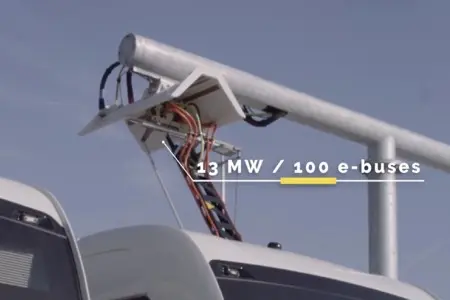
How long does it take to charge with an e-bus pantograph? The charging time depends on the battery capacity and the continuous charging rate, but megawatt-level transfers can restore up to 80% capacity within 6 to 15 minutes.
How to Install the Pantograph Up Charger System Dome for Electric Bus. Installing a "Pantograph Up" system requires precise positioning, robust structural support structures, and seamless wireless handshakes between the bus and charging station.
Get answers to the most common questions raised by infrastructure engineers, utility developers, and procurement directors regarding 400kW DC fast chargers.
Complete engineering solutions, from split supercharger stacks to UL-listed fast-charging stations.