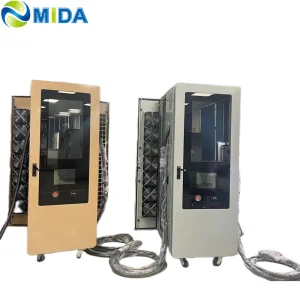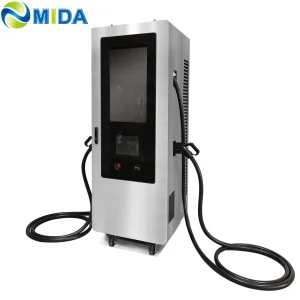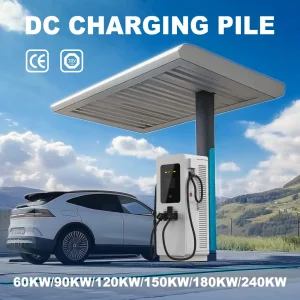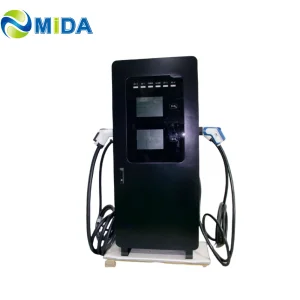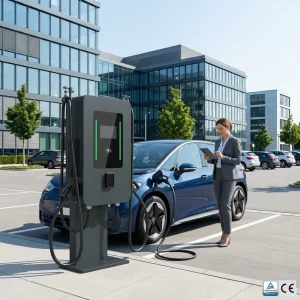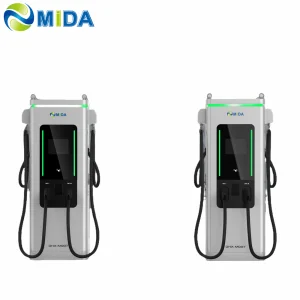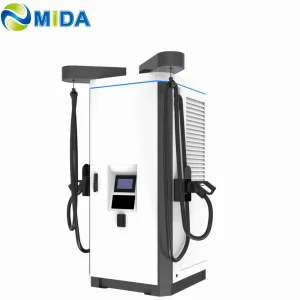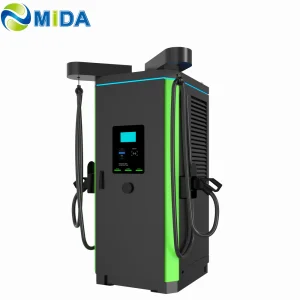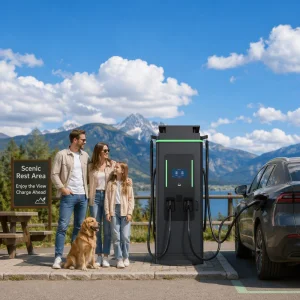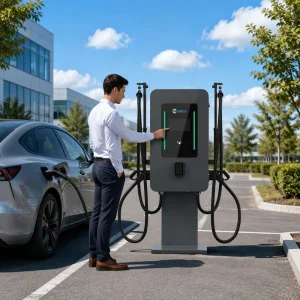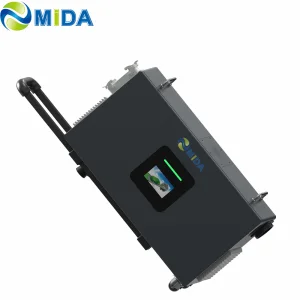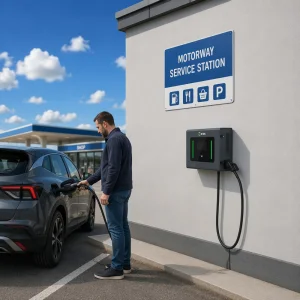
Explore our elite selection of dynamic, ultra-fast DC fast chargers, mobile BESS charging stations, and smart modular EV solutions designed for global public corridors and fleet applications.
The megawatt class and ultra-fast charging architectures are transforming urban commercial grids. High-power DC fast charging represents the pinnacle of modern electric transportation ecosystem integration.
Modern 300kW CCS configurations are transitioning from conventional IGBT switches to Silicon Carbide (SiC) MOSFETs. This migration yields over 96% power conversion efficiency, significantly minimizing thermal losses, reducing cooling loads, and optimizing the operational footprint of utility networks.
By leveraging bidirectional power topologies, contemporary fast-charging stations act as localized virtual power plants. High-power charging points feed power back to municipal grids during peak consumption periods, generating secondary revenue streams for depot operators.
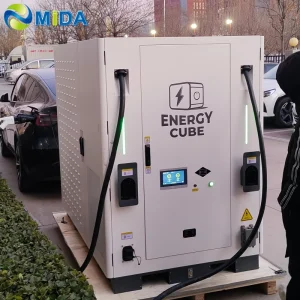
To avoid massive grid upgrade charges, operators are pairing 300kW DC superchargers with integrated battery energy storage systems (BESS). These hybrid microgrids smooth out grid load spikes, providing consistent 300kW throughput even on restricted 100kW grid connections.
Decisions at the enterprise scale demand rigorous technical validation, compliance certifications, and reliable system interoperability.
Compliance with DIN 70121 and ISO 15118 (including Plug & Charge and TLS encrypted communications) is mandatory. Enterprise procurement managers verify compatibility across diverse passenger cars and heavy-duty logistics fleets.
Procuring hardware with OCPP 1.6J or OCPP 2.0.1 capabilities allows flexible integration with corporate backends. Advanced security includes secure firmware updates, SSL/TLS client certificates, and remote diagnostics features.
Beyond purchase costs, global operators assess power factor metrics (≥0.99), THD standards (<5%), and modular servicing speeds. Scalable power modules mean a 300kW station can continue running at 240kW if one 60kW module fails.
Shanghai Mida Cable Group Ltd. operates through its wholly owned subsidiaries: Shanghai Mida EV Power Co., Ltd., Shenzhen Mida EV Power Co., Ltd., and Shanghai Mida New Energy Co., Ltd. Our vertical integration is our greatest strength, spanning high-tension cable extrusion, premium connector molding, complex dynamic software programming, and heavy industrial enclosure fabrication.
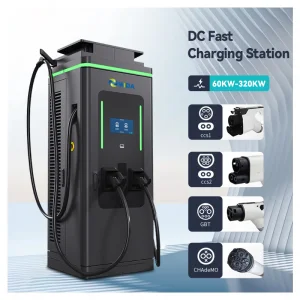
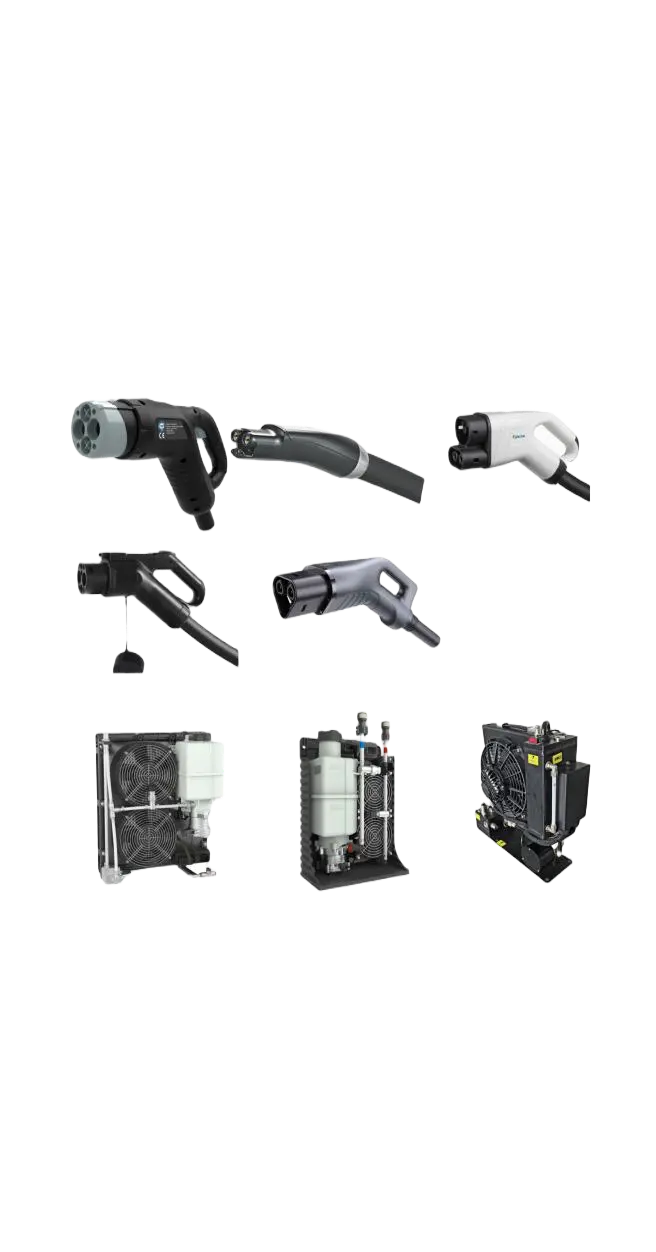
Mida Cable manufactures a comprehensive range of EV charging cables, including 16A–80A J1772 cables, 16A–63A IEC 62196-2 Type 2 cables, and DC fast charging cables: CCS1 (80A–500A), CCS2 (125A–1000A), CHAdeMO (125A–300A), GBT (200A–1000A), and NACS connectors (250A–600A).
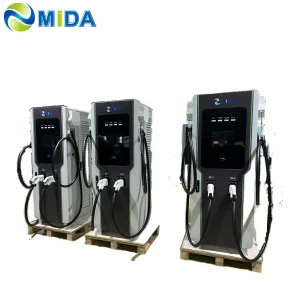
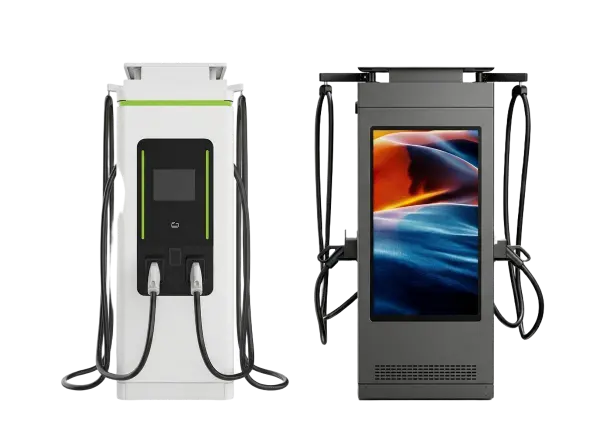
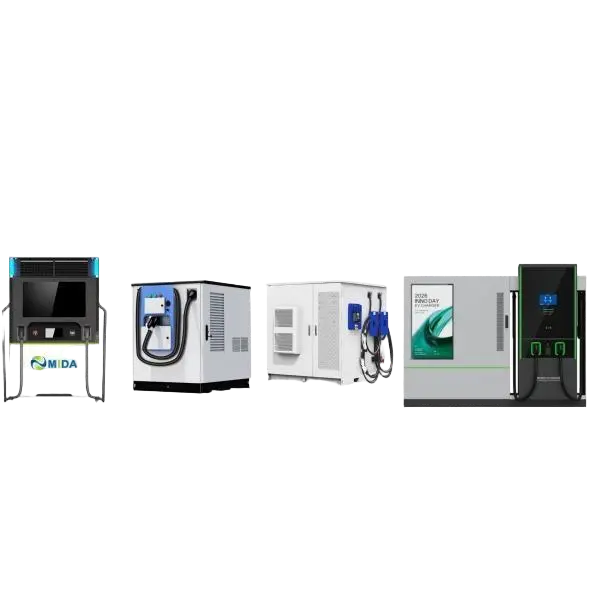
MIDA EV Power produces a full lineup of EV charging stations, such as 7kW–50kW mobile chargers, 3.6kW–7.2kW portable DC chargers, 360kW–1440kW split-type DC fast chargers, 20kW–50kW wall-mounted DC chargers, and 60kW–480kW floor-standing DC fast charging stations.
MIDA New Energy specializes in EV charger power modules, offering 20kW–60kW standard modules, 40kW–125kW liquid-cooled modules, 30kW–62.5kW bidirectional modules, and 20kW–45kW V2G charging modules.

High-power CCS charging technology is the foundation of modern infrastructure networks. We offer tailored systems for complex deployments.
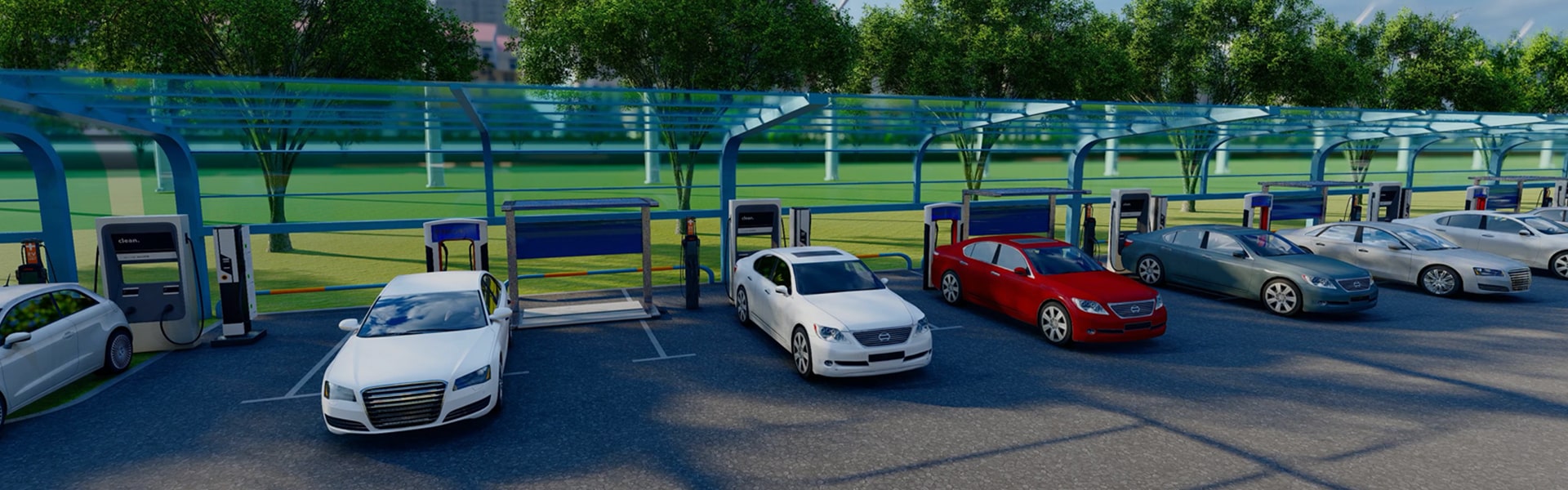
300kW CCS systems installed along highways deliver 150km of range in under 10 minutes. Integrated payment terminals and high-resolution advertising displays maximize ROI for network operators.
Ideal for bus and logistics fleets. Intelligent scheduling systems automatically prioritize chargers based on departure schedules, while liquid-cooled connections manage heavy load demands.
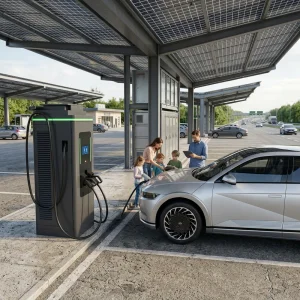
Combine solar generation, BESS storage, and 300kW DC fast chargers. This integrated package reduces reliance on local utility feeds and prevents peak-demand demand charges.
Discover how our modular segments adapt to diverse industrial applications and municipal demands.
16A to 80A Solutions
View More →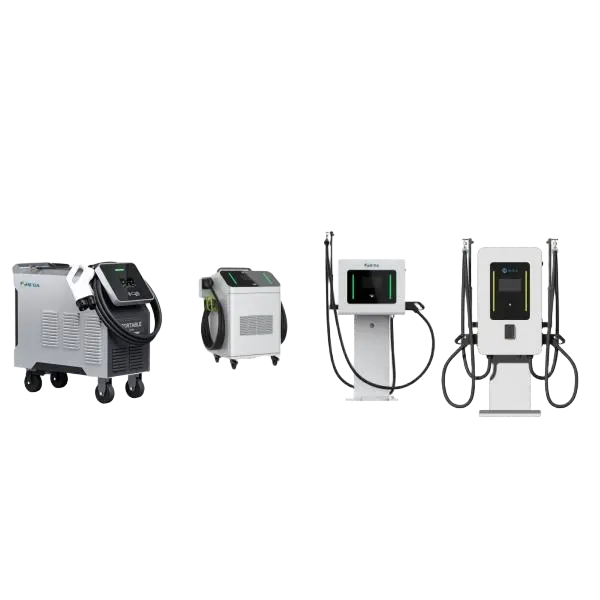
7kW to 80kW Options
View More →
60kW to 1440kW Ultra Power
View More →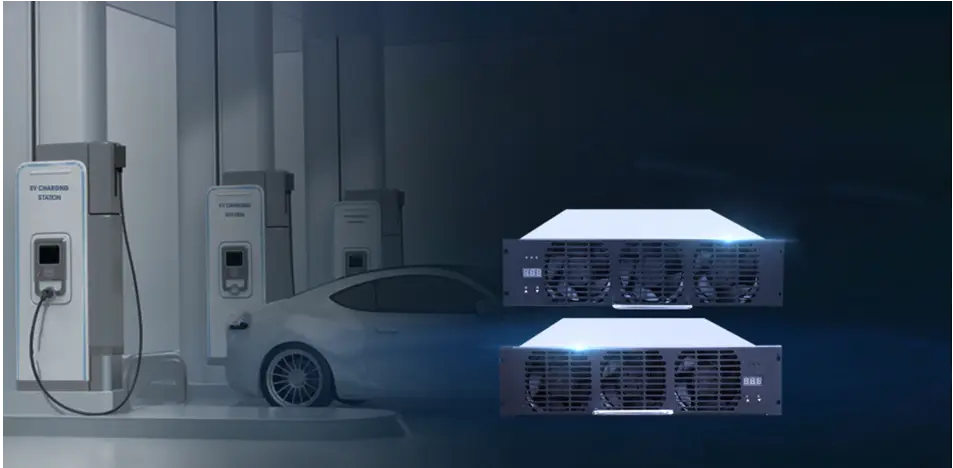
60kWh to 2MkWh Storage
View More →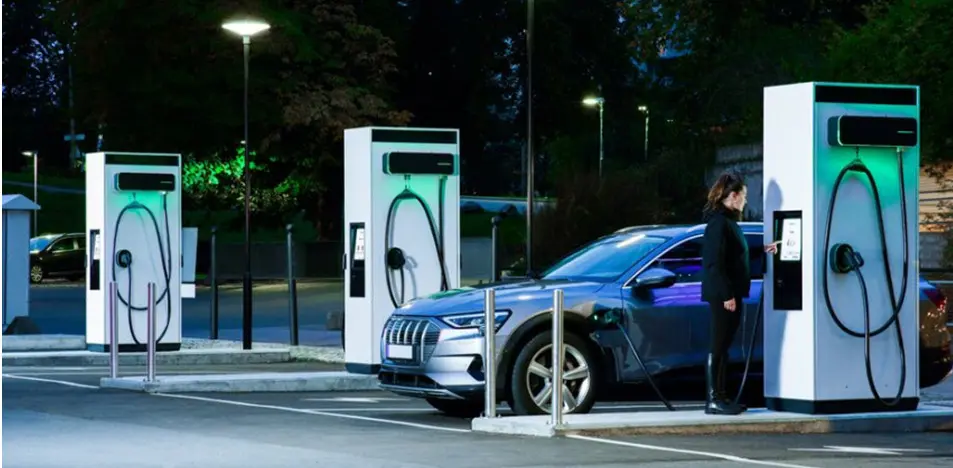
We supply global markets with certified components, ranging from power conversion modules to high-capacity liquid cooling assemblies.
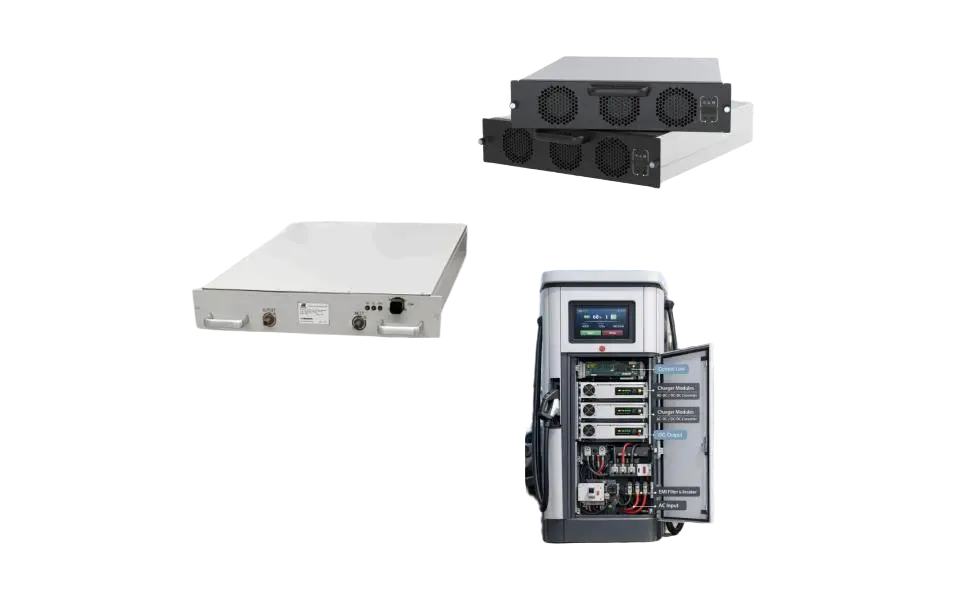
Ensuring equipment reliability and grid compliance across international markets requires stringent safety and validation testing.
Every 300kW CCS system undergoes hardware-in-the-loop (HIL) diagnostics simulating varied EV battery curves from global manufacturers. This ensures robust handshake sessions, error-free DIN 70121 protocol initialization, and seamless insulation monitoring.
Our outer cabinets use double-walled galvanized steel structures, finished with anti-corrosion marine-grade coatings. This guarantees stable outdoor operations from -30°C to +50°C, and handles conditions with up to 95% relative humidity.
Mida equipment features active power factor correction (APFC) and integrated active harmonic filtering. Total Harmonic Distortion (THD) is kept below 5%, satisfying utility requirements and avoiding interference with surrounding industrial assets.
Answers to common technical questions about 300kW CCS charging systems, installation requirements, and grid management.
Follow our engineering team's updates on international pantograph designs, charging automation, and smart public transit infrastructure.

What are the advantages of an e-bus pantograph dome? In contrast to classic plug-in charging systems, e-bus pantograph solutions allow fast charging directly at bus stops...
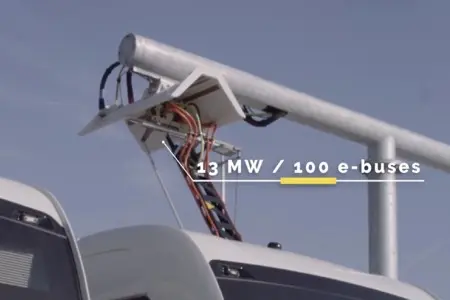
How long does it take to charge with an e-bus pantograph? The charging time depends on the battery capacity and the station's delivery rating, typically restoring 80% range in minutes...
How to Install the Pantograph Up Charger System Dome for Electric Bus. Installing a "Pantograph Up" system requires mounting overhead structural infrastructure, calibration...
Select from our range of floor-mounted, wall-mounted, and movable DC charging stations built to international standards.