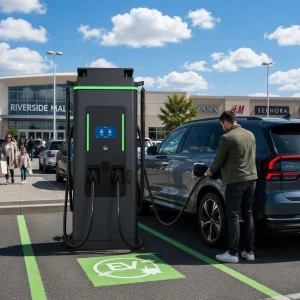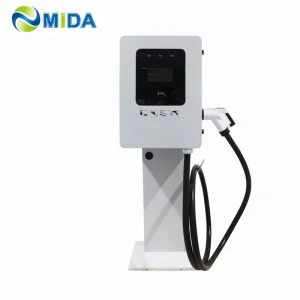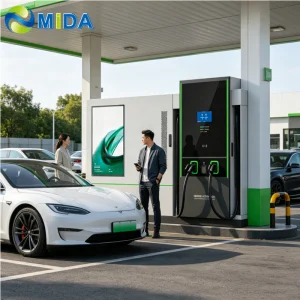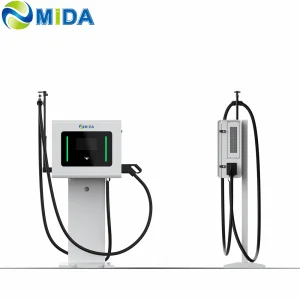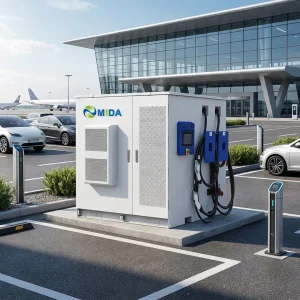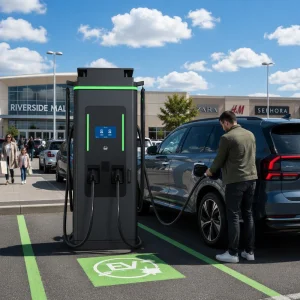
Explore our state-of-the-art charging units engineered for speed, safety, and operational reliability
Shanghai Mida Cable Group Ltd. operates through its wholly owned subsidiaries: Shanghai Mida EV Power Co., Ltd., Shenzhen Mida EV Power Co., Ltd., and Shanghai Mida New Energy Co., Ltd. Together, we drive vertical manufacturing excellence in heavy-duty electric vehicle charging architecture.
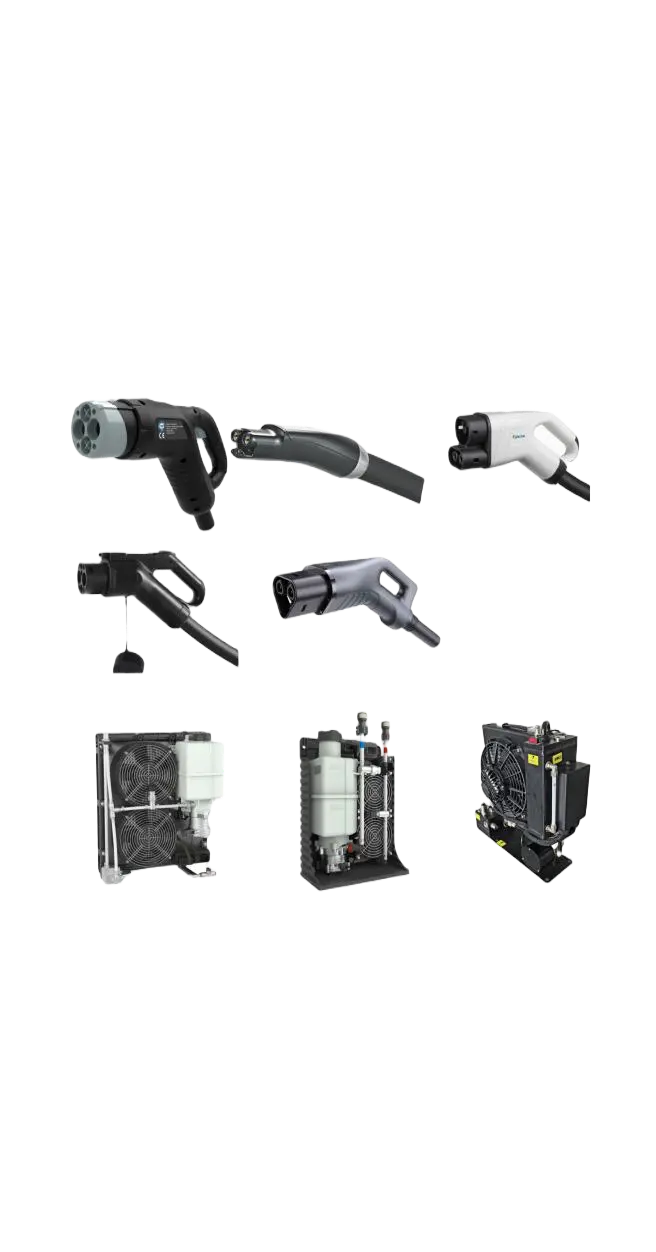
Mida Cable manufactures a comprehensive range of EV charging cables, including 16A–80A J1772 cables, 16A–63A IEC 62196-2 Type 2 cables, and high-capacity DC fast charging cables: CCS1 (80A–500A), CCS2 (125A–1000A), CHAdeMO (125A–300A), GBT (200A–1000A), and NACS connectors (250A–600A).
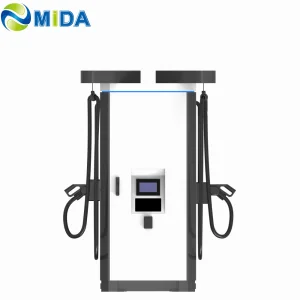
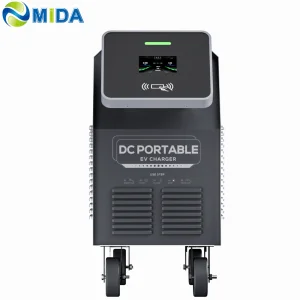
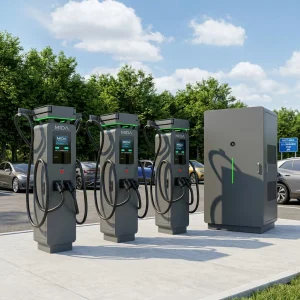
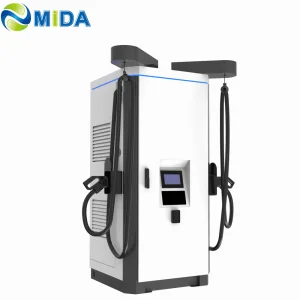
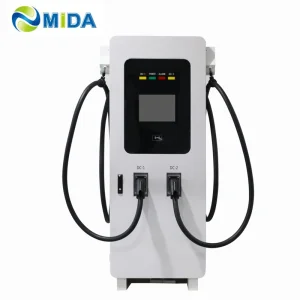
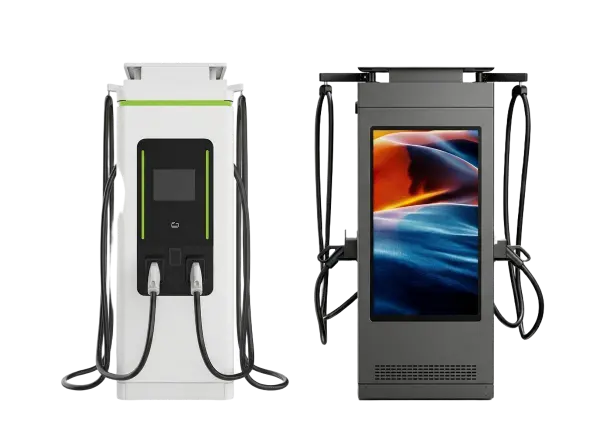
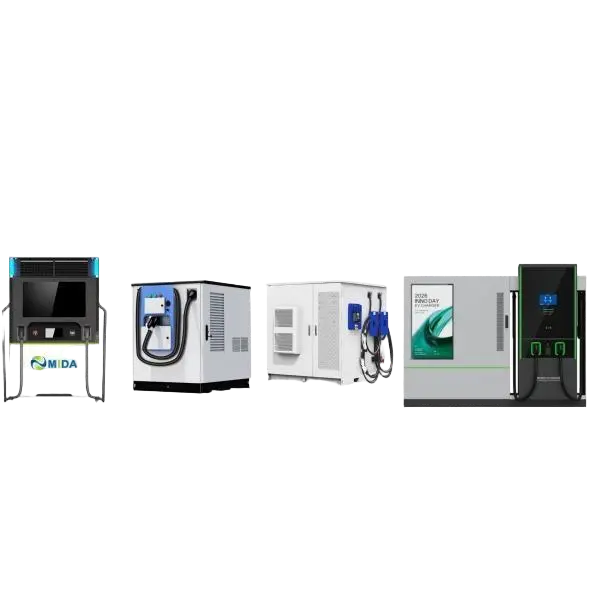
MIDA EV Power produces a full lineup of EV charging stations, such as 7kW–50kW mobile chargers, 3.6kW–7.2kW portable DC chargers, 360kW–1440kW split-type DC fast chargers, 20kW–50kW wall-mounted DC chargers, and 60kW–480kW floor-standing DC fast charging stations.
MIDA New Energy specializes in EV charger power modules, offering 20kW–60kW standard modules, 40kW–125kW liquid-cooled modules, 30kW–62.5kW bidirectional modules, and 20kW–45kW V2G charging modules.

Integrated solutions ranging from domestic AC units to high-performance megawatt charging hubs
Reliable, safe and highly efficient smart AC chargers for commercial facilities, offices and workplace environments.
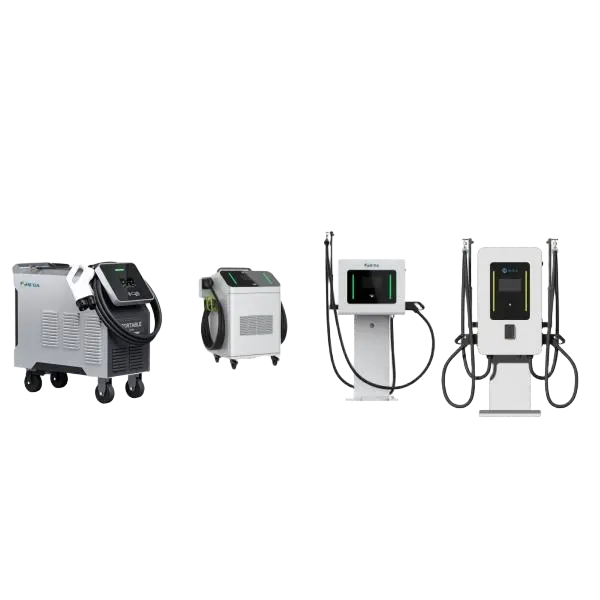
7kW, 20kW, 30kW, 40kW, 60kW, and 80kW systems designed for mobile fleet support and space-optimized vertical mount setups.
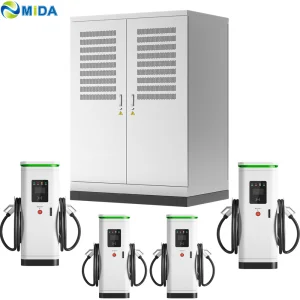
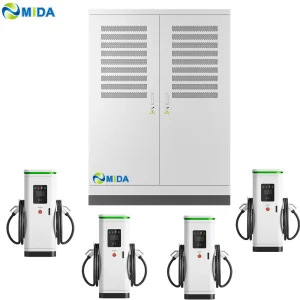
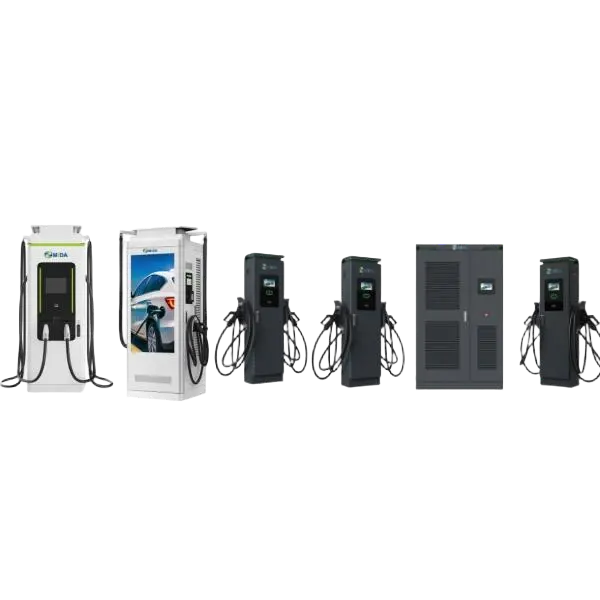
Megawatt class split & integrated designs ranging from 60kW to 480kW and 360kW up to 1440kW systems for fleet operators.
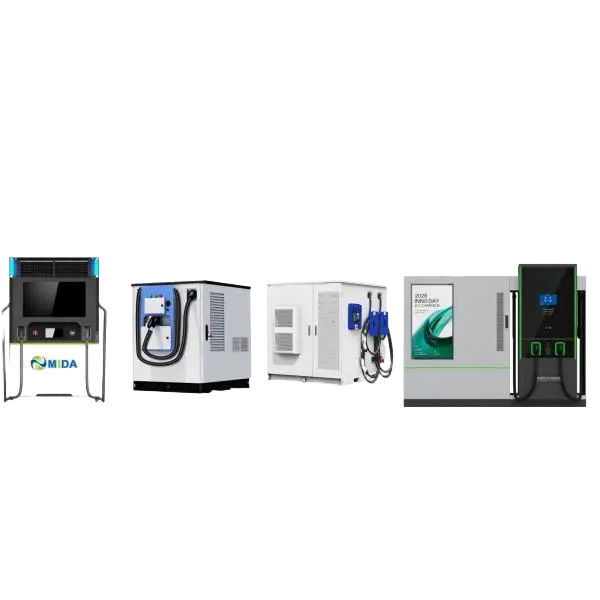
Battery-buffered systems (60kWh, 261kWh, 418kWh, 625kWh, 2MkWh) designed to optimize grid peak limits and lower dynamic costs.
The commercial transportation sector is undergoing a rapid transition toward zero-emission vehicle (ZEV) platforms. Heavy-duty logistics fleets, municipal transit systems, and long-haul transport vehicles demand charge cycles that mirror conventional liquid refueling schedules. In this demanding landscape, the China 240 kW EV charging station factory ecosystem has emerged as the global leader. It offers the optimal balance between initial capital expenditure (CAPEX), distribution transformer constraints, and minimum downtime.
Why 240 kW? A single 240 kW DC charging hub configured with dynamic dual-outlet power sharing can deliver either a fast, dedicated 240 kW charge to a single vehicle (bringing a typical 200 kWh battery pack to 80% state of charge in 40 minutes) or charge two local delivery vans simultaneously at 120 kW each. This utility maximizes duty-cycle efficiency for depot managers.
Across Europe, North America, and the Asia-Pacific region, grid capacity limitations are the primary obstacle to deploying DC fast charging infrastructure. Establishing charging corridors requires smart power management. A leading China 240 kW EV charging station factory like MIDA addresses this issue by integrating advanced power management architectures into standard systems. These dynamic systems distribute grid power across modular blocks. As a result, commercial hubs can operate at full efficiency without triggering expensive peak-demand penalties from local utilities.
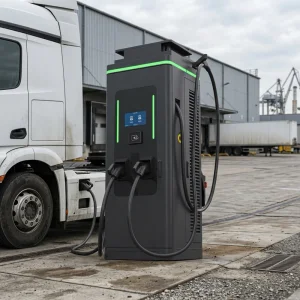
Industrial deployments, such as mining complexes, port terminals, and commercial shipping warehouses, demand rugged charging structures. Chargers in these environments must withstand wide temperature ranges, high dust concentrations, and vibration. By employing advanced dual-chamber structural layouts, our 240 kW systems isolate the sensitive power converter modules (IP54 rating) from dust, humidity, and heat. This design guarantees continuous operation and extends the service life of critical electrical components.
At the heart of the 240 kW charging station is the modular power conversion matrix. Modern China factories utilize 30 kW or 40 kW high-density power modules. These modules are based on Silicon Carbide (SiC) MOSFET technologies, which allow for:
Global distribution demands strict compliance with regional safety, measurement, and communication protocols. Shanghai MIDA designs and builds products according to strict international specifications, ensuring seamless compatibility across different charging ecosystems:
Precision components, modules, and full-stack charging platforms designed by Mida New Energy & Cable divisions
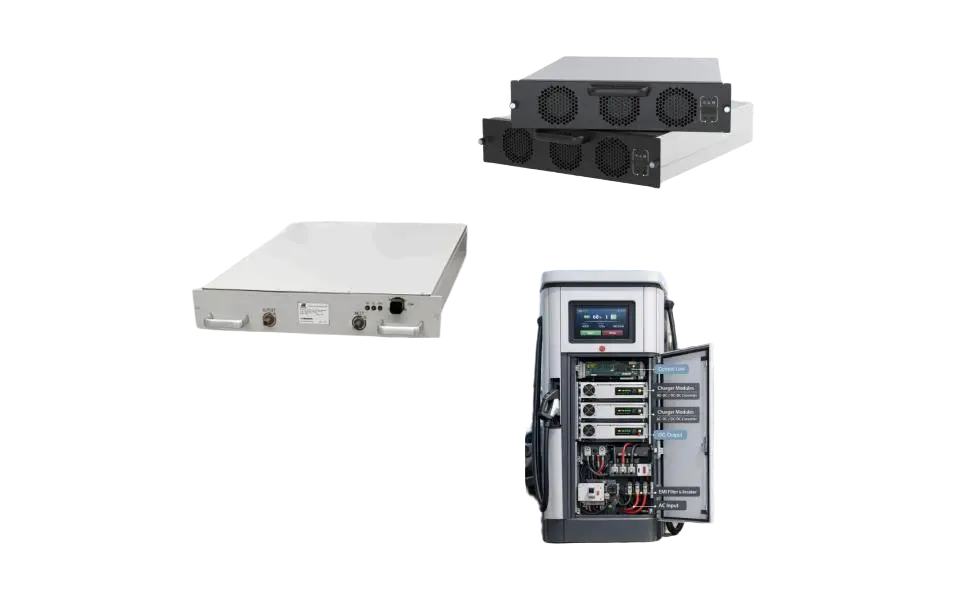
As the automotive industry shifts toward megawatt charging systems (MCS) for class 8 trucks and commercial aircraft, standard 240 kW units will serve as the foundation for decentralized commercial charging hubs. MIDA's engineering roadmap focuses on three main technologies:
By replacing traditional heavy copper conductors with dynamic liquid-cooled systems, our next-generation stations can deliver up to 600 kW to 800 kW via ultra-lightweight cables, making fast charging accessible for all operators.
Using advanced bidirectional AC/DC power modules (up to 62.5 kW), MIDA chargers enable parked fleet vehicles to supply power back to the grid during peak hours, creating new revenue streams for fleet managers.
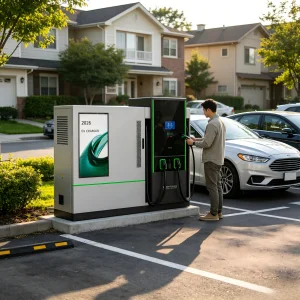
Combining charging equipment with localized energy storage (BESS) protects the regional grid from peak demand spikes. This allows operators to deploy high-power 240 kW stations on low-capacity connections.
Common technical questions regarding 240 kW DC deployments, design options, and site requirements
Stay informed about MIDA's developments in commercial charging infrastructure and vehicle electrification

In contrast to classic plug-in charging systems, e-bus pantograph systems offer automated, hands-free charging. This reduces operator error, eliminates trip hazards, and supports high-power energy transfer at bus stops and transit depots.
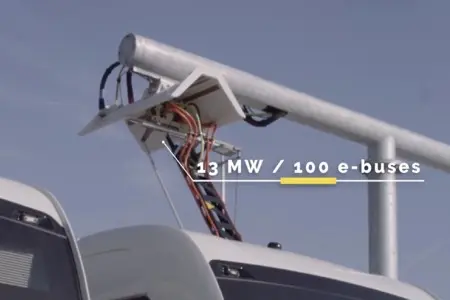
The charging time depends on the battery capacity and the output power of the charging station. Opportunity charging at bus stops can add significant driving range in just 5 to 10 minutes using automated high-power connections.
Installing a "Pantograph Up" system requires precise mechanical alignment, structural support analysis, integration with high-voltage supply lines, and communications testing to ensure safe operation under real-world conditions.
High-power modular units and integrated battery storage solutions certified for international markets