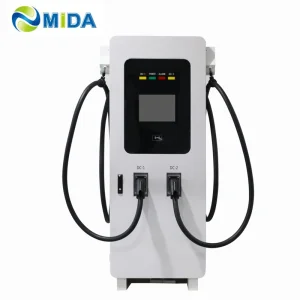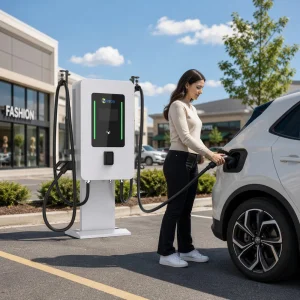
Best Recharge Stations For Electric Cars Manufacturer & Factories

Empowering Global EV Infrastructure with Automotive-Grade Power Electronics, Intelligent OCPP Architecture, and Liquid-Cooled Mega-Watt Charging Systems.

Global Infrastructure Dynamics & Procurement Insights

Understanding the technical demands and regulatory shifts driving commercial high-power EV fleet charging systems.

Grid Integration & BESS

Modern charging infrastructure is no longer just about drawing power; it is about local energy management. Integration of Battery Energy Storage Systems (BESS) enables stations to mitigate peak demand charges, support vehicle-to-grid (V2G) operations, and provide stable power even under restricted grid conditions.

Multi-Protocol Compatibility

Global procurement teams prioritize compatibility. MIDA stations natively support CCS1, CCS2, GB/T, CHAdeMO, and NACS protocols. Combined with advanced ISO 15118 protocol support, this enables seamless Plug & Charge features for automated billing and authentication.

Liquid-Cooled Supercharging

As EV battery packs grow in density, charging speed is governed by heat generation. Our Liquid Cooled DC Charging Stations (up to 720kW) allow continuous current delivery up to 1000A without cable degradation, minimizing charge downtime for heavy-duty commercial fleets.

Industrial Product Classifications

A quick overview of our dedicated production lines and performance tiers.
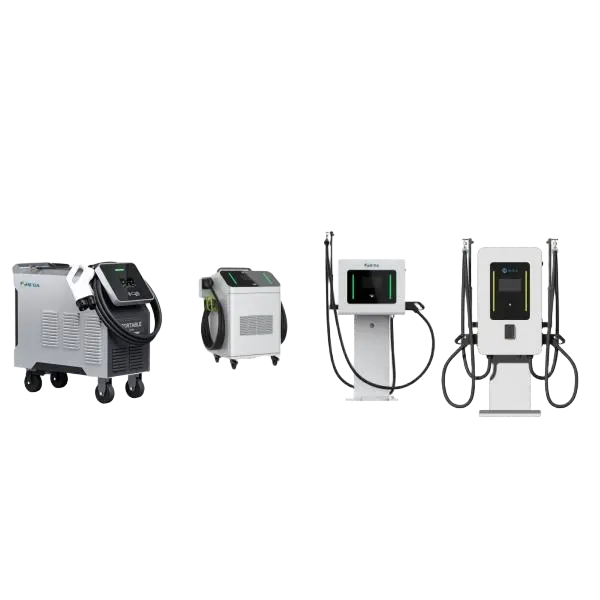
Wall-Mounted & Mobile EV Charger

Wall-Mounted & Mobile Chargers

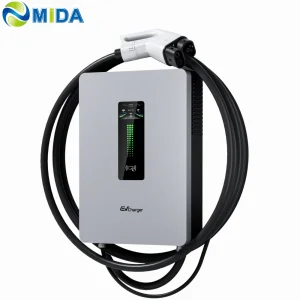
7kW to 80kW output, optimal for office depots and light commercial parking areas.

Explore Models →
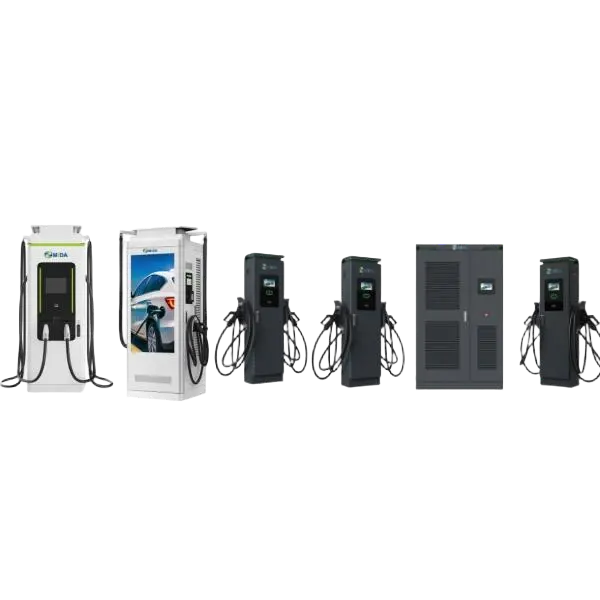
DC Charger Station

DC Charger Stations

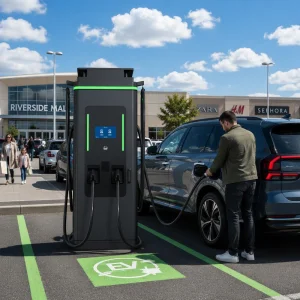
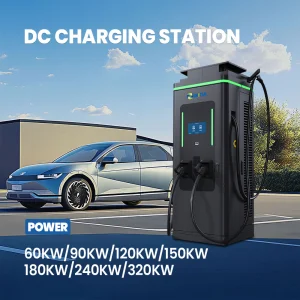
60kW to 1440kW high-speed systems for highway hubs and heavy freight corridors.

Explore Models →
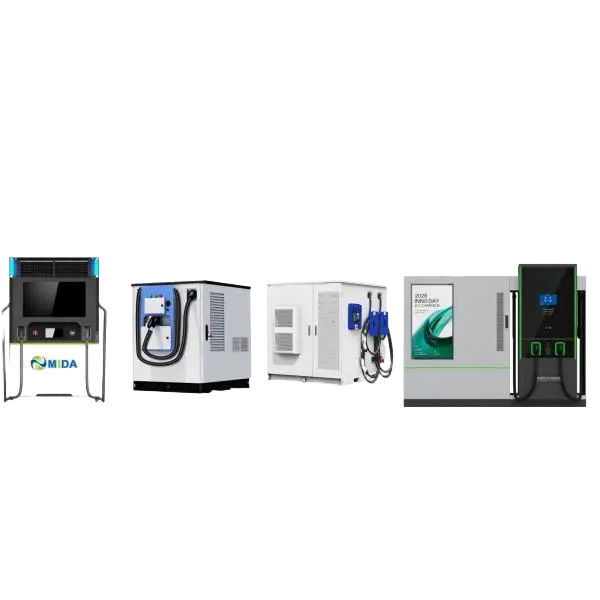
BESS Charging Station

BESS Charging Systems

Battery integrated stations from 60kWh to 2MWh for zero-emission microgrids.

Explore Models →

WELCOME TO MIDA GROUP

Shanghai Mida Cable Group Ltd. operates through its wholly owned subsidiaries: Shanghai Mida EV Power Co., Ltd., Shenzhen Mida EV Power Co., Ltd., and Shanghai Mida New Energy Co., Ltd.

Mida Cable manufactures a comprehensive range of EV charging cables, including 16A–80A J1772 cables, 16A–63A IEC 62196-2 Type 2 cables, and DC fast charging cables: CCS1 (80A–500A), CCS2 (125A–1000A), CHAdeMO (125A–300A), GBT (200A–1000A), and NACS connectors (250A–600A).

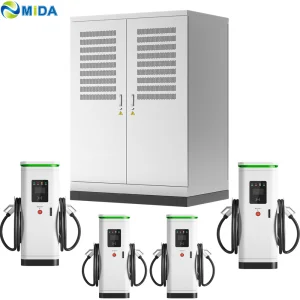
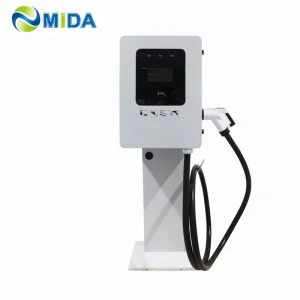
MIDA EV Power produces a full lineup of EV charging stations, such as 7kW–50kW mobile chargers, 3.6kW–7.2kW portable DC chargers, 360kW–1440kW split-type DC fast chargers, 20kW–50kW wall-mounted DC chargers, and 60kW–480kW floor-standing DC fast charging stations.

MIDA New Energy specializes in EV charger power modules, offering 20kW–60kW standard modules, 40kW–125kW liquid-cooled modules, 30kW–62.5kW bidirectional modules, and 20kW–45kW V2G charging modules.

Mida Factory Verification Certificate

China Factory 4.0: Supply Chain Resilience & Manufacturing Supremacy

Leveraging deep industrial clusters and integrated automated production lines for global scalability.

Vertically Integrated Production

Unlike simple assembly facilities, MIDA controls the entire production cycle from copper drawing and insulation extrusion for charging cables to PCB assembly and firmware programming of the charging controller boards.

Rigorous Quality Assurance

Our manufacturing centers employ automated optical inspection (AOI), full-load burn-in chambers, and environmental chambers simulating -30°C to +55°C conditions. This ensures that every EV charger station matches the required UL, CE, and TUV standards.

Dynamic Fleet Management Software

MIDA systems utilize native OCPP 1.6J and OCPP 2.0.1 integrations, permitting operators to manage charge scheduling, balancing load profiles, and running diagnostic protocols remotely from unified central server platforms.

Technical Breakdown: Core Components & Assemblies

Mida Group delivers end-to-end engineering excellence, from sub-components to complete charging sites.

EV Charging Power Modules

  • 30kW / 40kW / 50kW / 60kW / 80kW AC-DC Modules
  • 30kW / 40kW / 50kW / 60kW DC-DC EV Charger Modules
  • 40kW / 60kW / 75kW / 125kW Liquid Cooled Modules
  • 20kW / 22kW / 30kW / 40kW / 45kW V2G Power Modules
  • 30kW / 40kW / 50kW / 60kW MPPT Solar Charger Modules
  • 20kW / 50kW / 62.5kW Bidirectional AC-DC Modules
Explore Modules

DC Connectors & Cooling

  • 500A / 600A CCS1 & CCS2 & GB/T Connectors
  • 125A / 250A / 300A / 350A NACS & CHAdeMO Plugs
  • 1500A Megawatt Charging System (MCS) & ChaoJi
  • 3.5kW / 4.5kW / 6kW / 9kW Liquid Cooling Units
  • 2.4kW / 3.5kW Split Type Cooling Unit Assemblies
  • 25kW to 72kW Cooling Units for HPC Stations
Explore Connectors

DC Fast Charging Stations

  • 7kW to 60kW Compact Mobile DC Chargers
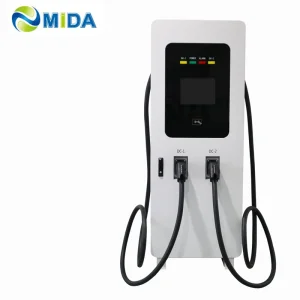
  • 20kW to 80kW Wall Mounted DC Charger Units
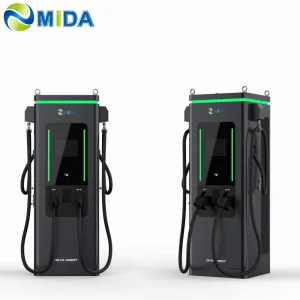
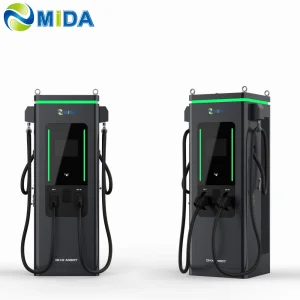
  • 60kW to 480kW Floor Mounted Charging Piles
  • 60kW to 240kW Advertising Chargers (43" / 55")
  • 600kW to 1080kW Liquid Cooled Charging Stations
  • 360kW to 1680kW Split Type DC Superchargers
Explore Stations

Energy Storage Systems

  • 15kW to 480kW Mobile ESS Charging Systems
  • 60kW to 400kW Integrated ESS Charging Cabinets
  • 65kWh to 200kWh Emergency Rescue Stations
  • 165kWh Autonomous Robotic Charging Platforms
  • 800kWh to 2000kWh Large Solar Energy Systems
Explore BESS
50+
Exporting Countries
100k+
Annual Connector Capacity
OCPP 2.0.1
Native Compliant Software
0.02%
Field Defect Rate

Tailored Charging Solutions for Industrial Projects

Discover how we deploy specialized charging architecture across diverse site configurations.

1. Logistics Hubs & Fleet Depots

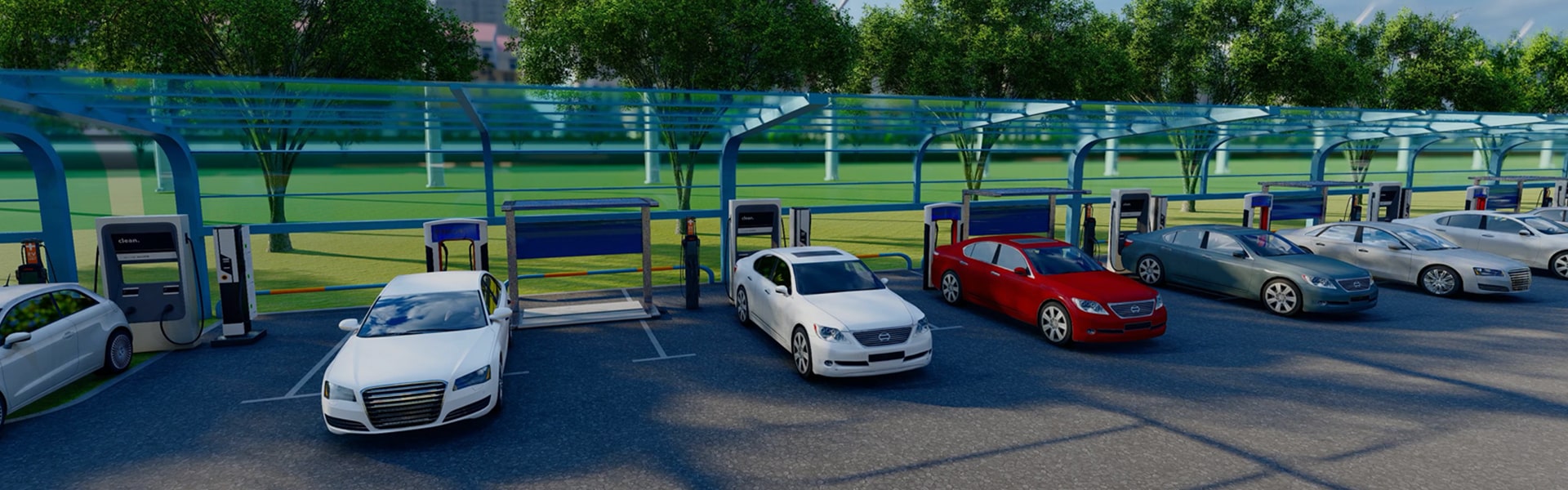
Commercial trucks and delivery fleets run on tight windows. High-power Split DC Charging Systems enable multiple dispensers to allocate power dynamically to vehicles as they park, maximizing charging speeds without overloading substation thresholds.

2. Public Highway Supercharging Hubs

For long-distance transit corridor applications, speed is critical. Using Liquid-Cooled 600kW/720kW Superchargers, drivers can replenish up to 300km of range in less than 10 minutes, optimizing vehicle throughput for site owners.

3. Multi-Unit Residential & Workplaces

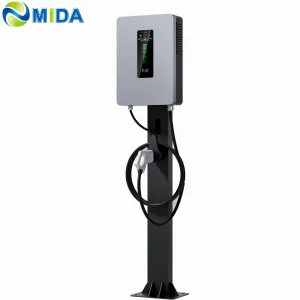
Where grid access limits heavy electrical pull, Wall-mounted OCPP 1.6J/2.0.1 chargers allow companies to implement load-balancing algorithms, ensuring vehicles are charged overnight or during off-peak hours without expensive grid updates.

Latest Industry & Corporate Updates

Stay informed with technical highlights from our engineering teams.
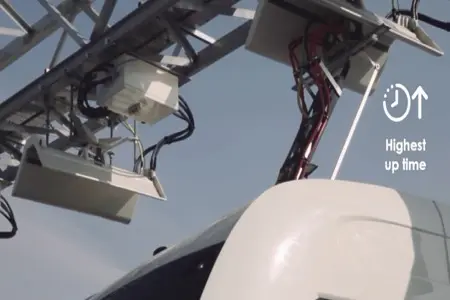
E-bus Pantograph Dome
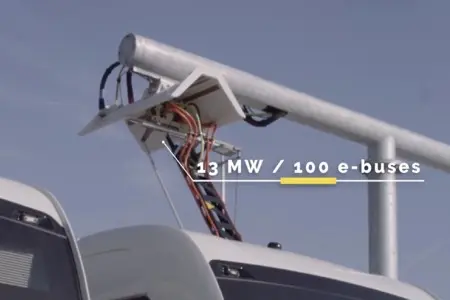
What are the advantages of an e-bus pantograph dome? In contrast to classic plug-in charging systems, e-bus pantograph charging optimizes route uptime and eliminates manual intervention...
Date: 2026-07-12 View More
E-bus Pantograph Charging Speed
How long does it take to charge with an e-bus pantograph? The charging time depends on the battery capacity, the grid layout, and the voltage level of the overhead charger stack...
Date: 2026-07-12 View More
Install Pantograph Up System
How to Install the Pantograph Up Charger System Dome for Electric Bus. Installing a "Pantograph Up" system requires precise structural engineering, grid interfaces, and custom mast layouts...
Date: 2026-07-12 View More

Frequently Asked Questions

Key technical insights on choosing the best EV recharge stations for commercial networks.

Q1: What is the main operational difference between Split DC Charging Systems and Integrated Charging Piles?
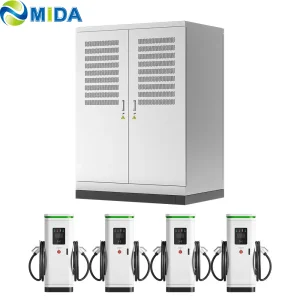
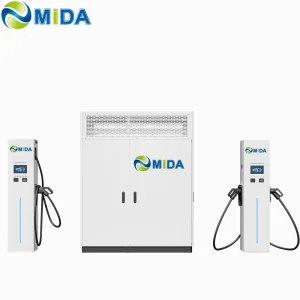
Split DC charging systems decouple the power transformation matrix from the user dispenser. The power electronics module sits in a remote cabinet, while compact user dispensers occupy the parking spaces. This configuration lowers layout footprint, reduces noise at the charging point, and makes modular maintenance much simpler.
Q2: How does Liquid Cooling technology prevent charging cable degradation?
As charging current exceeds 250A, copper resistance generates significant heat. Traditional cables mitigate this by increasing wire cross-section, making cables heavy and stiff. Liquid cooling continuously circulates a coolant fluid through internal pathways in the cable, dissipating heat and allowing a thinner, lighter cable to continuously handle up to 600A without overheating.
Q3: Why are OCPP 1.6J and OCPP 2.0.1 integrations crucial for public charging networks?
The Open Charge Point Protocol (OCPP) is the industry standard for communications between the charging station and the central system. It ensures that hardware can interface with any software provider for billing, reservation management, smart grid power balancing, and firmware diagnostics, protecting you from vendor lock-in.
Q4: Can these systems withstand extreme environmental conditions?
Yes. Our systems are engineered for industrial performance, rated IP54 to IP65 for ingress protection, featuring conformal-coated PCB boards, anti-condensation heaters, and optimized airflow dynamics to work reliably in temperatures ranging from -35°C to +55°C.
Q5: What certifications do your factories hold for international export?
Our products undergo testing by accredited bodies and carry CE, UL, TUV, ETL, and RCM marks, verifying compliance with international safety, electromagnetic compatibility, and grid connection requirements.
Mida EV Power Station Infrastructure Showcase