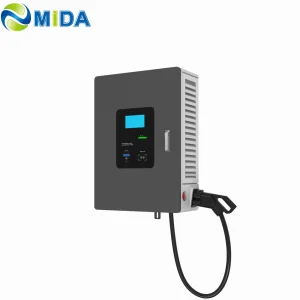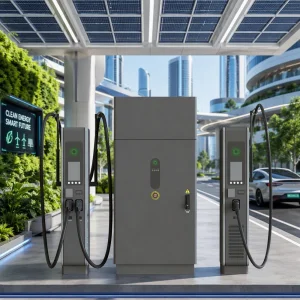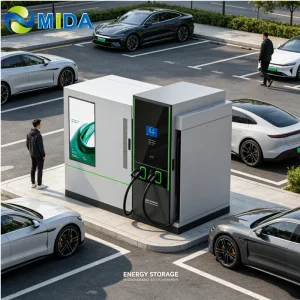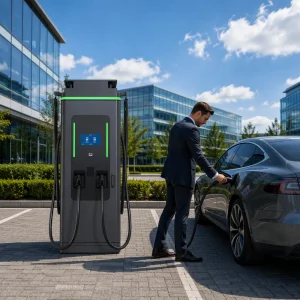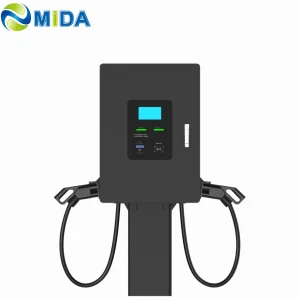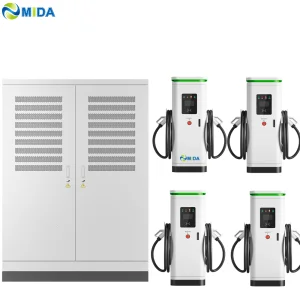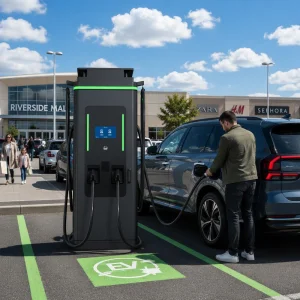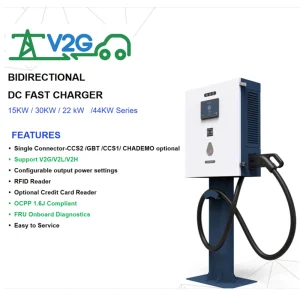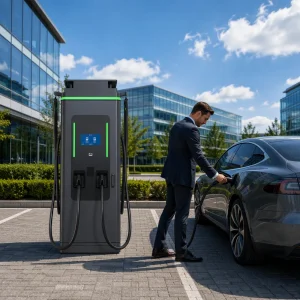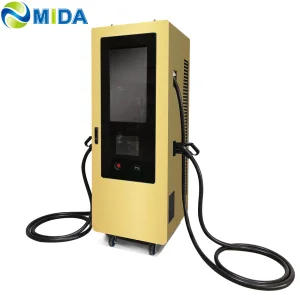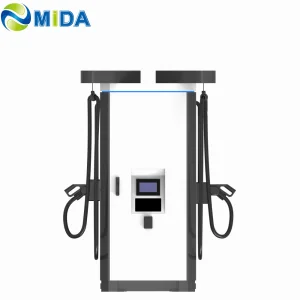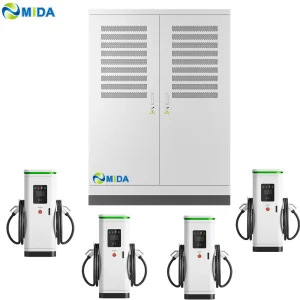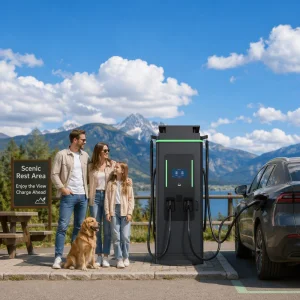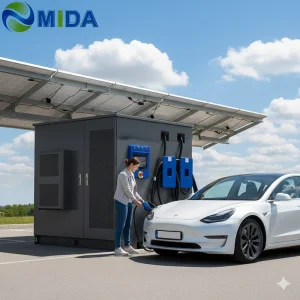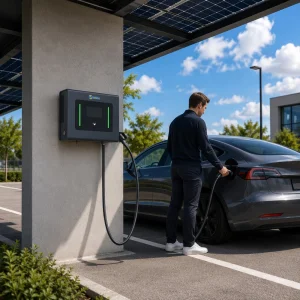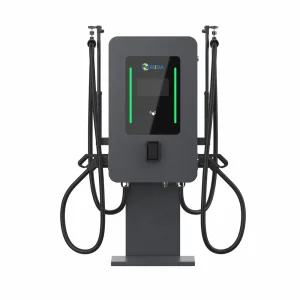
Explore our high-performance power electronics engineered to meet global standards (OCPP, CE, UL, CHAdeMO, and NACS). Click on any product below to download specifications and requesting quotations.
As the global transportation system undergoes rapid electrification, infrastructure requirements are shifting from fixed, grid-dependent models toward highly agile and resilient energy distribution systems. Portable EV DC Chargers represent a crucial paradigm shift, bridging the gap between high-capacity fast charging and spatial-temporal constraints. Unlike standard alternating current (AC) destination chargers, which rely heavily on vehicle-onboard inverters, portable direct current (DC) fast chargers bypass onboard physical constraints by routing regulated power directly to the battery pack. This dramatically compresses charging intervals, rendering them indispensable for modern fleets, logistics hubs, vehicle dealerships, and critical municipal services.
Global energy requirements demand versatility. Sourcing chargers from specialized manufacturing hubs like China allows infrastructure developers to deploy hardware capable of dealing with fluctuating grid structures, varied standard protocols (including NACS, CCS1, CCS2, and CHAdeMO), and unstable ambient conditions. This whitepaper analyzes the underlying power electronics, integration protocols, China's factory advantages, and practical application fields for top-tier portable DC chargers.
Shanghai Mida Cable Group Ltd. serves as a preeminent global provider of EV charging components, power modules, and integrated stations. Driven by continuous technical innovation and stringent compliance protocols, the group manages its operations through three specialized, wholly owned subsidiaries:
MIDA Group has established vertically integrated manufacturing chains. Our production facilities deploy automated SMT (Surface Mount Technology) assembly lines, environmental stress screening chambers, and automatic electrical performance diagnostic platforms. This comprehensive quality management structure ensures that every portable DC charger, cable assembly, and power module exhibits exceptional physical resilience and electrical reliability in the field.
Our R&D efforts are categorized into four critical fields. Each product category represents our commitment to high reliability, modular scalability, and universal interoperability.
The high-frequency electronic core that drives fast rectification with minimal thermal footprint.
Robust high-current interfaces designed to manage extreme thermal demands during continuous high-power transfer.
Deployable charging systems designed for municipal, retail, and industrial infrastructure.
Grid-independent power platforms designed to mitigate utility peak demand surcharges and support off-grid rescue missions.
When evaluating global manufacturing sources, the Chinese EVSE industrial cluster provides distinct competitive advantages. These go beyond low unit costs; they encompass extensive supply-chain integration, rapid technological iteration, and stringent quality control protocols. Sourcing from MIDA Group enables clients to capitalize on these unique advantages:
Our factory locations in Shanghai and Shenzhen sit at the epicenter of the global power electronics and lithium battery ecosystems. We source raw copper, silicon carbide components, semiconductors, and specialized potting materials locally. This structural proximity limits shipping delay risks and insulates our international clients from regional supply chain disruptions.
Because we manufacture power modules, charging cables, and enclosures under one corporate entity, we can compress prototyping phases. Software adaptations (such as aligning OCPP 1.6J or OCPP 2.0.1 commands with custom localized backend platforms) can be resolved directly by our engineering teams, eliminating third-party reliance.
Compliance is essential for high-voltage industrial hardware. MIDA products conform to international requirements including CE (LVD/EMC), TUV, RoHS, FCC, CHAdeMO 2.0, ISO 15118, and UL standards. This rigorous adherence ensures our chargers interface smoothly with local utility grids worldwide.
Portable and modular DC charging systems solve dynamic logistics, construction, and backup energy challenges. They are engineered to address specific technical use cases:
When electric vehicles experience complete battery depletion, standard AC recovery towing is inefficient. Deploying a 15kW to 30kW mobile DC charger powered by an onboard generator or mobile BESS stack allows recovery operators to add 15-20 miles of range in just 10-15 minutes, enabling the vehicle to reach the nearest permanent charging station.
For delivery fleets, installing fixed multi-hundred kilowatt grid connections involves high infrastructure costs and lengthy municipal permit approvals. Portable DC chargers allow fleet operators to utilize existing industrial outlets (e.g., 3-phase 380V/480V red sockets) to charge medium-duty vans and utility trucks overnight at high efficiency.
Service shops require flexible, movable diagnostic charging equipment. A wheeled, lightweight 20kW or 40kW DC unit can be rolled directly to specific vehicle lifts or test-drive lanes. This mobility eliminates the need to route high-voltage conduits to every work bay, optimizing service-floor layouts.
By pairing our 261kWh / 418kWh battery energy storage systems (BESS) with portable 60kW to 200kW DC chargers, facility managers can implement Peak Shaving. The BESS slowly accumulates energy from the grid during low-cost off-peak hours and discharges it rapidly during peak EV charging cycles. This mitigates demand charges and grid overload risks.
Stay informed about modern heavy vehicle transit charging innovations, electric bus pantograph operations, and system maintenance best practices.

In contrast to classic plug-in charging systems, e-bus pantograph dome arrays permit automated, high-power contact connections, reducing manual handling and driver error.
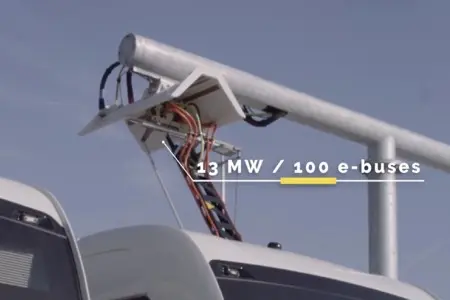
The overall charging time depends on the battery capacity and output power. Typical high-power opportunity pantographs can recharge an urban bus in 5 to 10 minutes.
Installing a "Pantograph Up" system dome requires precise alignment, robust mounting platforms, and integrated communication controls between the charger and vehicle.
For procurement managers, utility executives, and B2B buyers, evaluating an EVSE manufacturer requires looking beyond standard pricing sheets. Use this technical checklist to assess manufacturing partners:
Common technical queries concerning the implementation, safety, and operation of mobile DC charging platforms.
Compare our heavy-duty public charging piles, bidirectional V2G units, and custom split-type architectures designed for high-density transport hubs.