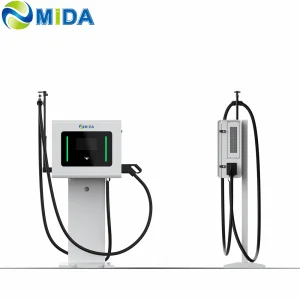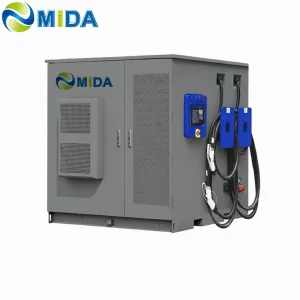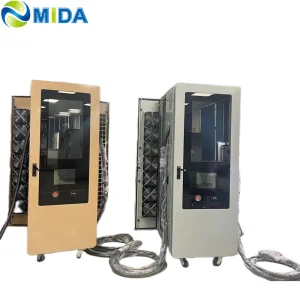
Industrial-Grade Fleet, Retail, & Commercial EV Power Infrastructure Solutions
In traditional EV terminology, Level 2 has historically referred to alternating current (AC) charging systems, operating on 208V or 240V lines with outputs up to 19.2kW. However, as global commercial fleets, residential complexes, and destination hubs scale up, the limitations of AC charging have become apparent. Because AC chargers rely on the vehicle’s internal On-Board Charger (OBC) to convert AC to DC, charging speeds are severely restricted—often capped at 7kW to 11kW by the vehicle's hardware constraints.
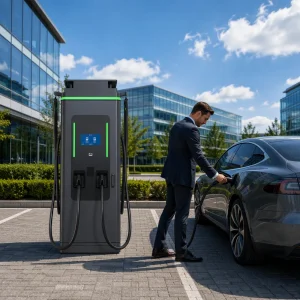
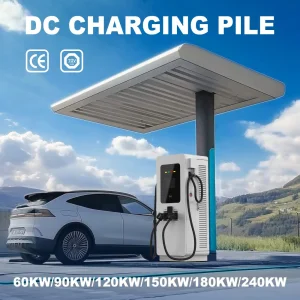
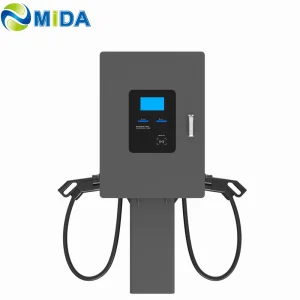
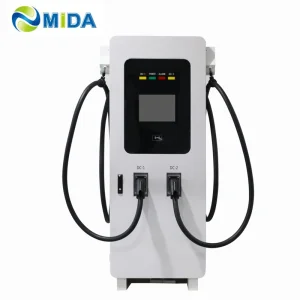
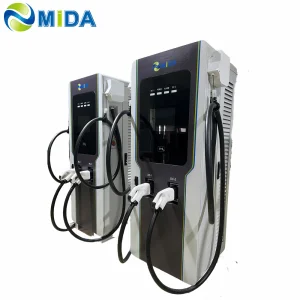
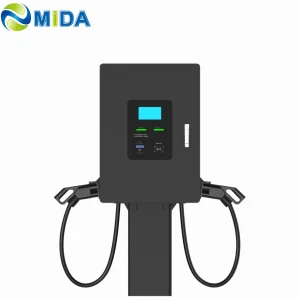
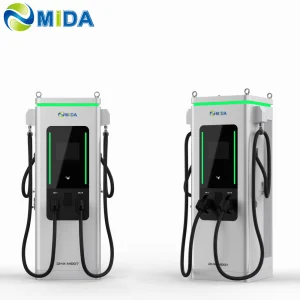
Enter the "Level 2 DC Charger" (often technically designated as low-power DC fast charging, ranging from 20kW to 40kW). By bypassing the vehicle’s OBC and feeding direct current straight to the traction battery, these chargers deliver up to 4 times the speed of conventional AC Level 2 systems without requiring the massive capital expenditure, grid reinforcement, or utility transformer upgrades demanded by ultra-fast Level 3 stations (>150kW). This hybrid positioning provides a highly cost-effective, high-turnover solution for commercial operators.
Direct-to-battery energy transfer avoids thermal conversions and energy losses associated with on-board chargers, keeping operational efficiency over 95%.
Operates smoothly on standard three-phase power lines (380V-480V) without triggering commercial demand charges or local grid capacity overload penalties.
Allows fleet operators to deploy 3 to 4 low-power DC charger units for the initial capital and installation cost of a single 150kW ultra-fast unit.
B2B EV infrastructure procurement involves navigating strict regulatory compliance, hardware longevity, and software integration requirements. Fleet managers, utility operators, and real estate developers evaluate suppliers on specific technical and economic parameters:
China’s leadership in EVSE (Electric Vehicle Supply Equipment) manufacturing is driven by a highly integrated supply chain ecosystem. Factories leveraging Industry 4.0 automation, automated optical inspection (AOI), and precise robotic assembly achieve economies of scale and component quality control that are difficult to match elsewhere.
From the raw silicon carbide (SiC) semiconductors used in power modules to the outer sheet metal chassis, every component is developed and tested within close proximity in hubs like Shenzhen and Shanghai. This vertical integration reduces manufacturing lead times, allows for rapid custom prototyping, and offers resilient buffer capacity against international supply chain disruptions.
Shanghai Mida Cable Group Ltd. operates through its wholly owned specialized subsidiaries: Shanghai Mida EV Power Co., Ltd., Shenzhen Mida EV Power Co., Ltd., and Shanghai Mida New Energy Co., Ltd.
By integrating advanced cable manufacturing, charging station electronics engineering, and high-efficiency power conversion modules, MIDA Group delivers comprehensive, vertically integrated charging solutions to global commercial and industrial clients.
Our production facilities employ advanced testing and diagnostic systems to guarantee reliability and compliance across diverse regional grid standards.

Discover our engineered solutions across the EV power transmission and storage sectors
High-efficiency conversion components designed for charging stations, featuring excellent heat dissipation and high power density.
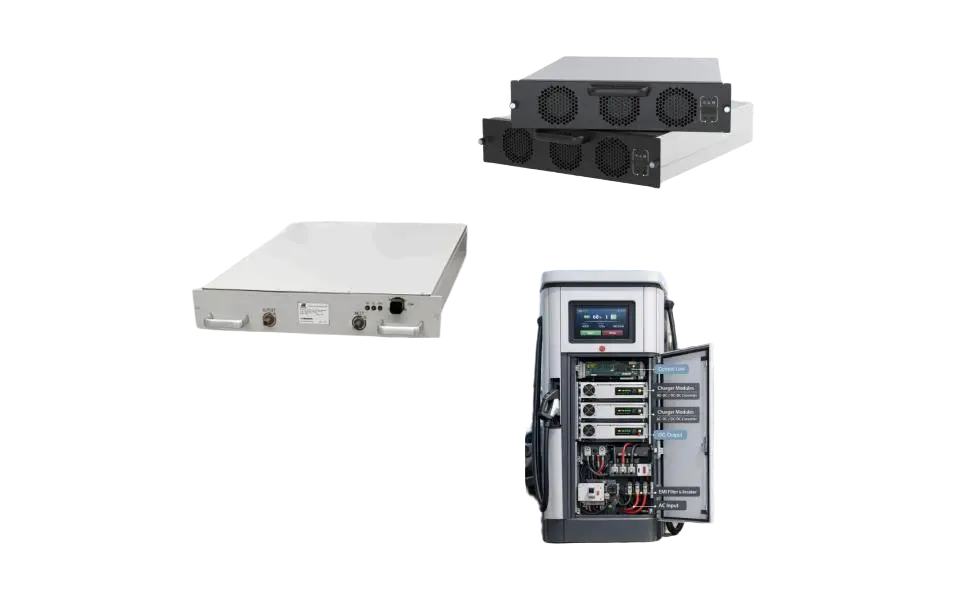
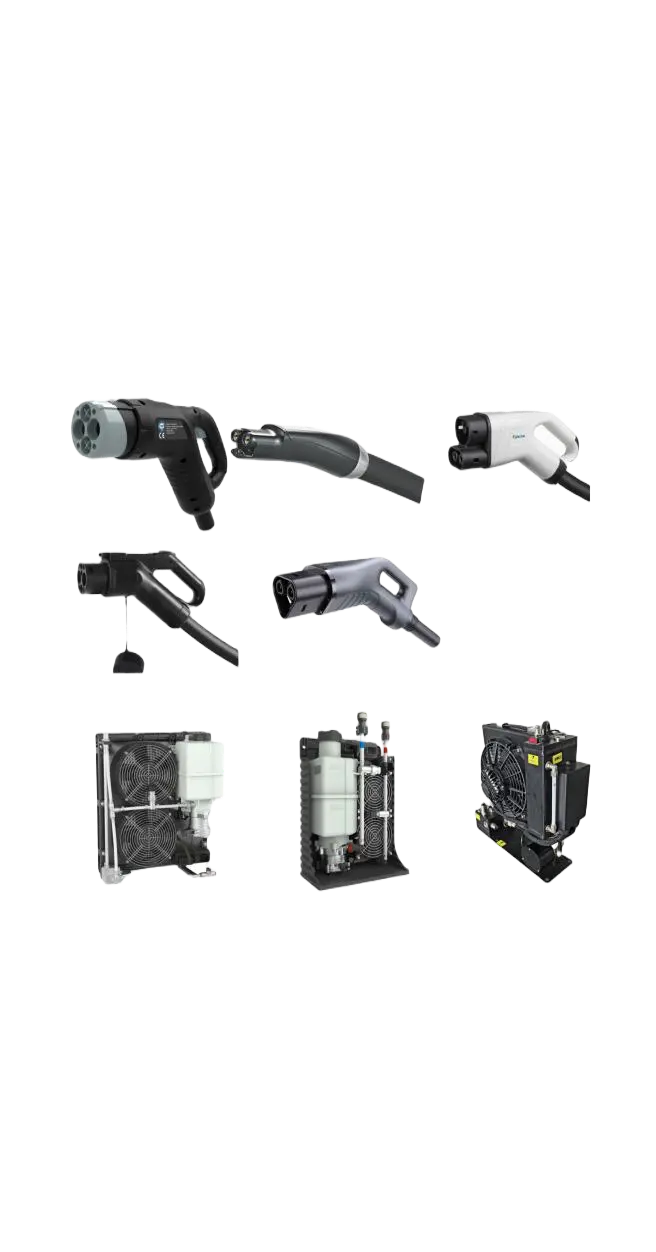
Ergonomic, wear-resistant charging guns and integrated cooling components engineered for high-power, high-current environments.
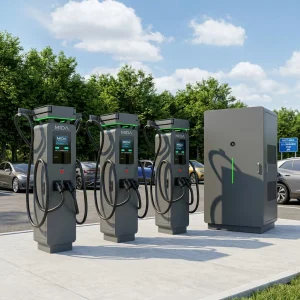
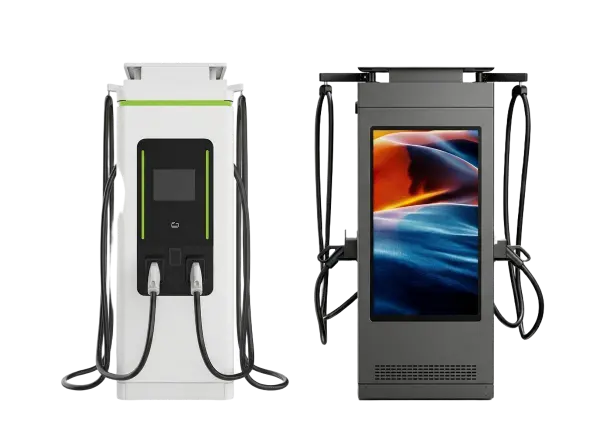
From low-power commercial wallboxes to high-power liquid-cooled megawatt stations, our units offer flexible, fast charging capabilities.
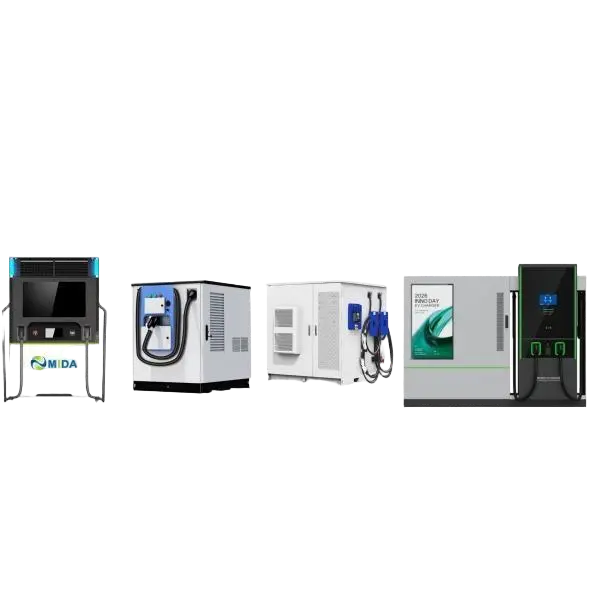
Integrating battery storage systems with EV charging units to support peak shaving, grid stabilization, and reliable emergency power.
"Level 2 DC Chargers" (20kW–80kW) fill a crucial infrastructure gap across several commercial and industrial application scenarios:
Delivery vans and logistics fleets typically dwell for 2 to 4 hours between shifts. A 30kW–40kW DC wallbox provides rapid, efficient charging without requiring high-power, multi-megawatt grid infrastructure upgrades.
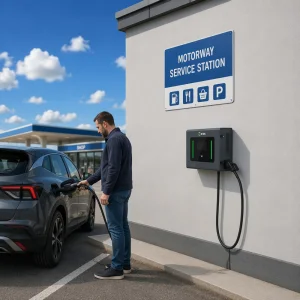
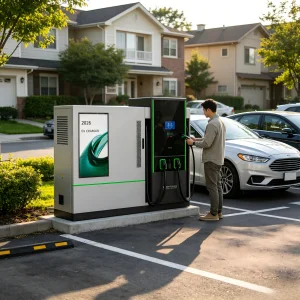
AC chargers are often too slow for busy visitors, while ultra-fast chargers are economically impractical for multi-hour parking. 20kW–50kW DC chargers offer a practical middle ground, providing fast, cost-effective charging during typical business meetings.
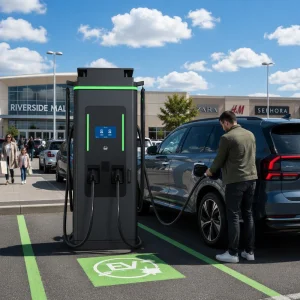
With dwell times averaging 45 to 90 minutes, consumers require faster charging speeds than AC can deliver. A 30kW–60kW DC charger offers rapid top-offs, driving customer traffic and increasing on-site dwell times.
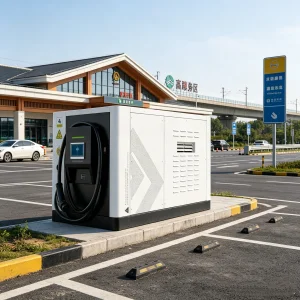
Furthermore, integration with Battery Energy Storage Systems (BESS) allows businesses to deploy fast-charging stations without worrying about local grid capacity constraints. By storing power during off-peak periods, these integrated systems discharge energy to vehicles during peak demand hours, minimizing energy costs and stabilizing grid loads.
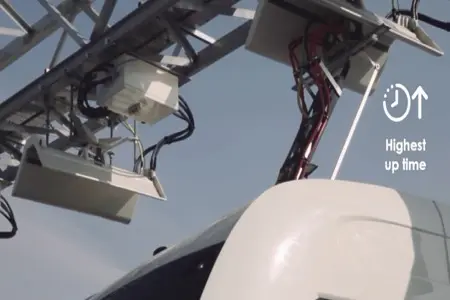
Stay informed with the latest developments in transit electrification, bus pantographs, and fast-charging technologies
Addressing the common questions raised by electrical engineers, fleet procurement managers, and utility planners
Explore our range of high-efficiency charging systems, power modules, and energy storage options