
Select from our high-efficiency, multi-standard compliant commercial hardware engineered for absolute uptime and rapid deployment.
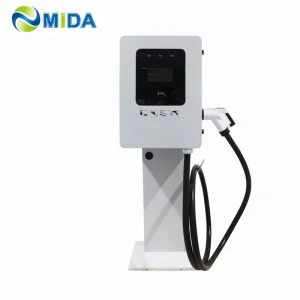
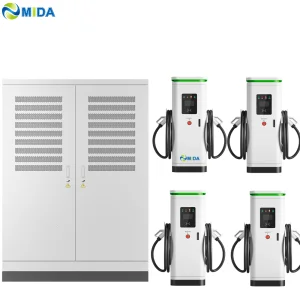
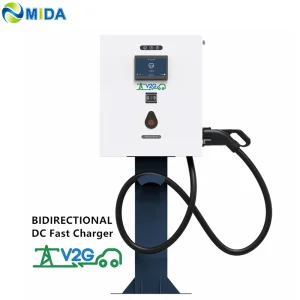
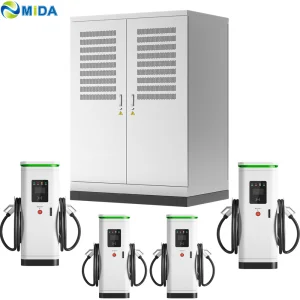
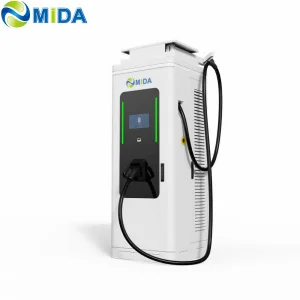
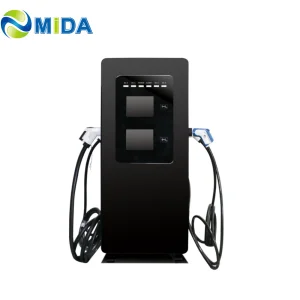
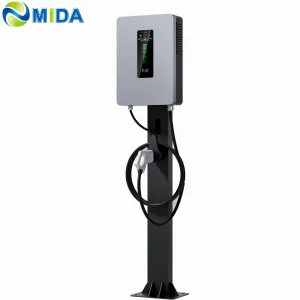
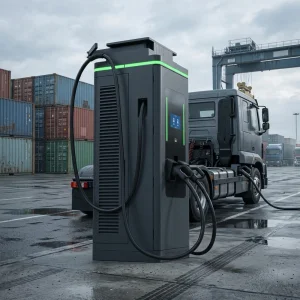
As governments globally mandate the transition toward clean mobility, logistics operators, municipal transit networks, commercial real estate developers, and corporate fleets are facing intense pressure to establish rapid charging networks. Crucially, the demand is no longer just for standard Alternating Current (AC) chargers, but for highly intelligent, scalable Direct Current (DC) Fast Charging Stations that support both Hybrid Cars (PHEVs) and full Battery Electric Vehicles (BEVs).
Modern enterprise procurement parameters focus heavily on the total cost of ownership (TCO), grid interaction efficiency, and maximum reliability. Fleet managers demand charging setups capable of dynamic load balancing, real-time telemetry output, and multi-protocol flexibility (including CCS1, CCS2, NACS, and CHAdeMO) to future-proof their capital investments against shifting global standards.

Shanghai Mida Cable Group Ltd. operates through its wholly owned subsidiaries: Shanghai Mida EV Power Co., Ltd., Shenzhen Mida EV Power Co., Ltd., and Shanghai Mida New Energy Co., Ltd. Our vertical integration guarantees absolute control over component manufacturing, power conversion engineering, and full assembly testing.
Mida Cable manufactures a comprehensive range of EV charging cables, including 16A–80A J1772 cables, 16A–63A IEC 62196-2 Type 2 cables, and heavy-duty DC fast charging cables: CCS1 (80A–500A), CCS2 (125A–1000A), CHAdeMO (125A–300A), GBT (200A–1000A), and NACS connectors (250A–600A).
MIDA EV Power produces a full lineup of EV charging stations, such as 7kW–50kW mobile chargers, 3.6kW–7.2kW portable DC chargers, 360kW–1440kW split-type DC fast chargers, 20kW–50kW wall-mounted DC chargers, and 60kW–480kW floor-standing DC fast charging stations.
MIDA New Energy specializes in EV charger power modules, offering 20kW–60kW standard modules, 40kW–125kW liquid-cooled modules, 30kW–62.5kW bidirectional modules, and 20kW–45kW V2G charging modules.
Comprehensive vertical solutions from raw components to finished power structures.
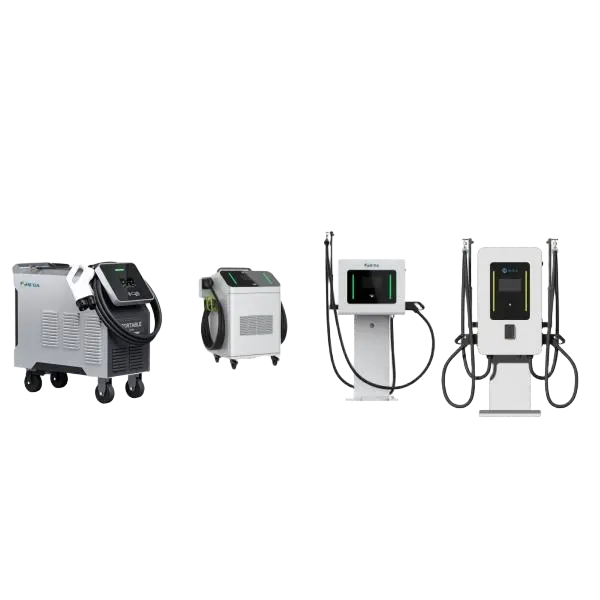
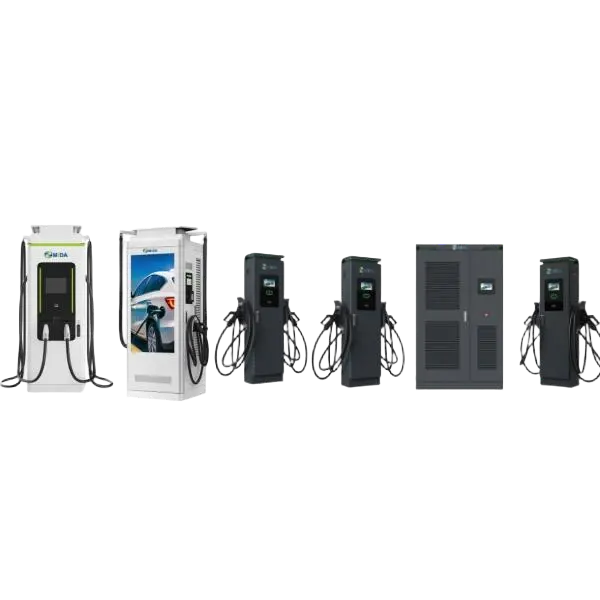
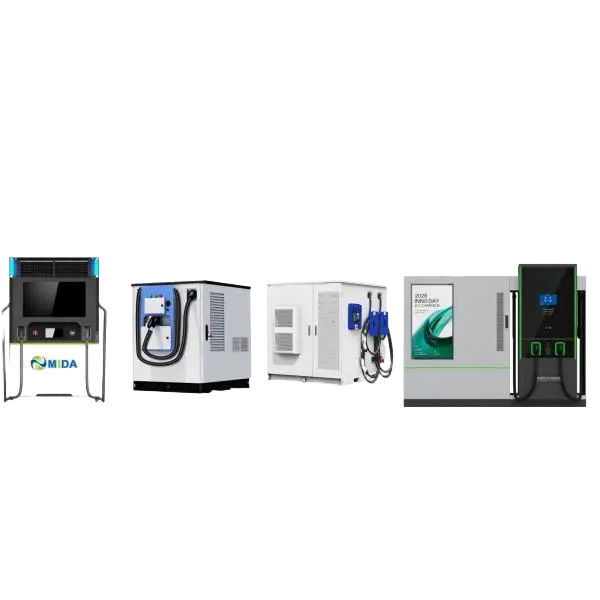
Implementing large-scale charging networks requires deep integration with existing power systems. MIDA Group specializes in solving three core industry challenges: infrastructure capacity constraints, high peak utility tariffs, and spatial limitations. By utilizing advanced Battery Energy Storage Systems (BESS), we deliver buffered DC fast charging capable of outputting ultra-fast charging speeds even on weak grids.
For municipal bus networks and logistics depots, adding multiple high-power DC chargers can strain local grids. Our BESS integrated charging stations buffer energy during off-peak hours and dispatch it at peak times, preventing grid overload and avoiding costly utility demand charges.
For high-traffic highway plazas and public commercial sites, we provide a split charging topology (from 360kW up to 1680kW). Power distribution is centralized in remote utility enclosures, while compact user dispensers occupy the retail parking spots, maximizing usable space and reducing noise.
By implementing OCPP 2.0.1 with dynamic load balancing, fleet managers can guarantee that delivery trucks and municipal buses reach target state-of-charge (SoC) profiles by morning, optimizing routing schedules while preserving battery life through gentle overnight charging cycles.
The electric vehicle landscape is evolving at a breakneck pace. The transition from legacy silicon (Si) switch modules to next-generation Silicon Carbide (SiC) semiconductors represents a major leap forward, yielding conversion efficiencies exceeding 96.5% and reducing system heat generation by up to 30%. This development is crucial as high-power chargers move past the 350kW threshold toward the Megawatt Charging System (MCS) standard, aimed at heavy-duty long-haul shipping applications.
Vehicle-to-Grid (V2G) capability transforms electric and hybrid cars from passive energy consumers into active distributed energy resources (DERs). MIDA Group's 20kW to 62.5kW bidirectional modules allow grid operators to utilize parked fleets to stabilize frequency fluctuations and supply local buildings during blackouts. Our V2G systems meet all IEEE 1547 and UL 1741 SA/SB safety protocols, ensuring seamless utility integration.
To deliver charging speeds of 500A and above, standard copper cables become too heavy and thick for safe user handling. Liquid-cooled cabling structures solve this issue. By circulating lightweight dielectric coolants directly to the connector terminals, we can reduce conductor cross-sections. This allows for lighter cables that remain cool to the touch even when running continuously at 600kW.
Reliable hardware is only part of the equation. Modern charging networks must defend against cyberattacks on financial interfaces and telemetry data. Our charging modules utilize TLS 1.3 encryption alongside ISO 15118 (Plug & Charge) certificates to verify vehicle identities securely. Operators can manage hardware, update firmware over-the-air (OTA), and monitor cooling system parameters in real-time, resulting in a robust, low-maintenance field deployment.
Advanced components designed for reliability and high performance.
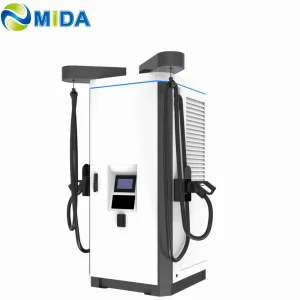
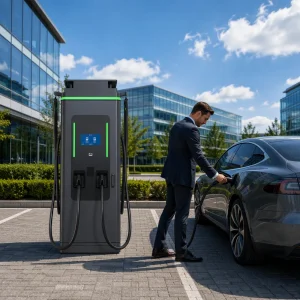
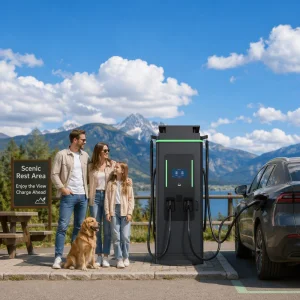
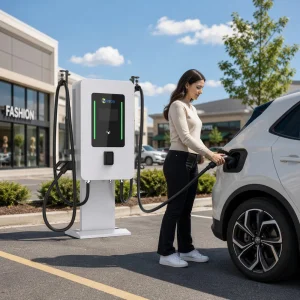
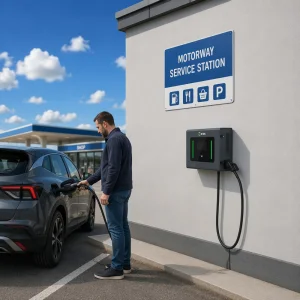
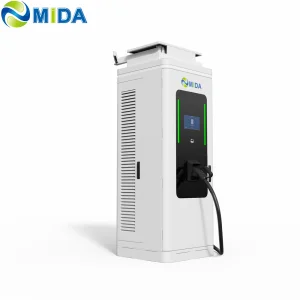
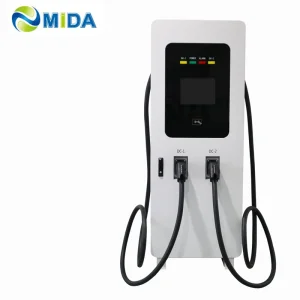
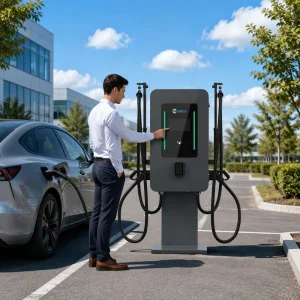
High-power DC charging units engineered for public locations, logistics corridors, and municipal transport hubs.
Read about our latest research, developments, and projects globally.
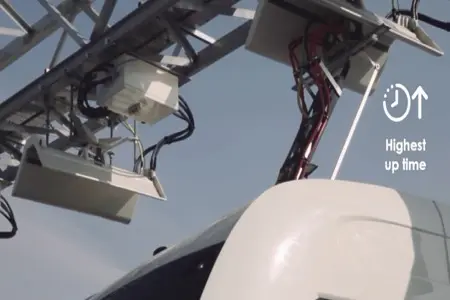
In contrast to classic plug-in charging systems, e-bus pantographs allow automated, high-power charging during scheduled stops. This reduces driver interaction and speeds up turnaround times...
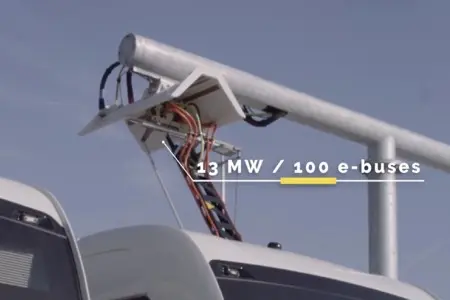
The charging time depends on the battery capacity and the grid output. Megawatt-level pantograph charging systems can charge transit buses in under 10 minutes...
Installing a "Pantograph Up" system requires precise structural anchoring, heavy electrical infrastructure planning, and proper compliance checks...
Expanding EV charging infrastructure globally requires strict compliance with regional safety codes and standards. MIDA Group products hold key international certifications, including UL, ETL, CE, TUV, and RCM. This guarantees that our chargers meet local electrical codes and run safely and reliably in any market.
Whether you are operating under North America's UL2231 electrical safety protocols or Europe's AFIR directives, our hardware is designed for immediate compliance. We support a range of plug configurations, including Type 1, Type 2, CCS1, CCS2, NACS, and CHAdeMO, allowing our products to integrate smoothly into different markets with minimal setup time.
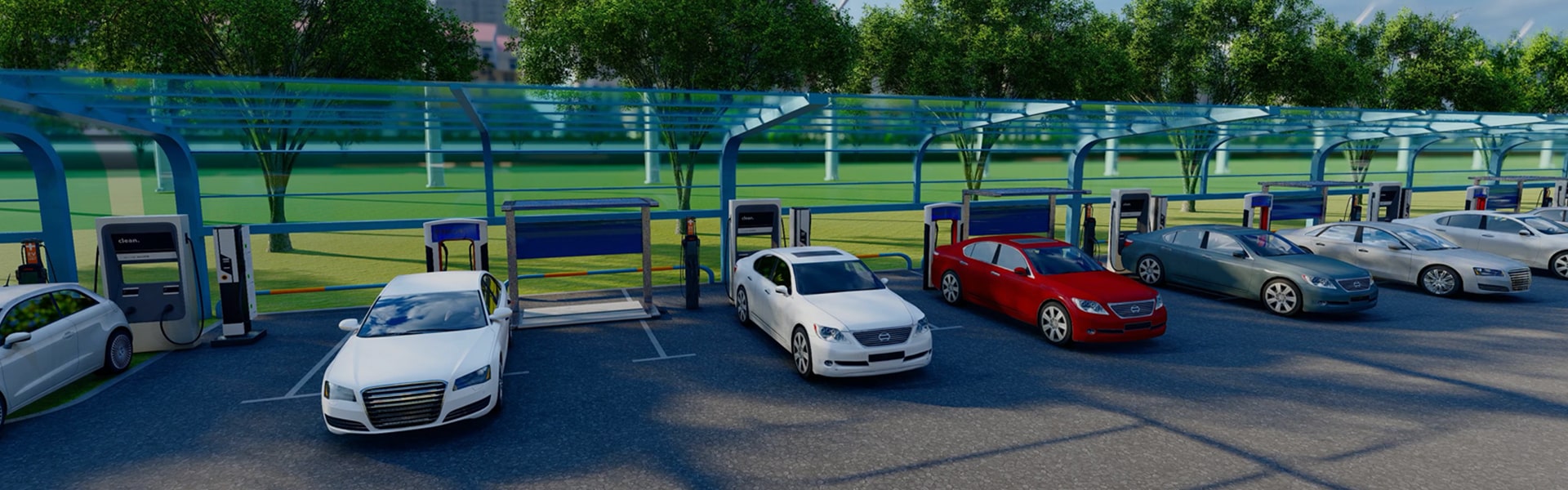
Common technical inquiries from commercial project managers and procurement heads.