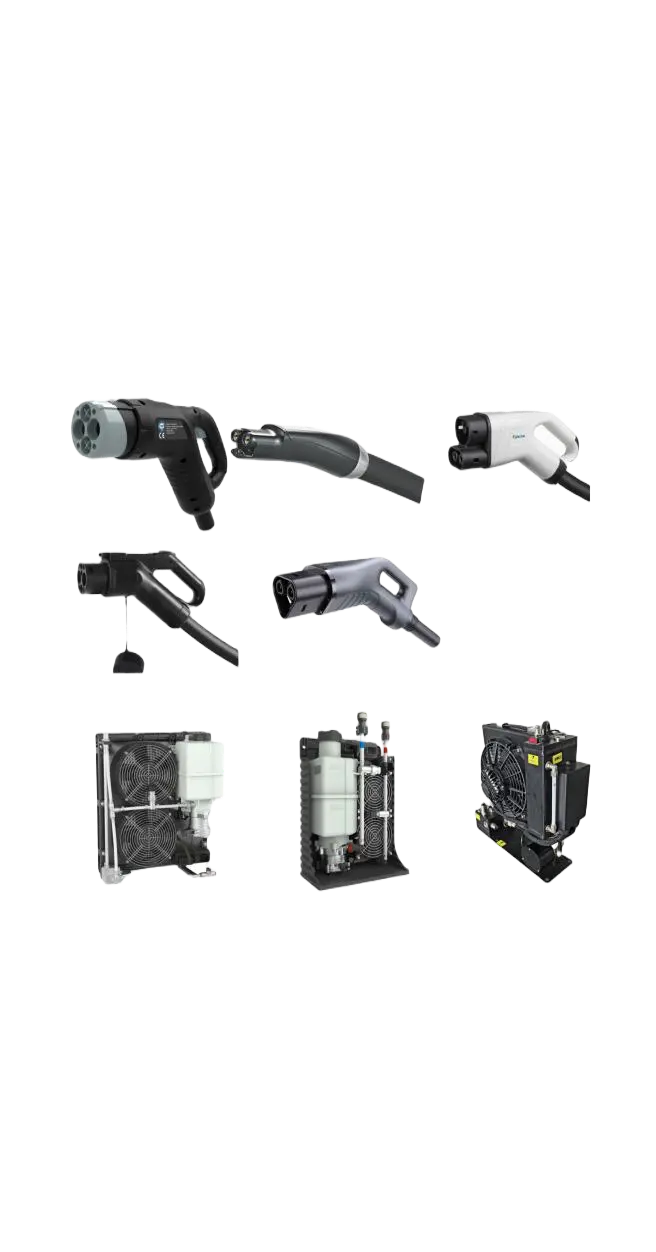
Shanghai Mida Cable Group Ltd., through its dedicated subsidiaries—Shanghai Mida EV Power Co., Ltd., Shenzhen Mida EV Power Co., Ltd., and Shanghai Mida New Energy Co., Ltd.—stands at the absolute forefront of the global electric vehicle infrastructure supply chain. We manufacture a comprehensive range of EV charging cables, including 16A–80A J1772 cables and 16A–63A IEC 62196-2 Type 2 cables. Our high-power DC fast charging connectors span CCS1 (80A–500A), CCS2 (125A–1000A), CHAdeMO (125A–300A), GBT (200A–1000A), and NACS connectors (250A–600A) to guarantee dynamic interoperability across major vehicle fleets worldwide.
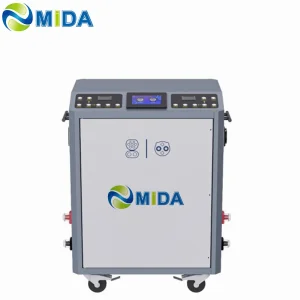
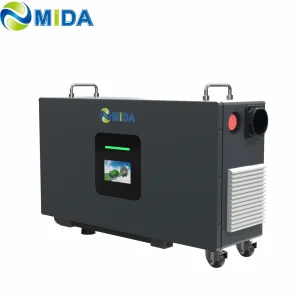
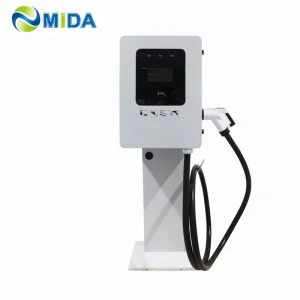
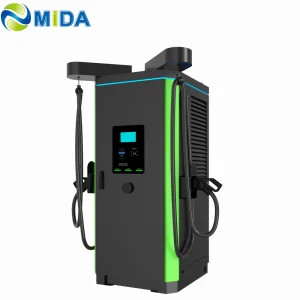
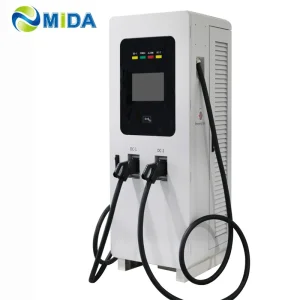
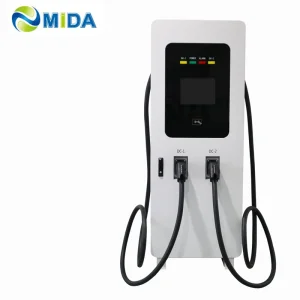
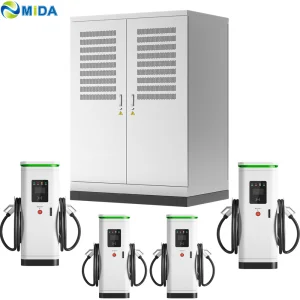
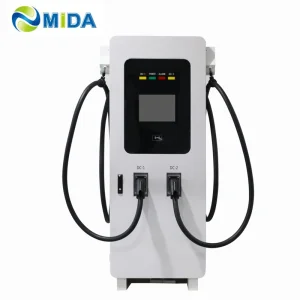
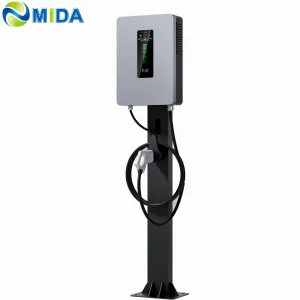
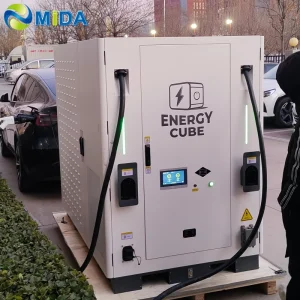
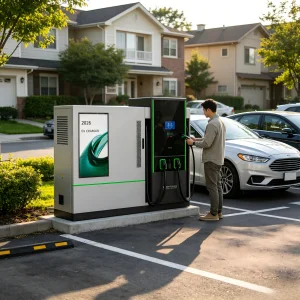
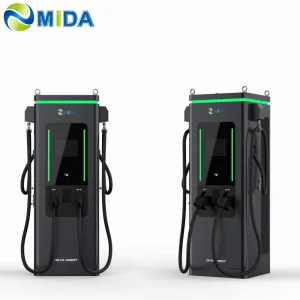
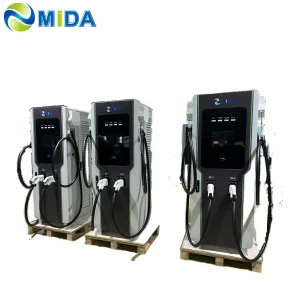
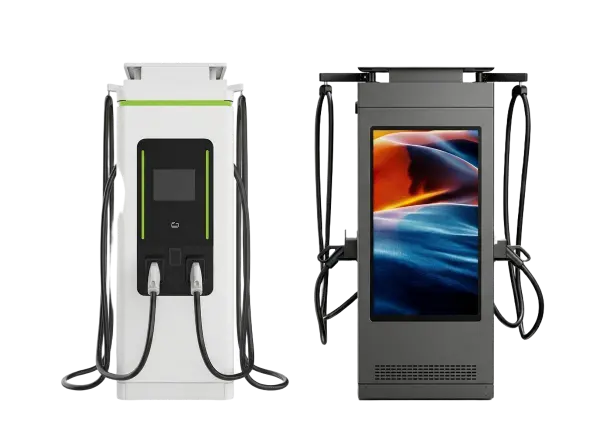
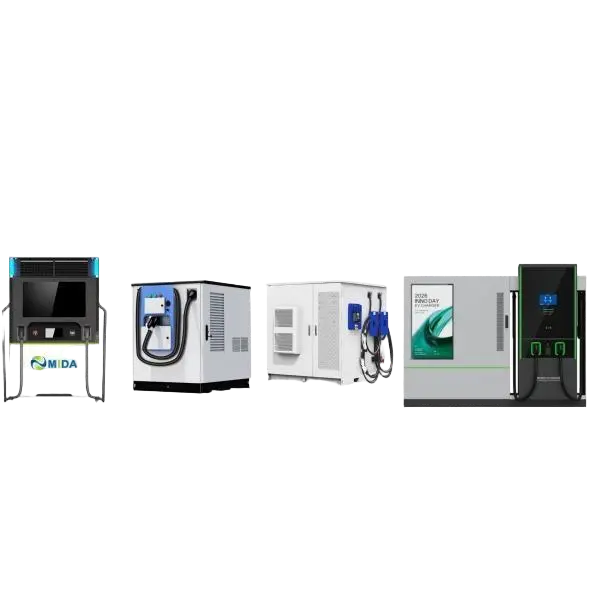
MIDA EV Power leads hardware innovation by delivering specialized charging topologies. Our lineup ranges from 7kW–50kW mobile chargers and 3.6kW–7.2kW portable DC chargers, up to 360kW–1440kW split-type DC fast chargers, 20kW–50kW wall-mounted DC units, and 60kW–480kW floor-standing DC charging stations.
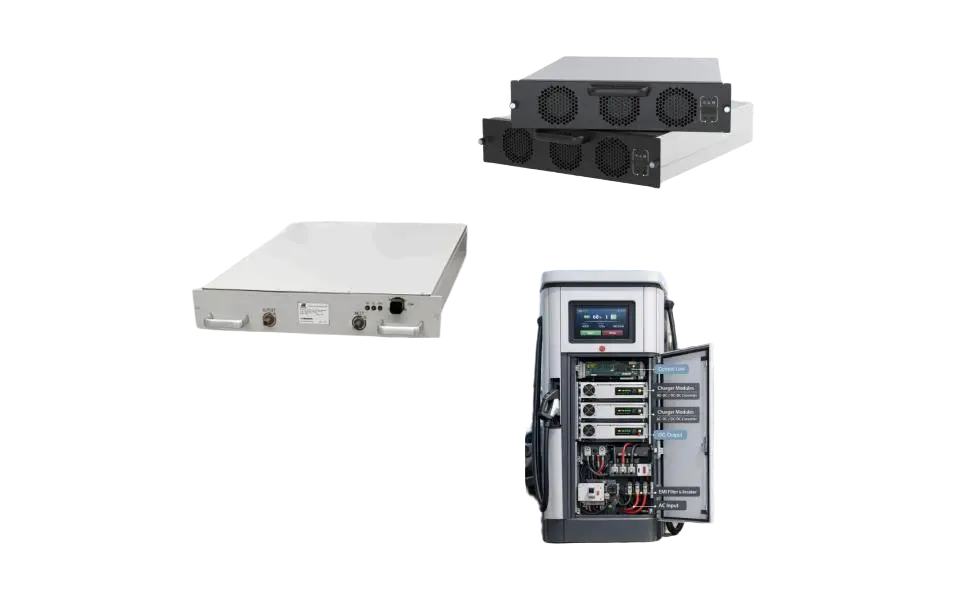
MIDA New Energy designs EV charger power modules, offering 20kW–60kW standard modules, 40kW–125kW liquid-cooled units, and bidirectional V2G power conversion topologies.
All stations comply strictly with CE, UL, and GB/T standards. Integrated systems ensure complete protection against overvoltage, insulation failure, and thermal overload.
Fully compliant with OCPP 1.6J and OCPP 2.0.1 protocols. Seamlessly connect with global CPO networks and municipal fleet telematics systems.
As the electric vehicle ecosystem matures, charging stations have evolved from simple electrical outlets into intelligent, bidirectional power nodes. Modern Charge Point Operators (CPOs) and fleet administrators demand higher power densities, reduced operational costs, and future-proof upgrade paths. MIDA Group supports this transition through extensive vertical integration, spanning connector technology, power electronics, and energy storage integration.
SEO Value Statement (Information Gain): Unlike suppliers that only package third-party parts, MIDA develops the complete charging ecosystem: the cables, the power modules, and the station software. This eliminates integration issues, enhances system efficiency by up to 3%, and ensures long-term field reliability.
The core of any DC fast charger lies in its conversion efficiency. MIDA’s 20kW–60kW standard air-cooled modules and 40kW–125kW liquid-cooled power modules employ high-frequency LLC resonant converters and active power factor correction (PFC) circuitry. This achieves a peak efficiency of over 96.5%, dramatically reducing heat dissipation and power loss during high-load charging cycles.
Furthermore, our 30kW–62.5kW bidirectional AC-DC power modules and V2G (Vehicle-to-Grid) modules allow commercial fleets to utilize vehicles as mobile energy storage devices. By injecting energy back into the local grid during peak demand times, operators can offset energy costs and create new revenue streams.
Standard air-cooled chargers struggle to deliver sustained currents above 250A due to thermal limitations. MIDA’s liquid-cooled systems bypass this bottleneck using integrated cooling units (ranging from 3.5kW to 72kW for HPC charging). By circulating coolant through the DC connector and cable bundle, we can deliver continuous charging current up to 1000A without overheating, enabling rapid charging for heavy-duty transit buses, logistics fleets, and passenger vehicles.
Max Continuous Current
Peak Module Efficiency
Max Split DC Output
Countries Supplied
MIDA Group operates major manufacturing facilities across critical industrial zones in Shanghai and Shenzhen. This dual-presence maximizes the strengths of China's premier EV hardware ecosystem:
Deploying public or fleet charging stations requires navigating complex regional grid regulations and electrical safety standards. MIDA Group designs all fast chargers to simplify compliance across diverse global markets:
Our stations are CE-certified, complying with IEC 61851-23/24, EN 61851, and regional grid codes. We support CCS2 and GBT charging standards, along with OCPP 1.6J/2.0.1 for seamless integration with European and Australian network backends.
For the Americas, our hardware is designed to meet UL 2202 and UL 2231 standards. We support CCS1 and the North American Charging Standard (NACS), enabling fleet operators to deploy robust charging solutions in compliance with local utility regulations.
To prevent localized grid overloads, MIDA fast chargers support dynamic load balancing. Our software can actively throttle charger output based on real-time grid feedback, or distribute power dynamically across up to 12 dispensers in a split-charger configuration. This minimizes upfront utility transformer upgrade costs and protects grid infrastructure.
MIDA Group supplies charging hardware optimized for specific real-world commercial requirements:
Our 60kW–240kW stations with integrated 43-inch and 55-inch advertising displays allow retail property owners to generate advertising revenue while offering fast charging to shoppers.
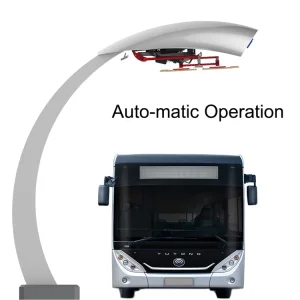
For municipal bus fleets and logistics companies, our 300kW–600kw split-type pantograph chargers and megawatt chargers ensure rapid overnight charging under rugged conditions.
Our BESS Charging Stations (ranging from 60kWh to 2MWh storage capacity) allow operators to deploy fast chargers in remote sites with limited grid capacity by utilizing buffered battery storage.
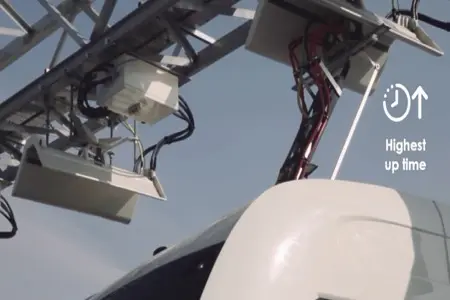
What are the advantages of an e-bus pantograph dome? In contrast to classic plug-in charging systems, e-bus pantographs enable automated overhead connection and faster high-power power transfer...
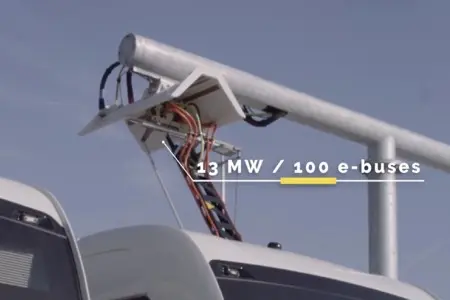
How long does it take to charge with an e-bus pantograph? The charging time depends heavily on the battery capacity, state of charge (SoC), and the nominal output power of the overhead station...
How to Install the Pantograph Up Charger System Dome for Electric Bus. Installing a "Pantograph Up" system requires robust electrical engineering and structural integration to ensure safety...
Split-type charging stations separate the central power cabinet from the individual dispensers. This allows the centralized power modules to dynamically distribute power across multiple charging outlets, optimizing charger utilization, simplifying maintenance, and minimizing space requirements at the parking bay.
BESS (Battery Energy Storage System) integrated chargers buffer energy from the grid during off-peak hours and release it during high-power charging sessions. This enables ultra-fast charging without requiring massive, expensive electrical grid upgrades, while protecting the local distribution grid from peak demand charges.
Yes, all MIDA DC fast charging stations are fully compatible with OCPP 1.6J and OCPP 2.0.1. This ensures full interoperability with global Charge Point Operator (CPO) network backends, enabling billing, remote monitoring, and diagnostic operations.
We use advanced liquid cooling units for continuous charging applications over 250A. For lower power stations, we implement high-efficiency forced air cooling with sealed power module enclosures to prevent dust and moisture ingress, satisfying IP54 and IP55 ratings.