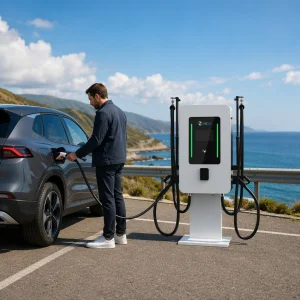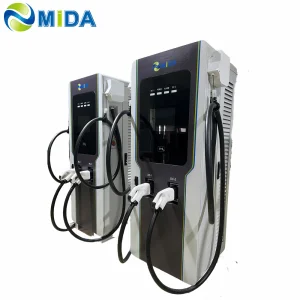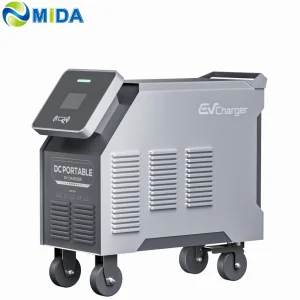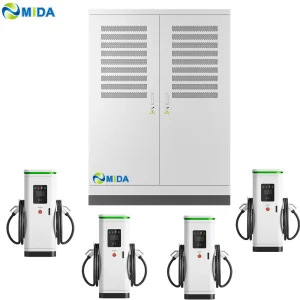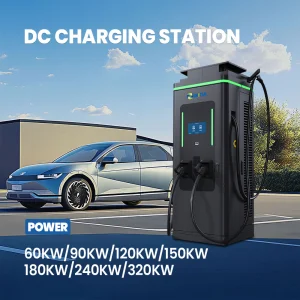
Explore our flagship high-voltage DC fast charging cabinets, mobile battery-buffered chargers, and smart OCPP wall-mounted solutions engineered for high availability.
The global EV transition has graduated from early-stage residential AC slow charging to ultra-fast, MW-scale, and grid-supportive DC energy nodes.
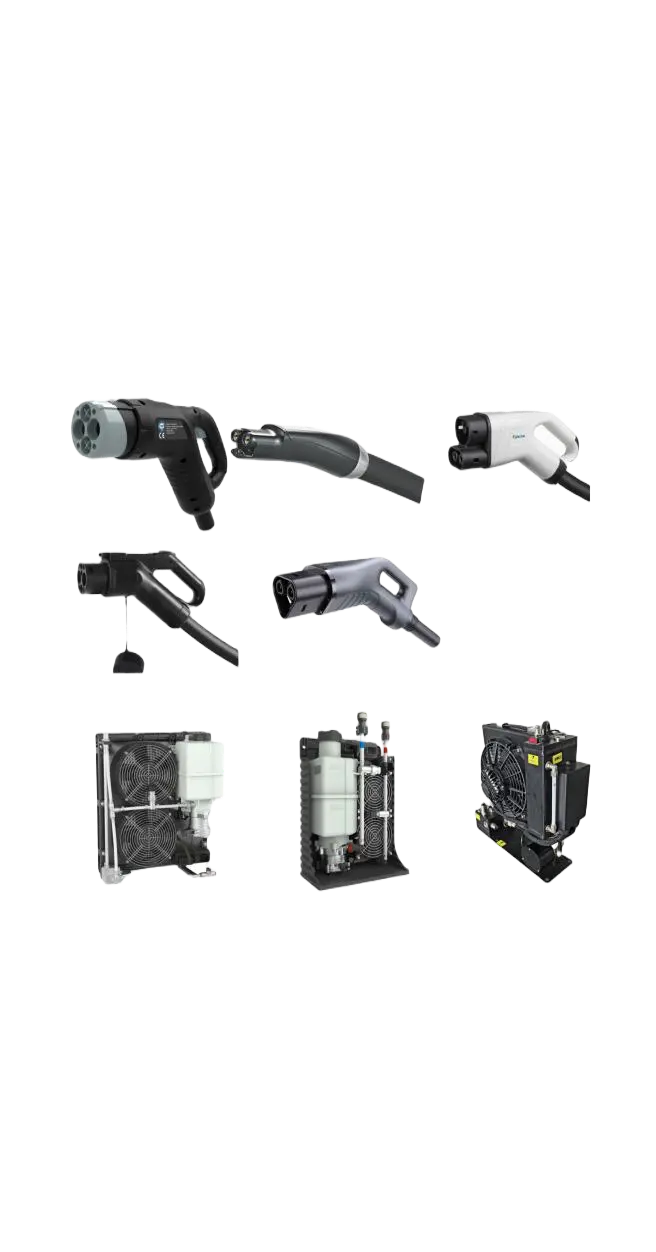
As battery architectures shift towards 800V and 1000V systems, conventional air-cooled hardware faces severe thermal limits. High-Power Charging (HPC) setups utilize active coolant loops integrated directly within the connectors and power stacks. This enables sustained delivery of 500A to 1000A currents, reducing commercial vehicle recharge times to under 15 minutes without degrading insulation systems or terminal contacts.
With smart grids requiring dynamic load balancing, Vehicle-to-Grid (V2G) systems compliant with ISO 15118-20 are transforming parked EVs into distributed energy storage assets. Modern charging infrastructure must feature bidirectional converter topologies (such as active front-end rectifiers and dual active bridge DC-DC converters) to facilitate seamless active and reactive power feedback back into utility grids.
Grid capacity constraints are a major bottleneck for high-power DC station deployments. Integrated Battery Energy Storage Systems (BESS) act as local buffers, absorbing power during low-demand periods and discharging to supplement local utility limits during multi-vehicle DC charging events. This reduces expensive grid upgrade costs (CapEx) and avoids peak demand utility surcharges (OpEx).
Procuring charging hardware at an enterprise level requires rigorous adherence to multi-regional regulations, interoperability standards, and ruggedized build quality. Commercial network operators (CPOs) and fleet logistics managers must design systems for multi-decade operations.
Integration with OCPP 1.6J and OCPP 2.0.1 backend management platforms is crucial for billing, load shedding, and diagnostic monitoring. Our stations incorporate robust hardware abstraction layers to support any compliant SaaS.
Hardware must satisfy regional harmonics and safety certifications, including CE-EMC/LVD in Europe, UL 2202/UL 2231 in North America, and NACS (SAE J3400) compliance for modern US infrastructure.
Public deployment demands IK10 impact resistance rating and IP55 or IP65 ingress protection to withstand sub-zero winters, high-salinity coastal areas, and desert heat storms.
How Shanghai Mida Cable Group guarantees quality control, accelerated lead times, and technological agility via direct in-house component fabrication.
Mida's parent company manages raw copper drawing, cross-linked insulation, and extrusion for liquid-cooled CCS1, CCS2, NACS, and Megawatt-level cables. By fabricating our own conductive pathways, we maintain absolute impedance matching and thermal threshold monitoring.
Unlike integrators that source external sub-components, MIDA New Energy designs and manufactures power conversion modules. From bi-directional V2G topology to active-clamp LLC resonant converters, we optimize thermal efficiency to reduce heat output and improve MTBF.
Every charging station is subjected to full-load burn-in testing, high-voltage insulation tests, isolation resistance validation, and multi-protocol hardware-in-the-loop (HIL) simulators. This process eliminates configuration errors prior to global container export.
Leveraging deep specialization through dedicated subsidiaries to deliver turnkey EVSE infrastructure globally.

Shanghai Mida Cable Group Ltd. operates through its wholly owned subsidiaries: Shanghai Mida EV Power Co., Ltd., Shenzhen Mida EV Power Co., Ltd., and Shanghai Mida New Energy Co., Ltd. Our multi-faceted engineering capabilities focus on resolving heat dissipation, grid conversion loss, and electrical safety challenges.
Manufactures high-reliability EV charging cables: 16A–80A J1772, 16A–63A IEC 62196-2 Type 2, and high-amp DC cables including CCS1 (80A–500A), CCS2 (125A–1000A), CHAdeMO (125A–300A), GB/T (200A–1000A), and NACS (250A–600A) liquid-cooled lines.
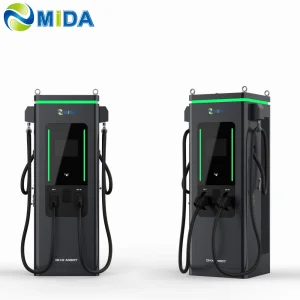
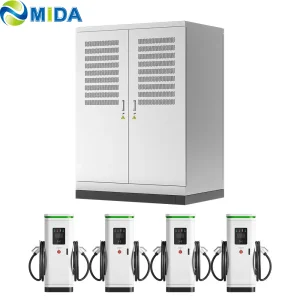
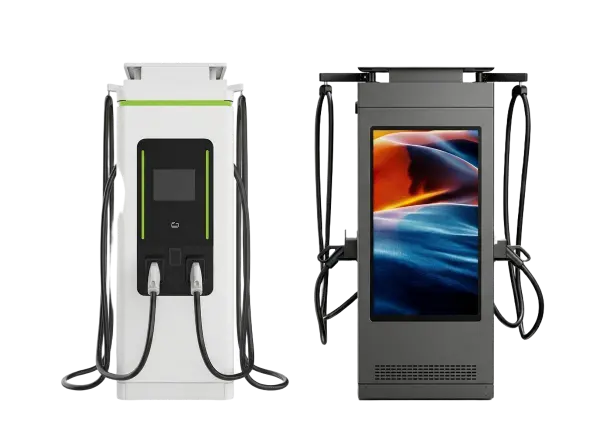
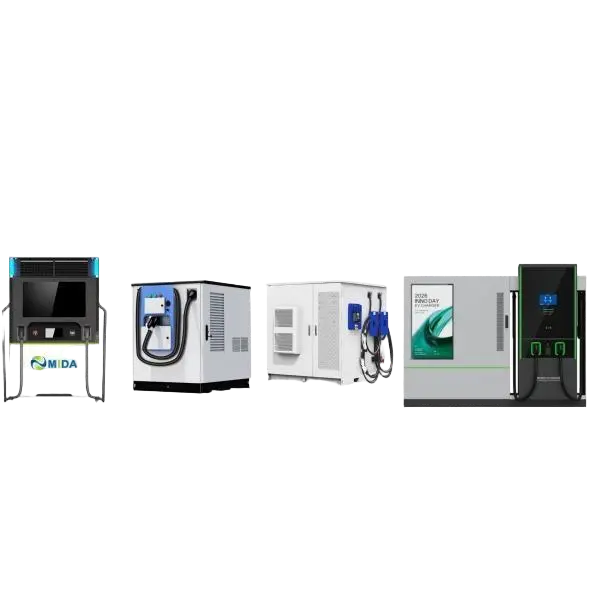
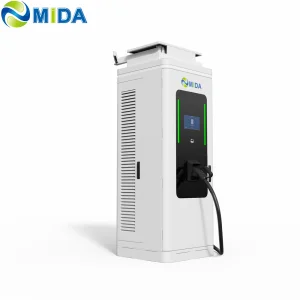
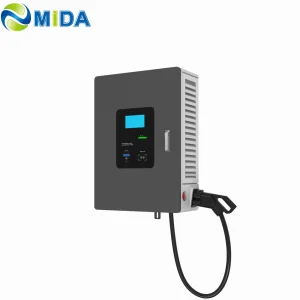
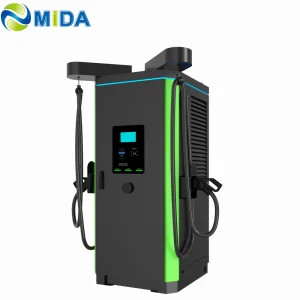
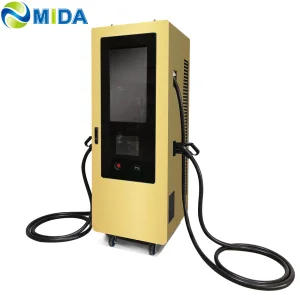
Fabricates robust EV chargers: 7kW–50kW mobile units, 3.6kW–7.2kW portable DC fast chargers, 360kW–1440kW split-architecture power cabinets, 20kW–50kW wall-mounted DC units, and 60kW–480kW integrated floor-standing DC charging hubs.
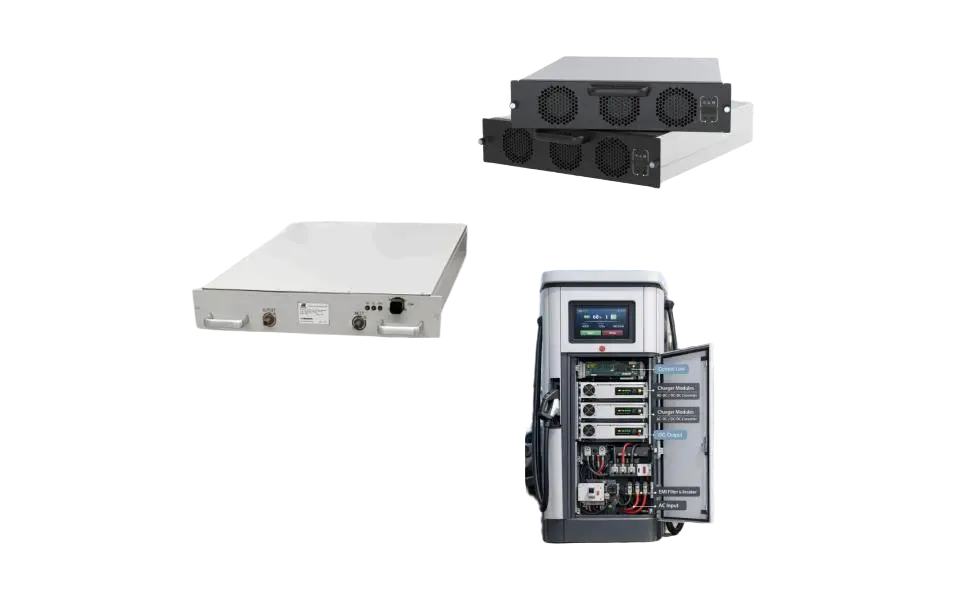
Designs advanced power electronics modules: 20kW–60kW standard air-cooled modules, 40kW–125kW active liquid-cooled modules, 30kW–62.5kW bidirectional conversion platforms, and 20kW–45kW specialized V2G vehicle-to-grid power nodes.
Scalable, modular, and engineered to integrate into diverse structural, commercial, and operational settings.
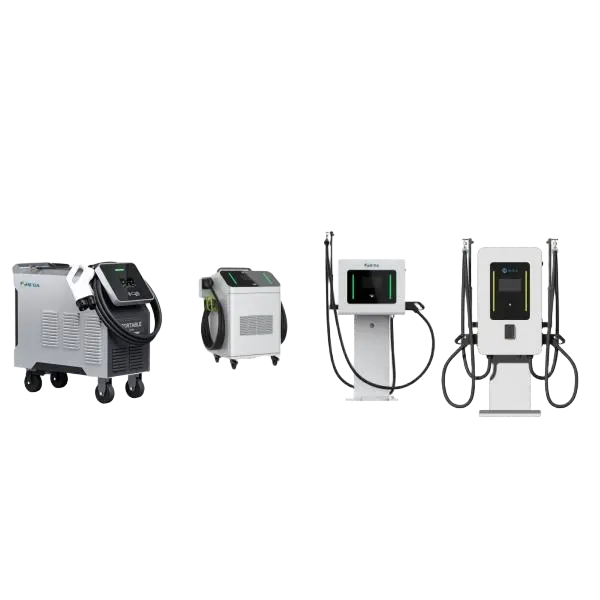
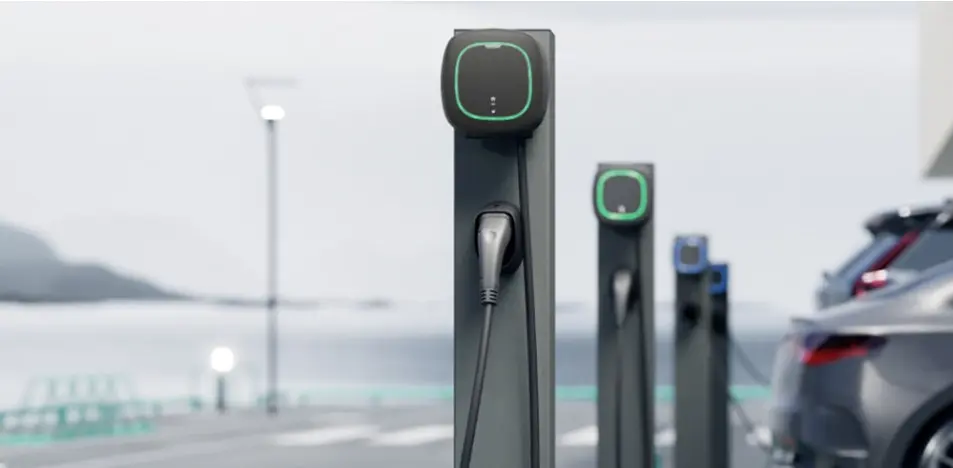
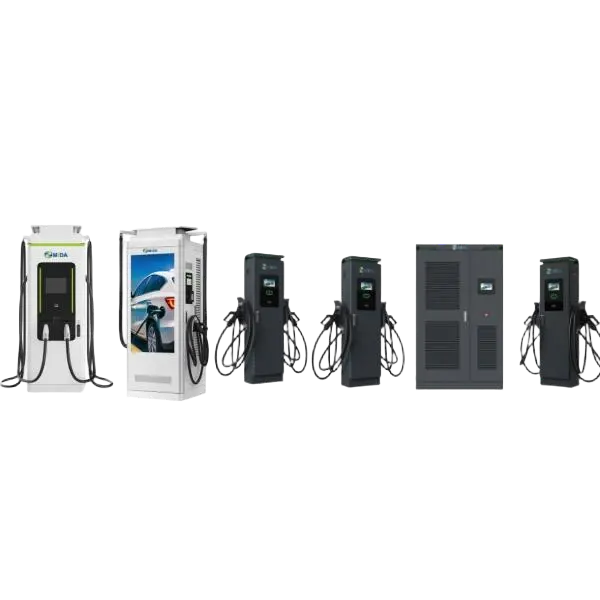
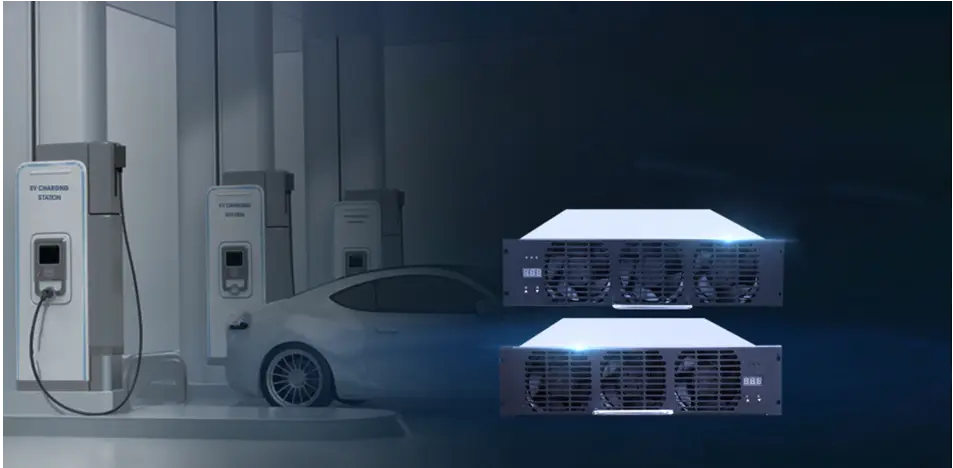
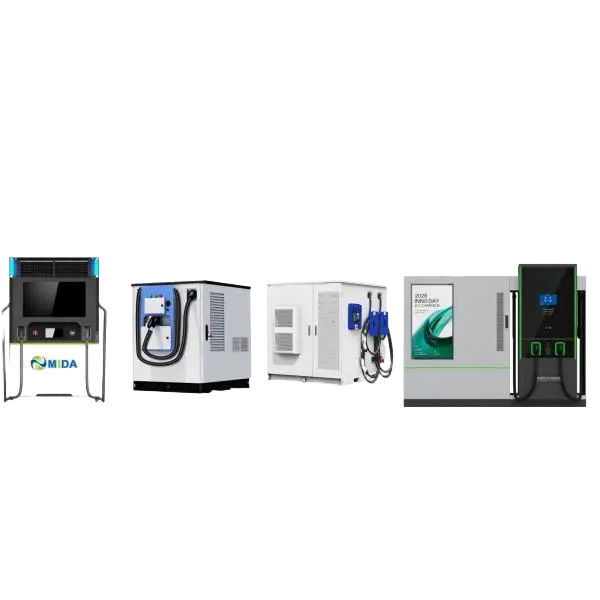
Comprehensive engineering matrices detailing modular configurations across our power conversion systems.
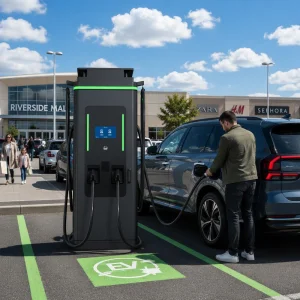
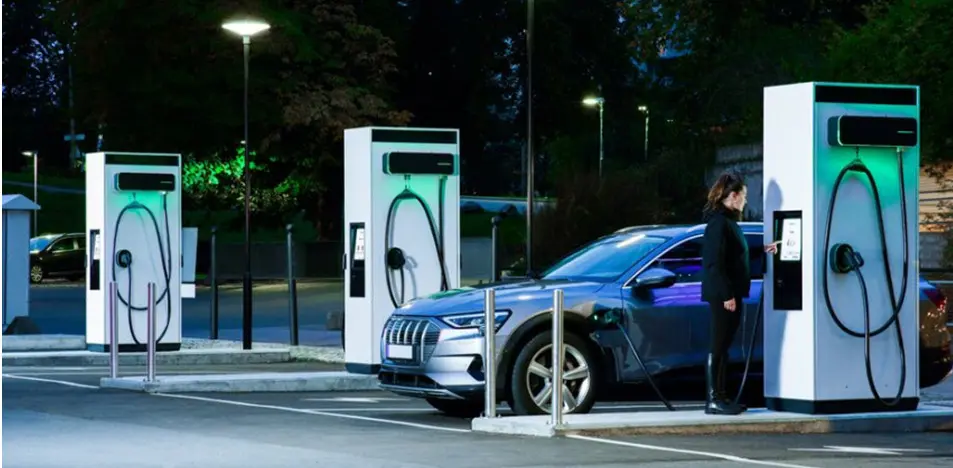
From heavy-duty fleet depots to high-density retail parking networks, MIDA hardware is deployed across various operating environments.
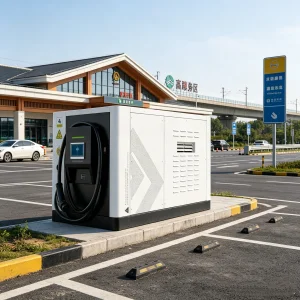
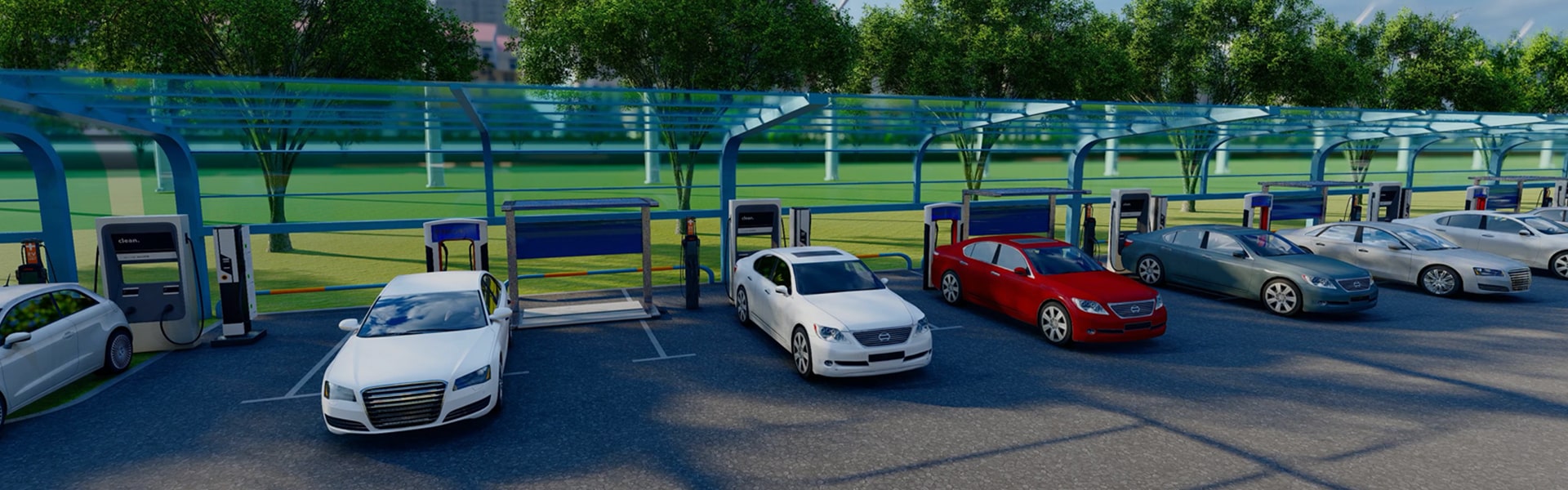
For cross-country transit corridors, our split charging stack architectures dynamically distribute power up to 1440kW. This enables multiple passenger vehicles to draw up to 350kW simultaneously, minimizing queue times and maximizing high-throughput highway revenue.
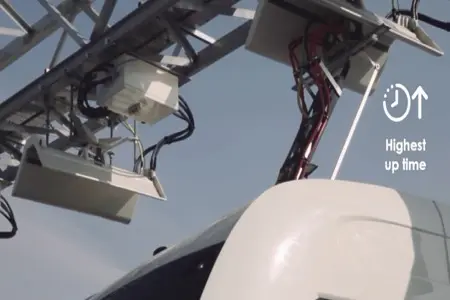
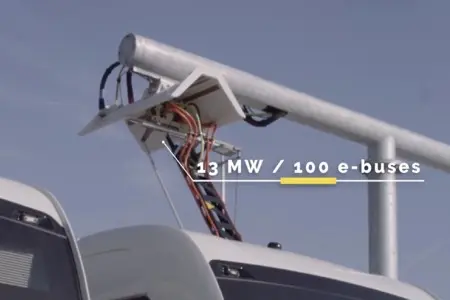
Heavy-duty logistics centers and municipal bus networks benefit from high-voltage DC cabinets paired with automated pantographs. These configurations support scheduling mechanisms designed to minimize grid peak rates and charge vehicles overnight.
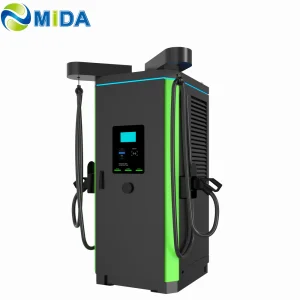
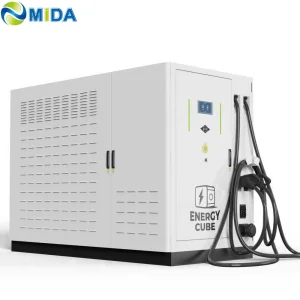
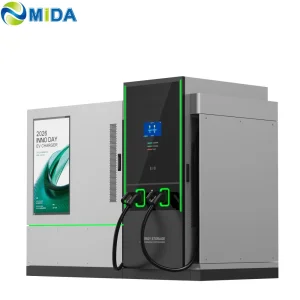
In locations with limited power infrastructure, our BESS-integrated systems supply high-capacity currents directly from an integrated battery buffer. This design charges from the grid at low wattages during off-peak hours and outputs high-wattage power during vehicle connections.
Keep up with technical updates, manufacturing achievements, and recent projects from the MIDA engineering team.
Industry-standard technical queries resolved by our lead hardware and grid-integration engineers.
High-voltage infrastructure designs customized for public networks, logistics hubs, and commercial charging corridors.