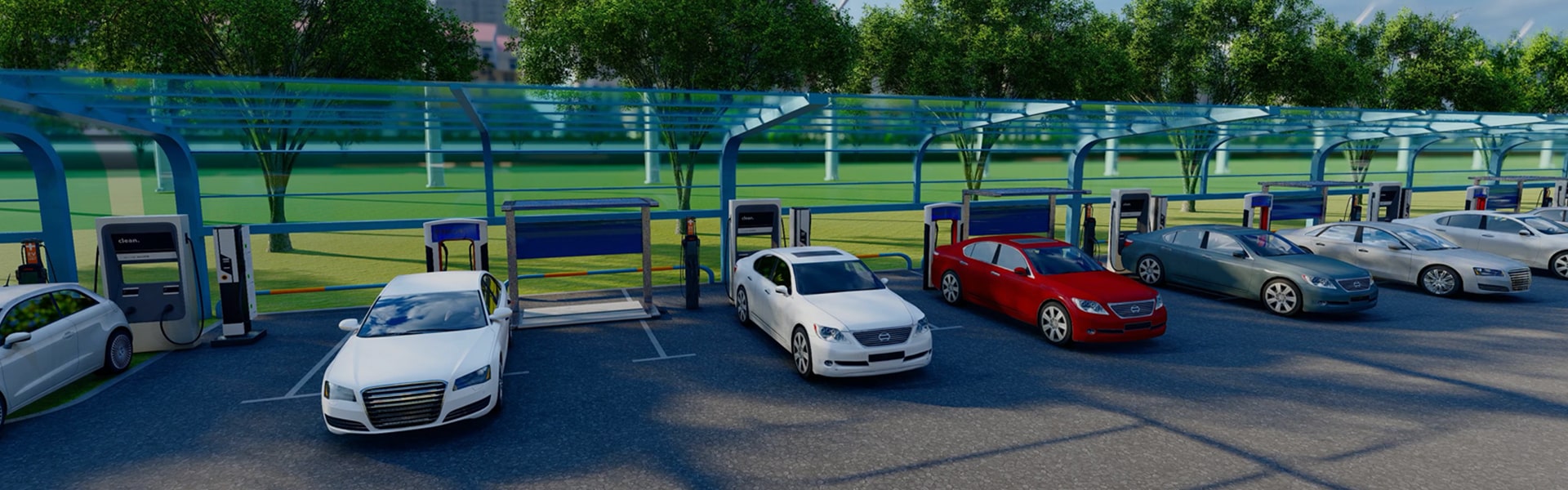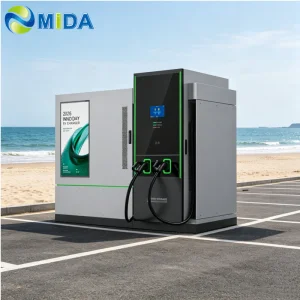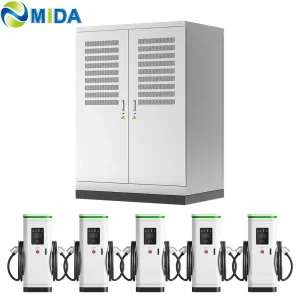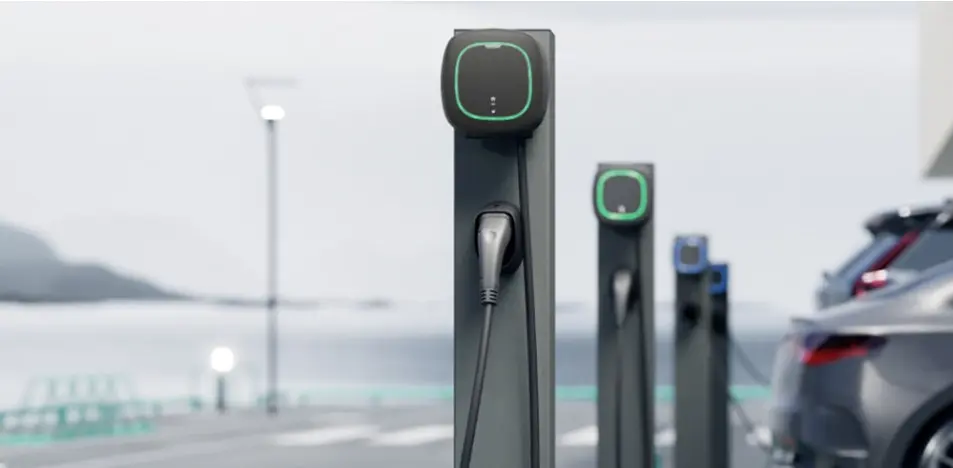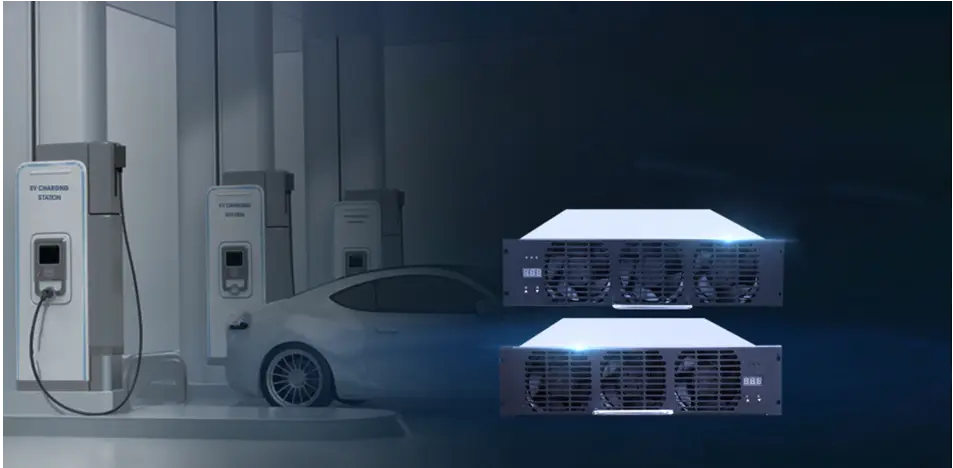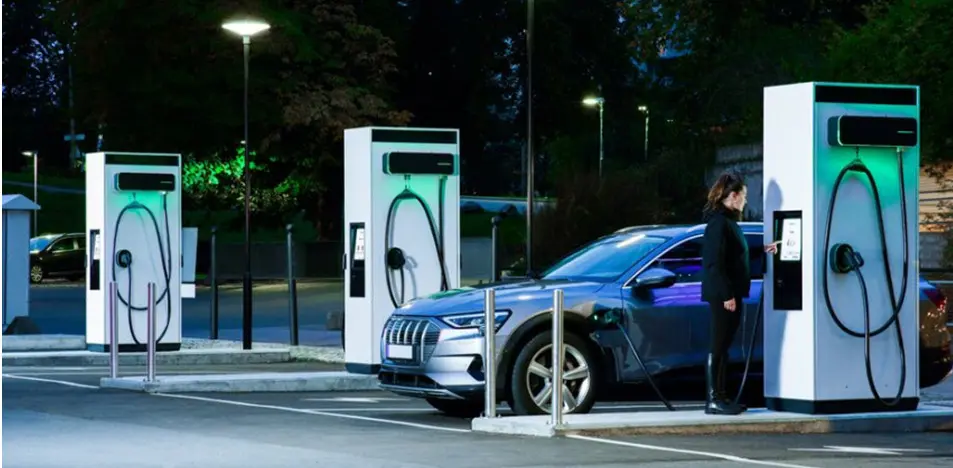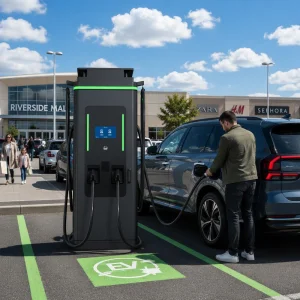
Explore our next-generation fast chargers designed for severe weather conditions, highway corridors, and municipal depots.
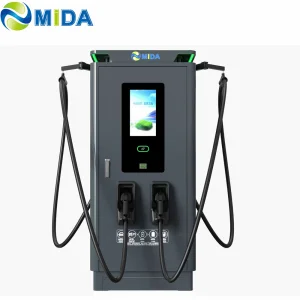
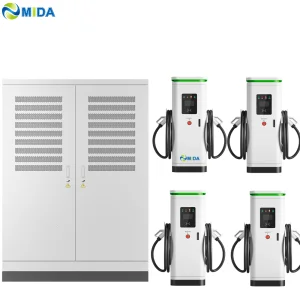
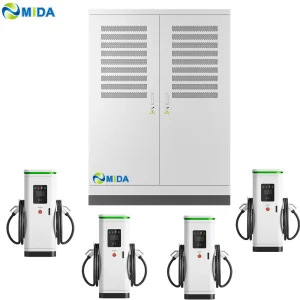
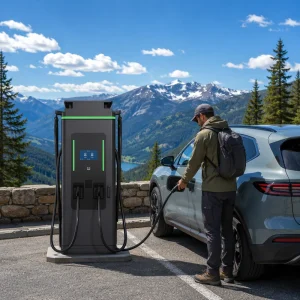
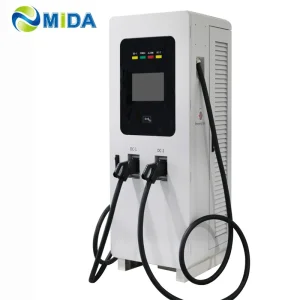
As global transit networks transition rapidly toward heavy electrification, the inherent rigidity of stationary grid connections emerges as a critical operational bottleneck. Static substation planning requires protracted utility approvals, civil works, and immense capital commitment. A portable car charging station functions not merely as an emergency auxiliary system, but as a modular, grid-edge energy delivery mechanism. This whitepaper analyzes the paradigm shift enabled by highly integrated portable and modular power delivery components, focusing on deployment kinetics, localized dynamic grid stabilization, and total cost of ownership (TCO) optimization.
By shifting power electronics from fixed foundations to mobile cabinets, fleet operators, logistics companies, and regional utility providers can bypass localized infrastructure deficits. Modern portable DC systems incorporate advanced silicon carbide (SiC) semiconductors, achieving power density metrics that allow a compact footprint to deliver massive charging outputs. In high-density commercial applications, this flexibility eliminates downtime, prevents local grid overload through software-managed dynamic throttling, and facilitates uninterrupted transport corridors.
Shanghai Mida Cable Group Ltd. operates through its wholly owned subsidiaries: Shanghai Mida EV Power Co., Ltd., Shenzhen Mida EV Power Co., Ltd., and Shanghai Mida New Energy Co., Ltd. As a vertically integrated manufacturer, the group leads the development of high-performance transmission cables, power modules, and specialized fast-charging interfaces.
Mida Cable manufactures a comprehensive range of EV charging cables, including 16A–80A J1772 cables, 16A–63A IEC 62196-2 Type 2 cables, and heavy-duty DC fast charging cables. Our production lines cover connector systems spanning CCS1 (80A–500A), CCS2 (125A–1000A), CHAdeMO (125A–300A), GBT (200A–1000A), and the NACS standard (250A–600A).
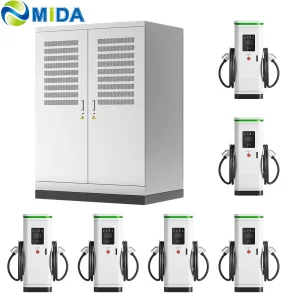
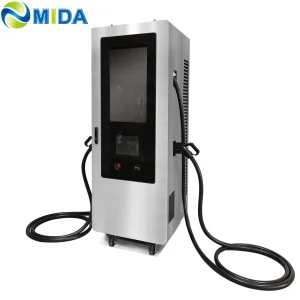
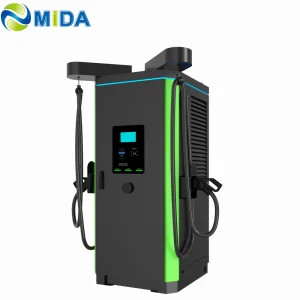
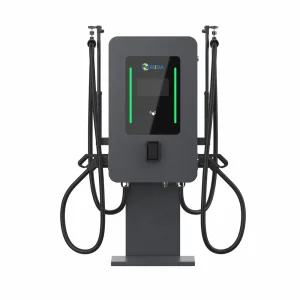
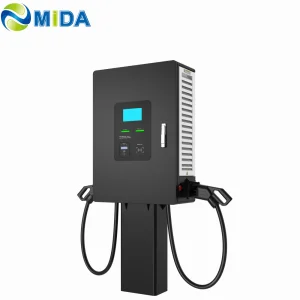
MIDA EV Power produces a full lineup of EV charging stations, such as 7kW–50kW mobile chargers, 3.6kW–7.2kW portable DC chargers, 360kW–1440kW split-type DC fast chargers, 20kW–50kW wall-mounted DC chargers, and 60kW–480kW floor-standing DC fast charging stations.
MIDA New Energy specializes in EV charger power modules, offering 20kW–60kW standard modules, 40kW–125kW liquid-cooled modules, 30kW–62.5kW bidirectional modules, and 20kW–45kW V2G charging modules.

A modular breakdown of MIDA Group's primary engineering and production categories.
Compact design for rapid site deployment and emergency service fleets.
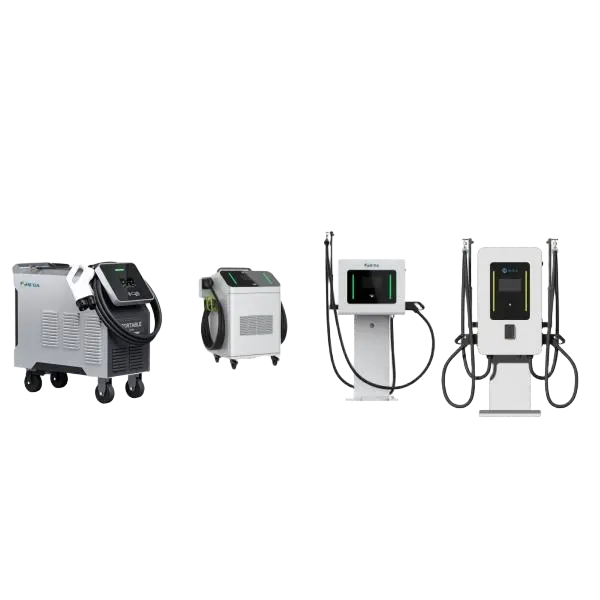
High-voltage highway and depot infrastructure with liquid cooling capability.
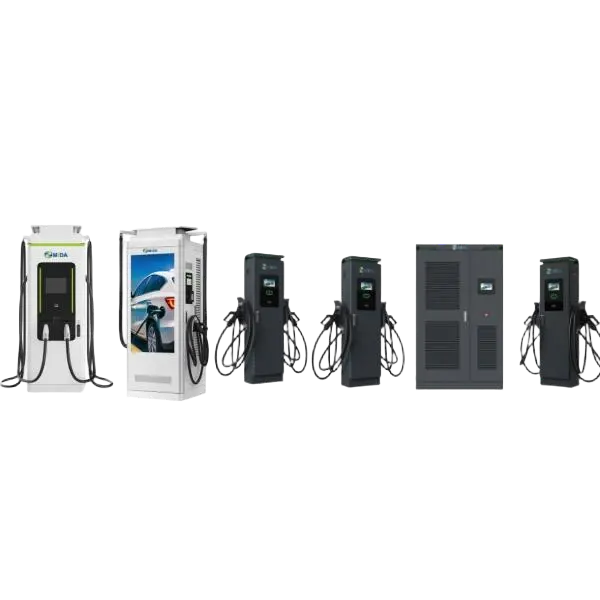
Battery Integrated EV systems designed to isolate the grid from peak load spikes.
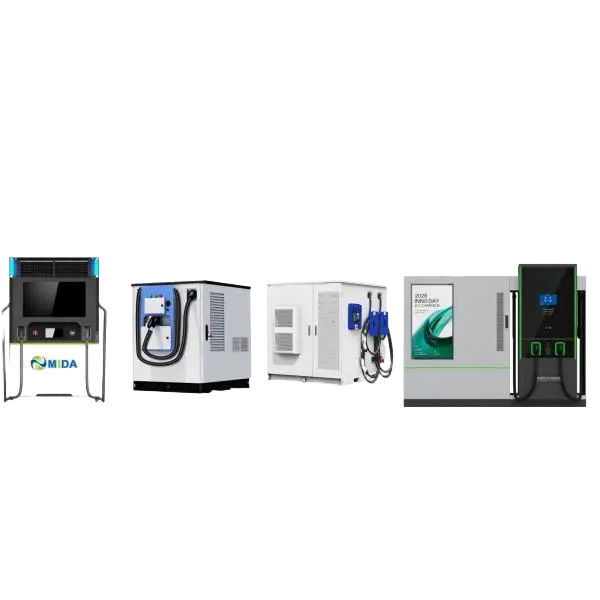
MIDA Group maintains complete oversight over core technology integration. Our proprietary designs cover high-density EV charging modules, high-current cooling units, and liquid-cooled CCS1/CCS2/GBT plugs. This vertical integration allows us to supply fully optimized subsystems to other charger brands and custom developers worldwide.
The EV infrastructure landscape is undergoing rapid diversification, moving beyond simple grid-to-vehicle power delivery. MIDA Group's technical development roadmap is structured to support these systemic changes, focusing on high power densities, advanced thermal dissipation, and bidirectional flow management.
Traditional forced-air cooling designs are highly vulnerable to fine airborne particulates, moisture ingress, and ambient heat loads. Liquid-cooled power modules keep crucial electrical components sealed in IP67 compartments, resulting in a system lifespan exceeding 10 years, even in coastal or industrial environments.
By substituting standard Silicon IGBTs with Silicon Carbide (SiC) MOSFETs, MIDA's newest modules achieve conversion efficiencies of over 97.5%. SiC components can operate at significantly higher switching frequencies, reducing the volume of magnetic components and resulting in lighter, more portable cabinets.
Vehicle-to-Grid (V2G) and Vehicle-to-Everything (V2X) technology turns parked vehicles into decentralized battery storage units. Our bidirectional power modules support seamless phase synchronization, enabling fleet dispatch systems to supply energy back to localized grids during peak pricing periods.
Future iterations of our battery-integrated charging stations are moving toward solid-state and high-density LFP cells. By combining modular solar MPPT inputs directly with local energy storage, these units can operate completely off-grid, ensuring remote industrial operations remain powered.
Every industry faces distinct logistical challenges when modernizing its energy systems. Standard fixed charging stations frequently fail to address the dynamic requirements of commercial fleet depots, deep-water shipping terminals, and rural construction sites. MIDA Group designs system architectures specifically for these demanding applications.
Delivery vans and municipal vehicles operate on strict shift schedules, leaving narrow charging windows. MIDA's high-capacity split DC fast chargers utilize intelligent dynamic load sharing. This allows a single power cabinet to distribute output to multiple vehicles simultaneously, priority-charging those with the earliest dispatch times.
Open-pit mining sites and ports run continuous, high-load schedules in extreme, dusty environments. Air-cooled systems are prone to early component degradation under these conditions. Our liquid-cooled split power stacks and robust 1000A GBT/CCS connectors deliver sustained megawatt power under continuous load without thermal derating.
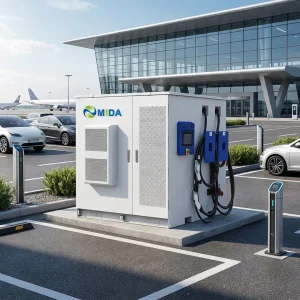
Highways suffer from localized power shortages during seasonal holiday surges, while emergency vehicles need quick deployment options. Our trailer-mounted mobile charging stations, equipped with built-in battery storage (BESS), provide portable, high-power DC charging without demanding immediate grid upgrades.
Operating electrical charging infrastructure globally requires strict adherence to international safety and communication standards. A charging system must operate reliably across diverse electrical environments, manage potential grid anomalies, and protect users from shock hazards, thermal runway events, and cyber vulnerabilities.
MIDA products are engineered to exceed standard international grid compliance metrics. Our chargers carry global certifications, including CE (LVD/EMC), TUV, UL2231/UL2594, and RoHS/REACH environmental declarations. This ensures full compatibility across European, North American, and Asian power distribution networks.
Additionally, all hardware interfaces feature localized safety interlocks, ground-fault circuit interruption (GFCI), surge protection (SPD Type 2), and continuous insulation monitoring. These features protect downstream battery networks from sudden voltage spikes and insulation failures.
Our control boards support the latest open standards, including:
MIDA Group's competitive advantage centers on our advanced manufacturing ecosystem in China. By locating copper extrusion lines, SMT assembly facilities, structural sheet-metal fabrication, and final performance testing within a centralized hub, we minimize transit times and reduce supply chain vulnerabilities.
We draw and extrude raw copper conductors in-house. This gives us complete control over cable flexibility, shielding layout, and insulation density, ensuring long-term reliability even at high currents.
Our automated Surface Mount Technology (SMT) lines produce control boards and power components. Automated Optical Inspection (AOI) detects component misalignments before final assembly.
Every completed power module undergoes 24 to 72 hours of continuous high-temperature, full-load burn-in testing. This helps eliminate premature module failures before shipment.
Stay informed about MIDA Group's international engineering achievements and specialized transit solutions.
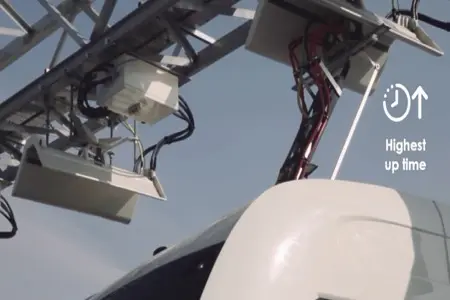
What are the advantages of an e-bus pantograph dome? In contrast to classic plug-in charging systems, e-bus pantographs enable automated overhead connections, maximizing rapid opportunity charging at route terminals.
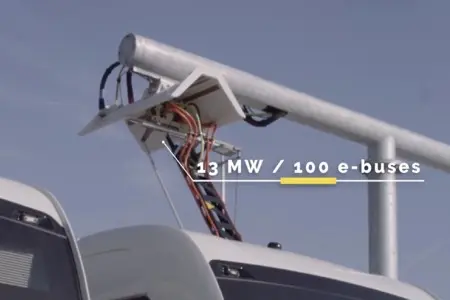
How long does it take to charge with an e-bus pantograph? The charging time depends on the battery capacity and the station's configuration. Standard urban bus systems can regain up to 80% range in just 5 to 10 minutes at 600kW.
How to Install the Pantograph Up Charger System Dome for Electric Bus. Installing an automated pantograph system requires alignment between the overhead support structure, high-power DC distribution lines, and local grid connection points.
Key technical and procurement details for global distributors, engineering contractors, and operators.
We maintain compliance with major global standard protocols, including DIN 70121, ISO 15118, and GBT 27930. Our R&D teams perform hardware interoperability testing with various passenger vehicles, commercial vans, and heavy-duty electric trucks to ensure consistent connection and communication performance.
Typical manufacturing cycles range from 4 to 6 weeks for standard designs, depending on the required certifications. Custom configurations—such as custom branding, structural modifications, or specialized voltage inputs—require a longer engineering validation cycle, usually 8 to 12 weeks.
Our closed-loop liquid-cooled modules operate effectively in ambient temperatures ranging from -35°C to +55°C. The internal coolant mixture prevents freezing in cold climates and conducts heat away from critical electronics in hot conditions, preventing thermal output degradation.
Yes. The control software in MIDA's portable chargers allows technicians to configure output rates and input parameters manually. This helps accommodate generator frequency drift, prevent voltage instabilities, and maintain stable operation on remote worksites.
All standard MIDA assemblies carry a 24-month parts replacement warranty. For commercial projects and distribution partners, we offer extended warranty options, direct technical training for local service crews, and modular spare parts packages to ensure rapid field service and minimize downtime.
Explore our integrated energy storage chargers, V2G bidirectional systems, and custom OEM/ODM fast-charging cabinets.
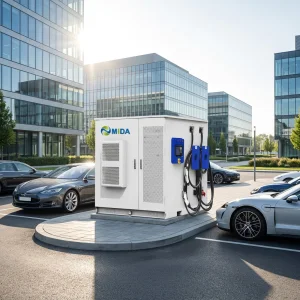
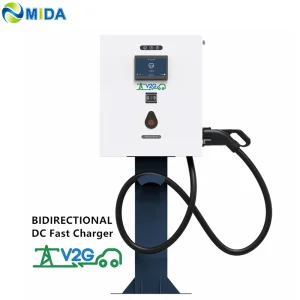
Partner with MIDA Group for your high-power DC infrastructure projects. Our engineering teams assist with single-cabinet and complete depot energy storage designs.
Contact Our Technical Sales Team