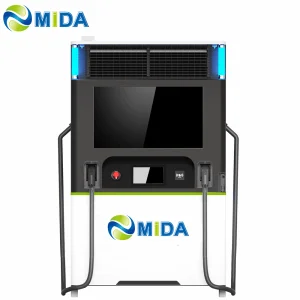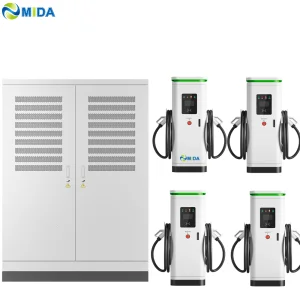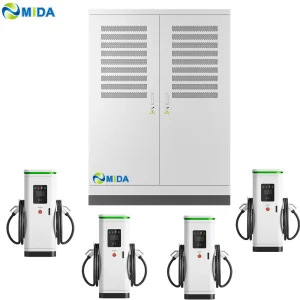
Explore our industrial range of high-efficiency charging systems built on advanced power electronics and robust structural reliability.
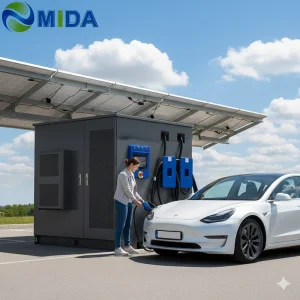
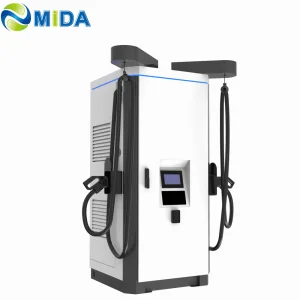
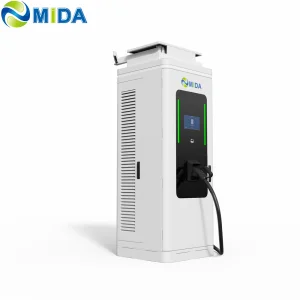
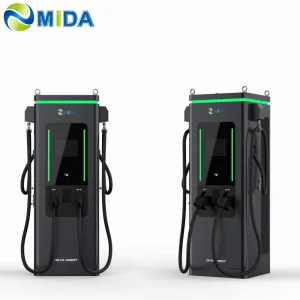
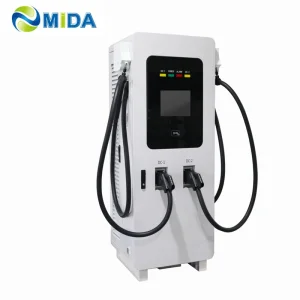
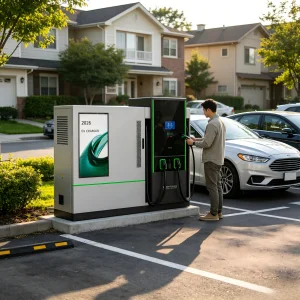
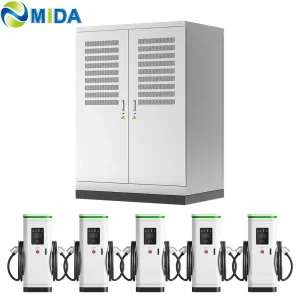
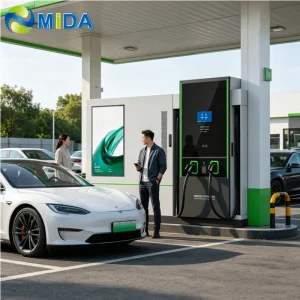
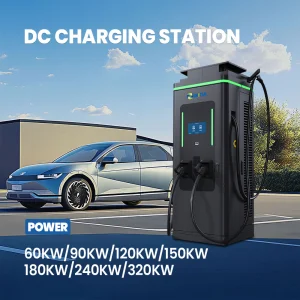
Evaluating standard requirements for scalable 60kW DC EV fast charging systems across public, industrial, and fleet applications.
For corporate, delivery, and public transit fleets, the 60kW rating is the optimal threshold for overnight cycles without over-allocating grid capacity.
Conforms with European Alternative Fuels Infrastructure Regulation (AFIR), supporting dynamic power sharing, multi-standard connectors, and integrated payment gateways.
Provides flexibility for connection with local storage systems and solar arrays, balancing Peak Shaving demands and operating off-grid where necessary.
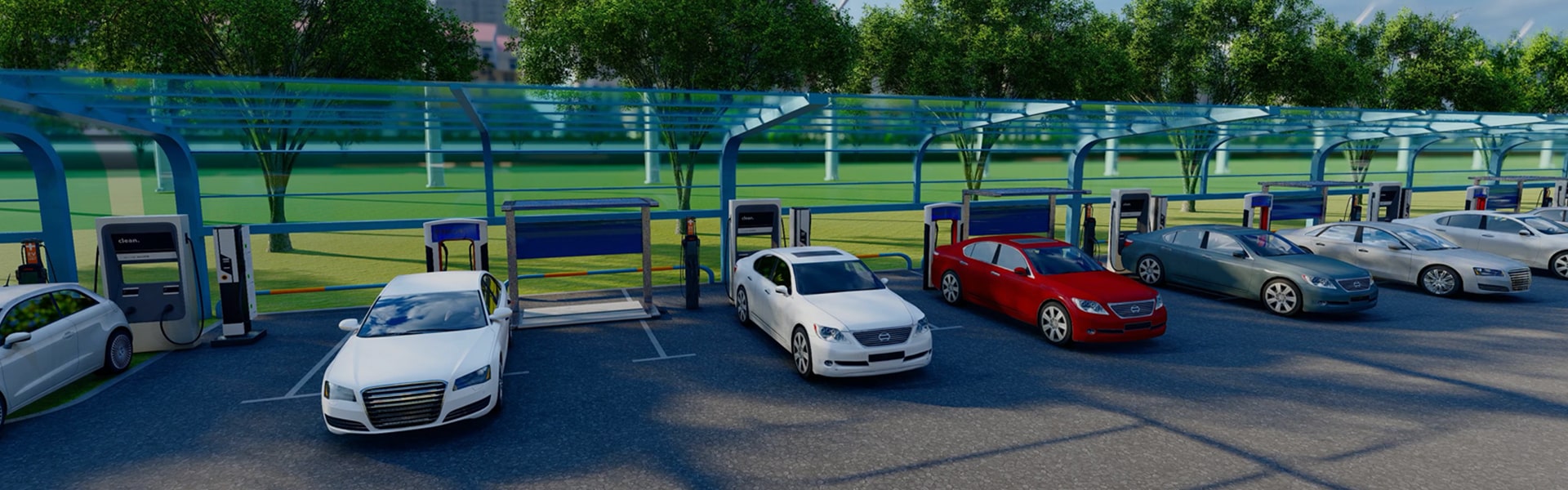
In the transition toward medium-duty electric fleets, logistics hubs, and commercial complexes, infrastructure managers face a critical choice between low-power AC points and high-megawatt charging depots. The 60kW DC charging node has emerged as the definitive benchmark for commercial efficiency. By utilizing continuous direct-current charging, a 60kW station bypasses the constraints of standard onboard vehicle chargers, delivering a 20-80% charge cycle within 45 to 60 minutes for typical commercial logistics vans, service fleets, and standard passenger EVs.
This dynamic positioning reduces the high electrical engineering overhead associated with 150kW+ stations, while simultaneously outperforming standard 22kW AC chargers by up to 300% in terms of turnaround time. When deploying charging points at commercial properties or depots, matching capital expenditure (CAPEX) with operational revenue margins is critical. A modular 60kW configuration offers developers a scalable installation footprint, allowing them to scale their grid capacity incrementally as fleet utilization ratios increase.
A breakdown of the electrical and structural specifications of MIDA's 60kW DC fast charging systems.
| Specification Parameter | Technical Specification (Standard 60kW Model) | Options & Advanced Customization |
|---|---|---|
| Input Voltage & Grid Topology | 3-phase 380V / 400V / 415V AC ± 15%, 50/60 Hz | 208V / 480V AC options for North American markets |
| Power Conversion Efficiency | ≥ 95% at nominal load; Power Factor ≥ 0.99 | Silicon Carbide (SiC) semiconductor upgrade (≥ 96.5%) |
| DC Output Voltage Range | 150V - 1000V DC (Wide Voltage Range) | High-voltage configuration up to 1000V for heavy duty vehicles |
| Connector Interface Options | Dual outlet: CCS1, CCS2, CHAdeMO, or GBT | Liquid-cooled CCS2 / NACS (Tesla) configurations available |
| Communication & IoT Protocols | OCPP 1.6J (Open Charge Point Protocol) compliant | Upgradable to OCPP 2.0.1; ISO 15118 Plug & Charge ready |
| Cabinet Environmental Rating | IP54 / NEMA 3R outdoor dust and waterproof housing | C4/C5 marine-grade anti-corrosion coating for coastal hubs |
| Safety & Electrical Protection | Over-voltage, under-voltage, short-circuit, leakage detection | Integrated insulation monitoring, surge protection (SPD Type 2) |
The foundation of MIDA's power conversion units lies in high-frequency switching technology. Our modern power modules utilize advanced resonant topologies to ensure that high-efficiency conversion is maintained even under fractional loads. By deploying 20kW or 30kW internal modular stacks, our 60kW stations offer built-in redundancy: if one power module experiences a fault, the system dynamically reallocates power among the remaining functional modules, keeping the station online at a reduced capacity. This prevents complete unit outages and lowers maintenance costs.
Looking ahead, we are incorporating Silicon Carbide (SiC) MOSFETs into our new generation of charging modules. SiC power electronics reduce switching losses, shrink module dimensions, and improve heat dissipation. This supports higher power densities in compact enclosures, which is critical for space-constrained urban charging hubs and commercial depots.
Shanghai Mida Cable Group Ltd. operates through its wholly owned subsidiaries: Shanghai Mida EV Power Co., Ltd., Shenzhen Mida EV Power Co., Ltd., and Shanghai Mida New Energy Co., Ltd.
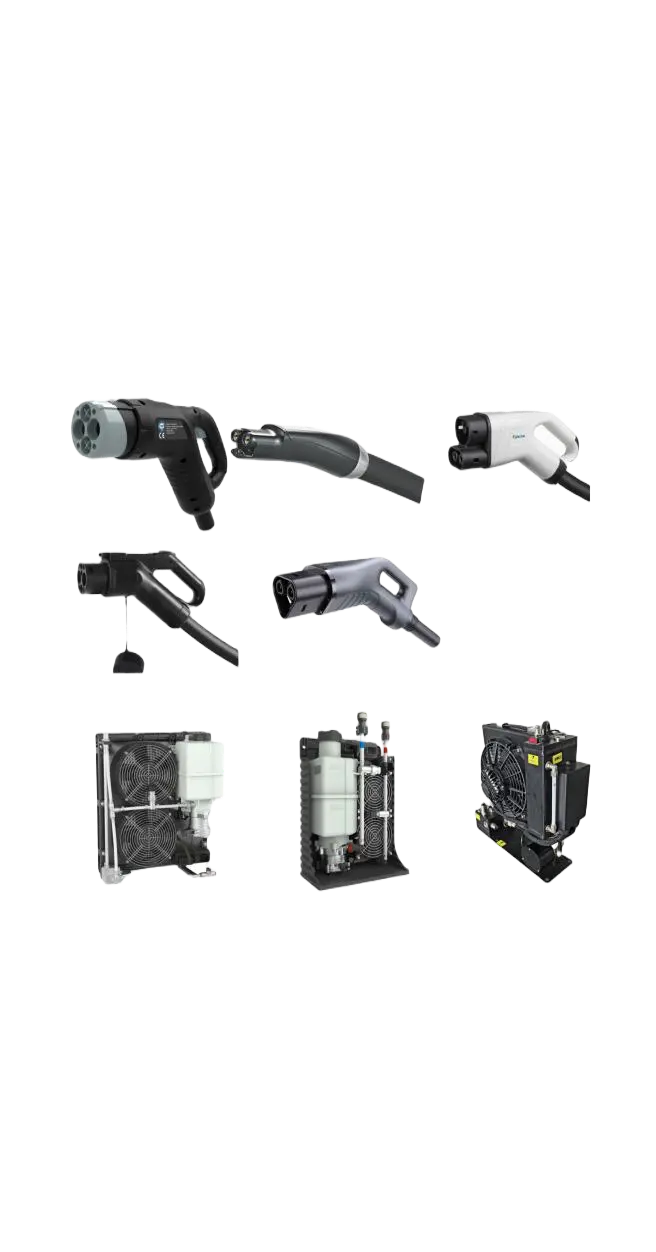
Mida Cable manufactures a comprehensive range of EV charging cables, including 16A–80A J1772 cables, 16A–63A IEC 62196-2 Type 2 cables, and DC fast charging cables: CCS1 (80A–500A), CCS2 (125A–1000A), CHAdeMO (125A–300A), GBT (200A–1000A), and NACS connectors (250A–600A).
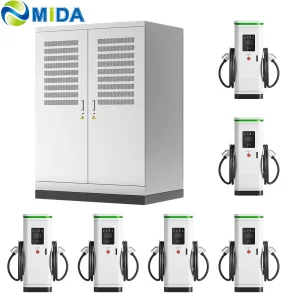
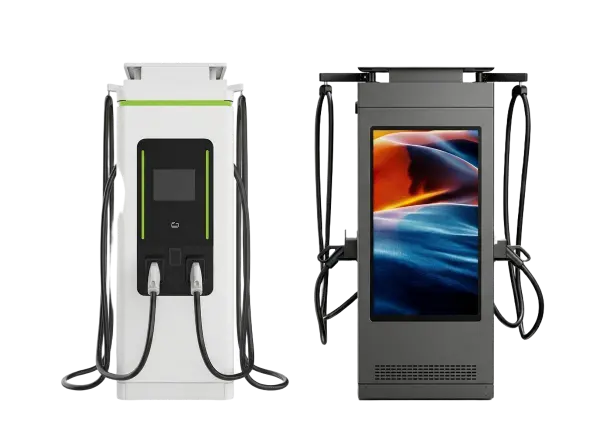
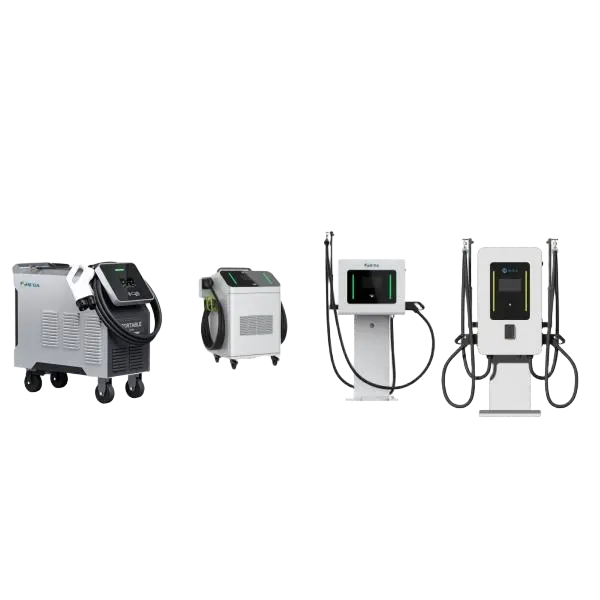
MIDA EV Power produces a full lineup of EV charging stations, such as 7kW–50kW mobile chargers, 3.6kW–7.2kW portable DC chargers, 360kW–1440kW split-type DC fast chargers, 20kW–50kW wall-mounted DC chargers, and 60kW–480kW floor-standing DC fast charging stations.
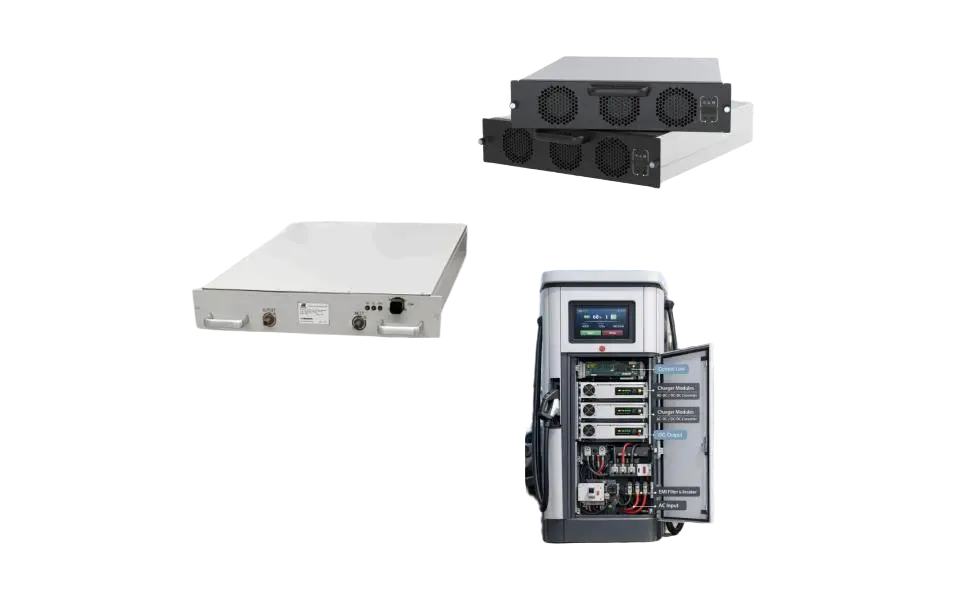
MIDA New Energy specializes in EV charger power modules, offering 20kW–60kW standard modules, 40kW–125kW liquid-cooled modules, 30kW–62.5kW bidirectional modules, and 20kW–45kW V2G charging modules.
Explore our integrated categories designed for different vehicle classes and infrastructure configurations.
Reliable, high-compatibility AC chargers for residential, public, and workplace locations.
Power range: 7kW, 20kW, 30kW, 40kW, 60kW, 80kW for dynamic on-site requirements.
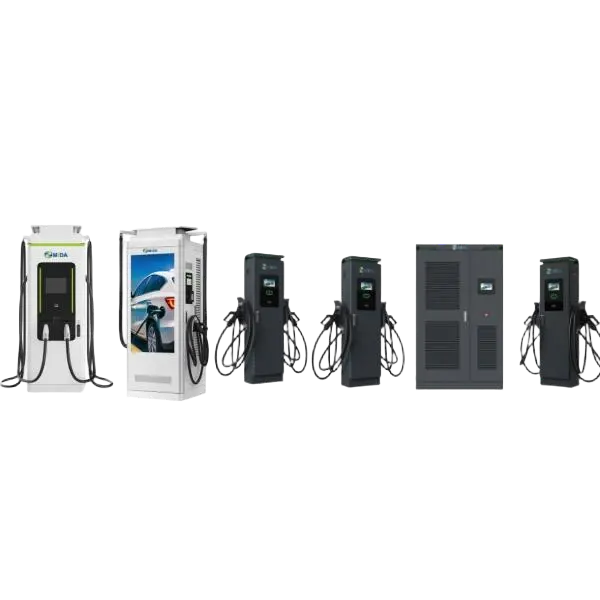
Power range: 60kW-480kW and 360kW-1440kW split configurations for high-throughput depots.
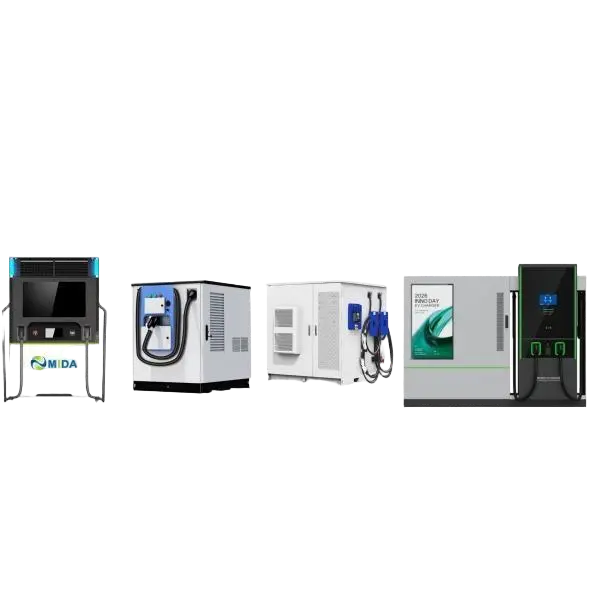
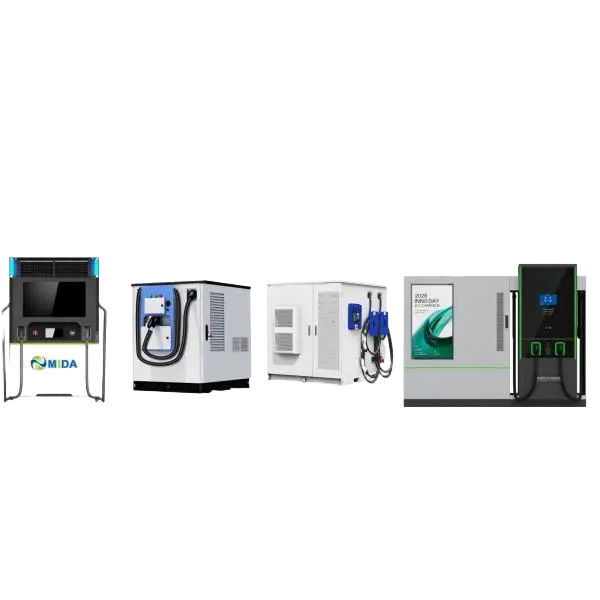
Integrated battery capacity: 60kWh, 261kWh, 418kWh, 625kWh, up to 2MkWh systems.
Insights from our engineering divisions on next-generation transit charging technologies.
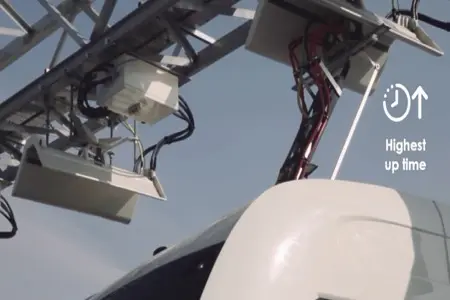
What are the advantages of an e-bus pantograph dome? In contrast to classic plug-in charging systems, e-bus pantograph systems offer automated, high-power overhead coupling for municipal transit networks.
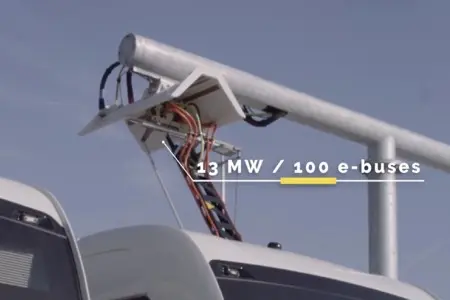
How long does it take to charge with an e-bus pantograph? The charging time depends on the battery capacity and the station output, often completing high-power boost charges in minutes.
How to Install the Pantograph Up Charger System Dome for Electric Bus. Installing a "Pantograph Up" system requires precise spatial alignment, structure structural support, and high-capacity electrical grid connections.
Ensuring system durability and regulatory alignment across international jurisdictions.
Deploying 60kW DC charging systems globally requires strict compliance with local safety standards and grid regulations. Different markets have unique structural requirements. For example, North America requires UL 2202 and UL 2231 safety listings, while Europe requires CE marking and compliance with specific EN standards. MIDA Group's engineering team manages the complete certification process to ensure seamless integration into municipal power distribution networks.
In addition to electrical safety, software integration is a critical factor for commercial networks. Our charging stations are certified for OCPP 1.6J and OCPP 2.0.1. This ensures full compatibility with third-party software platforms for billing, user authorization, and network diagnostics. By providing a flexible, interoperable backend interface, operators can easily integrate MIDA hardware into their existing network infrastructure.
To support corporate deployments, MIDA provides dedicated technical support and spare parts supply networks. We collaborate with regional engineering partners to offer localized maintenance and quick response times, minimizing station downtime. Our remote diagnostic tools also allow for proactive monitoring, enabling operators to identify and resolve issues before they affect the end user.
Expert insights on the engineering and operation of 60kW DC fast charging systems.
Explore our high-capacity DC chargers and storage-integrated charging stations for commercial operations.