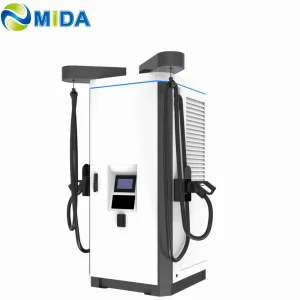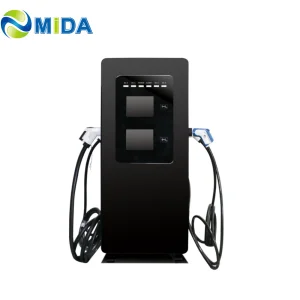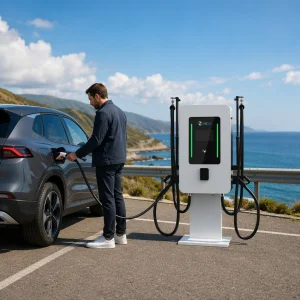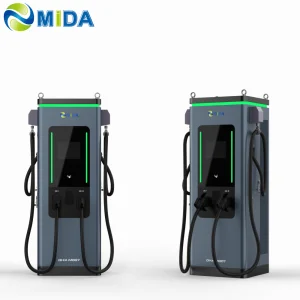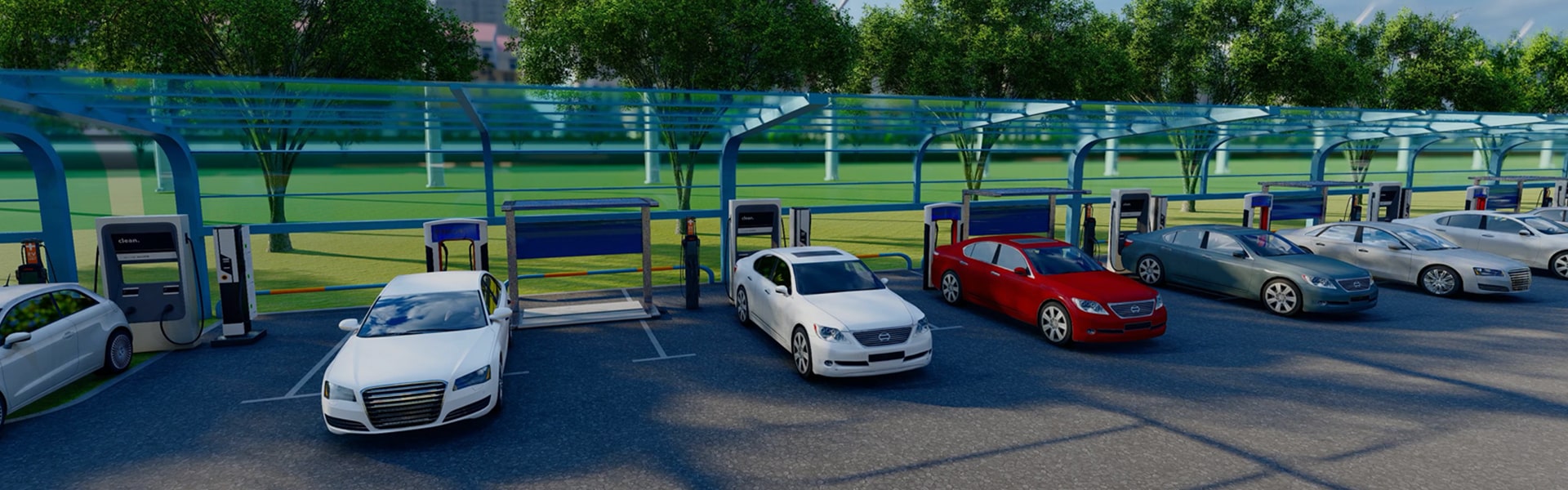
Explore our advanced technological solutions covering highway hyperchargers, commercial DC posts, and off-grid solar-integrated mobile battery systems.
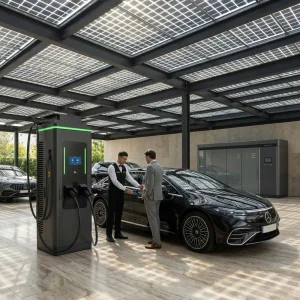
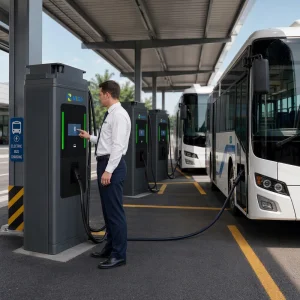
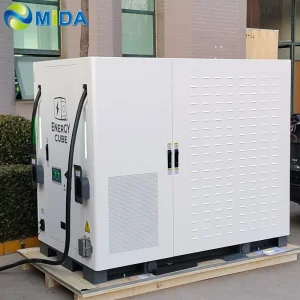
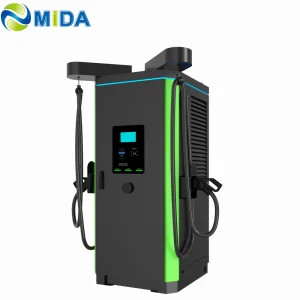
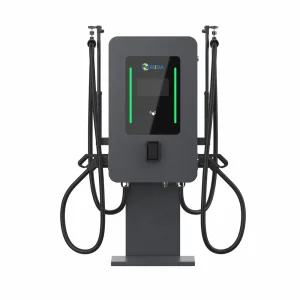
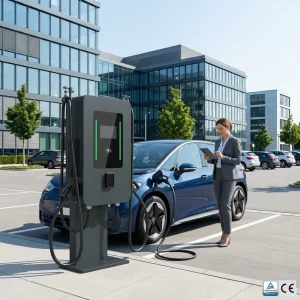
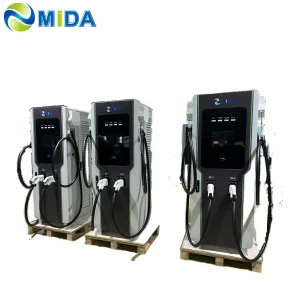
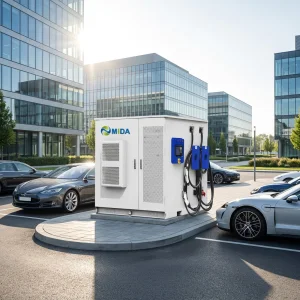
Shanghai Mida Cable Group Ltd. serves as a vanguard of the global electric vehicle infrastructure evolution. We operate through our specialized, wholly owned subsidiaries: Shanghai Mida EV Power Co., Ltd., Shenzhen Mida EV Power Co., Ltd., and Shanghai Mida New Energy Co., Ltd. This unified organizational structure ensures complete vertical integration across cabling, modular power transformation, and advanced software communication suites.
Our technical capabilities span the complete ecosystem of charging technology. We manufacture a comprehensive range of EV charging cables, including 16A–80A J1772 cables, 16A–63A IEC 62196-2 Type 2 cables, and heavy-duty DC fast charging cables. Our high-power transmission connector assemblies support standard formats: CCS1 (80A–500A), CCS2 (125A–1000A), CHAdeMO (125A–300A), GB/T (200A–1000A), and NACS connectors (250A–600A) tailored for high-speed corridor charging infrastructure.

In the highly competitive DC EV charging station market, sourcing from a tier-1 Chinese factory provides distinct capital and performance advantages. The primary strength of our Shanghai and Shenzhen manufacturing bases lies in the geographical clustering of the entire electric vehicle supply chain. This clustering grants us immediate access to high-grade raw copper, advanced insulation plastics, semiconductor power switches, and complex micro-controller units.
By producing cables, power modules, and controller boards internally, MIDA reduces dependency on secondary component suppliers. This integration shortens Lead-To-Delivery timelines by up to 40% compared to Western assemblers, and eliminates cross-border logistics bottlenecks during high-volume contract rollouts.
Additionally, our production lines utilize state-of-the-art automation for cable extrusions, high-precision structural stamping, and automatic PCB optical inspections (AOI). Every DC charging station undergoes comprehensive multi-stage Quality Assurance testing prior to leaving the dock, including full-load thermal cycle simulations, high-voltage insulation tests, and OCPP integration testing under varying grid conditions. For global procurement officers, this translates to stable pricing, predictable lead times, and industrial-grade quality control.
Engineered components and complete turnkey assemblies built for durability, efficiency, and high throughput charging networks.
High-efficiency conversion components engineered to optimize heat dissipation and grid alignment.
Certified heavy-duty connectors designed for physical endurance and efficient thermal regulation.
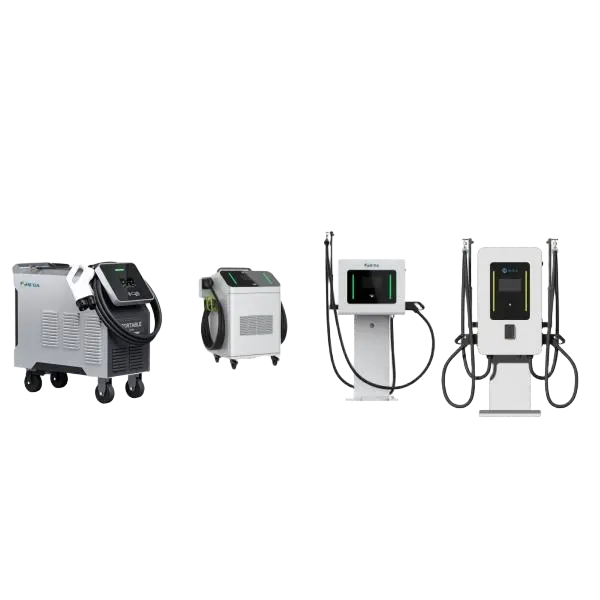
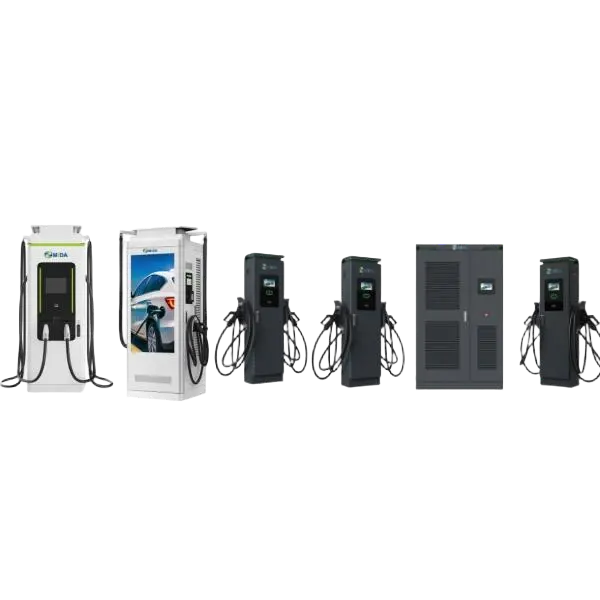
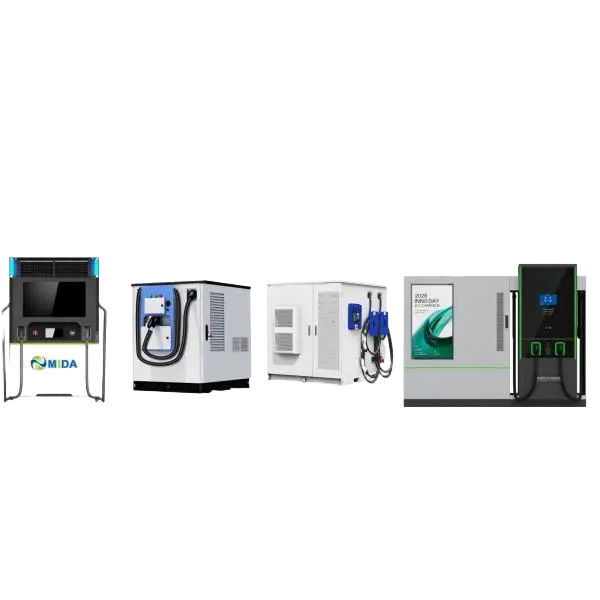
Complete charging systems featuring dynamic load balancing and robust outdoor housing.
Intelligent battery storage systems designed to bypass high peak-load utility fees.
Deploying high-voltage DC EV chargers globally requires strict compliance with localized electrical standards and safety certifications. Different markets impose distinct requirements for grid safety, measurement accuracy, and communication architectures. MIDA Group designs all products with a globally compliant architecture, adapting each model to meet local regulations during production.
In Europe, compliance with the CE Mark and TUV safety guidelines is essential for commercial installations. Furthermore, countries like Germany require strict compliance with Eichrecht (calibration law), which mandates PTB-approved MID energy meters. This ensures consumers are billed accurately based on the exact kilowatt-hours delivered to the vehicle, protecting the transaction data from manipulation.
In North America, certification under UL 2202 and UL 2231 standards by a Nationally Recognized Testing Laboratory (NRTL)—such as ETL—is required for insurance and municipal compliance. These standards require built-in Ground Fault Circuit Interruption (GFCI) and advanced thermal monitoring. With NACS (Tesla's charging standard) standardizing as SAE J3400, our chargers are built to support both CCS1 and NACS cables with native energy management capabilities.
Modern charging infrastructure relies on bidirectional communication. Implementing the ISO 15118-20 protocol enables "Plug & Charge" features and Vehicle-to-Grid (V2G) power flow. By using OCPP 1.6J and OCPP 2.0.1, operators can remotely manage charging networks, run diagnostics, adjust power outputs to match grid capacity, and minimize utility demand charges.
Custom configurations designed to meet the electrical, spatial, and user-experience needs of different commercial environments.
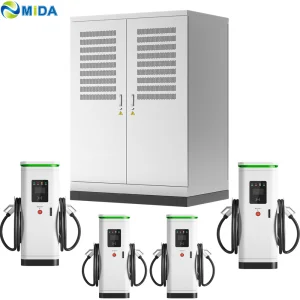
Highway charging stations require high power throughput to minimize charge times. MIDA's split-type liquid-cooled DC charging systems (360kW–1080kW) provide ultra-fast charging capability. Combined with dual CCS2 or NACS connector configurations, these stations can charge a passenger vehicle to 80% capacity in under 15 minutes, maximizing throughput along busy travel corridors.
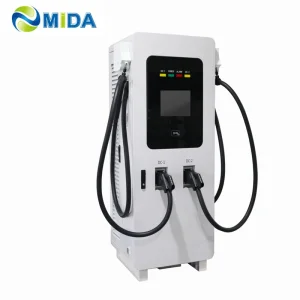
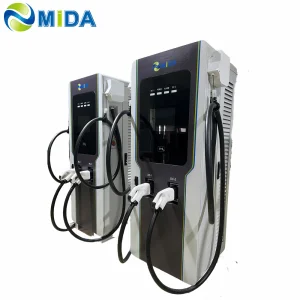
Fleet operations—such as electric delivery vans or city buses—rely on high uptime and scheduled charging profiles. Our floor-standing DC fast charging stations (60kW–240kW) feature dynamic power sharing and remote scheduling tools. This allows operators to charge multiple vehicles overnight, using lower off-peak utility rates while monitoring battery health through the cloud.
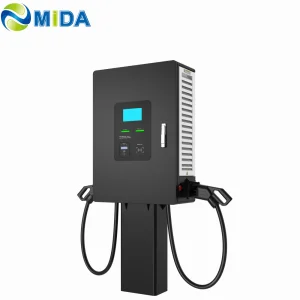
Urban sites often face space constraints and grid capacity limits. Our wall-mounted 60kW–80kW dual-gun DC chargers deliver fast charging without requiring large ground footprints. For locations with limited grid supply, integrating our Battery Energy Storage System (BESS) allows sites to store off-peak energy and discharge it during peak periods, avoiding expensive grid upgrades.
Deploying charging infrastructure in remote locations can be challenging without grid access. MIDA's mobile charging stations with integrated MPPT solar controllers and lithium storage systems (up to 2MWH) provide temporary or permanent power in remote areas, construction sites, or during emergency response operations without relying on a utility connection.
Crucial considerations for commercial charging network rollouts and technical systems design.
Liquid-cooled systems use a circulating coolant to dissipate heat directly from the cable and connector terminals. This allows the system to carry currents up to 600A continuously using a lighter, more flexible cable. Air-cooled systems are typically limited to 200A-250A before thermal throttling occurs, making liquid cooling necessary for sustained ultra-fast charging above 350kW.
Split-type systems use a central power matrix cabinet that dynamically routes modular power blocks (e.g., 30kW modules) to user dispensers based on real-time demands. If a vehicle requires 120kW and a second vehicle plugs in requiring 180kW, the system reallocates internal modules to match their needs, optimizing power distribution across all connected ports.
Eichrecht compliance requires an uninterrupted measurement chain. This means the charger must include a PTB-certified MID energy meter to measure the exact energy delivered, secure storage to sign and encrypt the transaction data, and a user verification method to check the signed data values via an independent transparency software tool.
Battery Energy Storage Systems (BESS) store energy during low-demand periods or from on-site solar systems. When an EV plugs in requesting high-power charging, the BESS discharges energy alongside the grid. This reduces peak load demands on the utility, helping operators avoid demand charges and expensive electrical service upgrades.
Bidirectional V2G charging is governed by ISO 15118-20 (the communication standard between the EV and EVSE) and grid connection codes like VDE-AR-N 4105 or IEEE 1547. Combined with bidirectional power modules and OCPP 2.0.1 commands, these standards allow grid operators to use connected EV batteries as a distributed energy resource.
In the US, chargers must be certified to UL 2202 (standard for safety of EV charging equipment) and UL 2231-1 & -2 (personnel protection systems). Systems must also comply with FCC Part 15 for electromagnetic emissions, and projects funded by the NEVI program must meet Build America, Buy America (BABA) rules.
Stay informed on the latest developments in mass-transit charging infrastructure, pantograph mechanics, and automated systems.
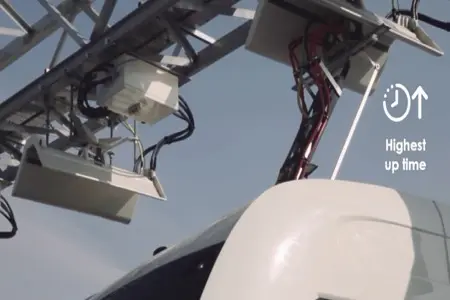
What are the advantages of an e-bus pantograph dome? In contrast to classic plug-in charging systems, e-bus pantograph systems offer automated, high-power contact connections, reducing manual handling and transit yard downtime.
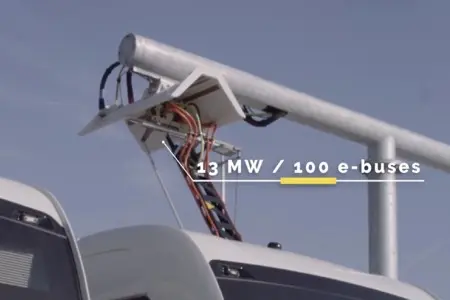
How long does it take to charge with an e-bus pantograph? The charging time depends on the battery capacity and the station's peak output. High-power systems can recharge transit buses in 5 to 10 minutes during regular route stops.
How to Install the Pantograph Up Charger System Dome for Electric Bus. Installing an automated overhead dome system requires careful structural alignment, high-power grid integration, and precise physical sensor synchronization.
Explore our certified solutions for commercial sites, including high-power split systems, advertising-enabled chargers, and solar hybrids.