Best 40kw Ev Dc Charger Module Manufacturers & Supplier

High-efficiency, scalable, and ultra-reliable DC charging core components for global high-power charging networks and smart microgrid infrastructure.

1. The Global Paradigm Shift: The Critical Role of 40kW DC Charger Modules

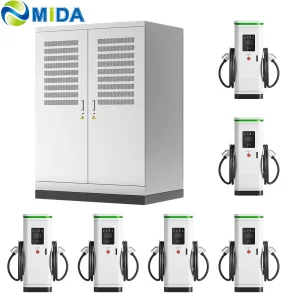
As the electrification of transportation accelerates globally, charge point operators (CPOs), EVSE manufacturers, and infrastructure developers demand modular power conversions that balance efficiency, space optimization, and heat dissipation. The 40kW EV DC charger module has emerged as the definitive industrial baseline for modern DC fast-charging technology. In contrast to legacy 15kW and 30kW units, a 40kW architecture enables higher-power density configurations, allowing engineers to scale charger cabinet designs from 120kW up to 720kW and beyond with fewer individual modules. This drastically reduces the complexity of wiring, minimizes the footprint of control cabinets, and streamlines thermal management systems.

>96.5%
Peak Power Efficiency
1000V
Maximum Output Voltage
<10W
Ultra-low Standby Loss
>150k Hrs
Calculated MTBF

Globally, industrial microgrids, logistics depots, and highway service stations are restructuring their electrical topologies to incorporate high-density modular power distribution. By utilizing 40kW charging modules, operators achieve maximum flexibility. A module cabinet equipped with ten 40kW modules can dynamically allocate power block by block. This ensures that a single vehicle can draw 400kW of ultra-fast charging, or multiple vehicles can share the energy dynamically in 40kW increments—thereby eliminating power wastage and lowering Total Cost of Ownership (TCO).

2. Structural Categories: AC, DC, and BESS Charger Systems

Understanding the architectural divisions within the charging matrix is essential for procurement managers. Below is the primary breakdown of current structural designs integrated by world-class manufacturers:
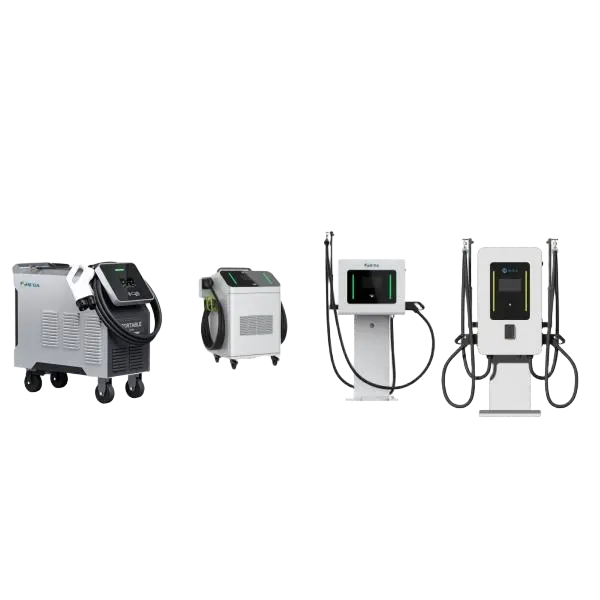
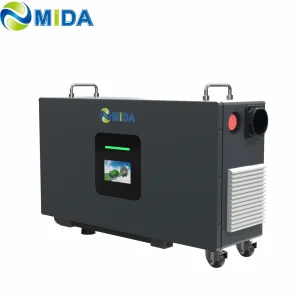
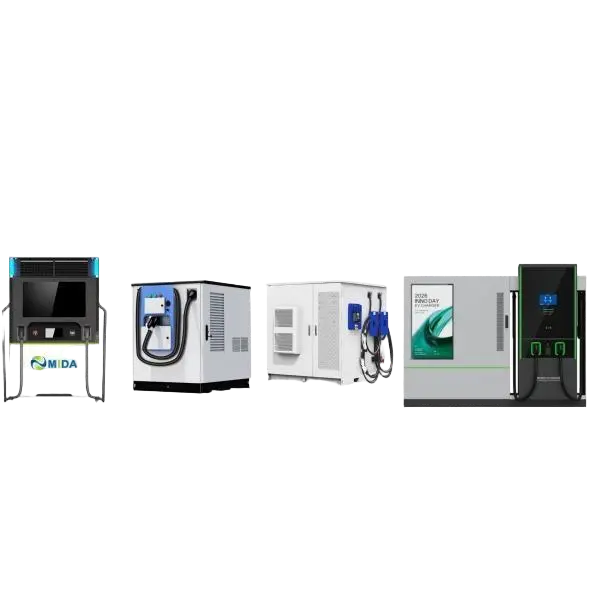
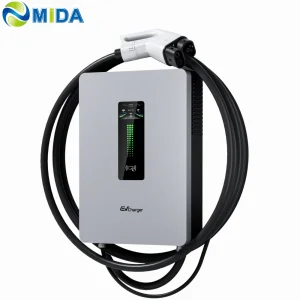
Wall-Mounted/Mobile EV Charger

Wall-Mounted & Mobile Chargers

7kW to 80kW modular configurations for fleet flexibility.
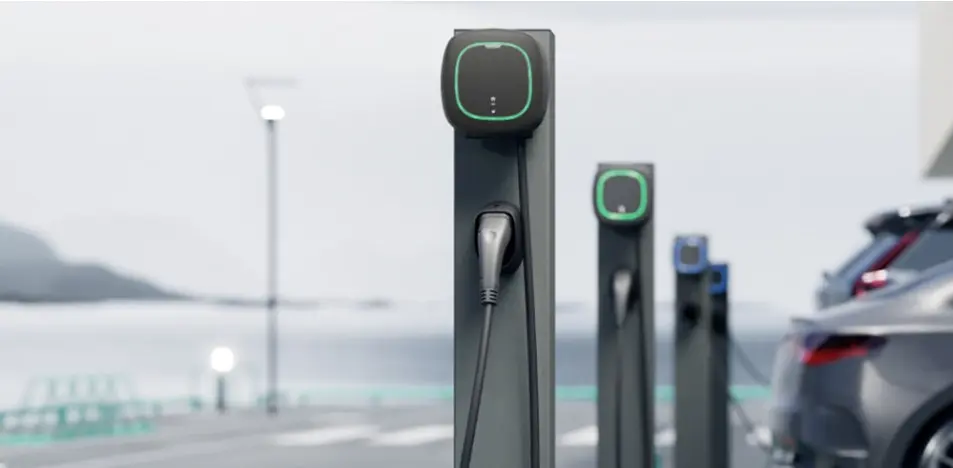
Wall-Mounted/Mobile EV Charger Detail

Compact Form Factor

Ideal for space-constrained urban areas and flexible emergency vehicle recovery services.

View More
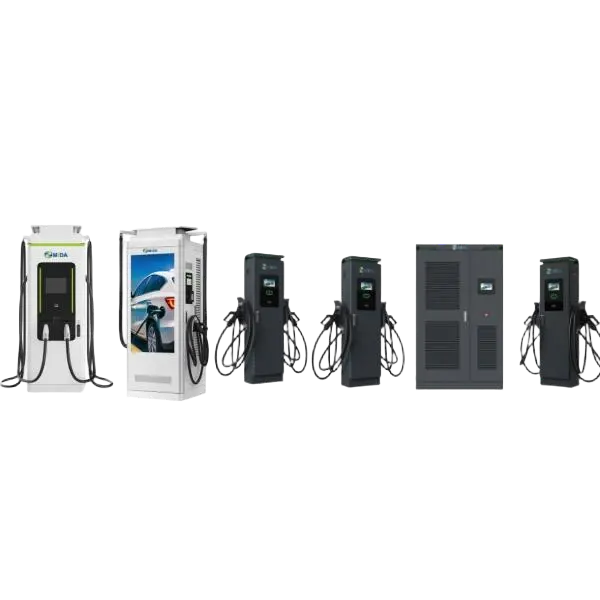
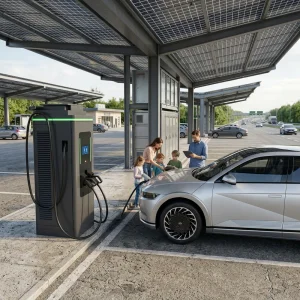
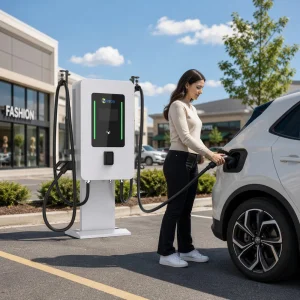
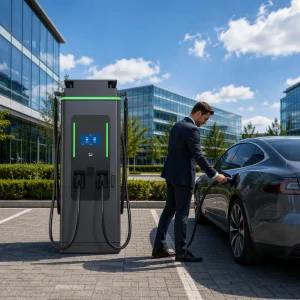
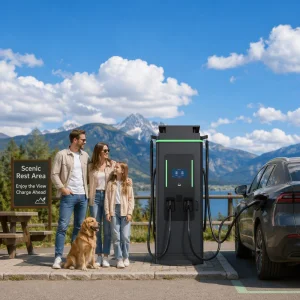
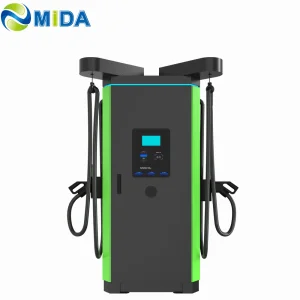
DC Charger Station

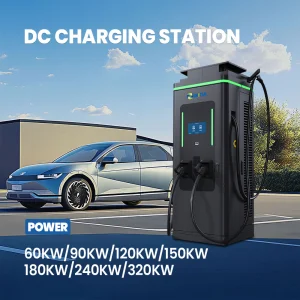
High-Power DC Stations

Scalable infrastructure from 60kW to 1440kW capacities.
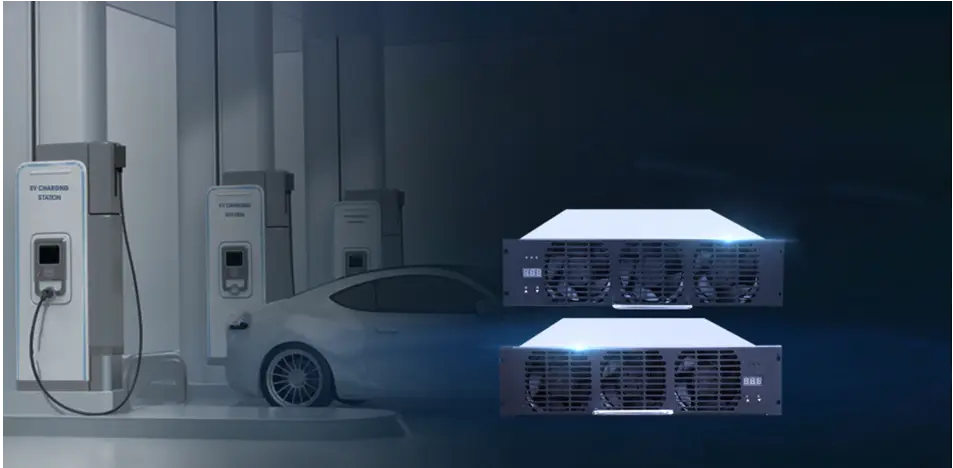
DC Charger Station Detail

Grid-Scale Capacity

Engineered for highway charging hubs and ultra-fast passenger vehicle charging routes.

View More
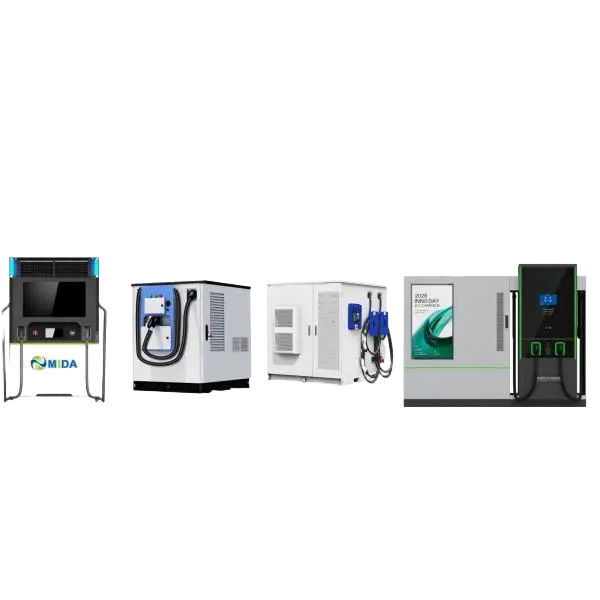
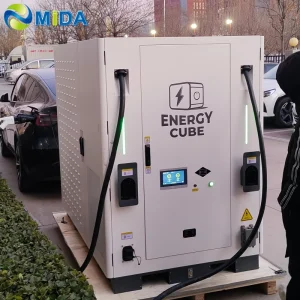
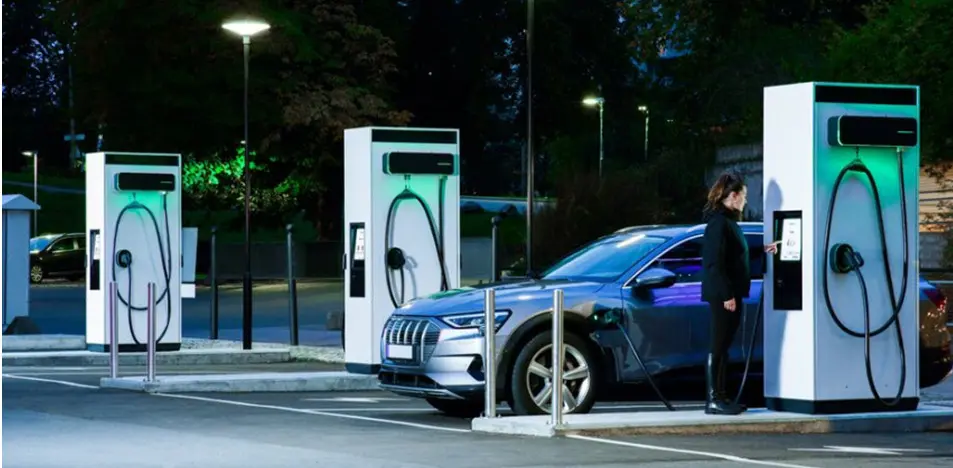
BESS Charging Station

BESS Charging Systems

Integrated energy storage units scaling up to 2MWh capacities.
BESS Charging Station Detail

Solar-to-Grid Balancing

Buffering high-demand peaks, utilizing battery storage to deliver high currents without grid strain.

View More

Welcome to MIDA GROUP

Shanghai Mida Cable Group Ltd. operates through its wholly owned subsidiaries: Shanghai Mida EV Power Co., Ltd., Shenzhen Mida EV Power Co., Ltd., and Shanghai Mida New Energy Co., Ltd. We specialize in developing state-of-the-art power electronics, high-voltage cables, and comprehensive EV charging system integrations.

Mida Cable manufactures a comprehensive range of EV charging cables, including 16A–80A J1772 cables, 16A–63A IEC 62196-2 Type 2 cables, and DC fast charging cables: CCS1 (80A–500A), CCS2 (125A–1000A), CHAdeMO (125A–300A), GBT (200A–1000A), and NACS connectors (250A–600A).

MIDA EV Power produces a full lineup of EV charging stations, such as 7kW–50kW mobile chargers, 3.6kW–7.2kW portable DC chargers, 360kW–1440kW split-type DC fast chargers, 20kW–50kW wall-mounted DC chargers, and 60kW–480kW floor-standing DC fast charging stations.

MIDA New Energy specializes in EV charger power modules, offering 20kW–60kW standard modules, 40kW–125kW liquid-cooled modules, 30kW–62.5kW bidirectional modules, and 20kW–45kW V2G charging modules.

Mida Group Logo

Main Product Catalog Matrix

Comprehensive technical specifications for power components and charging accessories
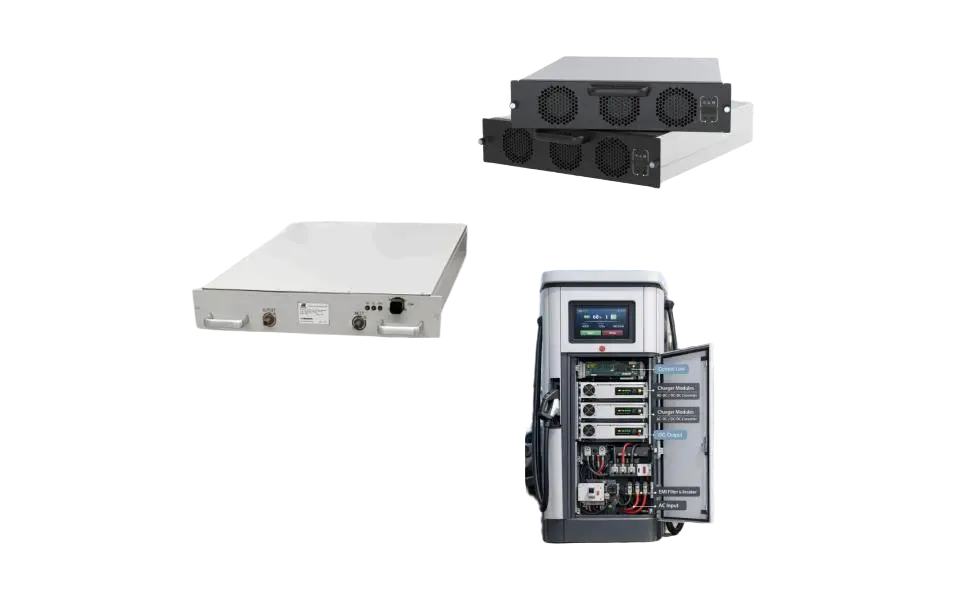
EV Charging Power Modules

  • 30kW 40kW 50kW 60kW 80kW AC DC EV Charger Module
  • 30kW 40kW 50kW 60kW DC DC EV Charger Module
  • 40kW 60kW 75kW 125kW Liquid Cooled Power Module
  • 20kW 22kW 30kW 40kW 45kW V2G Power Module
  • 30kW 40kW 50kW 60kW MPPT Power Module
  • 20kW 50kW 62.5kW Bidirectional AC DC Power Module
Explore Modules
EV Charging Power Module

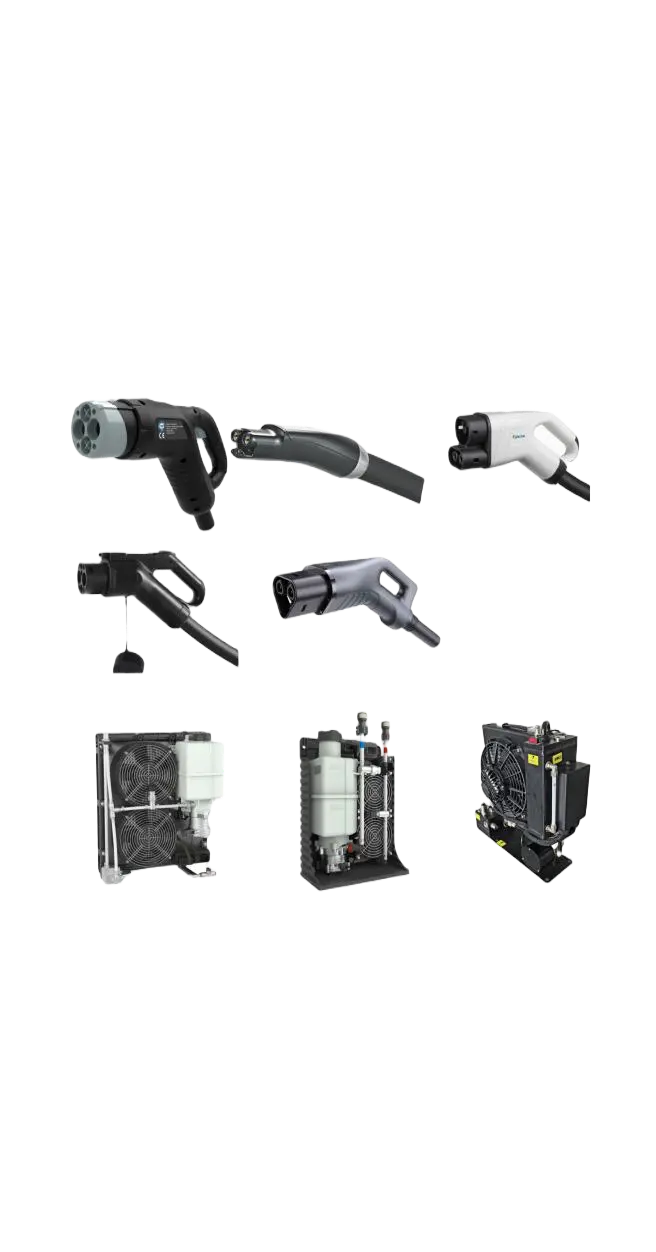
DC Connectors & Liquid Cooling

  • 500A 600A CCS1 & CCS2 & GBT Connector
  • 125A 250A 300A 350A NACS & CHAdeMO Connector
  • 1500A MCS Connector & CHAOJI Connector
  • 3.5kW 4.5kW 6kW 9kW Integrated Liquid Cooling Unit
  • 2.4kW 3.5kW Split Type Cooling Unit
  • 25kW ~72kW Cooling Unit for HPC Charging
Explore Connectors
DC Charging Connector

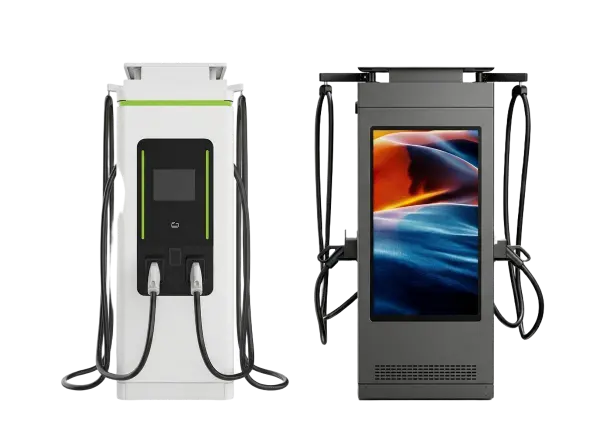
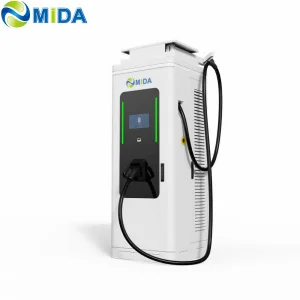
DC Fast Charger Stations

  • 7kW~ 60kW Mobile DC Charging Station
  • 20kW ~80kW Wall Mounted DC Charging Station
  • 60kW ~480kW Floor Mounted Charging Station
  • 60kW~240kW Advertising Charging Station (43 / 55 inch)
  • 600kW ~1080kW Liquid Cooled Charging Station
  • 360kW ~ 1680kW Split Type DC Charging Station
Explore Stations
DC Fast Charger Station

Energy Storage Charging Stations

  • 15kW~480kW Mobile ESS Charging Station
  • 60kW ~ 400kW Integrated ESS Charging Piles
  • 65kWh~200kWh Emergency Rescue Charging Station
  • 165kwh Automatic Charging Robot
  • 800kwh~2000kwh Solar Energy Charging System
Explore Energy Storage
Energy Storage Charging Station

3. Technical Deep-Dive: Silicon Carbide (SiC) Technology and Efficiency Optimization

Modern 40kW DC charger modules rely heavily on the transition from traditional Silicon (Si) IGBTs to Silicon Carbide (SiC) MOSFETs. The physics of SiC allows for higher critical breakdown electric fields, faster switching speeds, and significantly lower drain-to-source on-resistance (RDS(on)) at high operating temperatures. This translates into a substantial reduction in both switching and conduction losses.

Why Silicon Carbide Matters: In a standard 40kW EV charging system operating 12 hours a day, shifting from Si-based modules to SiC-based modules reduces power conversion loss by approximately 25-30%. Over a 5-year station operation period, this efficiency gain of ~1.5% results in thousands of kilowatt-hours saved per charging dispenser, directly benefiting the CPO's bottom line.

Furthermore, SiC technology permits higher switching frequencies (often exceeding 60 kHz), which allows manufacturers to reduce the volume and weight of passive components, such as inductors and capacitors. As a result, MIDA's 40kW power modules achieve ultra-high power densities, allowing more kilowatts to be packed into the standard 3U dimensions of a 19-inch subrack enclosure. This space saving is vital for metropolitan depot networks, where land costs and switchgear space are at a premium.

4. Chinese Manufacturing Efficiency and Supply Chain Integration

China's dominance in the EV charging module manufacturing sector is not merely a function of labor cost advantage, but rather a direct result of comprehensive industrial supply chain integration. The Yangtze River Delta and Pearl River Delta manufacturing clusters house everything from semiconductor packaging plants, high-frequency transformer windings, copper busbar extruders, to state-of-the-art automated testing facilities within a 50-kilometer radius.

MIDA Group utilizes this extreme geographic proximity to achieve unprecedented manufacturing turnaround times. Our Shanghai and Shenzhen production facilities employ automated optical inspection (AOI), fully computerized function-circuit testing (FCT), and robotic encapsulation systems. Every 40kW module undergoes rigorous thermal stress chamber burn-in processes under full electrical load for minimum required cycles to weed out infantile component failures. This integration allows us to keep manufacturing quality high, certification costs low, and pass the savings on to international infrastructure integrators who require certified, highly reliable power components.

5. Localized Application Scenarios: Where the 40kW Core Excels

The versatility of the 40kW module allows it to be deployed across a multitude of regional and structural topologies:

  • Commercial Logistics Depots: Fleet delivery trucks usually return to depots overnight. Having modules configured in a central energy cabinet allows overnight charging schedules to run in low-noise, high-efficiency modes, extending module life.
  • Highway High-Power Stations (HPC): These stations demand fast charging for long-distance commuters. By linking ten 40kW modules in parallel, a single charger dispenser easily delivers up to 400kW of continuous current, boosting consumer throughput.
  • Urban Destination Charging & Microgrids: Combining 40kW bidirectional modules with local Solar Photovoltaic (PV) arrays and battery storage (BESS) allows charging hubs to feed excess energy back to the grid, achieving peak-shaving benefits.

Corporate News & Technical Insights

Stay informed with the latest developments in transit charging and high-power pantograph engineering

e-bus pantograph dome
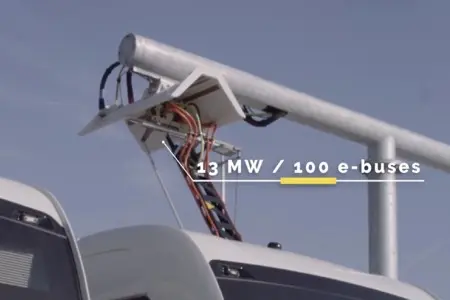
What are the advantages of an e-bus pantograph dome? In contrast to classic plug-in charging systems, e-bus pantograph networks offer zero-touch automated connectivity, enabling massive megawatt-level transfers in municipal urban bus depots.
26-07-12 View More
e-bus pantograph timing
How long does it take to charge with an e-bus pantograph? The charging time depends on the battery capacity and the dynamic power modules configured in the charging subrack, often ranging from 5 to 12 minutes for opportunity charging.
26-07-12 View More
pantograph up system installation
How to Install the Pantograph Up Charger System Dome for Electric Bus. Installing a “Pantograph Up” system requires careful architectural alignment, strict electrical connection validation, and heavy-duty structural anchoring to ensure wind-load resistance.
26-07-12 View More

6. Advanced FAQ: In-depth Technical Inquiries for Purchasing Officers

To assist technical directors, system engineers, and purchase managers in choosing the right EV charging components, we have detailed the most frequent questions regarding 40kW DC charging modules.

What are the primary differences between 30kW and 40kW charging modules?
The main difference lies in power density and packaging efficiency. A 40kW module provides 33% more power output within a nearly identical mechanical footprint. For example, a 120kW charging cabinet requires four 30kW modules, but only three 40kW modules. This reduces busbar routing, control cabling complexity, and overall manufacturing labor, while enhancing heat dissipation efficiency and MTBF.
How does a wide output voltage range (150V - 1000V) benefit charge point operators?
Electric passenger vehicles typically operate on a 400V architecture, while newer models (e.g., Hyundai E-GMP, Porsche, Audi) and heavy-duty electric buses utilize an 800V class battery system. A wide voltage range of 150V to 1000V ensures that a single 40kW module can deliver optimal power to any EV, regardless of its nominal battery voltage, avoiding power-derating issues.
Can air-cooled 40kW modules handle marine or high-dust industrial environments?
Standard forced-air-cooled modules have internal coatings (conformal coating) to resist moisture, salt fog, and dust. However, for extreme seaside, desert, or heavy industrial zones, liquid-cooled 40kW modules are highly recommended. Liquid cooling isolates the power electronics from ambient air entirely, achieving an IP65 protection rating and drastically lowering failure rates.
What is the significance of bidirectional (V2G) power modules?
Bidirectional 40kW power modules allow energy flow in two directions: from the grid to the vehicle (G2V) and from the vehicle's battery back to the building or grid (V2B/V2G). This converts fleet parking lots into distributed energy storage resources, allowing fleet managers to generate revenue by feeding energy back to the utility grid during peak tariff hours.
What communication protocols are used between the charging controller and the modules?
MIDA's 40kW charging modules communicate via standard high-speed CAN (Controller Area Network) bus interfaces. This allows real-time diagnostic reporting, output voltage/current adjustments, thermal monitoring, and direct integration with master controllers running OCPP 1.6J or OCPP 2.0.1 firmware.
EV Charging Station Manufacturing Factory Display