Explore our high-performance Level 3 DC Fast Chargers, Integrated Storage Solutions, and Intelligent Charging Systems.
As the electrification of transportation accelerates globally, commercial fleet operators, municipal transport hubs, and public charging network developers face a critical technical choice: matching grid capacity with vehicle turnaround requirements. Within this optimization equation, the 180kW DC Fast Charger represents the universal commercial sweet spot.
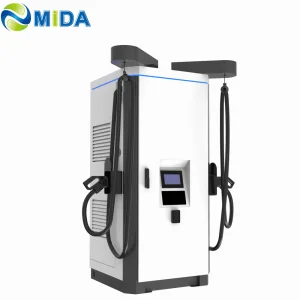
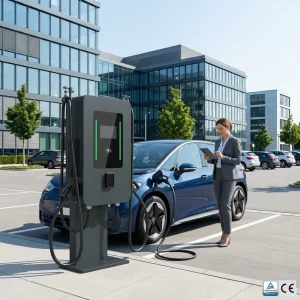
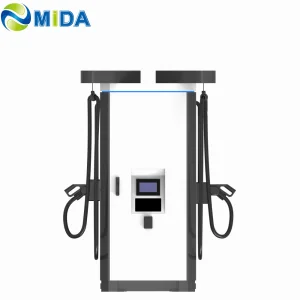
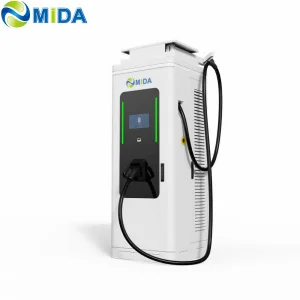
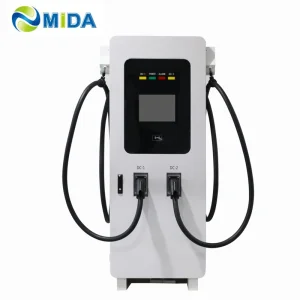
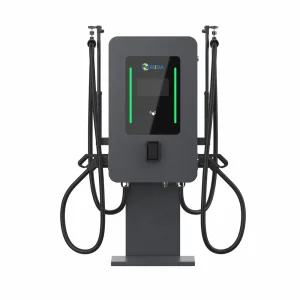
Unlike lower-power AC stations or excessively capital-intensive extreme fast chargers (>350kW) which often require grid substation upgrades, a 180kW configuration delivers high-velocity energy output without over-stressing localized grid connections. It is capable of adding approximately 100-150 kilometers of range to a modern passenger EV in less than 10-15 minutes, and supports dual-port output configurations for simultaneous power distribution (90kW + 90kW).
Our solutions incorporate dynamic energy routing matrices, converting and distributing high voltage safely to vehicles via standard CSS1, CCS2, NACS, and CHAdeMO connectors. Backed by state-of-the-art manufacturing infrastructure in China, we deliver high-reliability hardware built to withstand rigorous high-duty cycle commercial usage.
Utilizing silicon carbide (SiC) semiconductor power modules, our systems achieve peak power conversion efficiencies exceeding 96.5%, minimizing parasitic thermal losses.
Embedded dynamic load balancing (DLB) dynamically negotiates grid supply to distribute power optimally between dual vehicles charging simultaneously.
Compliant with ISO 15118-20, DIN 70121, and OCPP 2.0.1. Engineered with comprehensive protection parameters including overcurrent, short circuit, and ground fault safeguards.
Shanghai Mida Cable Group Ltd. operates through its wholly owned subsidiaries: Shanghai Mida EV Power Co., Ltd., Shenzhen Mida EV Power Co., Ltd., and Shanghai Mida New Energy Co., Ltd.
Mida Cable manufactures a comprehensive range of EV charging cables, including 16A–80A J1772 cables, 16A–63A IEC 62196-2 Type 2 cables, and DC fast charging cables: CCS1 (80A–500A), CCS2 (125A–1000A), CHAdeMO (125A–300A), GBT (200A–1000A), and NACS connectors (250A–600A).
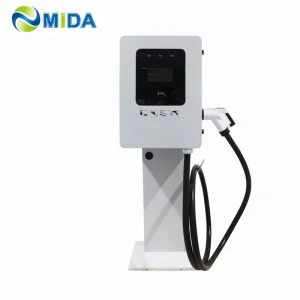
MIDA EV Power produces a full lineup of EV charging stations, such as 7kW–50kW mobile chargers, 3.6kW–7.2kW portable DC chargers, 360kW–1440kW split-type DC fast chargers, 20kW–50kW wall-mounted DC chargers, and 60kW–480kW floor-standing DC fast charging stations.
MIDA New Energy specializes in EV charger power modules, offering 20kW–60kW standard modules, 40kW–125kW liquid-cooled modules, 30kW–62.5kW bidirectional modules, and 20kW–45kW V2G charging modules.

Learn about our product ecosystems so that you can find the exact product matching your operational needs.
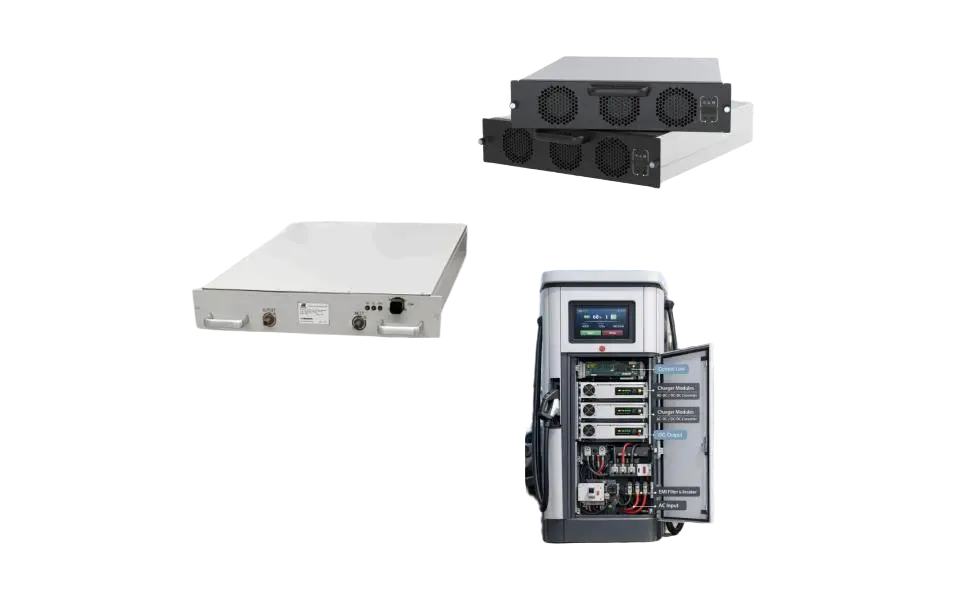
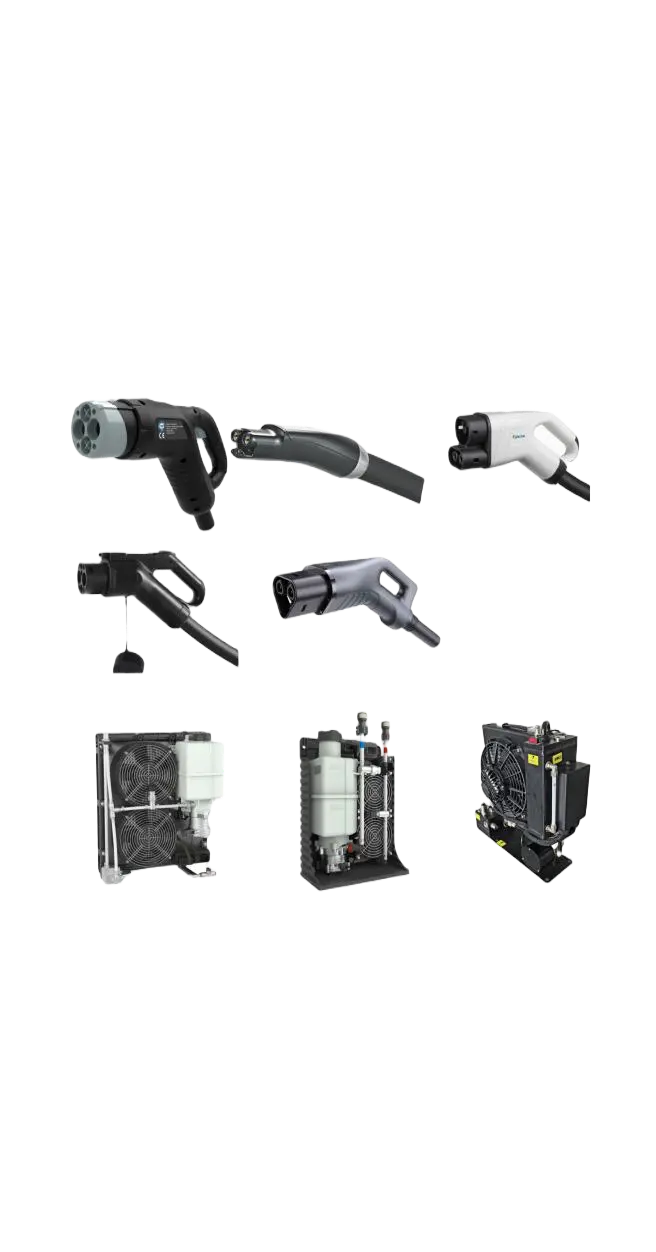
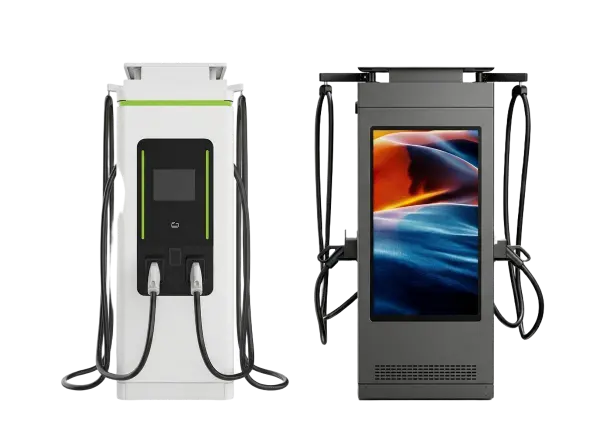
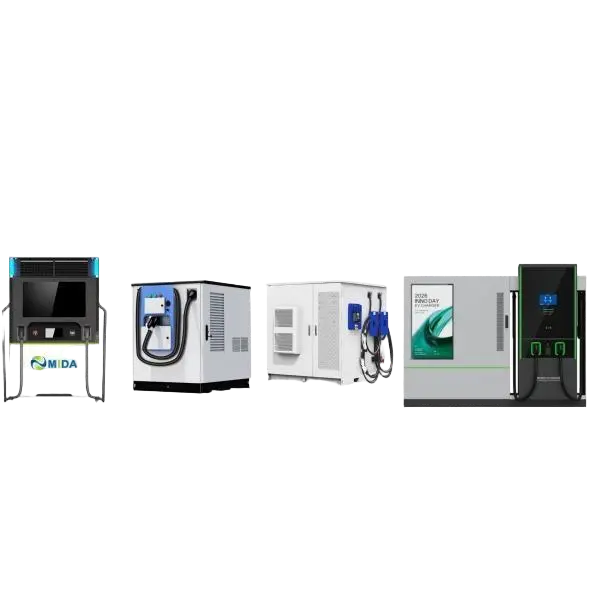
Direct supply options for charging operator groups and equipment distributors.
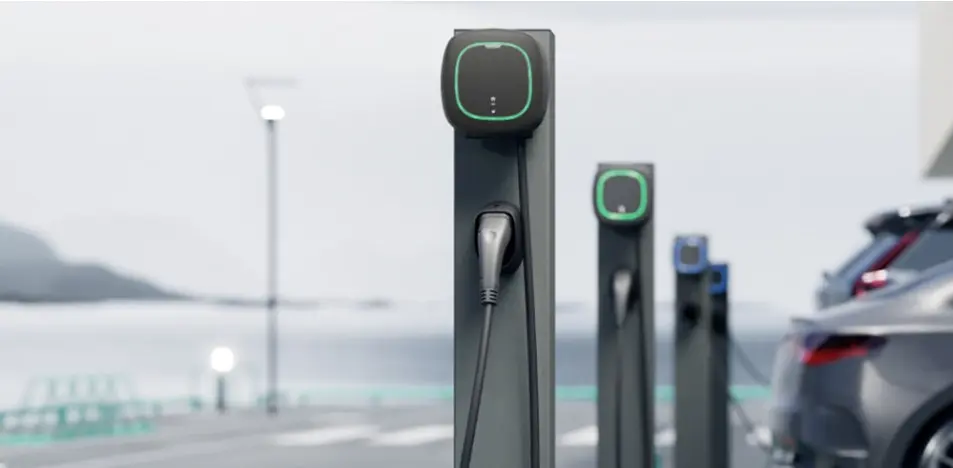
7kW 20kW 30kW 40kW 60kW 80kW systems designed for high flexibility applications.
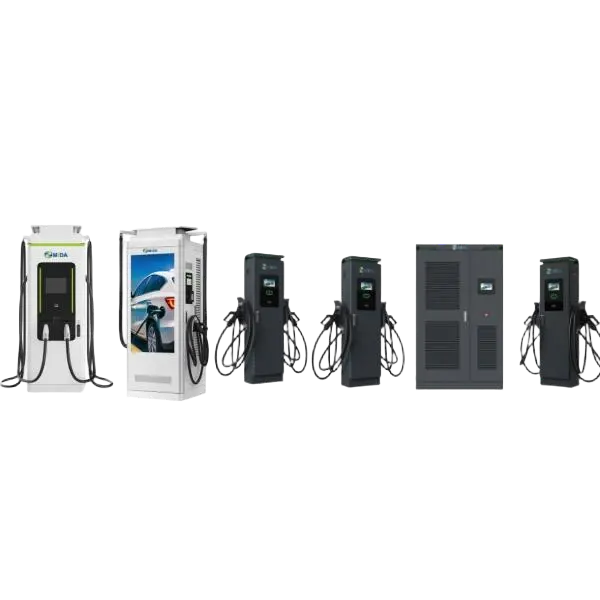
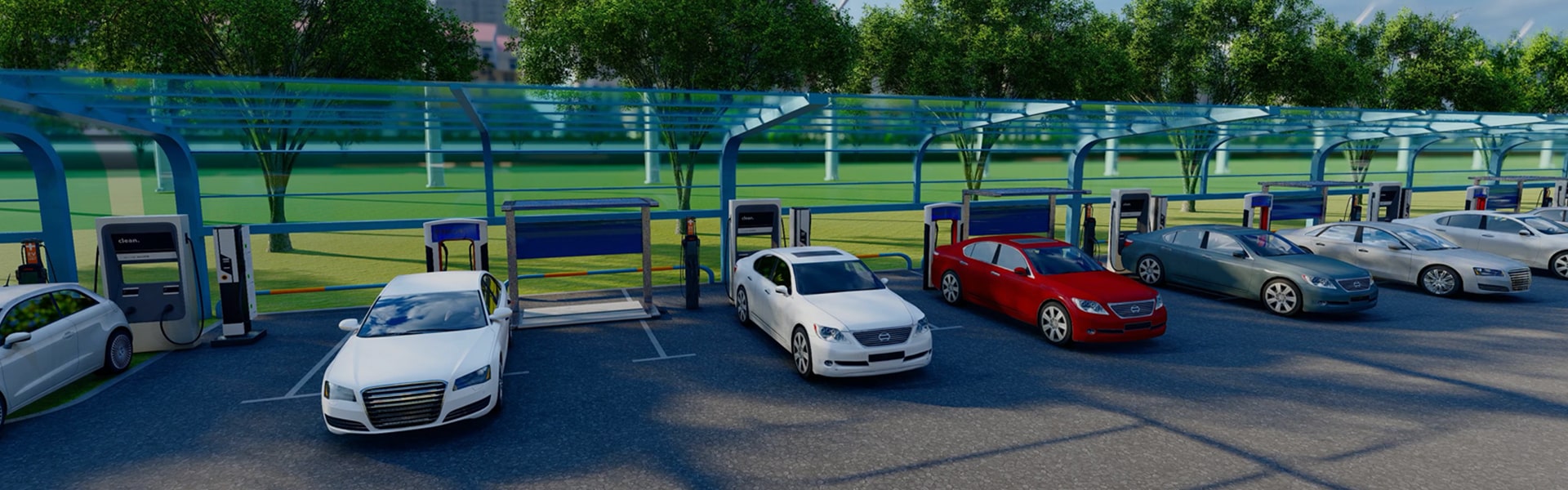
60kW-480kW & 360kW-1440kW high-capacity configurations for rapid charging depots.
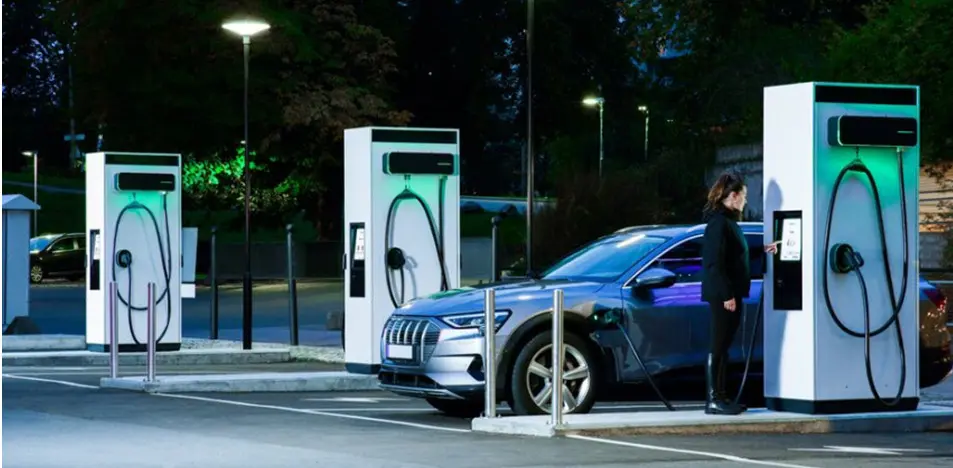
60kWh 261kWh 418kWh 625kWh 2MkWh solutions integrating storage with smart output.
Procuring fast-charging infrastructure from China provides distinct competitive advantages in engineering depth, raw component vertical integration, scalability, and capital efficiency. As a leading manufacturer located in China's industrial zones (Shanghai & Shenzhen), Mida Group maintains end-to-end oversight across every phase of the value chain.
China hosts the world's most dense supply chain ecosystem for power electronics, magnetic components, high-conductivity cables, and enclosure materials. Mida Group's dual industrial manufacturing nodes leverage this local proximity to source raw materials, conduct precise machining, extrude heavy-duty charging cables, and assemble power electronic modules under stringent quality tolerances. This proximity significantly compresses manufacturing lead times and reduces component transport costs, passing the efficiency savings directly to global operators.
Our engineering teams focus on advanced power electronics research, pioneering modular liquid-cooling technologies, next-generation V2G (Vehicle-to-Grid) bidirectional power flow modules, and high-frequency transformer configurations. Our hardware conforms to global certifications, including UL Listed markings, CE, CB, UKCA, RoHS, and FCC compliance, ensuring seamless interoperability across North American, European, and Asia-Pacific grid frameworks.
Integrating 180kW stations requires advanced grid interaction logic. Our control software supports dynamically managed local power limits, dynamically routing power between vehicles according to battery state-of-charge (SoC) profiles, target departure times, and overall grid availability. By communicating via OCPP 1.6J and OCPP 2.0.1, Mida charging piles enable operators to deploy smart energy pricing programs, optimize utility cost calculations, and prevent overloading local transformers.
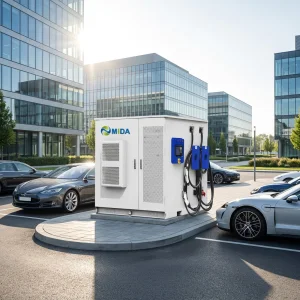
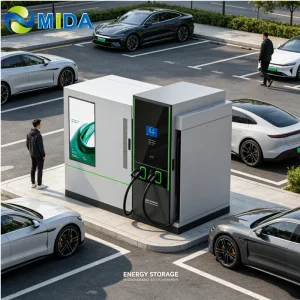
To support high-power DC charging in locations with weak grid access, Mida provides hybrid charging systems featuring integrated battery energy storage. By combining a 180kW or 200kW fast charger with BESS capacities ranging from 261kWh to 2MWh, operators can store energy during low-demand periods and dispatch it during high peak hours, smoothing demand spikes and avoiding punitive utility tariffs.
Latest technical updates and insights from Mida Group's research and engineering teams.

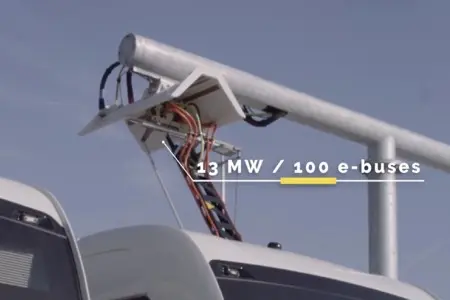
How 180kW fast chargers solve electrification challenges across diverse operational domains.
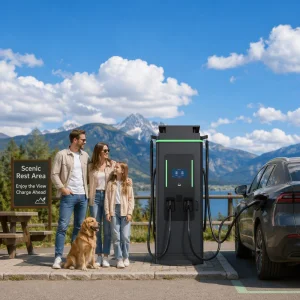
On national transport corridors, reducing vehicle dwell time is the highest priority. A 180kW dual-gun fast charger enables transit operators to service two passenger vehicles at 90kW each or a single commercial truck at the full 180kW capacity. Built-in climate control and rugged IP55 cabinets protect internal electronics against dust, heavy rain, and extreme temperatures, ensuring uptime levels exceed 99%.
Commercial delivery fleets rely on structured schedules. With 180kW fast chargers integrated with back-end fleet management software, operators can program charging sequences during overnight off-peak utility pricing periods. Dynamic load balancing routes power to delivery vans with lower battery charges first, ensuring all fleet assets are fully operational before the morning shift begins.
Find authoritative answers regarding specifications, integration, compliance, and sourcing of 180kW DC Fast Chargers.
Engineered for high uptime and durability in fleet, public, and private charging networks.