Explore our leading-edge commercial DC stations, ranging from high-mobility fast-chargers to megawatt split cabinets.
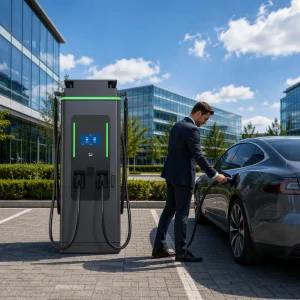
The global transition to sustainable e-mobility has catalyzed an unprecedented demand for reliable, high-power DC fast-charging networks. Central to this transition is the Type 2 DC (CCS2 - Combined Charging System Type 2) standard, defined under IEC 62196-3. Recognized as the default fast-charging architecture across Europe, Oceania, and large parts of Asia and South America, Type 2 DC technology forms the backbone of modern heavy-duty commercial fleets and public highway charging hubs.
With regions aiming for zero-emission targets, regulations such as Europe's Alternative Fuels Infrastructure Regulation (AFIR) dictate stringent power thresholds, contactless payment requirements, and high uptime limits. This regulatory push forces Charge Point Operators (CPOs) to prioritize high-capacity systems featuring dynamic power sharing and advanced cooling systems to minimize vehicle turnaround times.
Furthermore, standardizing protocols like OCPP (Open Charge Point Protocol) 1.6J and OCPP 2.0.1 allows seamless backend integration, offering utilities and enterprise operators the ability to manage load distributions intelligently, preventing localized grid overloads.
Standardization Integration: Modern grid operators are mandating dynamic local load balancing. Deploying Type 2 DC units integrated with ISO 15118 protocols supports Plug-and-Play capability as well as Vehicle-to-Grid (V2G) bi-directional power transfers.
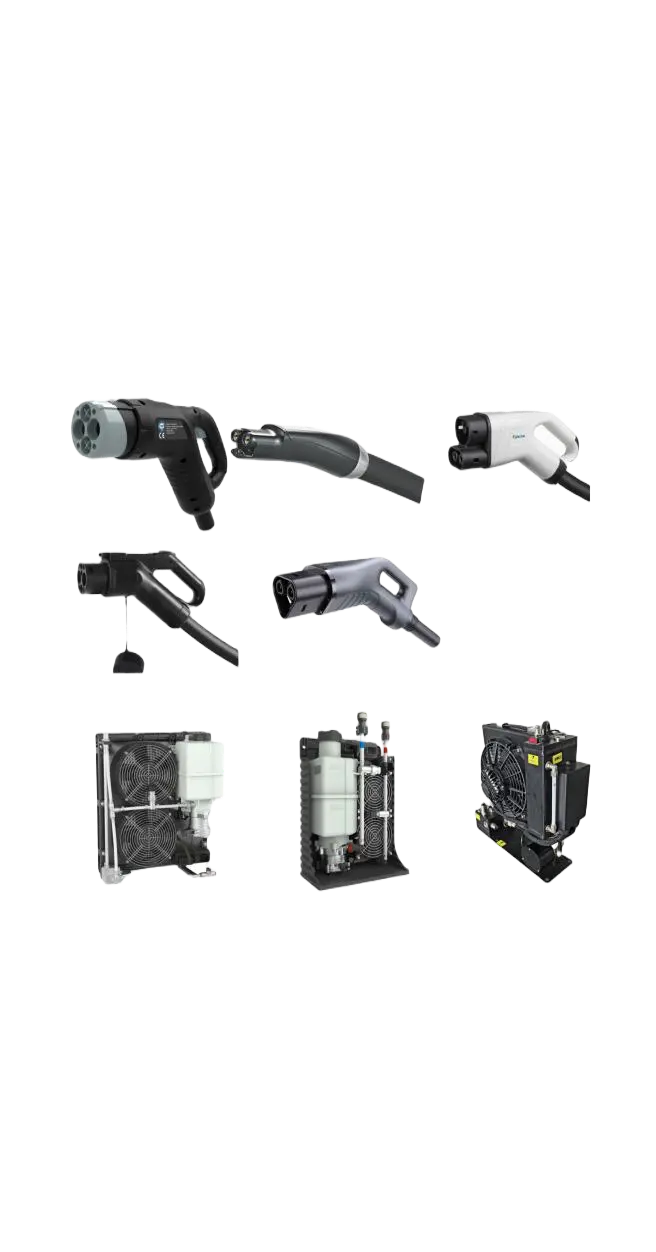
Thermal Thresholds: Charging above 200A demands liquid-cooled connectors. Passive cooling is sufficient for commercial depots operating below 150kW, while ultra-fast corridors require integrated glycol/water cooling lines to sustain structural Integrity.
Shanghai Mida Cable Group Ltd. operates through its wholly owned subsidiaries: Shanghai Mida EV Power Co., Ltd., Shenzhen Mida EV Power Co., Ltd., and Shanghai Mida New Energy Co., Ltd.
Mida Cable manufactures a comprehensive range of EV charging cables, including 16A–80A J1772 cables, 16A–63A IEC 62196-2 Type 2 cables, and DC fast charging cables: CCS1 (80A–500A), CCS2 (125A–1000A), CHAdeMO (125A–300A), GBT (200A–1000A), and NACS connectors (250A–600A).
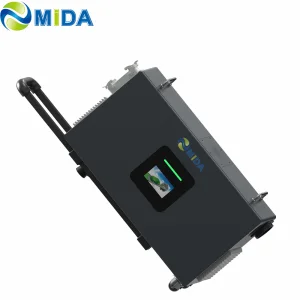
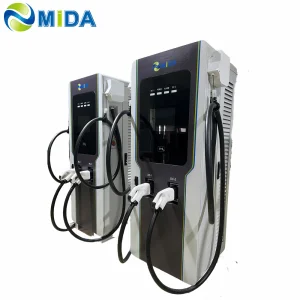
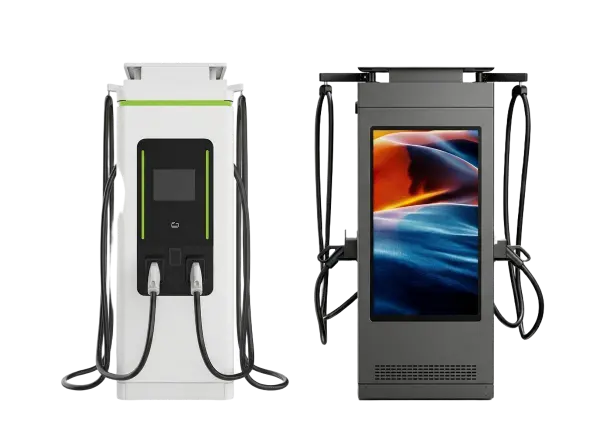
MIDA EV Power produces a full lineup of EV charging stations, such as 7kW–50kW mobile chargers, 3.6kW–7.2kW portable DC chargers, 360kW–1440kW split-type DC fast chargers, 20kW–50kW wall-mounted DC chargers, and 60kW–480kW floor-standing DC fast charging stations.
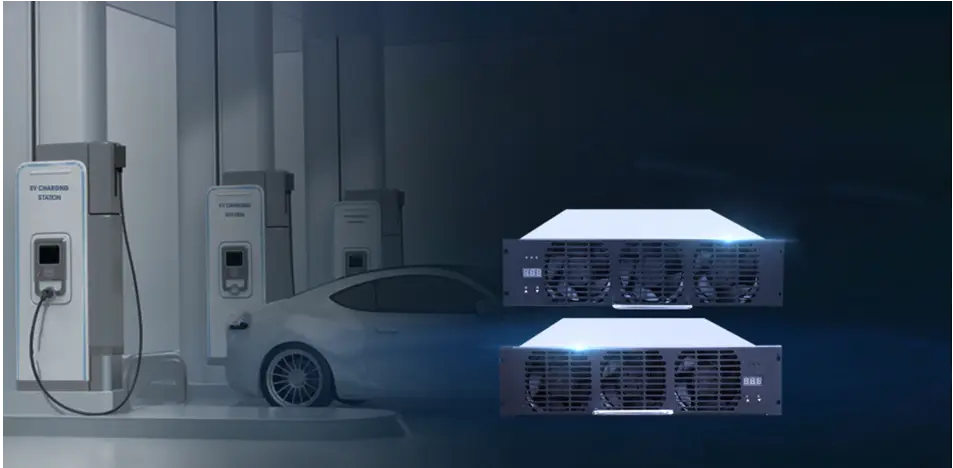
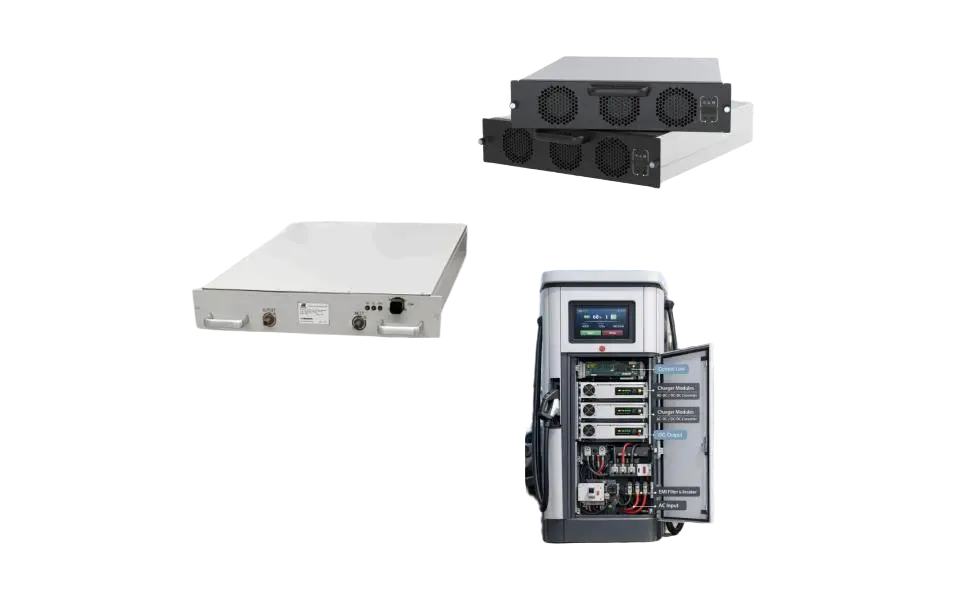
MIDA New Energy specializes in EV charger power modules, offering 20kW–60kW standard modules, 40kW–125kW liquid-cooled modules, 30kW–62.5kW bidirectional modules, and 20kW–45kW V2G charging modules.

Industrial classification of EVSE sub-assemblies and complete station systems manufactured by MIDA.
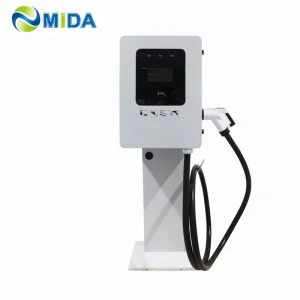
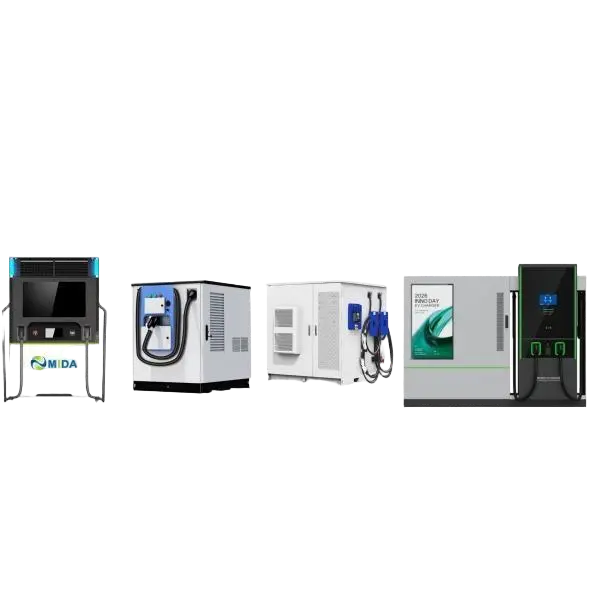
Designed for quick deployment, fleet depots, and mobile emergency services requiring swift plug-and-play Type 2 DC configurations.
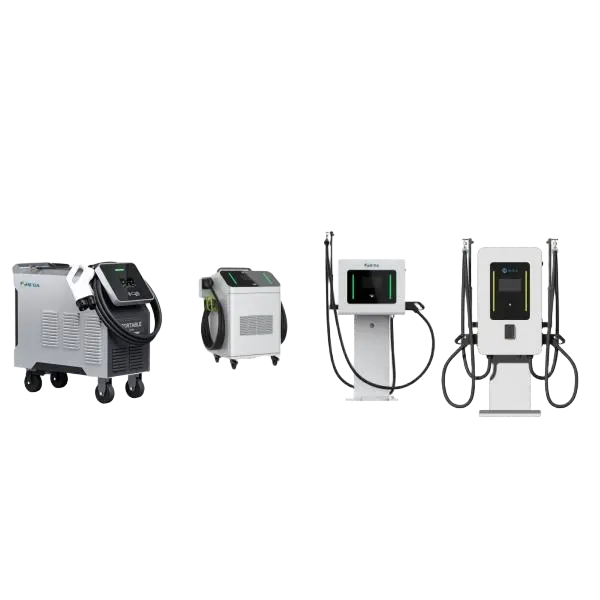
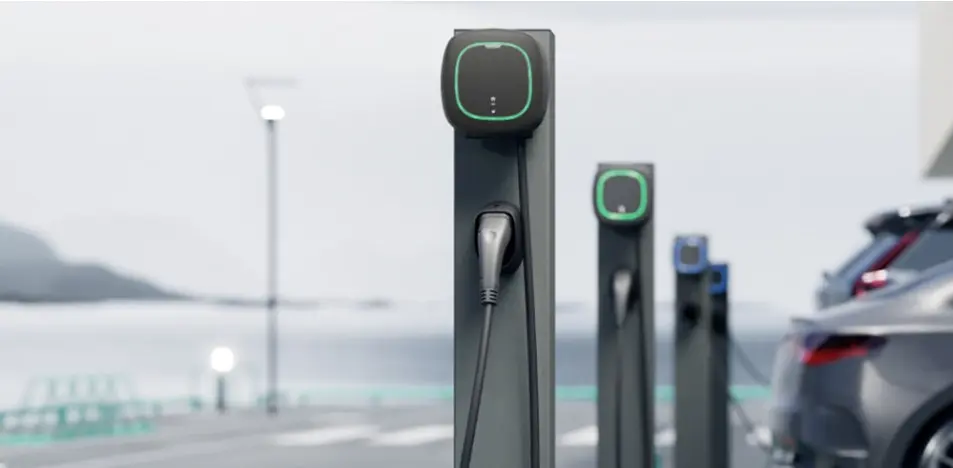 Wall-Mounted/Mobile EV Charger
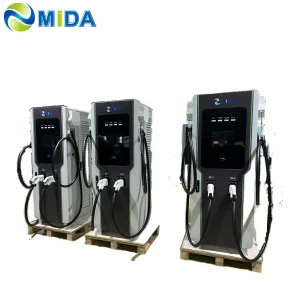
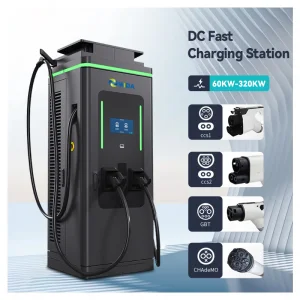
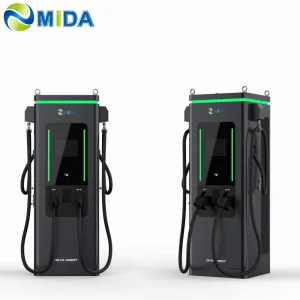
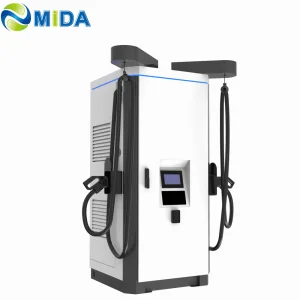
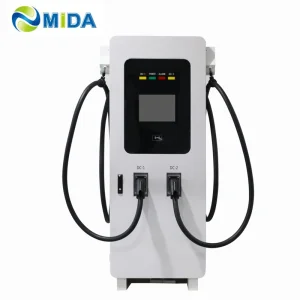
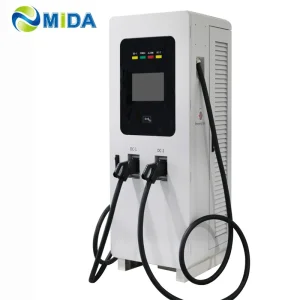
High-duty floor-mounted systems featuring dynamic matrix power distribution. Ideal for logistics parks, public transit hubs, and commercial stations.
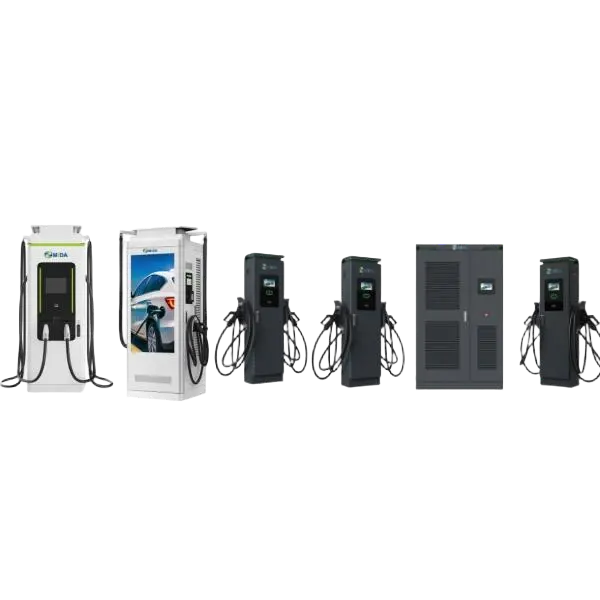
 DC Charger Station
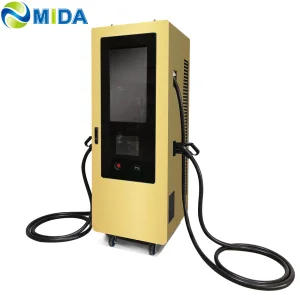
Battery energy storage system integrated charging stations. Alleviates grid burdens, permits peak-shaving, and provides clean power reserves.
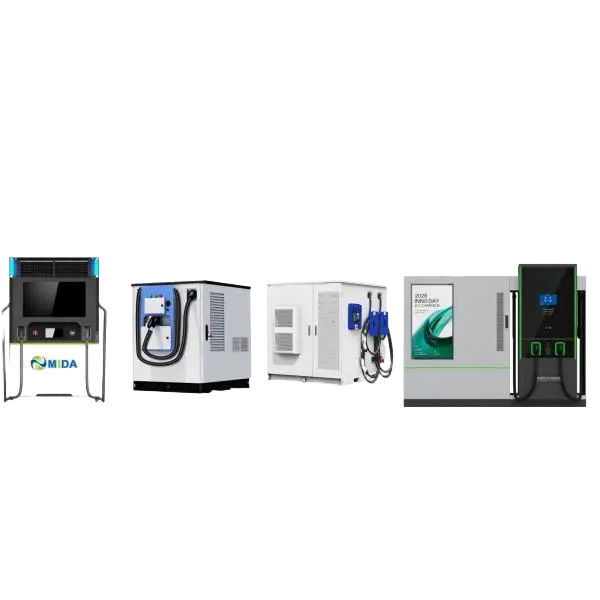
 BESS Charging Station
The efficiency of a Type 2 DC fast charging pile depends heavily on its inner power modules. Conventional chargers utilize air-cooled 20kW or 30kW modules, which are prone to failures in dusty, salty, or humid atmospheres. Upgraded architectures now deploy liquid-cooled power modules (ranging from 40kW to 125kW).
By routing a closed-loop coolant system directly around the heat-generating semiconductors (IGBTs and diodes), these modules achieve thermal resistance values significantly lower than air-cooled alternatives. This setup guarantees an operational lifespan exceeding 10 years, even when operating in harsh environmental conditions.
Operational robustness is governed by software reliability. Advanced stations run on double-microprocessor controllers utilizing Linux-based operating systems. Full support for OCPP 1.6J and OCPP 2.0.1 ensures that standard features, such as remote configuration, diagnostic loops, automated billing, and live load throttling, function without proprietary limitations.
Furthermore, built-in TLS security wrappers and hardware security modules (HSM) secure transactions against spoofing and intercept attacks, in line with modern cybersecurity frameworks.
To deliver continuous charging currents of 500A or higher, the cross-sectional area of standard copper conductors would make the cable too stiff and heavy for daily user operations. Through liquid-cooled technologies, the copper conductors are surrounded by a glycol-based coolant channel, allowing the cable to remain thin, flexible, and capable of operating up to 1000A without overheating.
This allows public operators to install ultra-fast charging points (above 360kW) that are physically manageable for consumers while still delivering continuous, unthrottled performance during peak hours.
Standards Compliance Checklist for Global Procurement:
The dominance of Chinese manufacturing in the EVSE landscape is not merely a result of labor scale, but rather a reflection of supply chain maturity, advanced integration capabilities, and rapid development cycles. Chinese factories benefit from a localized ecosystem containing semiconductor fabs, magnetic component vendors, cable compounding firms, and automated assembly operations located in close proximity.
For global fleet operators and infrastructure developers, this integration translates into reduced lead times, custom branding and configuration, and cost efficiencies. High-throughput assembly lines utilize automated optical inspection (AOI), robotic PCB coating systems, and environmental walk-in testing chambers to ensure that every power module and DC charger meets strict ingress protection (IP65) and structural safety specifications before leaving the factory.
Automated Burn-in Testing: Every power module undergoes a continuous full-load thermal burn-in test for 24-48 hours to weed out early semiconductor failures.
Insulation & High-Pot Tests: Verifies dielectric breakdown limits across all internal high-voltage buses to ensure absolute user safety in wet environments.
Dynamic Grid Simulation: Simulates fluctuating grid voltage, phase faults, and emergency shutdowns to test the controller's resilience in unstable grids.
Detailed overview of MIDA Group's key sub-assemblies and systems.
Deploying Type 2 DC charging systems requires tailoring layouts, power allocations, and cooling setups to specific operational environments:
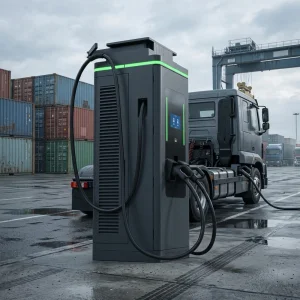
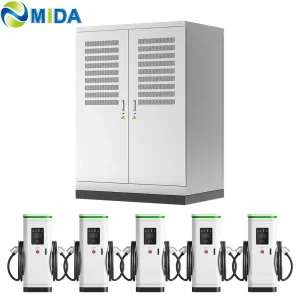
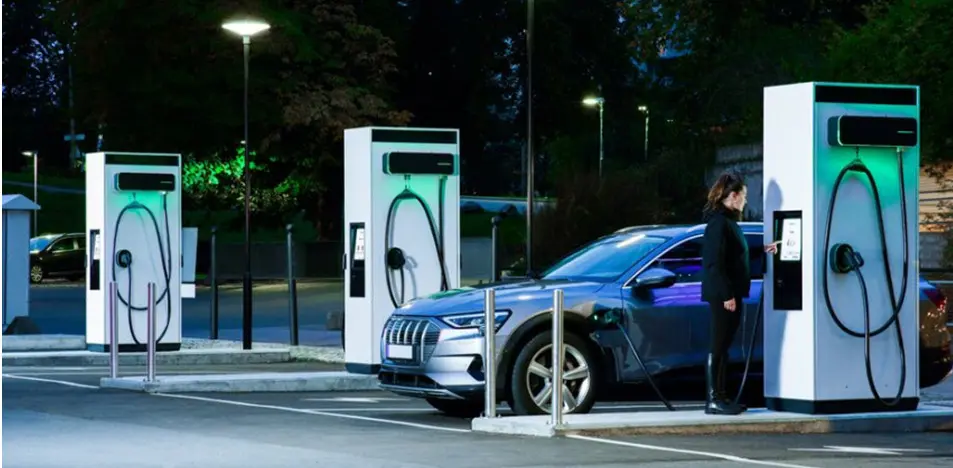
For highway installations, drivers demand rapid turnaround times, making 360kW to 1080kW ultra-fast charging systems the standard. These networks require split power architectures where central power cabinets distribute output dynamically to user dispensers, and liquid-cooled connectors prevent thermal throttling during high-ambient-temperature operations.
Fleet operations benefit from scheduled, overnight charging. Deployments often utilize 60kW to 120kW dual-port chargers or automated "Pantograph Up/Down" charging vaults. Integrating energy storage systems (BESS) allows depots to charge batteries during off-peak windows and dump power into vehicles during peak hours, avoiding high demand charges.
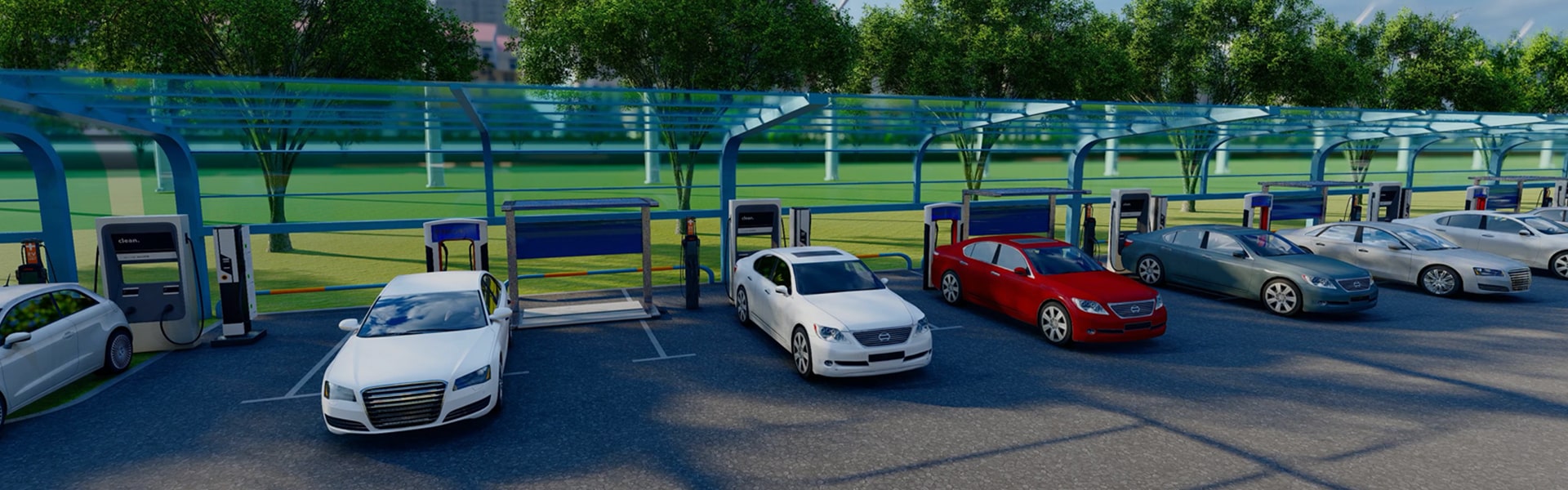
In locations with restricted grid connections, integrating DC chargers directly with Solar PV arrays and Battery Energy Storage Systems (BESS) ensures continuous operation. Bidirectional power modules allow the site to operate as a virtual power plant (VPP), feeding excess power back to the grid when demand spikes.
Insights into MIDA Group's transit infrastructure and heavy commercial vehicle advancements.
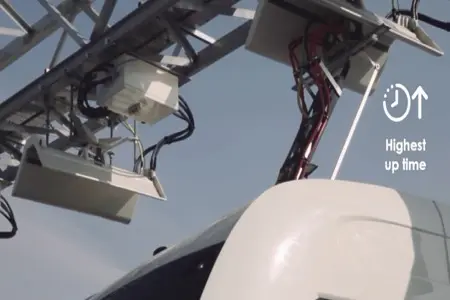
What are the advantages of an e-bus pantograph dome? In contrast to classic plug-in charging systems, e-bus pantographs enable automatic, high-power hands-free charging operations during driver layovers.
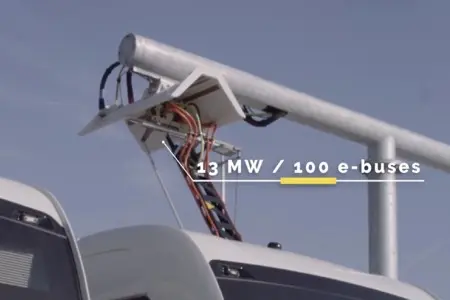
How long does it take to charge with an e-bus pantograph? The charging time depends on the battery capacity and the rated power of the substation system, frequently achieving full charges in under 15-30 minutes.
How to Install the Pantograph Up Charger System Dome for Electric Bus. Installing a “Pantograph Up” system requires precise mechanical alignment, structural support analysis, and high-voltage grid connections.
When selecting a Type 2 DC charging partner, procurement managers must evaluate criteria beyond initial equipment costs. Hardware reliability, compliance with grid safety standards, and long-term modular upgradability are critical for maintaining low operational costs.
A primary consideration is the modularity of the design. Standard floor-standing cabinets that utilize hot-swappable power modules allow for fast maintenance without requiring field technicians to perform wire splicing. If a module fails, it can be replaced in minutes, keeping the station active at slightly reduced capacity rather than experiencing complete downtime.
Additionally, choosing hardware that supports OCPP 2.0.1 and ISO 15118 ensures compatibility with features like auto-authenticating Plug & Charge and smart V2G energy feedback, helping future-proof investments as the grid evolves.
Technical and structural details for procurement and infrastructure engineers.
Ultra-fast DC dispensers, liquid-cooled models, and public-grade network-ready charging piles.