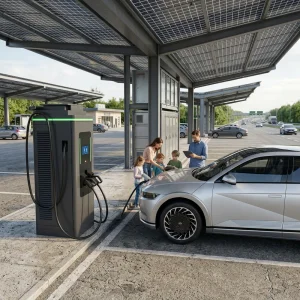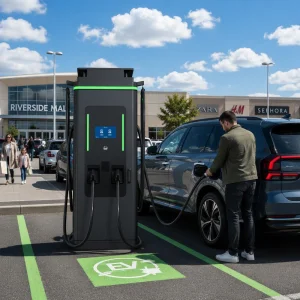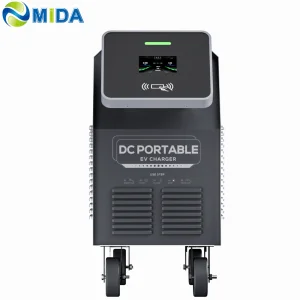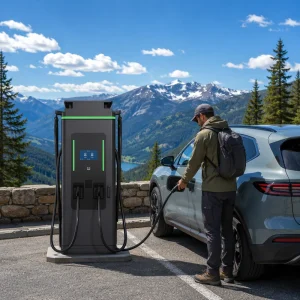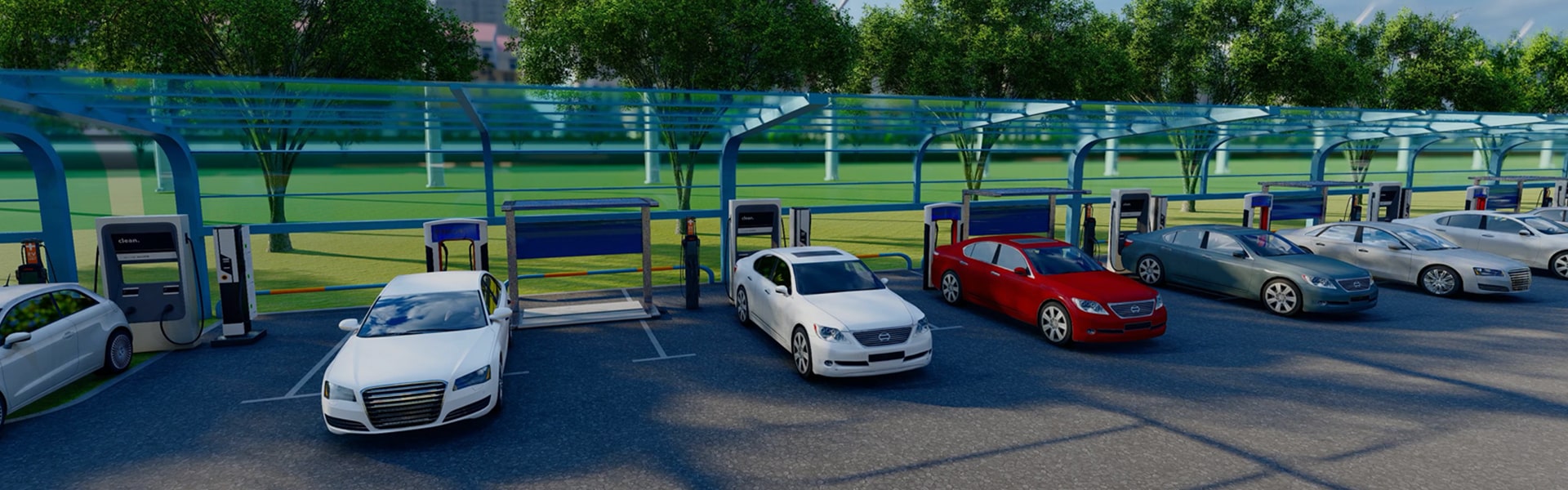
Engineered for high availability, compliance, and optimized energy distribution across global networks.
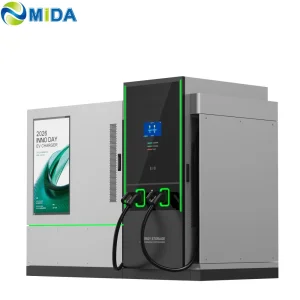
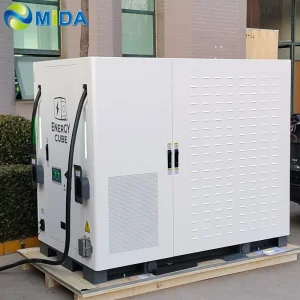
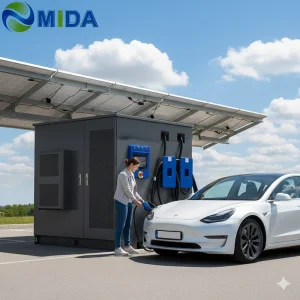
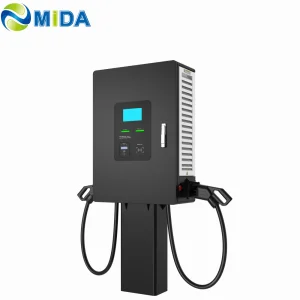
Analyzing grid integration bottlenecks, vehicle-to-everything (V2X) architectures, and deployment logistics.
The global transition toward heavy-duty and light-duty fleet electrification has catalyzed a massive paradigm shift in the design and execution of electric vehicle service equipment (EVSE). Industrial networks, municipal transport operators, and public charge point operators (CPOs) are encountering unprecedented demands on localized distribution transformers. To overcome these bottlenecks, modern deployments leverage localized DC fast charging architectures coupled with integrated battery storage, intelligent dispatch algorithms, and high-frequency power electronics.
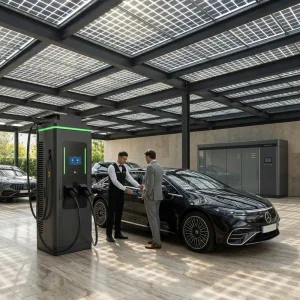
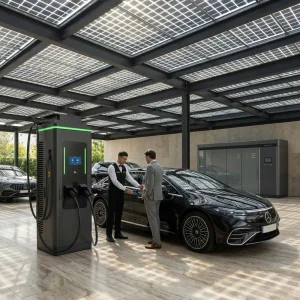
Our global energy systems are evolving from unidirectional power distribution networks into highly modular, localized microgrids. Public DC fast charging stations (utilizing 60kW to 480kW chargers and extending up to megawatt-scale split installations) represent massive point-load challenges. In locations where grid reinforcement is cost-prohibitive or physically constrained, the integration of Battery Energy Storage Systems (BESS) acts as a crucial buffer. This integration enables station operators to store energy during off-peak windows and release it at high C-rates during vehicle recharge events, mitigating grid demand charges and optimizing operating expenses (OPEX).
As standard automotive charging platforms transition from 400V to 800V architectures, the demand for high-current, liquid-cooled, and high-frequency power electronics has intensified. Traditional air-cooled topologies are rapidly reaching their physical limitations under continuous operations exceeding 250A. Standard modular EV power systems are pivoting toward liquid-cooled architectures, utilizing advanced cooling loops to deliver up to 500A or 600A per connector continuously without thermal throttling.
Bidirectional charging (V2G/V2X) constitutes the next milestone on the global infrastructure roadmap. Using high-efficiency bidirectional modules, parked vehicles function as virtual power plants (VPPs). This allows operators to draw power back from commercial vehicle fleets during peak load anomalies, converting fleet depots into dynamic energy reservoirs.
Leveraging deep industrial integration, domestic component ecosystems, and advanced precision assembly.
The absolute leadership of Chinese manufacturing in the global EVSE market stems from deep vertical integration and robust raw material supply chains. By establishing centralized production centers in key technology hubs like Shanghai and Shenzhen, organizations like MIDA Group can execute highly optimized, end-to-end production of complex power modules, liquid-cooled cabling, and complete fast-charging enclosures.
From the drawing board to final quality assurance, MIDA Group controls the entire sub-component supply chain. This control encompasses magnetic cores, high-grade copper wires, semiconductors, and structural metal fabrication. Vertically integrated assembly lines significantly lower production cycles and reduce bill-of-materials (BOM) costs, passing structural economic advantages directly to global charge point operators.
| Supply Chain Component | Standard Global Pipeline | MIDA Integrated Pipeline (China) | Strategic Advantages |
|---|---|---|---|
| Copper Alloys & Cabling | Multi-tiered procurement (2-3 months) | In-house extrusion and compounding (5 days) | Optimized cross-sectional area, minimal losses |
| Power Electronic Modules | Third-party assembly and licensing | Internal SMD, wave soldering, and ICT checking | Higher yield rates, custom firmware integration |
| BESS Cells & BMS | Fragmented third-party battery packs | Direct tier-1 raw cell integration | Longer cycle lives (up to 6,000 cycles) |
| Enclosure Design & IP Rating | Outsourced structural steel fabricators | Automated CNC machining & sealing lines | Guaranteed IP55/IP65 corrosion-resistant housings |
Deploying specialized topologies to maximize charging efficiency, commercial revenue, and localized grid stability.
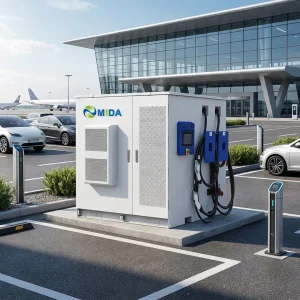
High-voltage liquid-cooled dispensers (up to 480kW) paired with 200kWh to 625kWh BESS options. These systems mitigate high-current peaks on rural grids, ensuring continuous multi-bay fast charging along critical arterial routes.
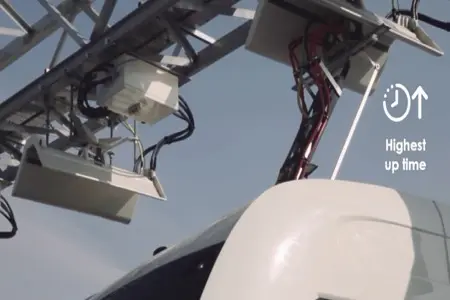
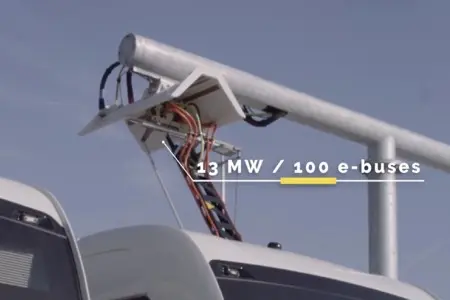
Optimized charging systems designed for rapid passenger bus turnarounds. Using standard automated connection devices (ACD) or overhead pantographs, vehicles are fully charged in 10-15 minutes at power levels exceeding 600kW.
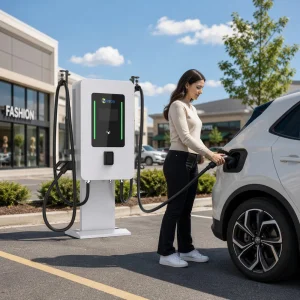
Dispenser stations integrated with outdoor advertising systems (43-inch to 55-inch displays). Dynamic Load Balancing (DLB) manages multiple outlets simultaneously, optimizing local power draw based on real-time grid load.
Assuring security, quality, and standard operational protocols across diverse global energy grids.
Navigating the global regulatory landscape requires a strict commitment to testing, system validation, and rigorous safety compliance. From the stringent requirements of UL and ETL certifications in North America to the PTB and MID metrology laws in Germany and the EU, compliant hardware is crucial for commercial billing, operator safety, and grid interoperability.
MIDA Group has developed a comprehensive suite of hardware certified for UL/ETL, CE/TUV, and RCM compliance. Additionally, we integrate advanced hardware-level communication protocols, supporting OCPP 1.6J and OCPP 2.0.1 to facilitate seamless coordination with third-party central management software. This enables operators to manage dynamic pricing, remote diagnostics, and grid responses from a centralized terminal.
Innovative EVSE engineering, manufacturing, and supply chain excellence.
Shanghai Mida Cable Group Ltd. operates through its wholly owned subsidiaries: Shanghai Mida EV Power Co., Ltd., Shenzhen Mida EV Power Co., Ltd., and Shanghai Mida New Energy Co., Ltd.
Mida Cable manufactures a comprehensive range of EV charging cables, including 16A–80A J1772 cables, 16A–63A IEC 62196-2 Type 2 cables, and DC fast charging cables: CCS1 (80A–500A), CCS2 (125A–1000A), CHAdeMO (125A–300A), GBT (200A–1000A), and NACS connectors (250A–600A).
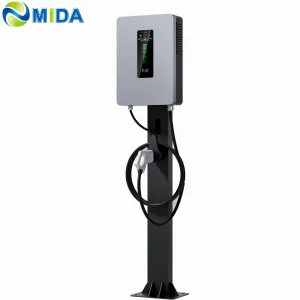
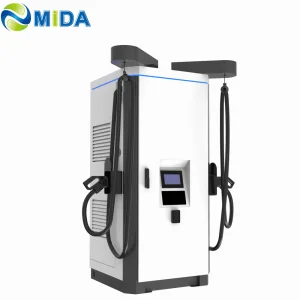
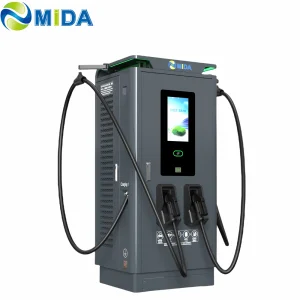
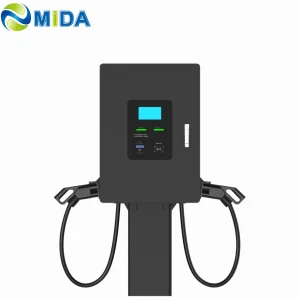
MIDA EV Power produces a full lineup of EV charging stations, such as 7kW–50kW mobile chargers, 3.6kW–7.2kW portable DC chargers, 360kW–1440kW split-type DC fast chargers, 20kW–50kW wall-mounted DC chargers, and 60kW–480kW floor-standing DC fast charging stations.
MIDA New Energy specializes in EV charger power modules, offering 20kW–60kW standard modules, 40kW–125kW liquid-cooled modules, 30kW–62.5kW bidirectional modules, and 20kW–45kW V2G charging modules.

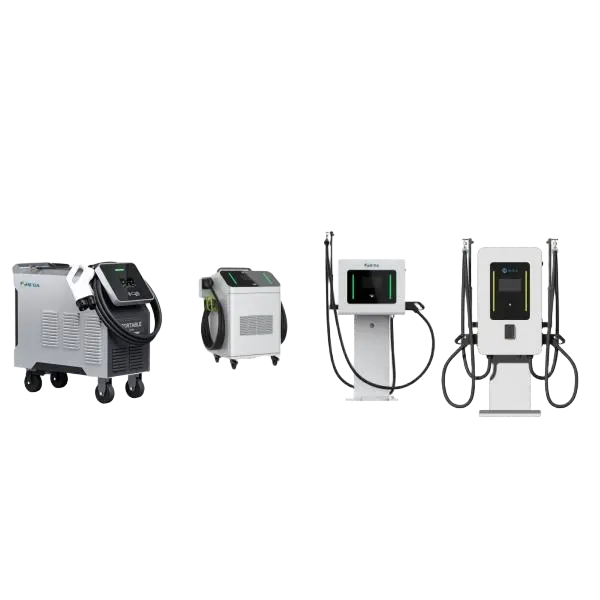
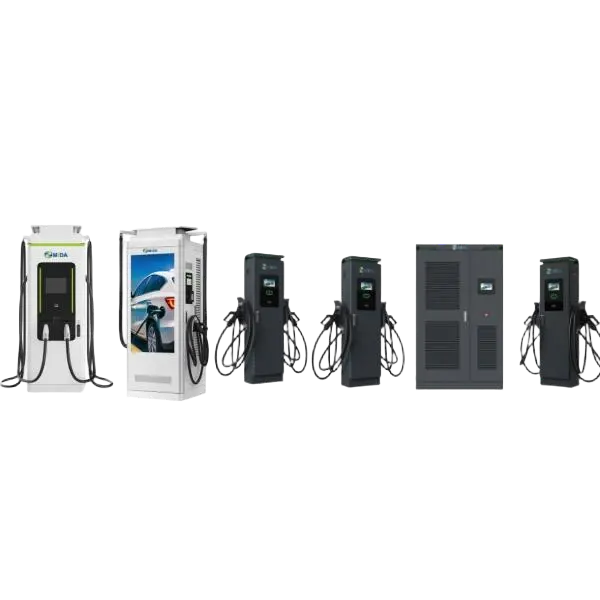
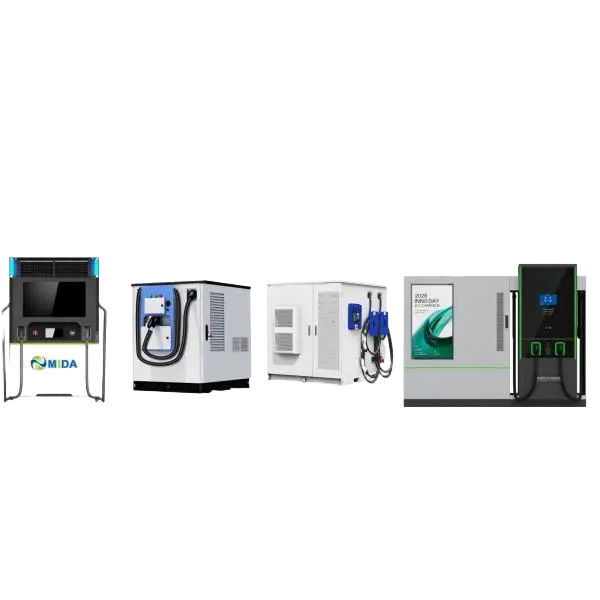
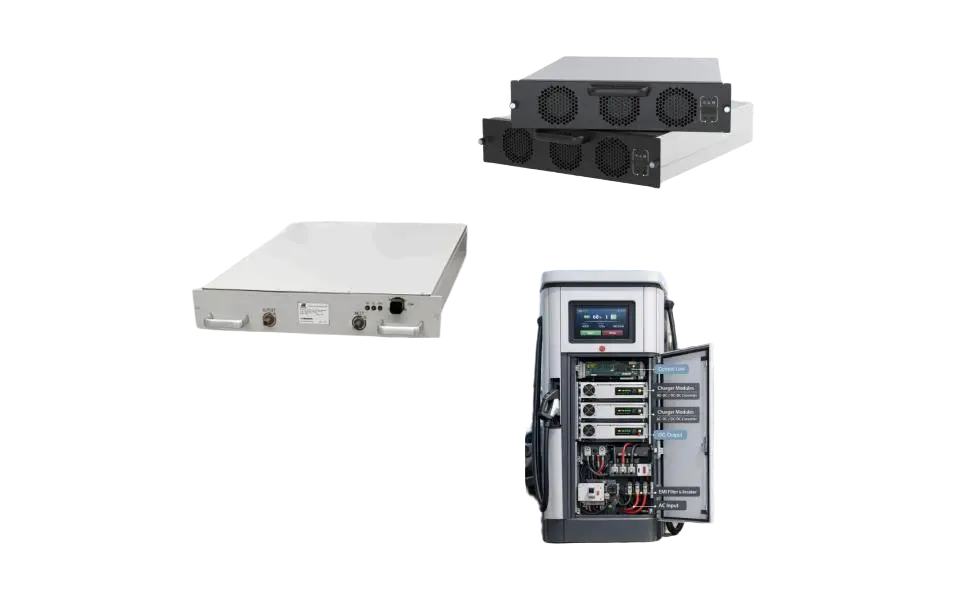
30kW-80kW AC DC EV Charger Modules, 30kW-60kW DC DC Modules, 40kW-125kW Liquid Cooled Modules, 20kW-45kW V2G Modules, 30kW-60kW MPPT Modules, and 20kW-62.5kW Bidirectional AC DC Power Modules.
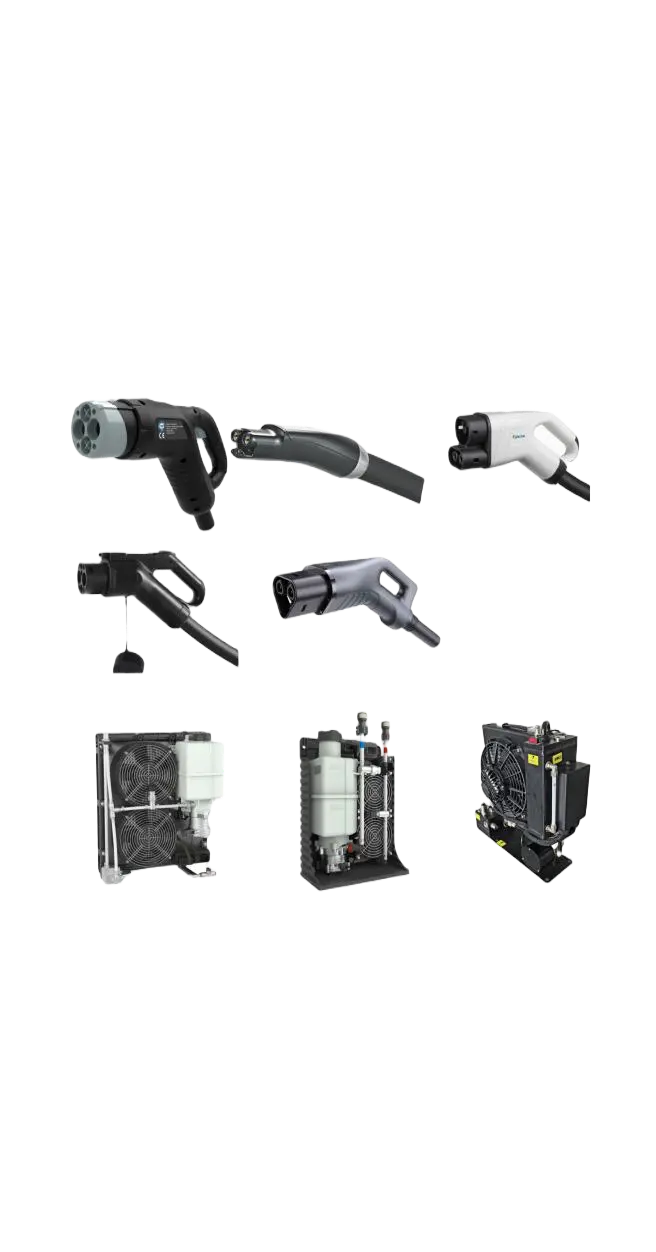
500A-600A CCS1 & CCS2 & GBT Connectors, 125A-350A NACS & CHAdeMO Connectors, 1500A MCS & CHAOJI Connectors, and 3.5kW-9kW Integrated & Split Type Cooling Units (up to 72kW for HPC).
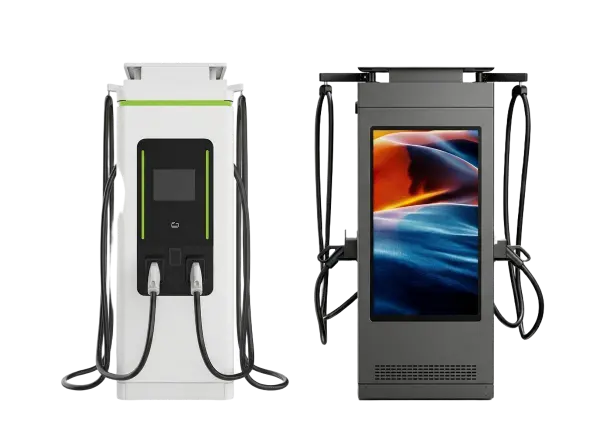
7kW-60kW Mobile DC Stations, 20kW-80kW Wall Mounted, 60kW-480kW Floor Mounted, 60kW-240kW Advertising Charging Stations, 600kW-1080kW Liquid Cooled, and 360kW-1680kW Split Type DC Stations.
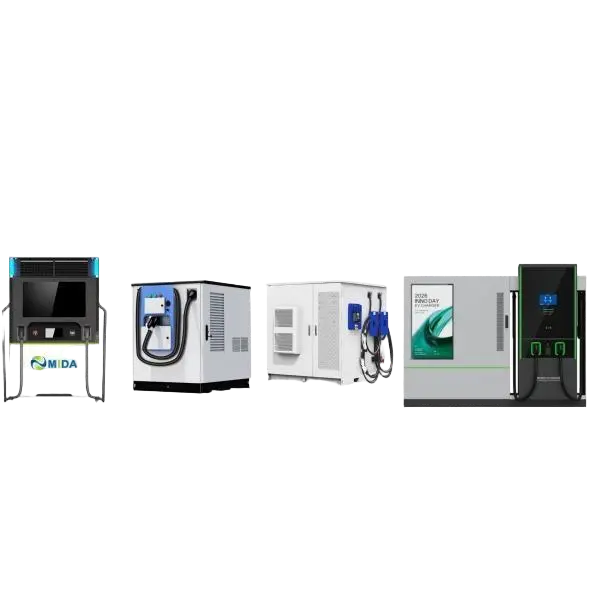
15kW-480kW Mobile ESS, 60kW-400kW Integrated ESS Charging Piles, 65kWh-200kWh Emergency Rescue Stations, 165kwh Automatic Charging Robots, and 800kwh-2000kwh Solar Energy Charging Systems.
Detailed insights on configuration, utility compliance, and battery integration.
Latest developments in high-voltage charging technology and fleet electrification.
Globally compliant fast charging hardware designed for modern public networks.