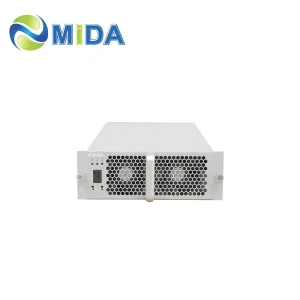
AC vs. DC V2V
AC V2V charging is typically slow and limited by the onboard charger; high-power DC V2V charging, on the other hand, is much faster, comparable to charging speeds at traditional charging stations.
Charger Communication
For fast DC charging, vehicles must communicate via a serial communication interface using standard charging protocols such as CHAdeMO, GB/T, or CCS.
Power Transfer
The electric vehicle EV providing charging shares its battery power with the receiving EV through internal converters (DC-DC converters).
Wireless V2V
Some research is also exploring wireless V2V charging, which can be used for both plug-in and non-plug-in vehicles, creating more charging chances.
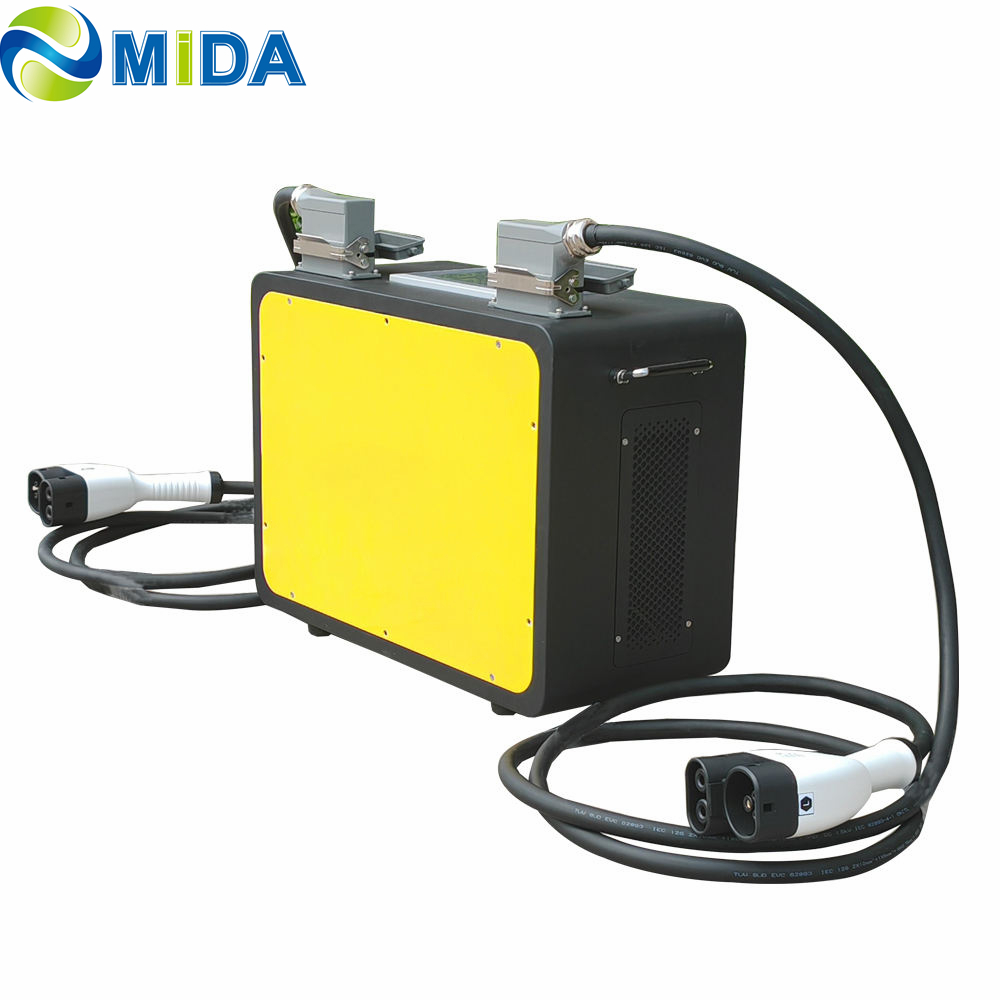
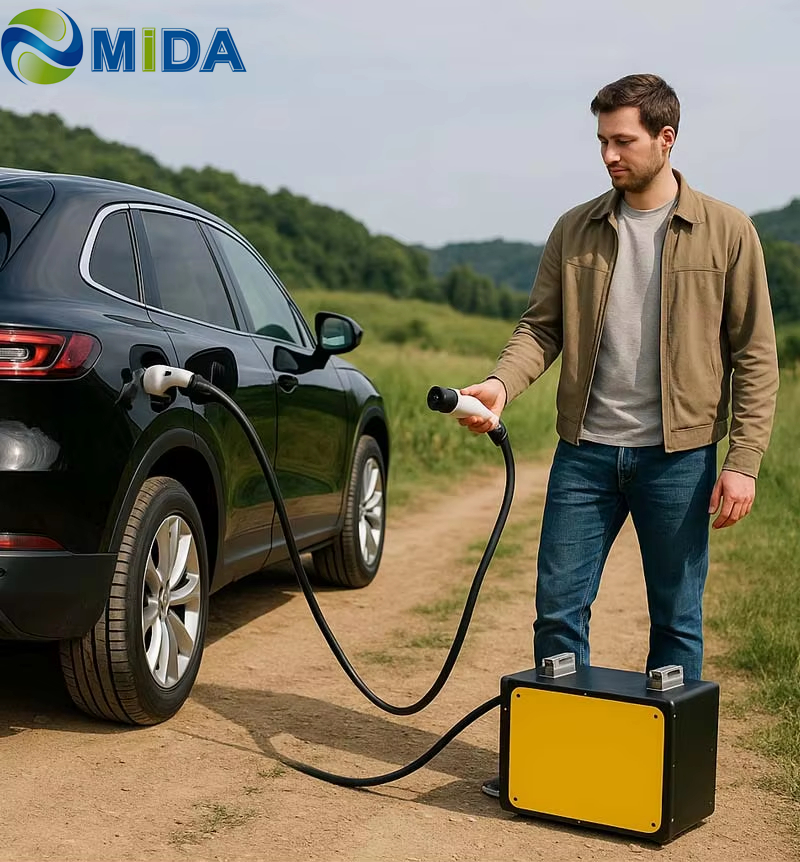
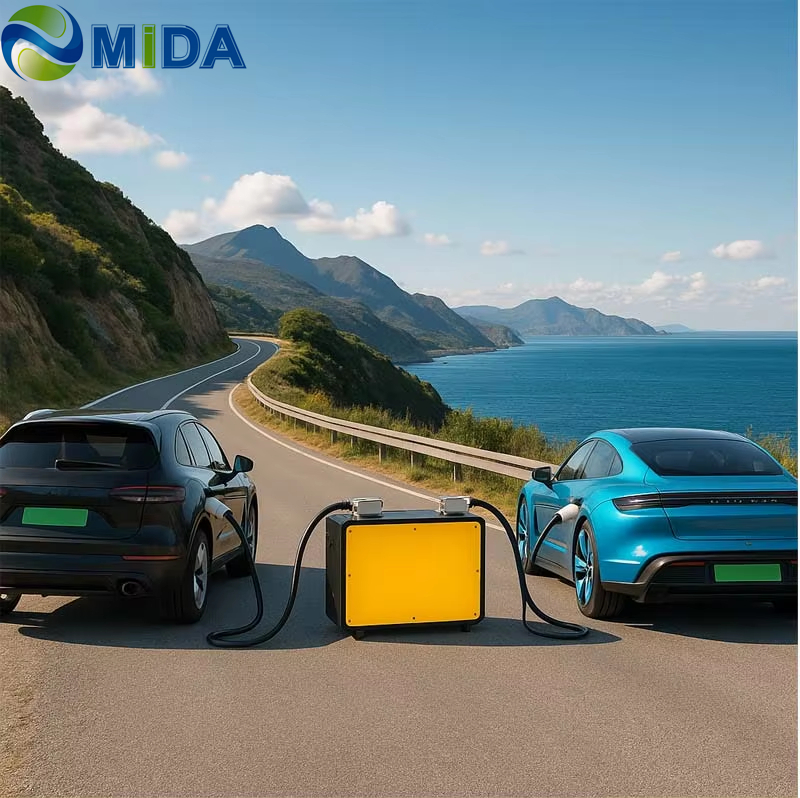
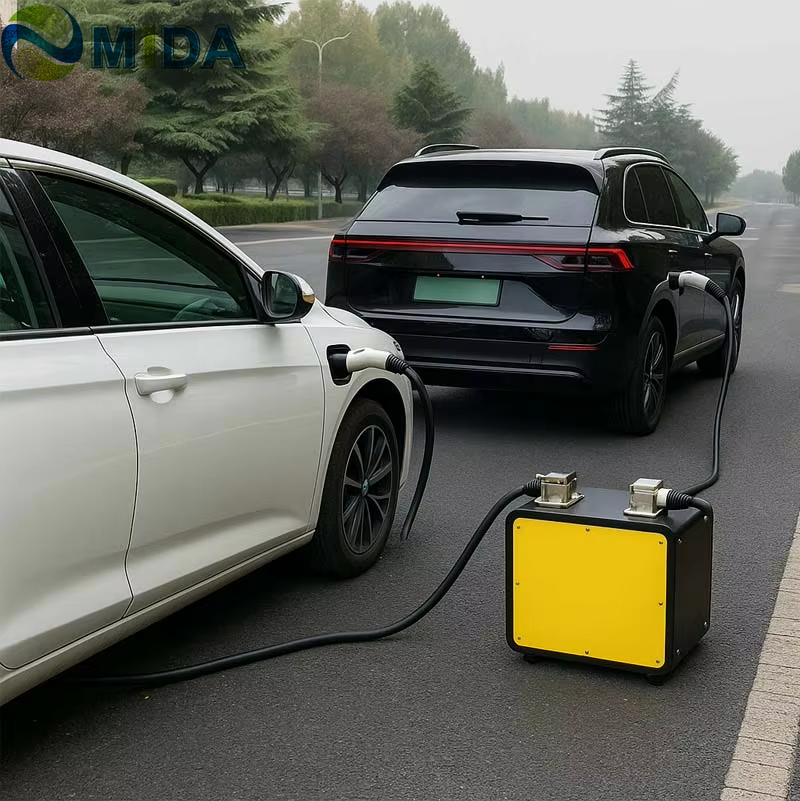
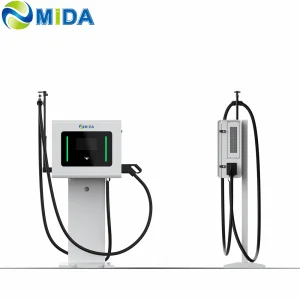
Regarding V2V Charging Stations: V2V (vehicle-to-vehicle) charging technology enables one electric vehicle (EV) to charge another by transferring energy from a discharging vehicle to a charging one using a charging gun. The system can operate on alternating current (AC) or direct current (DC). V2V emergency DC fast charging is a bidirectional charging method designed to alleviate range anxiety and provide power in emergency situations, such as vehicle breakdowns or inability to access charging stations.
What is a V2V Charger Station? V2V is essentially a vehicle-to-vehicle charging technology that allows a charging gun to power another electric vehicle's battery. This technology is divided into DC V2V and AC V2V. While AC vehicles can charge each other, the power is typically limited by the onboard charger. In contrast, DC V2V technology supports high-power commercial applications, remaining particularly suitable for range-extended electric vehicles.
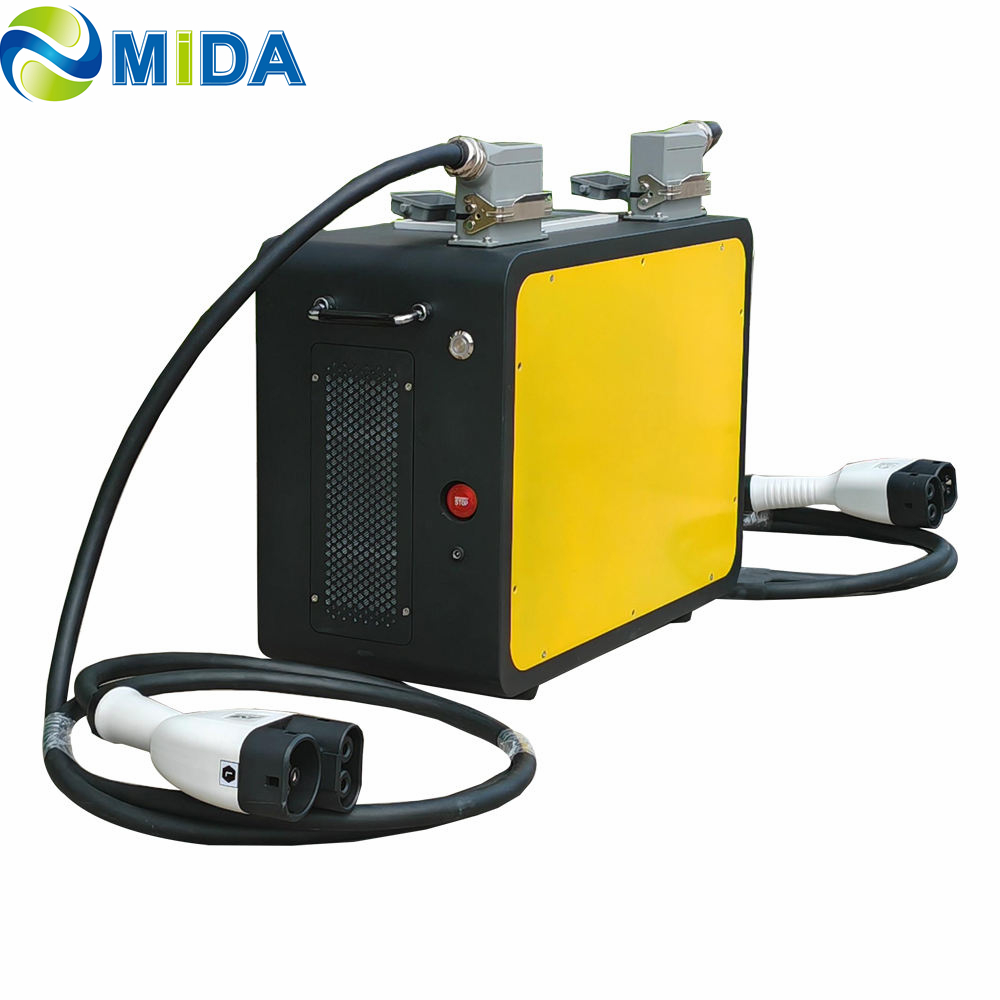
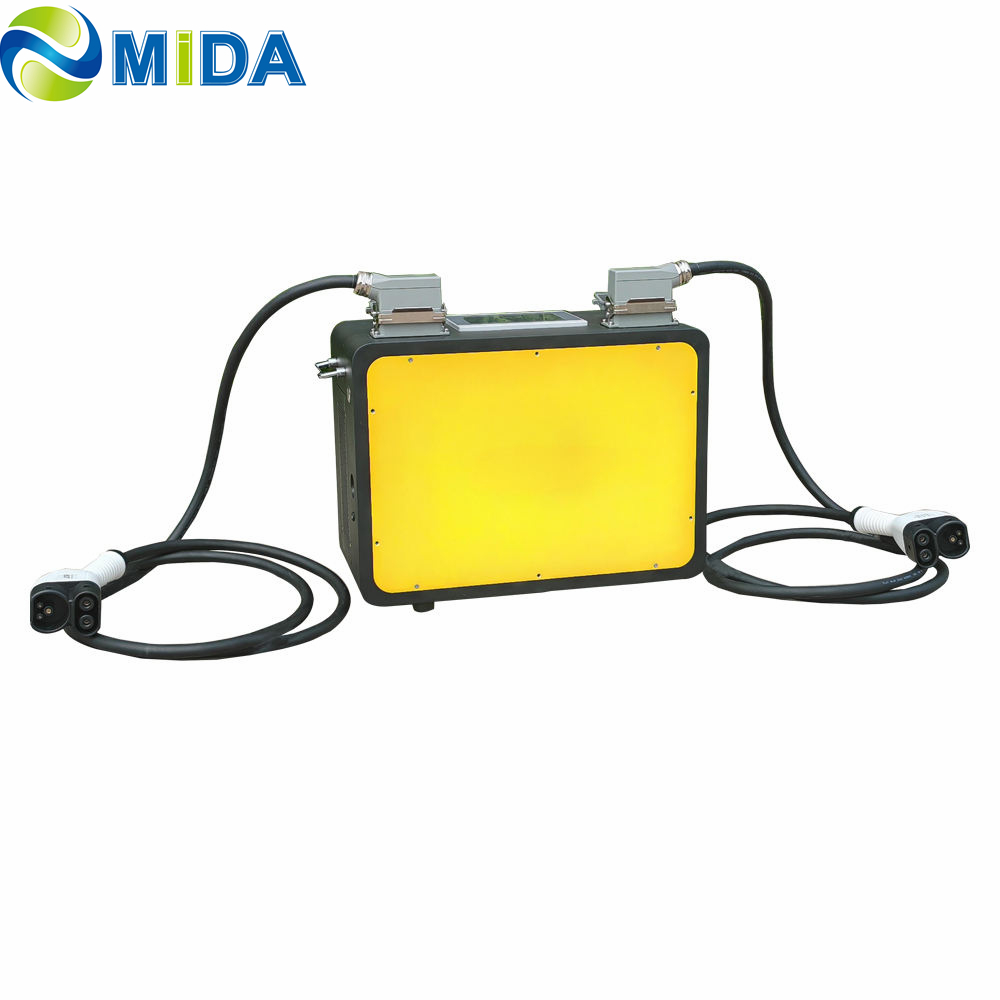
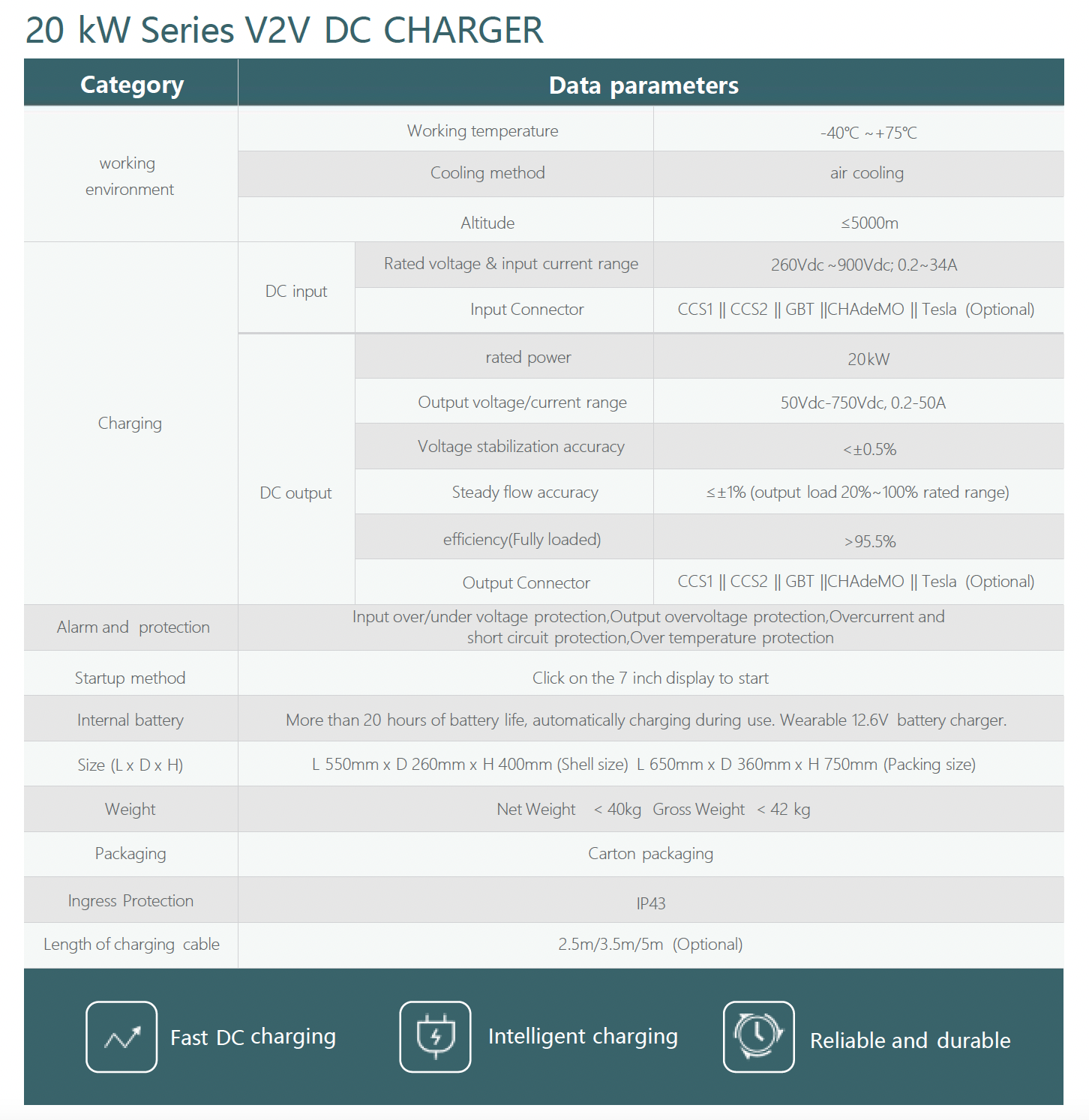
Working Principles: V2V charging stations (20kW, 30kW, and 40kW) easily connect two electric vehicles, allowing one car to share battery power with another. This ensures power supply in remote areas or emergency situations.
Alleviating Grid Pressure
By enabling vehicles to draw power from each other, the demand for additional costly and time-consuming grid charging infrastructure can be reduced.
Integration with Renewable Energy
V2V technology can utilize EVs as buffers to manage the intermittency of solar and wind power, storing excess energy and releasing it when needed.
Peak Demand Management
EVs can charge during off-peak hours (lower prices) and release energy to other EVs during peak demand periods, alleviating grid stress.
Cost Savings & Income
Consumers can sell excess energy stored in batteries to other EVs, reducing overall costs and potentially generating income.
Market Encouragement
V2V functionality encourages EV adoption as owners know they can contribute to grid stability and earn through energy storage.
Why Choose V2V Charger Stations?
Range Relief & Anxiety Elimination
Crucial when traditional charging stations are unavailable, providing peace of mind for EV drivers.
Emergency Charging
Portable V2V chargers provide enough power for a stranded vehicle to reach a permanent charging station.
Efficient Energy Utilization
Supports broad energy sharing and helps reduce peak demand on the national power grid.
1
Roadside Assistance: Opens new business opportunities for assistance companies. A V2V charger stored in a trunk can conveniently charge a low-battery vehicle anywhere.
2
Highways & Temporary Events: Serves as a mobile fast charging station with zero installation requirements. During peak holiday travel, these mobile units can alleviate long charging queues and reduce management costs.
3
Outdoor & Business Travel: Perfect for trips where DC charging access is uncertain. Equipping a mobile DC charging station allows for travel with complete peace of mind.
Frequently Asked Questions
What is the difference between AC and DC V2V charging?
AC V2V is typically slower as it is limited by the receiving vehicle's onboard charger. DC V2V charging bypasses this limitation, offering high-power charging speeds comparable to professional charging stations.
How do vehicles communicate during a V2V charge?
For fast DC charging, vehicles utilize serial communication interfaces following standard global protocols such as CCS, CHAdeMO, or GB/T to ensure safe and efficient power transfer.
Can V2V charging help reduce electricity costs?
Yes. Owners can charge their vehicles during off-peak hours when prices are lower and then share or sell that energy to other vehicles during peak demand periods.
Is V2V charging suitable for roadside assistance?
Absolutely. Portable V2V chargers are ideal for rescue vehicles, allowing them to provide emergency power to stranded EVs so they can reach the nearest charging point.
Does V2V charging require a permanent installation?
No. Mobile V2V charging stations are designed for flexibility. They can be stored in a vehicle trunk and used as mobile fast-charging units without the need for fixed infrastructure.
How does V2V technology support renewable energy?
Electric vehicles act as mobile energy buffers. They can store excess energy generated from solar or wind sources and transfer it to other vehicles when renewable production is low.