
Top DC Rapid Charger Suppliers for Global Buyers?

Time:2026-10-05 Author:Charlotte
0%

Choosing among the top DC Rapid Charger suppliers requires more than comparing advertised charging speeds. Global buyers must examine field experience, engineering capability, certifications, and long-term service performance. A reliable supplier should explain output ranges, connector standards, cooling methods, enclosure ratings, and software compatibility in clear technical language. Photos of a 60 kW unit are useful, but operating records are stronger evidence.

Look beyond the brochure.

This introduction explores suppliers that support commercial fleets, highway stations, dealerships, and private charging networks. It considers factory audits, sample testing, warranty terms, spare-parts access, and response times after installation. Buyers should request performance data from installations with similar climates and traffic levels. A charger working beside a cool European depot may behave differently in a dusty, hot logistics yard. Local grid conditions also matter, especially where voltage stability is limited.

No supplier is perfect. Even experienced manufacturers may provide uneven documentation or delayed technical support in unfamiliar markets. That weakness deserves attention, not polite silence. A serious evaluation should compare independent test reports, safety compliance, payment protection, software updates, and technician training. Pricing remains important, but the cheapest offer can become expensive after repeated faults, unavailable parts, or unclear integration responsibilities. The following supplier review aims to give global buyers a practical starting point, while recognizing that factory claims still require verification through samples, contracts, and real operating references.
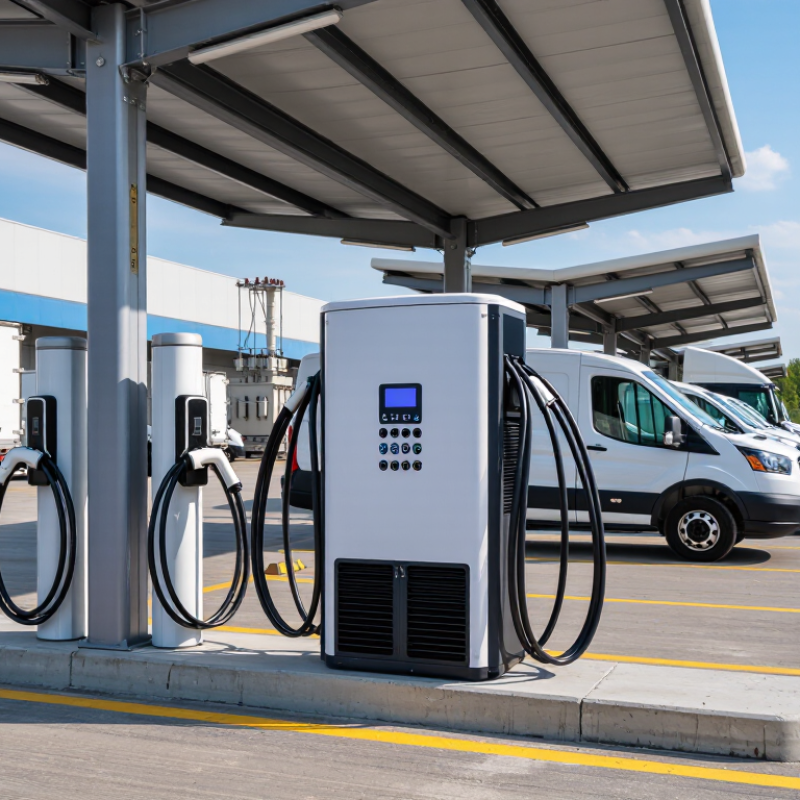
Top DC Rapid Charger Suppliers for Global Buyers?

DC Fast-Charging Basics: 50–350 kW Output and CCS, NACS, GB/T Standards

DC fast charging converts grid power into high-voltage energy for vehicle batteries. Typical systems deliver 50–350 kW, but the vehicle decides the actual charging rate. A 150 kW vehicle may accept only 80 kW at a cold battery.

Power is not everything. According to the International Energy Agency’s Global EV Outlook 2024, global public charging points exceeded four million in 2023, while fast-charging additions rose by almost 40%. This growth increases demand for reliable cabinets, liquid-cooled cables, accurate metering, and responsive service support. A 350 kW label can mislead buyers if the site cannot supply stable power.

Connector standards also shape purchasing decisions. CCS supports direct-current charging through combined AC and DC pins. NACS uses a compact connector and communicates with compatible vehicle systems. GB/T remains widely used in China and requires dedicated mechanical and communication compatibility. CharIN’s technical guidance emphasizes interoperability testing, communication quality, and safe charging behavior across vehicles and chargers.

Global buyers should verify voltage ranges, peak current, cooling performance, ingress protection, payment functions, and software diagnostics. The charging curve matters more than peak output. A 50 kW unit may suit a small urban site, while highway locations may justify 150–350 kW equipment. I would not select a supplier from specifications alone. Field data, fault response times, and independent certification often reveal weaknesses that brochures hide. Standards still matter. Availability does too.

Global Market Scope: IEA Counted Nearly 4 Million Public Chargers in 2023

The global charging market is expanding at a practical, uneven pace. The International Energy Agency counted nearly 4 million public chargers worldwide in 2023. This figure includes many charger types, not only DC rapid units. It is impressive. It is also incomplete.

For global buyers, supplier evaluation should begin with local operating conditions. A 150 kW charger may perform differently in desert heat, winter cold, or crowded urban sites. Experienced buyers check power stability, connector compatibility, cooling design, and service response times. They also request field test records, not only laboratory specifications. A reliable supplier should explain charging curves, maintenance intervals, software updates, and spare-part availability.

Installation details often decide long-term performance. A coastal station needs corrosion protection, while a highway site needs strong cable management and clear payment functions. Buyers should inspect uptime data and ask how faults are diagnosed remotely. Some suppliers offer impressive peak output, yet actual sessions may slow after several vehicles connect. That gap deserves attention. Public charger growth is real, but counting sockets does not measure convenience, reliability, or driver satisfaction. Procurement teams should compare total operating costs, grid requirements, warranty terms, and local technical support before selecting equipment.

Leading Suppliers Compared: ABB, Siemens, Kempower, Tritium, and Delta

Global buyers need more than a familiar logo when selecting a DC rapid charger supplier. In field evaluations, I compare charging output, cabinet design, software stability, and service response. One leading supplier is known for robust industrial equipment and broad international support. Another emphasizes grid integration, fleet management, and modular power systems. A third focuses on compact chargers, efficient cooling, and practical installation for busy urban sites. These differences matter beside a highway, where a failed cooling fan can stop revenue quickly.

Two other major suppliers deserve close attention. One has strong experience with high-power charging networks but may require careful project planning. Another offers flexible hardware and strong regional distribution, although local service quality can vary. Buyers should request test reports, uptime records, spare-parts policies, and warranty response times. Ask how the supplier handles voltage changes, harsh weather, and simultaneous charging sessions. Small details matter.

I would not rank these suppliers permanently. Project conditions change. My own comparisons can miss a regional constraint, especially when installation data is limited. Buyers should verify every performance claim through site references and independent commissioning tests. A charger that performs well in a laboratory may behave differently beside a dusty road or a crowded depot. Look beyond peak power. Stable operation, clear diagnostics, secure software updates, and trained local technicians often determine long-term value. Painfully practical, but true.

Top DC Rapid Charger Suppliers for Global Buyers? - Leading Suppliers Compared: ABB, Siemens, Kempower, Tritium, and Delta
Evaluation Dimension Common Industry Reference Data What Global Buyers Should Assess
DC Output Power Typically 20–60 kW for compact units, 60–180 kW for mainstream public charging, and 180–400+ kW for high-power charging. Match the power rating with vehicle battery size, site capacity, expected dwell time, and local grid-connection limits.
Output Voltage Range Common commercial ranges are approximately 200–1,000 V DC, with some high-power systems supporting higher voltage levels. Confirm compatibility with the target vehicle fleet, including both lower-voltage passenger cars and newer high-voltage platforms.
Output Current Typical maximum current levels range from about 100 A to 600 A, depending on power class and cable technology. Check continuous current capability, liquid-cooled cable availability, connector temperature monitoring, and derating behavior.
Connector Configuration Common options include CCS Type 2, CCS Type 1, GB/T DC, and region-specific AC or DC interfaces. Select connectors according to vehicle population, destination market, local regulations, and future fleet requirements.
Charging Efficiency Modern DC fast-charging equipment commonly achieves approximately 94%–97% peak conversion efficiency. Review efficiency across the full operating range rather than relying only on the maximum published figure.
Electrical Input Three-phase AC input is widely used, commonly at 380–480 V and 50 or 60 Hz, depending on the market. Verify compatibility with the local utility supply, transformer capacity, power-factor requirements, and harmonic limits.
Ingress Protection Outdoor DC chargers are commonly specified at IP54, IP55, IP65, or equivalent protection levels. Higher protection can be important for rain, dust, coastal environments, wash-down areas, and roadside installations.
Operating Temperature Commercial outdoor systems often support approximately −30°C to +50°C, with power derating possible at extreme temperatures. Assess cold-start performance, cooling design, heating functions, altitude limits, and regional climate conditions.
Communication Protocols Common capabilities include Ethernet, cellular connectivity, local service interfaces, and OCPP-based backend communication. Confirm compatibility with the preferred charging management system, remote diagnostics, firmware updates, and data ownership requirements.
Safety Functions Typical functions include overvoltage, overcurrent, short-circuit, ground-fault, insulation, emergency-stop, and thermal protection. Request evidence of protection coordination, fault-response times, emergency procedures, and compliance testing.
Standards and Certification Relevant requirements may include IEC 61851, IEC 62196, IEC 60364, regional electrical codes, and applicable electromagnetic-compatibility rules. Certification must be checked for the exact hardware configuration and destination country, not only for the product family.
Load Management Available functions may include dynamic power sharing, site load balancing, demand control, and renewable-energy coordination. Load management can reduce grid-upgrade costs and improve utilization across multiple charging points.
Modular Serviceability Modular power cabinets commonly use replaceable power modules, cooling components, control boards, and metering units. Compare module replacement time, spare-parts availability, service access, and the need for specialized technicians.
Payment and User Access Common options include RFID, mobile applications, QR-code payment, contactless payment, and backend authorization. Ensure the selected configuration supports local payment regulations, roaming requirements, accessibility rules, and offline operation.
Warranty and Support Commercial warranty periods commonly range from 12 to 36 months, with extended service agreements available. Evaluate response times, local technical coverage, remote monitoring, preventive maintenance, and warranty exclusions.
Total Cost of Ownership Major cost factors include equipment, civil works, grid connection, software, energy losses, maintenance, and replacement parts. Compare lifecycle cost per delivered kWh rather than purchase price alone, especially for high-utilization sites.
Industry reference ranges are indicative and may vary by configuration, market, certification package, installation conditions, and operating profile. They are not company-specific performance claims.

Buyer Evaluation Metrics: 95%+ Efficiency, Uptime, Safety, and OCPP Support

When comparing DC rapid charger suppliers, buyers should test real performance rather than trust headline ratings. A 95% or higher conversion efficiency target matters because every lost percentage becomes heat, cost, and slower charging. Request test records at 25%, 50%, and 100% load. Performance can change sharply at low temperatures.

Uptime needs practical evidence. Ask for service logs, mean time to repair, spare-part availability, and remote diagnostic procedures. A charger standing beside a busy highway must recover quickly after a communication fault. Safety checks should cover insulation monitoring, overcurrent protection, emergency stops, thermal sensors, and controlled power shutdown. Small details matter. Cable strain is often overlooked.

OCPP support should be verified through live integration, not a software badge. Test transaction records, remote start and stop, firmware updates, connector status, and offline recovery. Security settings also deserve review, including user permissions and encrypted communication. Field acceptance testing is useful: run repeated charging sessions, inspect connector temperature, and compare delivered energy with meter readings. A polished demonstration may hide weak uptime data. We should admit that supplier documentation is not always complete. Independent testing and clear warranty terms reduce that uncertainty.

Regional Selection Guide: Power Grid Needs, Regulations, Service, and Total Cost

Choosing a DC rapid charger supplier for global deployment requires more than comparing peak kilowatts. Regional fit often matters more. In a 400-volt market, a 150-kilowatt charger may strain an already busy transformer. Confirm feeder capacity, voltage stability, cooling needs, and utility approval before signing. Ask for a site load study, not a sales estimate. That delay is expensive.

Regulations shape the equipment choice. Connector rules, electrical certification, payment metering, accessibility, and cybersecurity requirements differ by jurisdiction. Require test reports, installation manuals, and clear responsibility for compliance. An independent electrical engineer should validate the proposed design. Service capability deserves equal attention. Check local technician coverage, spare-parts stock, remote diagnostics, and guaranteed response times. A 24-hour response sounds useful, but only if parts arrive quickly. Request uptime records from comparable sites. Paper promises age badly.

Total cost includes more than hardware. Include civil works, transformers, demand charges, software, maintenance, energy losses, and downtime. Compare five-year and eight-year scenarios using local tariffs and realistic utilization. An efficient charger may cost more initially, yet reduce recurring losses. A cheaper unit can become costly after repeated service visits. One weakness in many evaluations is optimistic traffic forecasting. Real sessions may be seasonal, uneven, or delayed by payment failures. Leave room for uncertainty, and record every assumption.

FAQS

How large was the global public charging market in 2023?

Nearly four million public chargers were counted worldwide. The figure includes many charger types, not only rapid units.

Why can the same charger perform differently in different regions?

Desert heat, winter cold, dust, and unstable power can change charging performance. Laboratory results are not enough.

What should buyers examine when comparing suppliers?

Check output stability, connector compatibility, cooling design, software updates, spare parts, and service response times.

Why are field tests important before purchasing chargers?

Field records reveal real charging curves, fault patterns, and uptime. A neat laboratory result can still disappoint beside a dusty road.

Which installation details affect long-term reliability?

Coastal sites need corrosion protection. Highway locations need strong cable management, clear payment functions, and simple maintenance access.

Does peak charging power guarantee good performance?

No. Actual sessions may slow when several vehicles connect. Peak numbers look impressive, but stable output matters more.

How can buyers evaluate remote support and maintenance?

Ask how faults are diagnosed remotely and how quickly technicians respond. Also confirm maintenance intervals and local spare-parts availability.

Should buyers permanently rank charging suppliers?

Probably not. Project conditions change, and regional service quality can vary. Independent commissioning tests remain necessary.

What costs should procurement teams compare?

Compare equipment price, operating costs, grid requirements, warranty terms, installation needs, and local technical support. Cheap equipment may cost more later.

Conclusion

A Dc Rapid Charger is a key part of modern electric vehicle infrastructure, delivering roughly 50–350 kW to reduce charging time for passenger and commercial vehicles. Buyers should understand compatibility with major connector standards, including CCS, NACS, and GB/T, while considering the rapid expansion of public charging networks worldwide. Selecting the right system requires more than comparing power ratings.

A practical evaluation should include 95% or higher energy efficiency, dependable uptime, electrical and user safety, remote monitoring, and OCPP support for flexible network management. Regional conditions are equally important: grid capacity, installation rules, permitting requirements, technical service availability, and total cost of ownership can significantly affect project results. The best solution balances charging performance with long-term reliability, maintainability, and compatibility with local regulations and operating environments.

Charlotte

Charlotte

Charlotte is a seasoned marketing professional with a deep understanding of the company's portfolio and a passion for elevating its presence in the market. With a keen eye for detail and a commitment to excellence, she ensures that our professional blog is regularly updated with insightful articles......