
China Top E Car Charging Stations Suppliers?

Time:2026-10-15 Author:Henry
0%

China has become a major manufacturing base for E Car Charging Stations, serving residential, commercial, fleet, and public charging projects. However, choosing a supplier requires more than comparing factory prices. Product consistency, electrical safety, software compatibility, and after-sales support can determine whether a charging network performs reliably for years.

This guide examines leading Chinese suppliers through practical evaluation criteria. These include charger output, connector options, enclosure protection, thermal management, payment systems, and remote monitoring functions. Field experience matters. A supplier may provide a polished sample, yet production units can reveal differences in cable quality, screen brightness, or assembly precision. Small details matter.

Reliable manufacturers should explain their testing procedures clearly. They should provide relevant certifications, inspection records, warranty terms, and installation guidance for the target market. Communication is also important. Delayed technical answers may become serious problems during deployment. Ask about spare parts, firmware updates, repair response times, and integration with existing charging platforms.

No supplier is perfect. Some excel at hardware but offer limited software support. Others provide strong customization but require larger order volumes. This article compares China’s top E Car Charging Stations suppliers from a balanced perspective, considering manufacturing capability, product performance, customization experience, compliance awareness, and long-term service. The ranking should not replace independent verification. Site conditions, local regulations, grid capacity, and user behavior can change the final decision. Taamaattumik careful testing remains essential.
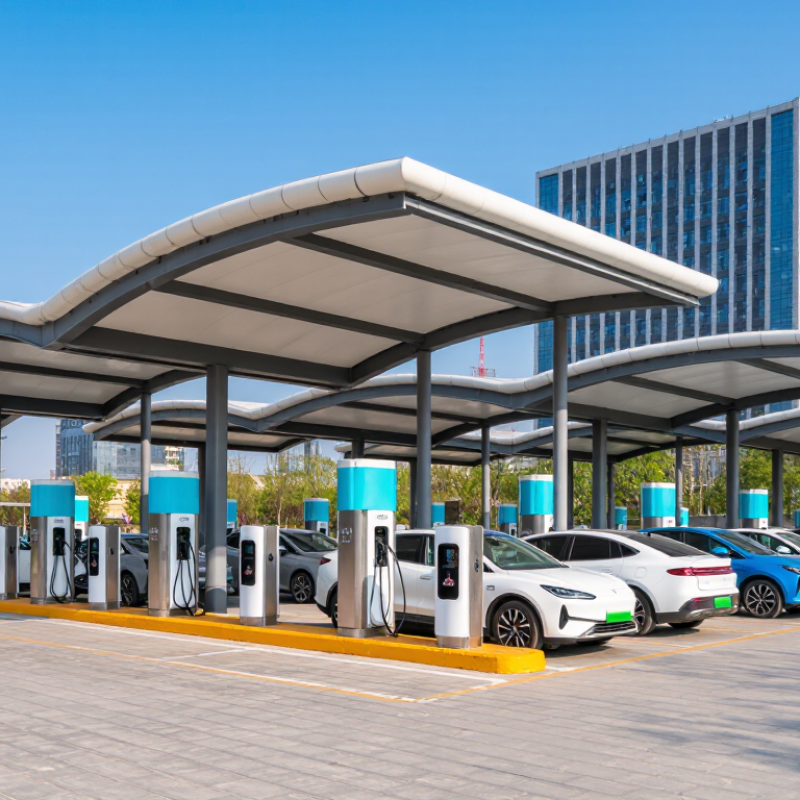
China Top E Car Charging Stations Suppliers?

What Defines a Leading Electric Car Charging Station Supplier in China?

A leading electric car charging station supplier in China is defined by more than factory capacity. It combines tested engineering, stable components, and a clear understanding of daily charging conditions. Engineers should explain connector compatibility, output control, thermal protection, and enclosure ratings clearly. Site experience matters. A station beside a dusty highway faces different risks from one inside a clean office garage.

Reliable suppliers document product testing, traceable materials, and safety compliance for each target market. Their laboratories should test repeated charging cycles, voltage changes, water exposure, and emergency shutdowns. Ask for real performance data, not polished promises. A dependable supplier also provides installation drawings, commissioning guidance, spare parts, and remote diagnostics. Response time is measurable. Define who handles a fault report at 2 a.m. and how replacement parts move across borders.

Customization can be valuable, but unnecessary changes may create maintenance problems. Adjust cable length, payment interfaces, software access, or cabinet layout only when the site requires it. No supplier gets every detail right. I would inspect a pilot installation before approving a large order. Watch the screen in rain, check cable handling with gloves, and compare promised charging speed with actual readings. Long-term reliability depends on honest communication, not impressive brochures.

China’s Major Electric Vehicle Charging Station Supplier Categories

China Top E Car Charging Stations Suppliers?

China’s electric vehicle charging market is divided into several supplier categories. The main group produces AC destination chargers for homes, offices, hotels, and parking garages. These units usually offer lower power, simpler installation, and overnight charging. DC fast-charging suppliers serve highways, shopping centers, and urban charging hubs. Their equipment requires stronger grid connections, liquid cooling, and careful thermal monitoring.

The International Energy Agency reported that China held nearly 60% of the world’s public charging points in 2023, with about 2.4 million public units. This scale supports a third category: high-power and ultra-fast charging equipment. These systems reduce waiting time, but their real performance depends on transformers, cables, software, and site capacity. Bigger power is not always better.

Fleet and depot charging suppliers form another important category. They design coordinated systems for taxis, buses, delivery vans, and logistics vehicles. Load management can prevent several vehicles from charging at full power simultaneously. Some suppliers also provide charging management platforms, payment functions, remote diagnostics, and energy monitoring. The China Electric Vehicle Charging Infrastructure Promotion Alliance reported continued rapid growth in public charging infrastructure during 2024.

The boundaries remain imperfect. Some manufacturers produce hardware, software, and installation services together. Others specialize in one component. Buyers should check measured output, connector compatibility, warranty response, protection ratings, and local service coverage. A lower purchase price may hide expensive grid upgrades or weak maintenance support. Experience at the installation site still matters.

Key Products and Technologies Offered by Chinese Charging Companies

China’s leading electric car charging suppliers offer hardware for homes, workplaces, highways, and commercial fleets. Their product lines usually include AC wallboxes rated from 7 to 22 kW. These units support scheduled charging, load balancing, RFID access, and mobile monitoring. Some models connect with rooftop solar and battery storage systems.

For public charging, Chinese manufacturers commonly provide DC chargers from 60 to 480 kW. Liquid-cooled designs can reduce heat during extended high-power sessions. Modular power cabinets also allow operators to replace faulty modules without shutting down every outlet. Many systems support GB/T, CCS, or other regional connectors, depending on the target market. OCPP compatibility can simplify integration with third-party management platforms.

Safety technology remains central to product development. Typical features include insulation monitoring, surge protection, emergency stops, thermal sensors, and automatic power reduction. Weather-resistant enclosures help equipment operate in rain, dust, and changing temperatures. However, specifications do not always predict field performance. Cable wear, unstable networks, poor installation, and crowded parking areas can expose weaknesses. Buyers should verify local certifications, warranty response times, spare-part availability, and software update policies. A charger may deliver high power on paper. Real reliability depends on grid capacity, maintenance skills, and careful site design.

China EV Charging Stations: Key Products and Technologies

Representative rated power levels commonly offered across China's electric vehicle charging market

Chinese charging suppliers typically provide solutions ranging from 7 kW residential AC chargers to 480 kW liquid-cooled DC fast chargers. Key technologies include smart load management, modular power conversion, high-voltage charging, liquid-cooled cables, remote monitoring, and integration with solar-storage-charging systems. The values shown are representative product power levels rather than company-specific sales data.

How to Evaluate China’s Electric Car Charging Station Suppliers

China Top E Car Charging Stations Suppliers?

Evaluating China’s electric car charging station suppliers requires more than comparing prices. Check the factory’s production records, testing equipment, and quality controls. Ask for traceable component lists and recent inspection reports. A reliable supplier should explain protection against overcurrent, overheating, moisture, and voltage changes. Look for suitable ingress protection ratings and documented safety testing for your target market.

Communication matters during technical discussions. The supplier should clearly support the required charging standard, connector type, network protocol, and payment system. Request a live software demonstration, not only screenshots. Test load balancing with several chargers operating together. Review firmware update methods and cybersecurity procedures. Poor documentation can create expensive delays during installation.

Visit the production site when possible. Observe cable assembly, terminal tightening, labeling, and final inspection. Ask for samples from different production batches. A pilot order can reveal problems that brochures hide. Check warranty terms, spare-part availability, response times, and local service capability. Speak with existing commercial customers, while recognizing that references may be carefully selected. No supplier will score perfectly. I would record weaknesses openly, rather than letting a low quotation decide the purchase. A cheaper unit may consume more maintenance time, especially when software, cooling fans, or replacement connectors fail. Evaluate the complete operating cost over several years, including installation, energy management, repairs, and technical support.

Applications, Certifications, and Export Capabilities of Chinese Suppliers

Chinese electric car charging station suppliers serve homes, workplaces, parking buildings, highways, and commercial fleets. Their equipment may include wall-mounted AC chargers, portable units, and high-power DC systems. In real projects, output power, connector compatibility, load management, and weather resistance matter more than attractive brochures. A reliable supplier should explain testing procedures, maintenance access, and expected charging performance in hot, cold, and humid conditions.

Applications vary by destination. Residential users often need compact AC charging and simple installation. Fleet operators usually require remote monitoring, billing functions, and stable daily operation. Export buyers should review certifications for the target market, such as CE, UKCA, or other locally accepted approvals. Useful evidence includes safety test reports, electromagnetic compatibility results, factory quality records, and ISO 9001 certification. Certification claims need verification. A certificate alone does not prove consistent production quality.

Tips: Request a sample unit and inspect its cable, display, enclosure, and emergency stop function. Confirm connector standards, software language, spare-part supply, packaging strength, and after-sales response times. Export capability also includes accurate customs documents, clear warranty terms, and experience handling different voltage systems. Some supplier websites overstate delivery capacity. Ask for recent shipment records and realistic lead times. Mistakes can happen, especially with regional grid requirements, so independent inspection remains worthwhile.

China Top E Car Charging Stations Suppliers? - Applications, Certifications, and Export Capabilities of Chinese Suppliers

Supplier Category Typical Products Typical Power Range Main Applications Common Charging Standards Relevant Certifications and Compliance Export Capabilities Key Evaluation Points
Residential AC Charging Manufacturers Wall-mounted and floor-mounted AC charging units for private parking spaces 3.6–22 kW AC Detached homes, apartment parking areas, employee parking, and small commercial sites IEC 61851; IEC 62196; GB/T 20234 for the Chinese market; Type 2 or other region-specific interfaces for export CE, RoHS, EMC and LVD compliance for applicable European products; CCC for products sold in China; ISO 9001 commonly used for quality management Suitable for Europe, Southeast Asia, the Middle East, Australia, and selected Latin American markets, subject to local grid and connector requirements Residual-current protection, enclosure rating, load management, Wi-Fi or Ethernet connectivity, app integration, and after-sales support
Commercial AC Charging Manufacturers Dual-port pedestal chargers, destination chargers, and network-connected AC stations 7–43 kW AC, depending on the electrical system and connector configuration Hotels, offices, retail centers, residential developments, fleet parking, and public car parks IEC 61851; IEC 62196; OCPP 1.6 is common, while OCPP 2.0.1 is increasingly requested for network management CE, RoHS, EMC, LVD, ingress-protection testing, ISO 9001, and market-specific electrical safety approvals Often offered with private labeling, multilingual software, remote monitoring, and customized payment or backend interfaces Backend compatibility, uptime reporting, RFID or payment options, dynamic load balancing, maintenance procedures, and spare-parts availability
DC Fast-Charging Manufacturers Standalone DC fast chargers, split-type power cabinets, and satellite dispensers 20–240 kW DC for common passenger-vehicle projects; higher ratings are available for specialized deployments Highway service areas, urban public charging, commercial fleets, logistics hubs, and automotive dealerships IEC 61851-23 and IEC 61851-24; CCS-based systems, CHAdeMO in selected markets, and GB/T 20234 for China CE or other destination-market approvals, EMC and electrical-safety testing, IP and IK testing, ISO 9001, and local grid-connection compliance Export projects commonly require site engineering, containerized logistics, commissioning assistance, and local service partners Power sharing, thermal management, efficiency, peak-power stability, connector durability, remote diagnostics, and warranty response time
Ultra-Fast and High-Power Charging Manufacturers High-power DC charging cabinets, liquid-cooled charging cables, and multi-dispenser systems 240–600 kW or more, depending on vehicle demand, grid capacity, and system design Expressway corridors, bus depots, heavy-duty vehicle hubs, and high-throughput fleet operations IEC 61851 series, IEC 62196 where applicable, CCS configurations, GB/T systems, and emerging regional high-power requirements Market-specific safety certification, EMC testing, environmental testing, grid-interconnection approval, and factory quality-management controls Usually supplied through project-based export contracts with engineering documentation, installation guidance, and commissioning support Transformer and switchgear requirements, peak-load management, cooling reliability, serviceability, cybersecurity, and lifecycle cost
Fleet and Depot Charging Manufacturers Managed AC or DC charging systems, central power cabinets, and fleet scheduling platforms 22–480 kW per charging point, with multi-port power allocation Electric buses, delivery vans, taxis, rental fleets, warehouses, ports, and municipal vehicles IEC 61851; IEC 62196; OCPP; ISO 15118 may be available for compatible plug-and-charge or vehicle-to-grid projects CE or destination-market approvals, EMC and LVD where applicable, ISO 9001, cybersecurity controls, and local fleet-infrastructure requirements Commonly supports system integration, customized APIs, energy-management interfaces, and phased international deployment Charging scheduling, energy tariffs, vehicle telematics, uptime guarantees, data ownership, cybersecurity, and integration with fleet software
Solar-Integrated Charging Manufacturers Solar carport charging systems, energy-storage-linked chargers, and smart energy-management packages 7–180 kW charging output, depending on the charger and energy-storage architecture Commercial parking, business campuses, resorts, remote sites, microgrids, and renewable-energy projects IEC 61851, IEC 62196, applicable photovoltaic and storage standards, and OCPP for network-connected chargers CE, RoHS, EMC, LVD, photovoltaic or storage-system approvals where applicable, ISO 9001, and local electrical-installation rules Export capability depends on engineering scope; suppliers may provide equipment-only, turnkey, or local-partner installation models Solar self-consumption, battery compatibility, energy-management software, backup operation, weather resistance, and local permitting
Portable and Emergency EV Charger Manufacturers Portable AC chargers, mobile DC charging units, and emergency roadside charging equipment 2.3–22 kW AC for portable products; mobile DC systems vary by battery capacity and vehicle requirements Roadside assistance, temporary events, rental fleets, remote parking, workshops, and backup charging IEC 61851, IEC 62196, region-specific plug standards, and applicable battery transport requirements for mobile energy-storage products CE, RoHS, EMC, electrical-safety testing, IP ratings, and transport documentation for products containing lithium batteries Generally suitable for small-batch export and e-commerce distribution, subject to product labeling, plug configuration, and logistics restrictions Weight, battery safety, thermal protection, cable management, portability, charging speed, transport compliance, and replacement-part access

Note: Certification requirements, connector configurations, communication protocols, and grid approvals vary by destination market and product model. Buyers should request current test reports, declarations of conformity, factory audit records, and project references before placing an order.

FAQS

What main categories of electric vehicle charging suppliers exist in China?

Main categories include AC home chargers, DC fast chargers, ultra-fast systems, and fleet depot solutions. Some suppliers combine hardware, software, and installation services.

Where are AC charging stations commonly used?

AC chargers suit homes, offices, hotels, and parking garages. They usually provide lower power and simpler installation. Overnight charging is common.

When should buyers consider DC fast-charging equipment?

DC fast chargers fit highways, shopping centers, and urban charging hubs. They require stronger grid connections and careful thermal monitoring. Site capacity matters.

Is higher charging power always better?

No. Bigger power can reduce waiting time, but it may require costly transformers and stronger cables. Software and site capacity also affect real performance. Not always better.

What should buyers check when evaluating a supplier?

Review production records, testing equipment, inspection reports, and traceable component lists. Check protection against overheating, overcurrent, moisture, and voltage changes. Ask for measured output, warranty terms, and local service coverage.

How can buyers test a supplier’s software and charging system?

Request a live software demonstration instead of relying on screenshots. Test several chargers operating together with load balancing enabled. Review payment functions, remote diagnostics, firmware updates, and cybersecurity procedures. Test it live.

Which certifications and documents should export buyers request?

Request safety reports, electromagnetic compatibility results, factory quality records, and locally accepted certifications. Confirm the documents match the target market and actual product model. A certificate alone proves little.

What details matter when choosing chargers for commercial fleets?

Fleet systems should support remote monitoring, billing, load management, and stable daily operation. They should coordinate taxis, buses, delivery vans, or logistics vehicles without overloading the grid. Ask about spare parts and response times.

How should buyers estimate the complete cost of a charging station?

Include equipment, installation, grid upgrades, energy management, repairs, software, and technical support. A low purchase price may hide expensive maintenance. Fans and connectors fail sometimes. That matters.

Why is a sample order or site inspection useful?

A sample can reveal weak cables, poor labeling, loose terminals, or inadequate emergency-stop functions. A site visit also shows assembly and final inspection practices. Brochures can hide problems.

Conclusion

China has become a major source of E Car Charging Stations, offering a broad range of solutions for homes, workplaces, commercial parking areas, highways, and public transport networks. Leading suppliers are typically defined by reliable product quality, strong research and development capabilities, flexible manufacturing, intelligent software, and responsive technical support. The market includes manufacturers of AC chargers, DC fast chargers, portable units, charging cabinets, battery-swapping equipment, and integrated charging network systems. Many companies also provide load management, remote monitoring, payment functions, energy management, and solar or storage integration.

When evaluating Chinese suppliers, buyers should examine charging speed, safety protection, compatibility with international vehicle standards, operating temperature range, warranty terms, production capacity, and after-sales service. Certifications, factory quality controls, testing records, and export experience are equally important. Suppliers with clear documentation, adaptable designs, dependable communication protocols, and experience serving different regional requirements can better support long-term deployment. A careful comparison of technology, compliance, customization, delivery capability, and total operating cost helps buyers select a suitable partner for their charging infrastructure projects.

Henry

Henry

Henry is a dedicated marketing professional with a profound expertise in the company's offerings. With years of experience in the industry, he possesses an impressive understanding of the market dynamics and consumer behaviors that drive success. Henry is committed to sharing his insights through......