
Top China EV Charging Station Suppliers for Australia

Time:2026-10-31 Author:Madeline
0%

Australia’s electric vehicle market is expanding, but charging expectations vary sharply between city streets, coastal highways, and regional towns. Choosing a supplier is therefore more than comparing advertised charging speeds. Buyers need equipment suited to local power conditions, dependable software, responsive maintenance, and clear warranty terms. A charger must work on a wet winter morning, not only in a showroom demonstration.

For this guide to Top China EV Charging Station Suppliers for Australia, the key question is practical fit. Behyad Jafari, CEO of the Electric Vehicle Council, is an important Australian industry voice. His position on accessible charging can be summarized—not quoted verbatim—as: “Charging must be dependable where people actually travel.” That distinction matters. A supplier’s product sheet cannot guarantee field performance. Ask about Australian installations, spare-parts availability, remote diagnostics, and support response times. Check whether connectors, network features, and installation guidance suit your intended site. Details matter. A fast unit with poor support may become an expensive metal cabinet.

This introduction sets the context for evaluating suppliers, rather than endorsing any company without evidence. It considers product range, certification documentation, service capacity, and experience serving Australian projects. Some details can change quickly, and public claims deserve verification. That is worth admitting. Use the comparison as a starting point, then confirm specifications and support commitments directly with each supplier.
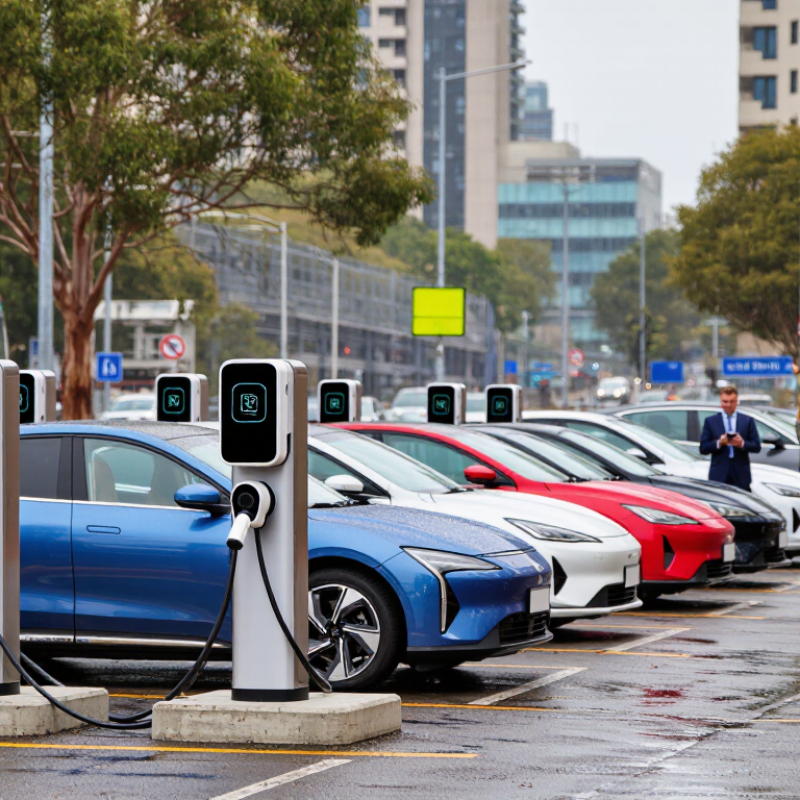
Top China EV Charging Station Suppliers for Australia

Australia’s EV Market: 87,217 Battery-Electric Cars Sold in 2023

Top China EV Charging Station Suppliers for Australia

Australia’s EV Market: 87,217 Battery-Electric Cars Sold in 2023

Australia recorded 87,217 battery-electric car sales in 2023, a useful signal for charging suppliers eyeing the market. But sales alone do not reveal where drivers charge, or how often public stations are used. That distinction matters. A charger beside a busy urban apartment block serves different needs from one at a remote highway stop.

For Chinese suppliers entering Australia, the practical challenge is matching equipment to local conditions. Drivers may need reliable overnight charging at home, while fleet depots often need several vehicles ready by morning. On long routes, clear payment options and visible fault reporting can matter as much as charging speed. Hot afternoons, long travel distances, and uneven grid capacity also deserve attention during site planning.

The 2023 figure is encouraging, but it is not a complete forecast. Some buyers may charge mainly at home; others have no private parking. Suppliers should study local usage patterns, installation constraints, and after-sales support before choosing a product mix. That work can be messy. Yet a charger that is easy to maintain and dependable in daily use may serve drivers better than a faster unit with limited support.

Australian Charging Standards: Type 2 AC, CCS2 DC and AS/NZS 61851

For Australian projects, connector compatibility is only the starting point. Type 2 is widely used for AC charging, while CCS2 serves DC fast charging. A plug may fit the vehicle, yet the charging unit must also communicate correctly and operate within its rated limits. Check the equipment’s declared voltage, current, protection features, and installation requirements against the site design.

AS/NZS 61851 covers key requirements for conductive EV charging equipment and systems. Ask suppliers for current test reports, conformity documentation, and clear model-specific specifications, rather than relying on a broad statement of compliance. Confirm that the exact configuration being offered has been assessed; small changes to cables or enclosures can matter. In coastal areas, salt air and driving rain make enclosure ratings and corrosion protection practical concerns. On a busy site, cable reach and connector handling matter too.

Small details matter. A useful supplier should explain how its equipment supports Australian electrical installations and what local verification remains necessary. Have a qualified professional check the selected unit, site supply, protection devices, and commissioning plan against applicable requirements. Paperwork can look reassuring. It may still leave questions about firmware, service support, or interoperability, so clarify those points before ordering.

Chinese Suppliers to Compare: Huawei, StarCharge, Sinexcel and TGOOD

Chinese charging suppliers differ in more than quoted price. Compare their experience with public charging, fleet depots, and commercial sites. These projects place different demands on hardware, software, and support. One supplier may offer a broad equipment range, while another may focus on power conversion or large charging networks. Ask for project references that match your intended use, not just impressive installation totals.

For Australian sites, check connector options, charging power, remote monitoring, and compatibility with your chosen backend. Ask suppliers to document relevant Australian approvals and provide clear evidence; do not rely on a sales presentation alone.

Practical details matter. Can local technicians access spare parts? How quickly are faults acknowledged? What happens if network connectivity drops? Request warranty terms in writing, including response times and exclusions. A polished brochure is not proof of dependable service. It is an easy mistake to make.

Compare operating costs over several years, not only the initial hardware quote. Site conditions, such as coastal exposure, summer heat, and limited electrical capacity, can change the best choice. A small pilot may reveal issues that a spreadsheet misses.

Charger Power Benchmarks: 7–22 kW AC and 50–350 kW DC

For Australian projects, 7–22 kW AC chargers suit homes, workplaces and destinations where vehicles stay parked for hours. A 7 kW unit can add useful range overnight; 11 or 22 kW may better serve shared parking, provided the site supply and vehicle onboard charger support that rate. Check load management, cable reach and weather protection on site—not just the product sheet. A neat benchmark can still mislead.

For highway stops and busy commercial hubs, 50–350 kW DC covers a broad operating range. A 50 kW charger can support steady turnover, while 150–350 kW equipment is better suited to short stops and compatible vehicles. Peak power is not guaranteed: battery temperature, state of charge, grid capacity and power sharing can all reduce output. The IEA’s Global EV Outlook 2024 reported that public charging points worldwide grew by more than 40% in 2023, with fast chargers growing faster. That growth makes reliable site planning as important as headline charger power.

Tips: Match power to dwell time. Ask suppliers for test data at realistic temperatures, continuous-output limits and load-sharing performance. Then verify Australian grid connection requirements and electrical documentation with qualified local professionals. Small details matter. A poorly placed cable or undersized connection can spoil an otherwise sound installation.

Top China EV Charging Station Suppliers for Australia - Charger Power Benchmarks: 7–22 kW AC and 50–350 kW DC

Non-brand-specific reference benchmarks for comparing EV charging equipment. Actual specifications, vehicle charging rates, grid capacity, and installation requirements vary by product and site.

Charger category Rated output Typical electrical supply Common connector Typical applications Key Australia considerations
AC charging benchmarks
AC, single-phase 7 kW About 230 V, 30–32 A, single-phase Type 2 is common for public and workplace equipment; socket or tethered cable options vary Homes, workplaces, and overnight parking Check the vehicle’s onboard AC charger capacity and the site’s available single-phase supply.
AC, three-phase 11 kW About 400 V, 16 A per phase, three-phase Type 2 is common for public and workplace equipment Workplaces, apartments, and destination charging Requires compatible three-phase infrastructure; the vehicle may accept less than the charger’s rated output.
AC, three-phase 22 kW About 400 V, 32 A per phase, three-phase Type 2 is common for public and workplace equipment Commercial sites and locations where vehicles park for several hours Confirm both site capacity and vehicle AC acceptance; many vehicles will not draw 22 kW AC.
DC fast-charging benchmarks
DC fast charger 50 kW Three-phase AC input; supply capacity depends on equipment design and site configuration CCS2 is widely used in Australia Fleets, regional routes, and locations with moderate dwell times Check output voltage and current limits, cable reach, and whether the site has adequate network capacity.
DC fast charger 100–150 kW Three-phase AC input; demand and connection requirements vary with the selected model CCS2 is widely used in Australia Public charging hubs, fleet depots, and highway sites Assess simultaneous charging, load management, and the vehicle’s DC charging curve.
DC fast charger 180–240 kW High-capacity three-phase AC connection; site demand depends on charger configuration CCS2 is widely used in Australia Highway charging, major public hubs, and high-utilisation fleets Confirm transformer and network capacity, power-sharing behaviour, and cable cooling requirements.
DC high-power charger 300–350 kW Very high-capacity three-phase AC connection; may require dedicated site infrastructure CCS2 is widely used in Australia High-volume highway hubs and sites serving compatible vehicles The charger’s maximum rating does not guarantee that a vehicle can accept that power; verify vehicle limits and grid connection feasibility.

Installation note: Confirm applicable Australian electrical and network requirements with a qualified local designer or installer. AS/NZS 3000 is relevant to electrical installations; equipment compliance, approvals, and connection requirements should be verified for the specific project.

Supplier Selection: OCPP 1.6J/2.0.1, Grid Capacity and Local Support

For Australian projects, protocol support matters as much as charger output.

Ask suppliers to confirm whether each model supports OCPP 1.6J or 2.0.1, and request a live demonstration with your intended charging platform. A protocol label alone is not proof that every feature will work. Check remote diagnostics, user authentication, firmware updates, and smart charging behavior. Test before ordering at scale.

Grid capacity can set the real limit.

A 22 kW unit may look suitable on paper, yet a site with limited three-phase supply may need load management or staged installation. Ask for clear power diagrams, operating ranges, and guidance on balancing several chargers during peak demand. Get an Australian electrical professional to assess the site. Do not rely on a supplier’s estimate alone.

Local support is practical, not decorative.

Confirm who handles commissioning, replacement parts, warranty claims, and urgent faults across your region. Ask about response times and stock locations in writing. A remote support team may solve software issues quickly, but a damaged connector still needs local attention. Small details matter.

One uncomfortable question is worth asking: what happens when the first unit fails on a busy Monday? A strong supplier should answer plainly, even if the answer reveals limits.

FAQS

How many battery-electric cars were sold in Australia in 2023?

Australia recorded 87,217 sales. This signals market activity, but it does not show where drivers charge.

Why should charging suppliers study local driver habits?

Apartment residents may need public chargers, while homeowners may charge overnight. Fleet depots often need several vehicles ready by morning. One size rarely fits.

What conditions should suppliers consider when planning Australian charging sites?

Consider summer heat, coastal exposure, long travel distances, and grid limits. A highway stop and an urban apartment block have different needs.

Which technical details should buyers check before choosing a charger?

Check connector options, charging power, remote monitoring, and compatibility with the intended charging platform. Ask for evidence of relevant local approvals.

What should buyers know about OCPP support?

Ask whether each model supports OCPP 1.6J or 2.0.1. Test key features, such as diagnostics and firmware updates, with your platform. Labels can mislead.

How can a site’s grid capacity affect charger choice?

A 22 kW charger may exceed a site’s available supply. An electrical professional can assess capacity and recommend load management or staged installation.

Why is local after-sales support important?

Confirm spare-parts locations, warranty terms, and fault response times in writing. Software can be fixed remotely. A damaged connector may need local attention.

Should buyers run a pilot before ordering many chargers?

Yes. A small pilot can reveal installation or network problems that a spreadsheet misses. It may feel slow, but surprises cost more.

Conclusion

Australia’s electric vehicle market is growing rapidly, with 87,217 battery-electric cars sold in 2023, creating greater demand for dependable charging infrastructure. For an Electric Car Charging Station Australia project, compatibility with local requirements is essential: Type 2 connectors are commonly used for AC charging, while CCS2 supports DC fast charging, and equipment should meet applicable AS/NZS 61851 requirements.

When comparing Chinese suppliers, consider product range, proven performance, warranty terms, and the availability of local technical support rather than relying on headline specifications alone. Typical benchmarks include 7–22 kW for AC chargers and 50–350 kW for DC units, with the right choice depending on site use and electrical capacity. Check support for OCPP 1.6J or 2.0.1 to help integrate chargers with management platforms, and assess grid capacity, installation needs, maintenance arrangements, and after-sales service before making a decision.

Madeline

Madeline

Madeline is a dedicated marketing professional with a wealth of expertise in our company's core offerings. With a keen understanding of the industry, she brings a unique perspective to her role, consistently delivering high-quality content that highlights the superior aspects of our products. As......