The global electric vehicle market is expanding quickly, but charging access remains uneven. The International Energy Agency’s Global EV Outlook 2024 reports more than four million public charging points worldwide at the end of 2023. Over 1.3 million were added during that year. China accounted for more than half of the global total. Europe and North America are growing, yet their networks still face slower permitting, grid constraints, and uneven rural coverage.
“Electric cars are a global phenomenon, and their sales are surging,” said Fatih Birol, Executive Director of the IEA. His observation also highlights a practical concern. More vehicles require dependable E Vehicle Charging Stations, not only attractive hardware. The European Automobile Manufacturers’ Association estimates that Europe may need 8.8 million public chargers by 2030. That target exposes a substantial infrastructure gap. It also makes supplier selection more complicated.
This Top 10 E Vehicle Charging Stations Suppliers Worldwide overview examines manufacturers and network providers through measurable criteria. These include charging speed, connector compatibility, uptime, software integration, safety certifications, geographic reach, and after-sales support. The list uses public company information, IEA data, BloombergNEF market analysis, and regional infrastructure reports. Rankings remain imperfect. Some suppliers publish limited uptime figures, while others combine hardware sales with managed networks. A strong charger can still disappoint when maintenance is slow or local grid capacity is weak. Real-world reliability matters most at a cold highway station, a crowded workplace car park, or a quiet rural site after sunset.
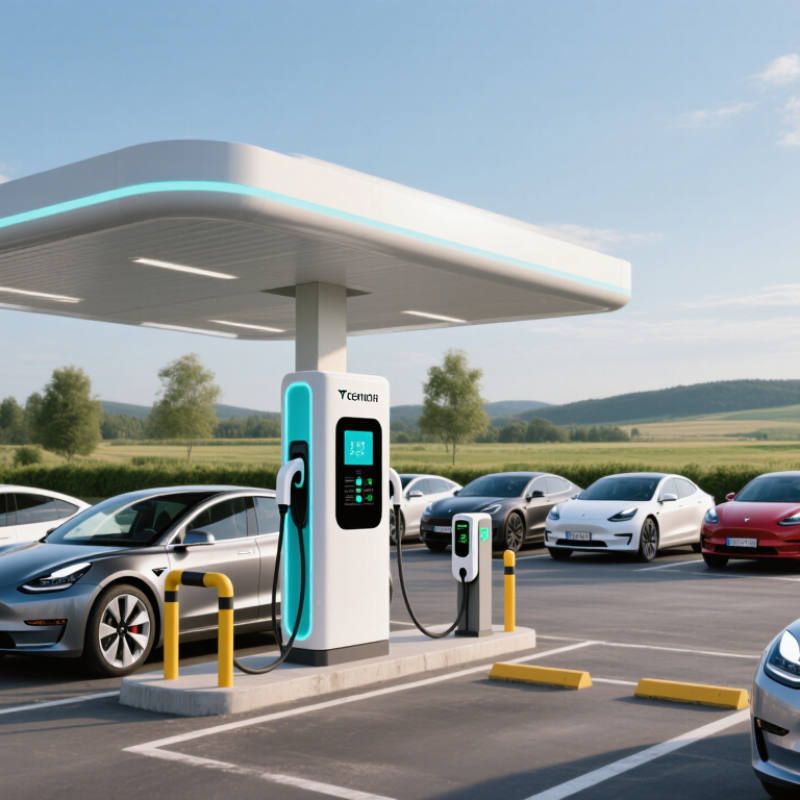
Definition and Role of Electric Vehicle Charging Station Suppliers
Electric vehicle charging station suppliers do more than sell hardware. They design, install, operate, and maintain the infrastructure that connects vehicles with electricity. Their services may include charging cabinets, connectors, cloud platforms, payment systems, remote monitoring, and field repairs. A reliable supplier also supports interoperability, cybersecurity, load management, and compliance with local technical standards.
The International Energy Agency’s Global EV Outlook 2024 reported more than four million public charging points worldwide at the end of 2023. Public charging capacity must expand rapidly as electric vehicle adoption grows. However, charger numbers alone can mislead. A site with ten slow chargers may serve fewer drivers than one well-managed fast-charging hub. Practical evaluation should examine uptime, charging speed, network coverage, maintenance response, energy efficiency, and total operating cost. The best worldwide suppliers are not always the largest. Their performance depends on local grid conditions and service capability.
Tips: Compare verified uptime data, not only advertised power. Ask how quickly technicians respond to failures. Check software compatibility before signing a long contract. The IEA also warns that grid planning must keep pace with charging demand. That requirement is easy to underestimate. A careful supplier assessment should include traffic patterns, peak electricity loads, weather exposure, and future vehicle compatibility. Mistakes still happen, especially when buyers judge equipment without reviewing long-term maintenance records.
Key Criteria for Comparing Global Charging Station Suppliers
Comparing global electric vehicle charging station suppliers requires more than checking power ratings and attractive pricing. Start with proven field experience. Ask for installation records in hot, cold, coastal, and high-traffic locations. A supplier with years of operation should provide uptime data, maintenance logs, and customer references. Numbers matter.
Technical compatibility is equally important. Confirm connector options, charging power, voltage range, and communication protocols. Open communication standards can reduce dependence on one software system. Check whether the platform supports remote monitoring, load balancing, payment control, and firmware updates. Test these functions before signing a large contract. A polished demonstration may hide daily difficulties.
Reliability depends on the entire service network. Review warranty length, replacement procedures, spare-part availability, and local response times. Ask who handles faults at night or during public holidays. Cybersecurity deserves direct questions about access controls, data protection, and update management. Independent safety certifications and documented testing add authority, but they do not replace site trials. A low purchase price still tempts experienced teams. That choice can age badly. Compare installation costs, energy losses, software fees, repairs, and expected service life. Weather protection, cable durability, screen visibility, and emergency access should be inspected in person. No comparison is perfect. Supplier claims also need practical verification.
Top Ten Electric Vehicle Charging Station Suppliers Worldwide
The top ten electric vehicle charging station suppliers worldwide are best judged by field performance, not advertising reach. This review uses a practical supplier group rather than a permanent league table. The strongest providers support AC chargers for workplaces, DC fast chargers for highways, and high-power systems for commercial fleets. Their equipment usually covers common regional connectors and communicates with open network protocols.
Reliability matters most. Leading suppliers publish uptime data, cybersecurity practices, warranty terms, and service response targets. They also provide remote diagnostics, load balancing, payment integration, and energy management tools. A station beside a busy motorway needs different engineering from one installed in a residential garage. Weather resistance, cable cooling, screen visibility, and parking-bay design can affect daily use.
Local support separates capable suppliers from impressive brochures. Experienced teams study grid capacity, permits, traffic flow, and maintenance access before installation. They train technicians and keep replacement parts near major markets. Yet supplier claims deserve careful checking. Uptime percentages may exclude payment failures or damaged cables. That weakness is easy to miss. Buyers should request independent references, repair records, and test results from comparable sites. The best supplier is not always the largest. A smaller specialist may respond faster, while a global provider may offer stronger software and purchasing power. My assessment would remain open to revision as charging standards, battery sizes, and public infrastructure policies continue to change.
Top 10 E Vehicle Charging Stations Suppliers Worldwide? - Top Ten Electric Vehicle Charging Station Suppliers Worldwide
Comparative overview of major global electric vehicle charging solution suppliers
| Rank |
Supplier ID |
Primary Market Origin |
EV Charging Activity Since |
Main Geographic Coverage |
Typical AC Output |
Maximum Published DC Output |
Core Charging Segments |
Cloud Management |
| 1 |
Supplier 01 |
United States |
2007 |
North America, Europe, Asia-Pacific and selected global markets |
Up to 19.2 kW |
Up to 500 kW |
Home, workplace, fleet and public charging |
Available |
| 2 |
Supplier 02 |
Switzerland |
2010 |
Europe, North America, Latin America, Middle East and Asia-Pacific |
Up to 22 kW |
Up to 360 kW |
Highway, fleet, depot and public charging |
Available |
| 3 |
Supplier 03 |
Germany |
2018 |
Europe, North America, Asia-Pacific and selected international markets |
Up to 22 kW |
Up to 300 kW |
Residential, commercial, fleet and public charging |
Available |
| 4 |
Supplier 04 |
France |
2013 |
Europe, Asia-Pacific, North America and Latin America |
Up to 22 kW |
Up to 180 kW |
Buildings, workplaces, fleets and public locations |
Available |
| 5 |
Supplier 05 |
Spain |
2015 |
Europe, North America, Latin America and Asia-Pacific |
Up to 22 kW |
Up to 220 kW |
Home, destination, fleet and fast charging |
Available |
| 6 |
Supplier 06 |
Australia |
2001 |
Europe, North America, Australia and other international markets |
Up to 22 kW |
Up to 350 kW |
Fast charging, highway and commercial fleets |
Available |
| 7 |
Supplier 07 |
Netherlands |
2008 |
Primarily Europe, with selected international projects |
Up to 22 kW |
Up to 180 kW |
Residential, workplace, destination and fleet charging |
Available |
| 8 |
Supplier 08 |
United Kingdom |
2014 |
Europe, North America and Australia |
Up to 22 kW |
Up to 150 kW |
Workplace, fleet, depot and public charging |
Available |
| 9 |
Supplier 09 |
China |
2014 |
China, Asia-Pacific, Europe, Latin America and Middle East markets |
Up to 22 kW |
Up to 480 kW |
Public, residential, bus, fleet and depot charging |
Available |
| 10 |
Supplier 10 |
Taiwan |
2010 |
Asia-Pacific, Europe, North America and selected global markets |
Up to 22 kW |
Up to 200 kW |
Home, commercial, fleet and fast charging |
Available |
Note: The ranking is an indicative comparison based on international market presence, product breadth, charging-power range and publicly documented deployment capabilities. Output figures represent maximum published ratings for selected product families and may vary by model, connector configuration, installation conditions and local regulations.
Technologies and Services Offered by Leading Suppliers
The global charging market is expanding quickly. The International Energy Agency reported over four million public charging points worldwide at the end of 2023. More than 1.4 million were added that year. This growth explains the attention around the top ten electric vehicle charging suppliers. However, rankings remain imperfect. Hardware volume alone cannot measure service quality.
Leading suppliers now combine alternating-current units with direct-current fast chargers. High-power systems can serve passenger cars, buses, and delivery fleets. Liquid-cooled cables support higher output in compact stations. Dynamic load management prevents several chargers from overwhelming a building connection. Real uptime matters. Remote diagnostics can identify payment faults, overheating, or connector failures before drivers arrive. Some suppliers also provide on-site maintenance and spare-parts logistics.
Software is becoming equally important. Cloud platforms monitor energy use, session revenue, faults, and station availability. Open Charge Point Protocol integration helps operators connect equipment from different manufacturers. ISO 15118 supports automated identification and future vehicle-to-grid functions. Renewable-energy matching, battery storage, and fleet scheduling can reduce peak demand. The U.S. National Renewable Energy Laboratory highlights managed charging as a practical tool for controlling grid impacts. Cybersecurity deserves more attention, though. A connected charger is part of critical infrastructure, not merely a parking accessory. Some installations still suffer from broken screens, weak mobile signals, and unclear pricing. Those details expose a gap between impressive specifications and everyday driver experience.
Global Market Trends and Future Development of EV Charging Infrastructure
The global EV charging market is moving from isolated installations toward connected infrastructure. The leading ten supplier groups usually compete through charging speed, software reliability, installation support, and international maintenance networks. Public fast chargers increasingly deliver 150–350 kW, while workplace units often use lower power overnight. This difference matters. A busy highway station needs rapid turnover, but an apartment garage needs safe load management.
Future development will depend on grid capacity, renewable energy, and intelligent charging. Suppliers are testing battery storage beside charging sites to reduce pressure during peak demand. Vehicle-to-grid systems may later allow parked cars to support local electricity networks. However, adoption remains uneven. Rural areas still face expensive construction, limited transformer capacity, and uncertain utilization. In field projects, a charger can be technically excellent yet underused because its location is inconvenient. That is an important weakness in current market forecasts.
Tips: Compare uptime records, service response times, connector compatibility, and cybersecurity practices before selecting a supplier. Ask for realistic output under cold weather and heavy traffic. Check the installation site carefully. A short pilot project can reveal payment failures, cable wear, and queue problems. Industry standards are improving, but they are not perfect. Operators should review performance data monthly and adjust pricing, power allocation, and maintenance plans when evidence changes.
Global EV Charging Infrastructure Growth
Global public EV charging points increased from approximately 1.8 million in 2021 to more than 5 million in 2024. This expansion reflects rising EV adoption, continued public-private investment, and growing demand for fast-charging infrastructure. The figures are supplier-neutral and represent worldwide public charging infrastructure.
Source: International Energy Agency, Global EV Outlook reports; figures are rounded estimates.
FAQS
Compare field performance, not advertising reach. Review uptime, service response, warranty coverage, and independent customer references. Rankings can change.
A capable supplier should offer AC workplace chargers and DC fast chargers. High-power systems can support cars, buses, and delivery fleets. Match power to daily demand.
A highway station needs quick vehicle turnover. An apartment garage needs safe overnight charging. An inconvenient location may remain underused.
Useful platforms show energy use, session revenue, faults, and station availability. Remote diagnostics can detect payment errors and overheating. Clear pricing matters too.
Dynamic load management prevents several chargers from overloading one building connection. Battery storage can reduce peak demand. Good planning still needs accurate grid data.
Check grid capacity, permits, traffic flow, connector compatibility, and maintenance access. Inspect signal strength and parking-bay space. Small details matter.
Not necessarily. Some figures may exclude payment failures or damaged cables. Request repair records, test results, and references from similar locations.
Track charging speed, payment success, cable wear, queue length, and cold-weather output. Review results monthly. A short pilot may reveal weaknesses early.
Conclusion
This article explores the role of E Vehicle Charging Stations suppliers in building reliable, accessible, and efficient electric mobility networks worldwide. It explains how these suppliers provide charging hardware, software platforms, installation support, maintenance, payment systems, and energy management solutions for homes, workplaces, commercial locations, and public roads. The discussion also introduces key criteria for comparing suppliers, including charging speed, network coverage, equipment compatibility, safety, scalability, operating costs, customer service, and long-term reliability.
The article presents a global overview of ten leading supplier categories without focusing on specific brand names, highlighting the technologies and services shaping the industry. It also examines important market trends, such as the expansion of fast-charging networks, smart charging, renewable energy integration, connected infrastructure, and improved interoperability. Looking ahead, continued investment, supportive regulations, and advances in battery and charging technology are expected to make EV charging more convenient, sustainable, and widely available.