
China Top 10 Electric Car Charging Station Cost Guide

Time:2026-11-07 Author:Liam
0%

China’s electric vehicle market is expanding quickly, but charging costs still vary widely. A station’s price depends on more than its advertised hardware. Charger type, output, site conditions, grid capacity, installation work, and maintenance all affect the final bill. A unit beside an existing power connection may be straightforward to install. A remote parking area can require extra cabling, civil work, or electrical upgrades.

Dr. Gil Tal, director of the Plug-in Hybrid & Electric Vehicle Research Center at UC Davis, has studied how charging access shapes electric-vehicle use. His research offers a practical reminder: charging convenience and availability matter alongside vehicle ownership costs. That is useful context when comparing equipment prices with the full cost of deploying a station.

This China Top 10 Electric Car Charging Station Cost Guide examines the main cost factors behind ten common station options. It distinguishes home and commercial use, and explains why AC and DC chargers carry different equipment and installation needs. You will also find details to check before comparing quotations, including rated power, connector compatibility, warranty coverage, and service arrangements. Prices change. Local conditions do, too. Treat any estimate as a starting point, not a guaranteed quote. Some comparisons may still miss hidden site costs; that is worth checking carefully.
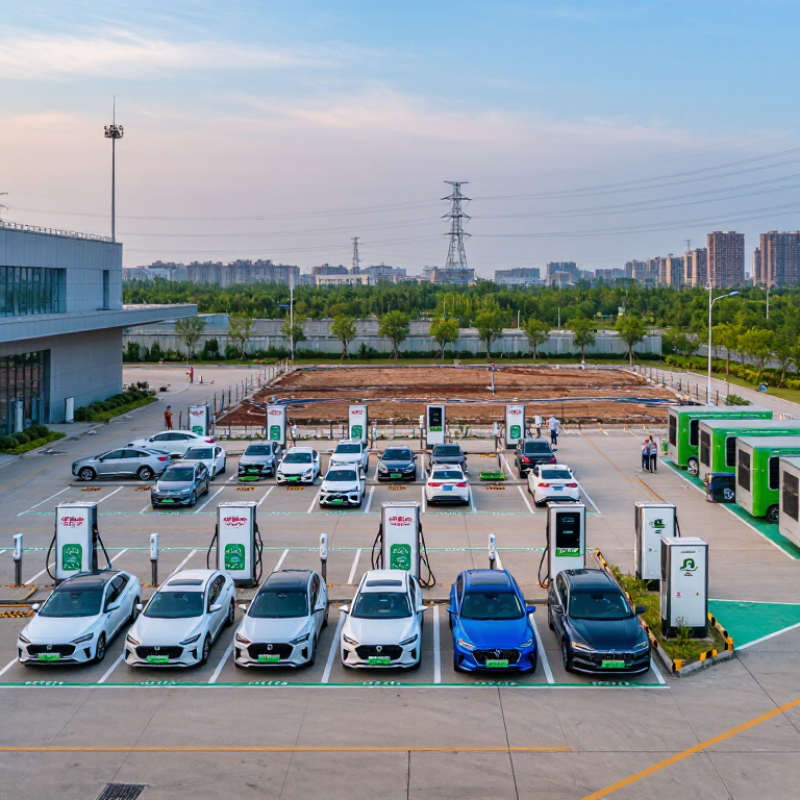
China Top 10 Electric Car Charging Station Cost Guide

Electric Car Charging Stations in China: Types and Cost Basics

China’s charging options range from home AC wallboxes to high-power public DC stations. A typical home unit delivers about 7 kW, while shared AC chargers often provide 11–22 kW. Public DC chargers commonly range from 60 kW upward, shortening stops but requiring more demanding electrical infrastructure.

For a home AC setup, the charger itself may cost roughly RMB 2,000–6,000; basic installation can add about RMB 1,000–5,000. These are indicative ranges, not quotations. Long cable routes, parking-garage work, or limited electrical capacity can raise the bill. DC equipment may cost tens of thousands of RMB or more, before site preparation and grid upgrades. Not just the unit. A reliable estimate should separate equipment, installation, and any capacity upgrades.

Tips: Check your vehicle’s charging limit and typical parking time before choosing power. Ask an installer to inspect the meter, cable route, and available capacity. Get a written breakdown. Prices vary by city and site, and estimates can miss small details; verify them on location.

What Determines Charging Station Costs in China?

Charging station costs in China depend less on the charger alone than on the site around it. A basic AC unit and a high-power DC system have very different hardware needs. DC equipment may require power modules, stronger cooling, and thicker cables. More output can mean a larger transformer and higher connection costs. Small detail, big bill.

Site conditions often shift the budget. A station beside an existing distribution room may need little electrical work. A roadside lot with limited grid capacity could require new cabling, a transformer, or pavement repairs. Labor, trench length, drainage, weather protection, and local installation requirements also matter. Urban land and parking arrangements can add recurring expenses. Prices vary by city and project, so a national average can mislead.

Software and upkeep belong in the estimate too. Operators may pay for monitoring, payment processing, communications, inspections, and replacement parts. A busy site can spread these costs across more charging sessions; a quiet site may struggle to do so. One awkward point: choosing the lowest equipment quote can raise the total cost if it does not match the site’s power supply. Compare complete installation proposals, not just charger prices. Real quotations should specify capacity, connection work, civil works, and ongoing service assumptions.

China Electric Car Charging Station Cost Guide

What Determines Charging Station Costs in China?

Higher charging power generally means higher equipment and electrical-system costs. Final project costs also depend on transformer capacity, grid-connection distance, cabling, civil works, site conditions, and local installation requirements. These indicative ranges cover equipment and standard installation; land costs and major grid upgrades are excluded. Actual quotes vary by location and project.

Top 10 Electric Car Charging Stations in China: Cost Comparison

China’s Top 10 Electric Car Charging Station Cost Guide

A useful comparison looks at charging power, not brand names. The ranges below are indicative 2025 budgets in China for one charger and standard installation. They exclude land, major grid upgrades, and unusual civil works. China Electric Vehicle Charging Infrastructure Promotion Alliance data counted 3.585 million public charging piles at the end of 2024. Scale is growing fast. But costs still depend heavily on the site.

7kW AC unit
typically costs RMB 3,000–8,000
11kW unit
RMB 5,000–12,000
22kW AC unit
around RMB 8,000–20,000
20kW DC unit
RMB 25,000–50,000
30kW DC charger
may cost RMB 35,000–70,000
60kW
RMB 60,000–120,000
120kW
budget RMB 100,000–220,000
180kW
RMB 160,000–320,000
240kW system
roughly RMB 220,000–450,000
360kW split system
RMB 350,000–700,000

These are planning estimates, not audited national averages. The International Energy Agency’s Global EV Outlook 2024 identifies China as the world’s largest public charging market, yet local utilization varies widely. A busy urban site may justify faster equipment; a quiet parking area may not. Transformer capacity, cable runs, and installation access can shift the quote sharply. That part is easy to underestimate. Check site-specific bids before comparing headline prices.

Installation, Electricity, and Maintenance Costs

Installation costs depend more on the site than the charger itself. In China, a straightforward home installation for a 7 kW AC unit may cost about RMB 1,000–5,000, including basic wiring and labor. Long cable runs, wall drilling, or electrical upgrades can raise the bill. Commercial DC installations may also require substantial grid-capacity work. Get a site survey and an itemized quote before comparing options. A small detail matters: parking access and cable routing can change the final cost.

Electricity costs vary by city, provider, and time of use. For a simple estimate, charging a 60 kWh battery at RMB 0.60 per kWh costs about RMB 36 for energy alone; public charging service fees may be added. Check the displayed tariff before plugging in. Maintenance is easy to overlook. Inspect cables, connectors, ventilation, and safety switches regularly, and keep a record of faults and repairs. Dust, rain exposure, and frequent use can affect upkeep needs. Exact annual costs are difficult to generalize, and my estimate may miss local differences. That uncertainty is worth checking against the site’s service plan.

China Top 10 Electric Car Charging Station Cost Guide - Installation, Electricity, and Maintenance Costs

Indicative costs in Chinese yuan (RMB). Actual prices vary by city, site conditions, equipment specification, utility connection requirements, and electricity tariff. Equipment and installation figures are per charging point unless noted; land, major transformer upgrades, and financing are excluded.

Rank Charging Station Type Typical Equipment Cost Typical Installation Cost Electricity Cost* (per kWh) Estimated Annual Maintenance Typical Use / Cost Considerations
1 7 kW residential AC charger ¥1,500–¥4,000 ¥1,000–¥5,000 ¥0.30–¥0.80 ¥200–¥800 Common for private parking. Longer cable runs, metering, or electrical upgrades can increase installation costs.
2 7 kW shared residential AC charger ¥2,000–¥5,000 ¥2,000–¥8,000 ¥0.30–¥0.80 ¥300–¥1,000 Suitable for apartment or workplace parking; access control and separate billing may add cost.
3 11 kW commercial AC charger ¥3,000–¥8,000 ¥2,000–¥8,000 ¥0.50–¥1.30 ¥300–¥1,200 Often used at offices and destination parking. Confirm vehicle compatibility and available site capacity.
4 22 kW commercial AC charger ¥4,000–¥10,000 ¥3,000–¥12,000 ¥0.50–¥1.30 ¥400–¥1,500 Higher AC output requires compatible vehicles and sufficient three-phase electrical capacity.
5 30 kW DC fast charger ¥20,000–¥50,000 ¥10,000–¥40,000 ¥0.50–¥1.30 ¥1,000–¥3,000 A lower-power DC option for fleet depots and smaller public sites; civil works and grid connection are site-dependent.
6 60 kW DC fast charger ¥40,000–¥90,000 ¥20,000–¥80,000 ¥0.50–¥1.30 ¥1,500–¥4,000 Common for public and fleet charging. The power supply and distribution equipment can be a major cost factor.
7 120 kW DC fast charger ¥80,000–¥160,000 ¥40,000–¥150,000 ¥0.50–¥1.30 ¥2,000–¥6,000 Suitable for busy public sites. A transformer or utility-capacity upgrade may be required and is not included above.
8 180–240 kW DC fast charger ¥140,000–¥300,000 ¥60,000–¥250,000 ¥0.50–¥1.30 ¥3,000–¥8,000 High-power public charging; costs depend on power sharing, cabling, cooling, and grid connection requirements.
9 360 kW DC ultra-fast charger ¥250,000–¥500,000 ¥100,000–¥400,000 ¥0.50–¥1.30 ¥5,000–¥12,000 Typically suited to high-throughput sites. Hardware output does not guarantee that every vehicle can accept this charging rate.
10 4–8-port mixed charging hub ¥100,000–¥600,000 ¥80,000–¥500,000 ¥0.50–¥1.30 ¥5,000–¥20,000 Indicative total for multiple AC/DC ports. Costs vary substantially with total capacity, shared power cabinets, site works, and transformer needs.

*Electricity figures are illustrative energy-charge ranges, not guaranteed nationwide tariffs. Residential and commercial rates vary by province, utility category, and time of use. Public charging bills may also include a separate service fee; check local tariffs and site quotations before budgeting.

How to Choose the Right Charging Station for Your Needs

China Top 10 Electric Car Charging Station Cost Guide

How to Choose the Right Charging Station for Your Needs

Choose a charger around your daily routine, not its maximum advertised output. For overnight home charging, a 7 kW AC unit may be enough for many drivers. Check your vehicle’s onboard AC charging limit first; a higher-rated unit cannot make the car charge faster than it allows. Need quicker daytime top-ups? Compare suitable DC options, but remember they usually require more installation capacity and can cost more to set up. Start with your parking habits.

One detail is easy to miss: the charger price is only part of the bill. Ask for an assessment of wiring distance, electrical capacity, mounting, and any site work. A unit beside the meter may be cheaper to install than one across a long garage. The International Energy Agency’s Global EV Outlook 2024 reports that public charging points grew by more than 40% worldwide in 2023, with China holding about 70% of the global public stock. That growth makes access easier in many areas, but it does not guarantee a convenient charger near your home or workplace. Check local charging access and expected daily mileage before paying for extra speed. A cheaper unit can still be the wrong buy.

FAQS

How much can a basic home charger installation cost in China?

A simple 7 kW AC installation may cost about RMB 1,000–5,000. Long cables or electrical upgrades can raise the bill.

What can change the installation price?

Cable distance, wall drilling, parking access, and electrical capacity all matter. A charger near the meter may cost less to install.

How much does charging a 60 kWh battery cost?

At RMB 0.60 per kWh, the energy costs about RMB 36. Public charging fees may be extra. Check the displayed tariff.

Is a 7 kW AC charger enough for home use?

It may suit overnight charging for many drivers. Check your vehicle’s onboard AC limit first. Faster is not always useful.

When should I consider a DC charger?

Consider DC charging for quicker daytime top-ups. It may need more site capacity and cost more to install.

What should I inspect during charger maintenance?

Check cables, connectors, ventilation, and safety switches regularly. Keep a simple record of faults and repairs.

Do maintenance costs stay the same each year?

Not necessarily. Dust, rain, and frequent use can affect upkeep. Local service plans may give a better estimate; mine could miss details.

Does wider public charger growth guarantee a nearby charging point?

No. Public charging points grew by over 40% worldwide in 2023, but local access still varies. Check nearby options and your daily mileage.

Conclusion

This guide explains the main types of electric car charging stations available in China, from basic home chargers to faster public and commercial systems. It compares ten common charging station options by typical cost level and use case, helping readers understand how charging speed, power capacity, equipment features, and intended location can affect the Electric Car Charging Station Cost. Rather than focusing on a single price, the guide shows why costs vary and what to consider before comparing options.

It also covers expenses beyond the charger itself, including installation, electrical upgrades, electricity use, and ongoing maintenance. By assessing daily driving distance, charging frequency, available power supply, site conditions, and budget, readers can select a station that suits their needs without paying for unnecessary capacity. The aim is to provide a clear, practical overview of the costs involved in choosing and operating an electric car charging station in China.

Liam

Liam

Liam is a dedicated marketing professional with a profound expertise in the industry, where he excels at highlighting the unique advantages of our core products. With a keen understanding of market trends and consumer needs, Liam frequently updates our company’s professional blog, providing......