
Choosing a Dc Fast Ev Charger manufacturer in 2026 involves more than comparing charging speed or headline prices. Global buyers need equipment that fits local grid conditions, vehicle connectors, site layouts, and service expectations. A busy highway stop, for example, may need several high-power dispensers, while a city fleet depot may value dependable overnight support and clear load management. Details matter.
This guide examines manufacturers through practical buying criteria, including product range, charging performance, safety features, software compatibility, manufacturing capacity, and after-sales support. It also considers how suppliers handle commissioning, spare parts, warranty terms, and technical assistance across regions. Buyers should verify certifications and grid requirements for each destination market; these can differ, and a product suitable in one country may need adjustments elsewhere.
Specifications tell only part of the story. Ask for test records, references from comparable installations, and a clear explanation of uptime figures. Check what happens when a dispenser fails on a wet, cold morning—not just during a polished demonstration. Real support counts. Some claims may be difficult to compare directly, and published data can leave gaps. That is worth questioning.
The manufacturers discussed here offer a starting point for evaluating global options, not a universal ranking for every project. Site conditions, vehicle mix, budget, and service access can change the best choice. Careful due diligence helps buyers narrow the field and select equipment built for daily operation, rather than impressive specifications alone.
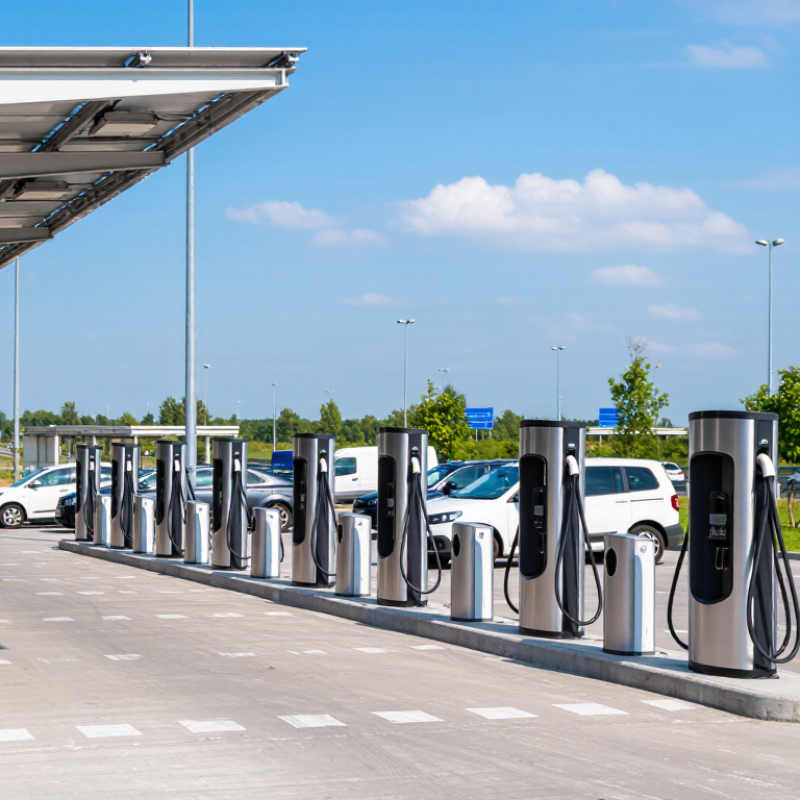
A top DC fast EV charger manufacturer proves performance in real charging environments, not only in laboratory brochures. Buyers should examine stable power delivery, thermal control, connector durability, and uptime records. A charger facing summer heat, winter frost, dust, and repeated daily use needs strong engineering. Field experience matters. Ask for verified data from similar climates and traffic levels.
Professional manufacturers design for interoperability and long-term service. Support for open communication protocols, remote diagnostics, load management, and secure software updates can reduce operating delays. Clear safety certifications and documented testing also strengthen buyer confidence. Spare-part availability, technician response times, warranty terms, and installation guidance deserve equal attention. Cheap hardware can become expensive when one failed cooling fan closes a charging point. That lesson is often learned late.
Tips: Request independent test reports, service-level commitments, and references from operating sites. Compare actual charging curves, not only maximum output. Check whether the supplier explains software failures honestly. No system is perfect. A reliable manufacturer admits limits, records corrective actions, and improves future versions. Global buyers should also review local grid conditions, language support, training resources, and compliance requirements before signing a purchase agreement.
Modern DC fast chargers convert incoming grid power into controlled direct current for a vehicle’s battery. Their power-conversion modules regulate voltage and current as charging conditions change. Silicon-carbide components can reduce switching losses and support compact designs, though actual performance depends on the charger’s engineering and operating conditions. Modular cabinets also let systems distribute power across charging ports. A parked vehicle may receive more power while another charges slowly. Useful in busy depots. No system is effortless.
Thermal management is just as important. Liquid-cooled cables can carry high current while remaining manageable for drivers, and internal cooling systems help protect power electronics. Sensors track temperature, voltage, and current, while control software can reduce output when components approach operating limits. Communication between charger and vehicle helps coordinate charging, but compatibility and software behavior still deserve careful testing. A dashboard reading is not the whole story. Buyers should examine rated output, cable handling, service access, and performance across expected temperatures. Field measurements can reveal gaps between specifications and daily use, a detail that is easy to miss in a product comparison.
| Technology Area | Common Implementations | Typical System Data | Why It Matters to Global Buyers |
|---|---|---|---|
| Power output and scalability | Modular power cabinets paired with one or more dispensers; power can be assigned or shared across charging points. | Commercial DC fast chargers commonly span roughly 50–400 kW per charging system. Actual power per vehicle depends on charger configuration, vehicle limits, and site conditions. | Modular designs can support phased site expansion and help operators allocate available power across vehicles. |
| DC output voltage range | Wide-output-voltage power conversion designed to accommodate different battery pack voltages. | Many current systems support vehicle-side output ranges extending from approximately 200 V to 1,000 V DC; the exact range varies by model. | A broad voltage range improves compatibility with vehicles using different battery architectures. Buyers should verify the full output curve, not just maximum power. |
| Power semiconductor devices | Silicon IGBTs and silicon-carbide (SiC) MOSFETs are used in power-conversion stages, depending on system design. | SiC devices can support high-frequency switching and reduce conversion losses in suitable designs; overall system efficiency depends on the complete charger and operating conditions. | Ask for independently verified efficiency data, operating-temperature limits, and serviceability information rather than judging performance by semiconductor type alone. |
| Cable and connector thermal management | Air-cooled cables for many standard-power applications; liquid-cooled cables may be used for higher-current charging. | Connector current capability depends on the connector design, cable cooling, temperature limits, and applicable standard. Some liquid-cooled designs are engineered for currents around 500 A or higher. | Check continuous-current ratings, cable handling, coolant maintenance requirements, and local certification for the intended climate and duty cycle. |
| Vehicle connectors and charging standards | Regional DC interfaces include CCS1, CCS2, CHAdeMO, and the connector standardized in North America as SAE J3400. | Connector availability and vehicle compatibility vary by country and market. Not every charger supports every interface. | Specify connector types, cable count, local electrical approvals, and supported vehicle communication protocols for each deployment region. |
| Charging communication | Vehicle-to-charger communication is defined by the applicable charging system; network management commonly uses OCPP. | OCPP 1.6J and OCPP 2.0.1 are widely used versions. ISO 15118 features, including Plug & Charge, require compatible vehicles, chargers, and backend arrangements. | Confirm the exact supported version, interoperability testing, remote-update policy, and whether advanced functions are enabled or optional. |
| Power sharing and site energy management | Dynamic load management distributes available site or cabinet power among active charging sessions. | Allocation may respond to the number of connected vehicles, their charging requests, and configured site limits. The specific control strategy is system-dependent. | Useful where grid capacity is limited or multiple dispensers share a power cabinet; verify peak-demand controls and integration requirements. |
| Safety and electrical compliance | Protection and control design may address overcurrent, overvoltage, insulation faults, temperature, emergency shutdown, and access to energized components. | IEC 61851 covers conductive charging systems; IEC 62196 covers plugs, socket-outlets, vehicle connectors, and vehicle inlets. Applicable local requirements vary. | Request certificates and test reports for the destination market, and verify that the exact charger configuration is covered. |
| Environmental and operational design | Enclosures, cooling systems, cable management, and monitoring designed for indoor or outdoor installation. | Operating temperature, ingress protection, corrosion resistance, altitude limits, and acoustic levels are model-specific; consult the product datasheet. | Match specifications to local weather, dust, humidity, coastal exposure, installation layout, and expected daily utilization. |
Note: Figures are indicative ranges for commonly deployed DC fast-charging systems, not specifications for a particular product. Confirm current ratings, certifications, and interoperability with the equipment supplier and relevant local authorities.
Global buyers comparing DC fast charger manufacturers should look beyond rated kilowatts. The IEA’s Global EV Outlook 2024 reports that public charging points exceeded four million in 2023, while fast-charger numbers rose 55%. Its 2023 edition recorded about 2.7 million public points in 2022, also a 55% annual increase. That rapid expansion makes manufacturing capacity and dependable field service practical selection criteria.
Leading suppliers for global markets pair high-power cabinets with dispensers built for heat, dust, and frequent cable handling. Buyers should verify connector options, grid-voltage range, load management, protocol compatibility, destination-market certifications, and replacement-part lead times. A 350-kilowatt rating alone cannot guarantee fast sessions. Site power limits, vehicle charging curves, and thermal management all affect real-world output. Small details matter.
For multi-country projects, compare warranty terms, remote diagnostics, commissioning support, and uptime measurement methods. Published uptime claims are not always directly comparable, so request service records from installations with similar climates and usage. This remains a weak spot in many tenders. A careful review may take longer, but it can reveal whether a manufacturer can support chargers after installation, not just ship them.
Choosing a DC fast charger starts with the vehicle fleet and site conditions, not the largest power rating. Compare rated output with the power vehicles can actually accept. A 300 kW unit may deliver less when several dispensers share one cabinet. Ask for performance curves across different temperatures and charging loads. Thermal derating matters. Review energy efficiency, standby consumption, and cable reach, too. A heavy cable can be awkward in cold weather, even when its rating looks impressive.
Safety needs evidence, not reassuring language. Check independent test reports, electrical protection features, insulation monitoring, and emergency-stop placement. Confirm the enclosure rating suits the site’s dust and rain exposure. For a busy charging plaza, inspect maintenance access and fault-detection records. A polished specification sheet can still leave practical questions unanswered. That’s worth admitting.
Tips: Match connector types and charging protocols to the vehicles expected at your site, then confirm compatibility through documented tests. Check whether software supports load sharing, remote diagnostics, and clear fault messages. Ask suppliers how updates are managed and what service response times they can commit to. Compare warranty terms and spare-parts availability, not just purchase price. If possible, test a unit with representative vehicles before ordering. Real-world results may differ from a lab report.
For global buyers, a DC fast charger must fit the site and the local grid, not just a product sheet. Check that its connectors, communication protocols, and safety certifications match the destination market. Ask for current test reports and confirm which standards apply to the intended installation. Details matter. A connector mismatch can delay commissioning, even when the charger looks suitable on paper.
Service capacity deserves equal attention. Request clear warranty terms, remote-diagnostics procedures, and realistic response times for your region. Ask whether replacement modules and trained technicians are available nearby. A fast reply is not the same as a repaired charger. Buyers should also confirm how software updates are managed and who handles faults after handover. Small gaps in responsibility can become expensive.
Compare total cost over the expected service life, not only the purchase price. Include installation, grid upgrades, energy losses, maintenance, and likely downtime. A unit with higher efficiency may reduce operating costs, but actual savings depend on utilization and electricity tariffs. Forecasts are imperfect. That is worth remembering. Use site-specific data where possible, and ask suppliers to explain their assumptions. A spreadsheet can still miss a difficult site condition or a slow service route.
How to read this chart: The bars show the ideal minimum time to add 70 kWh to a battery, calculated as energy divided by charger power. Actual charging takes longer because vehicle limits, battery temperature, charging curves, and conversion losses affect power delivery. For procurement, also verify local standards compatibility, service and spare-parts coverage, and total installed and operating cost.
Look for stable power delivery, reliable cooling, durable connectors, and uptime records from real charging sites. Field data matters.
Ask for independent test reports and references from sites with similar weather and traffic. Check performance in heat, frost, and dusty conditions.
Remote diagnostics, load management, secure updates, and open communication protocols can help operators identify and address faults sooner.
Review warranty terms, technician response times, spare-part availability, and fault-handling responsibilities. A quick reply does not mean a quick repair.
Confirm connector compatibility, communication protocols, safety certifications, and applicable test reports before installation. Small mismatches can delay commissioning.
Consider installation, grid upgrades, energy losses, maintenance, and downtime over the charger’s expected service life. The initial price is only part of the picture.
Compare actual charging curves and ask suppliers to explain their assumptions. Savings depend on site usage and electricity rates; forecasts can miss details.
Look for clear training, local service capacity, honest reporting of software issues, and documented improvements. No system is perfect, and that deserves a closer look.
This guide explains what defines a top Dc Fast Ev Charger manufacturer in 2026, focusing on dependable engineering, scalable production, intelligent energy management, and strong quality control. Modern DC fast charging systems increasingly use high-power modular architectures, liquid-cooled cables, advanced power semiconductors, dynamic load balancing, remote monitoring, and secure software platforms. These technologies help charging networks deliver faster sessions while improving efficiency, uptime, and operational visibility for commercial and public applications.
For global buyers, the article outlines how to compare charging speed, output stability, safety protections, connector compatibility, communication protocols, environmental durability, and ease of maintenance. It also highlights important purchasing factors such as regional certification, grid requirements, installation conditions, warranty coverage, spare-parts availability, technical support, and total cost of ownership. By evaluating performance, compliance, service capability, and long-term value together, buyers can select charging equipment that supports reliable deployment across different markets and future expansion needs.
