
2026 Top DC Quick Charger Types for Global Buyers

Time:2026-09-30 Author:Oliver
0%

The 2026 DC Quick Charger market will be shaped by charging speed, site power, vehicle compatibility, and operating reliability. Global buyers will compare urban 60–180 kW units, highway 180–350 kW systems, liquid-cooled high-power chargers, and emerging megawatt platforms. Each type serves a different location. Data matters.

The International Energy Agency’s Global EV Outlook 2024 reported more than 14 million electric cars sold worldwide in 2023. Electric vehicles represented almost one in five new car sales. The report also recorded over four million public charging points globally, with public charger additions rising by nearly 40% that year. These figures show strong demand, but they also expose grid limitations. A 350 kW charger is valuable on a busy motorway, yet excessive for a small urban parking site with limited electrical capacity.

Fatih Birol, Executive Director of the IEA, has said, “The electric car revolution is unstoppable.” His statement reflects market momentum, not a guarantee that every charger investment will succeed. Buyers still need to examine uptime records, connector standards, payment systems, thermal management, maintenance access, and local grid conditions. No ranking is perfect. A charger with impressive peak output may deliver poor value if its cabinet overheats or its software fails during demand peaks. This guide compares the leading 2026 DC Quick Charger types through practical performance, installation requirements, lifecycle cost, and regional suitability. It also recognizes an uncomfortable truth: charging technology is advancing faster than many sites can upgrade their power infrastructure.
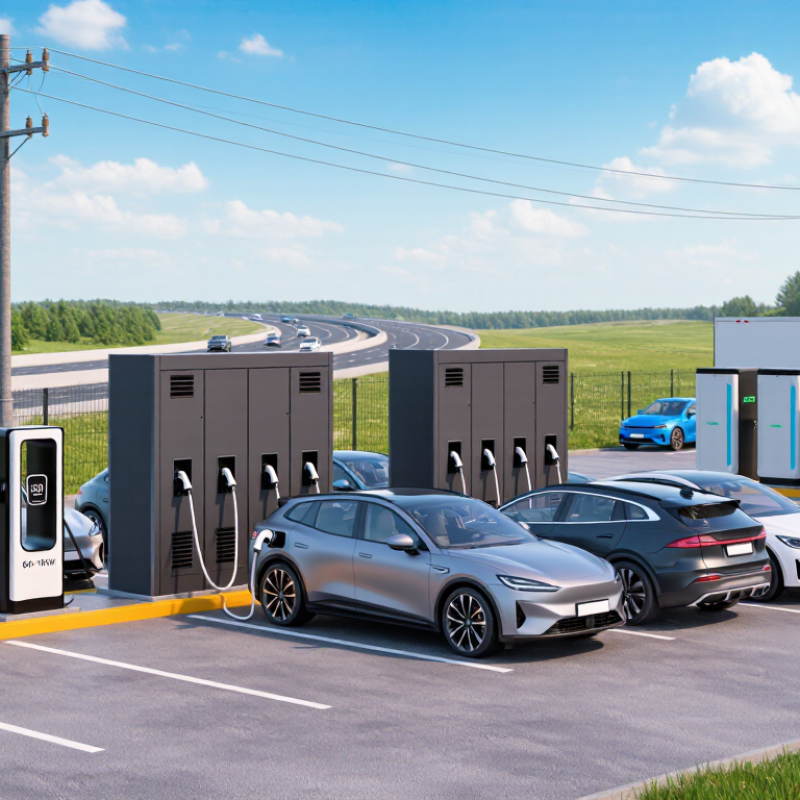
2026 Top DC Quick Charger Types for Global Buyers

DC Quick Charger Basics: 50–350 kW Output and 15–30-Minute Charging

DC quick chargers in 2026 commonly range from 50 kW to 350 kW. Their actual charging speed depends on the vehicle, battery temperature, and charging curve. A 150 kW charger cannot force a vehicle to accept 150 kW.

For many compatible vehicles, a 15–30-minute session can add meaningful driving range. The first minutes are usually the fastest. As the battery approaches a high state of charge, power often decreases to protect battery cells. In real installations, cable length, cooling performance, grid capacity, and connector compatibility also affect results. A charger rated at 350 kW may deliver less during heavy site demand.

Buyers should examine measured output, not only the nameplate rating. Ask for test records at different loads and temperatures. Check whether the cabinet supports simultaneous charging, since shared power can reduce each vehicle’s speed. Liquid-cooled cables can improve handling at high output, but they add maintenance points. Dust, heat, and poor ventilation remain practical concerns.

The 15-minute claim needs careful reading. It may describe charging from a low battery level to a moderate level under ideal conditions. That is useful, but not universal. Field data can differ. A sound purchasing decision compares vehicle compatibility, daily traffic, electrical capacity, service access, and total operating cost. Sometimes, a reliable 100 kW unit serves a location better than a costly 350 kW system.

2026 Top DC Quick Charger Types for Global Buyers - DC Quick Charger Basics: 50–350 kW Output and 15–30-Minute Charging

DC Charger Type Rated Output Typical DC Voltage Approx. Maximum Current Approx. 10–80% Charge Time* Best-Fit Application Key Buyer Considerations
Entry-Level DC Fast Charger 50 kW 200–500 V 100–250 A 50–65 minutes Urban parking, retail sites, workplaces and destinations with longer dwell times Lower grid impact and infrastructure cost, but it generally does not deliver a 15–30-minute full session for a typical passenger EV.
Standard Fast Charger 100 kW 200–500 V 200–500 A 25–35 minutes Convenience stores, highway rest areas, fleet depots and mixed-use charging hubs A practical balance between charging speed, electrical capacity and equipment cost for many passenger EVs.
High-Speed DC Charger 150 kW 300–800 V 188–500 A 18–25 minutes Highway corridors, passenger-car charging plazas and commercial fleet operations Often suitable for the 15–30-minute charging target when the vehicle battery and charging curve can accept the available power.
Ultra-Fast DC Charger 250 kW 400–1,000 V 250–625 A 11–16 minutes High-volume highway sites, logistics hubs and rapid-turnover commercial locations Requires substantial grid capacity, careful thermal management and compatibility with high-voltage vehicle platforms.
Premium High-Power DC Charger 350 kW 500–1,000 V 350–700 A 8–12 minutes Major intercity corridors, premium charging hubs and heavy-use fleet facilities The charger’s rated output may exceed the vehicle’s acceptance limit; site demand charges and cooling requirements can be significant.
Global buyer checklist: Select the connector and communication standard required in the target market, verify single-port or multi-port power sharing, confirm three-phase electrical capacity, and check payment, network, safety and local certification requirements. Common regional connector standards include CCS1, CCS2, CHAdeMO, GB/T and NACS.

*Estimated charging times: Indicative calculation for a typical 60 kWh passenger-EV battery charged from approximately 10% to 80%, assuming the vehicle can accept the charger’s rated power. Actual times vary with battery size, state of charge, temperature, vehicle charging curve, cable limits, site power sharing and charging losses. Charging power normally tapers as the battery approaches a high state of charge.

Connector Standards Compared: CCS, CHAdeMO, GB/T, and NACS by Region

For global buyers, DC quick-charger selection starts with connector standards, not cabinet size. CCS remains common across Europe and many other markets, while CHAdeMO still operates in parts of Asia and legacy vehicle fleets. GB/T is widely used in mainland China, with separate specifications for charging equipment and vehicle interfaces. NACS is increasingly visible in North America, but regional adoption and vehicle compatibility still vary.

In field assessments, connector fit is only one checkpoint. Buyers should verify voltage range, maximum current, communication protocol, and local certification requirements. A charger with the correct socket may still fail to serve the intended vehicles. That assumption can fail. Climate also matters. Dust, humidity, and winter temperatures can affect cable flexibility and cooling performance. Regional service access deserves equal attention.

CCS often suits mixed European fleets, while GB/T may simplify projects focused on Chinese-market vehicles. CHAdeMO can remain practical where older vehicles are common, although future expansion needs careful review. NACS may reduce interface complexity in selected North American deployments, but public-site requirements can differ. Confirm every vehicle model directly. Real projects expose gaps between standards documents and daily use. Connector charts help, but they cannot replace route data, fleet interviews, and on-site testing.

Power Classes Explained: 60, 120, 180, 240, and 350 kW Charger Types

2026 Top DC Quick Charger Types for Global Buyers

Power classes shape more than charging speed. A 60 kW DC charger suits urban parking, service centers, and vehicles staying 30–60 minutes. A 120 kW unit fits busy retail sites and mixed vehicle fleets. At 180 kW, charging becomes practical for regional routes. The 240 kW class supports high-demand corridors, while 350 kW chargers target premium highway sites and compatible high-voltage vehicles. Actual output still depends on battery temperature, state of charge, cable limits, and vehicle acceptance.

60 kW
Urban parking
120 kW
Retail sites
180 kW
Regional routes
240 kW
High-demand corridors
350 kW
Premium highway sites

The International Energy Agency reported over 4 million public charging points worldwide at the end of 2023, with fast-charging deployment growing strongly in major markets (Global EV Outlook 2024). This growth increases pressure on grid capacity and site design. Buyers should check transformer availability, peak-load tariffs, cooling systems, connector standards, and remote monitoring before comparing price. A 350 kW cabinet may deliver less than 100 kW to an older vehicle. Bigger is not always better. That lesson is easy to overlook.

Tips: Match charger power with local traffic, not brochure figures. Measure weekday and weekend demand separately. Leave space for future cabinets, but avoid oversized electrical infrastructure today. A short pilot can expose weak assumptions. Use certified test procedures and independent commissioning records, because uptime claims can vary by climate and maintenance practice. Percentages alone may mislead.

Site and Grid Design: 400–1000 V Systems, Cooling, and Load Sharing

In 2026, DC quick-charger design will depend less on headline power and more on site behavior. The IEA’s Global EV Outlook 2024 recorded more than four million public charging points worldwide at the end of 2023. Over 1.3 million were added during that year. This growth increases pressure on parking layouts, transformers, and utility connections.

A 400–1000 V architecture can support different vehicle platforms, but voltage range affects insulation, protection, and cable selection. Designers should separate charging cabinets from dispensers when space allows. Liquid-cooled cables become practical above sustained high-power demand, especially beside busy highways. Air cooling may still suit urban sites with shorter sessions. Field experience shows that heat often builds inside cabinets before users notice slower charging.

Load sharing is essential where grid capacity is limited. A site controller can distribute available power across four, eight, or more connectors. The IEA reports that public fast-charging deployment is accelerating, yet local grids rarely expand at the same speed. Dynamic allocation prevents one vehicle from consuming the entire feeder. It also reduces unnecessary peak-demand charges. However, algorithms need tested fallback settings. A perfect forecast is impossible. A badly tuned system can disappoint drivers during evening peaks. NREL charging-infrastructure studies also emphasize that utilization, dwell time, and electrical capacity must be evaluated together, not separately.

Global Buyer Checklist: 95%+ Efficiency, IP54 Protection, and OCPP 1.6+

For 2026, global buyers should compare DC quick chargers beyond headline power ratings. A 95% or higher efficiency target reduces energy waste and operating costs. However, ask how efficiency was measured. Rated-load results may not reflect low-temperature starts, partial loads, or long cable runs.

In field inspections, enclosure protection often reveals more than a product brochure. IP54 helps protect against dust and water splashes, but it does not support high-pressure washing. Check door seals, drainage paths, cable strain relief, and ventilation filters. Air-cooled chargers can suit moderate power sites with clear airflow. Liquid-cooled systems may serve higher-power corridors, but they require stronger maintenance planning.

Communication standards also deserve careful testing. OCPP 1.6 or later can support remote monitoring, charging records, fault alerts, and software management across mixed networks. Confirm real interoperability, not only a compatibility statement. Test offline charging, reconnection, user authorization, and firmware recovery before deployment. Local voltage, grid capacity, connector requirements, and thermal derating can change the buying decision.

One detail is easy to miss. Ensure efficiency data includes standby consumption. A charger can perform well during peak charging, yet waste power overnight. Installation teams should record temperature, output power, and error codes during a pilot period. Some assumptions will fail in practice. That is useful feedback, not a reason to hide the weakness.

FAQS

How should buyers choose a connector standard?

Start with the vehicles and region. Check each vehicle model, communication protocol, voltage range, and local certification needs. A matching socket is not enough.

Which connector types are common in different regions?

CCS is common in Europe and other markets. GB/T serves many vehicles in mainland China. CHAdeMO remains useful for some older fleets, while NACS is growing in North America. Local adoption varies.

Is a higher-power charger always better?

No. A 350 kW charger may provide under 100 kW to an older vehicle. Bigger is not always better.

What power level suits a busy retail site?

A 120 kW unit can suit busy retail locations and mixed fleets. Check actual traffic and vehicle charging limits before choosing.

What should buyers check before comparing charger prices?

Review transformer capacity, peak-load tariffs, cooling, connectors, and remote monitoring. Grid upgrades can change project costs considerably.

When are liquid-cooled cables useful?

They are practical for sustained high-power charging, especially at busy highway sites. Air cooling may suit urban locations with shorter sessions.

How does load sharing help a charging site?

A site controller can divide available power among several connectors. This helps avoid one vehicle using the entire feeder. Evening peaks still need testing.

What can a pilot project reveal?

It can expose weak assumptions about demand, uptime, and site performance. Measure weekday and weekend use separately. A short pilot helps, though it cannot answer everything.

Conclusion

This guide explains how a Dc Quick Charger can support fast electric vehicle charging, with typical power outputs from 50 to 350 kW and charging sessions that may take approximately 15 to 30 minutes, depending on the vehicle, battery capacity, and operating conditions. It compares major connector standards, including CCS, CHAdeMO, GB/T, and NACS, helping global buyers identify regional compatibility and deployment requirements.

The article also breaks down common charger classes, such as 60, 120, 180, 240, and 350 kW, while covering essential site and grid considerations. Buyers will learn about 400–1000 V systems, thermal management, load sharing, installation planning, and operational reliability. A practical checklist highlights key specifications, including efficiency above 95%, IP54 protection, and OCPP 1.6 or higher, enabling more informed decisions for commercial, fleet, and public charging projects.

Oliver

Oliver

Oliver is a seasoned marketing professional with a wealth of expertise in driving brand awareness and engagement. With a deep understanding of our company's product offerings, he consistently delivers high-quality content that enriches our professional blog. His insights not only shed light on......